
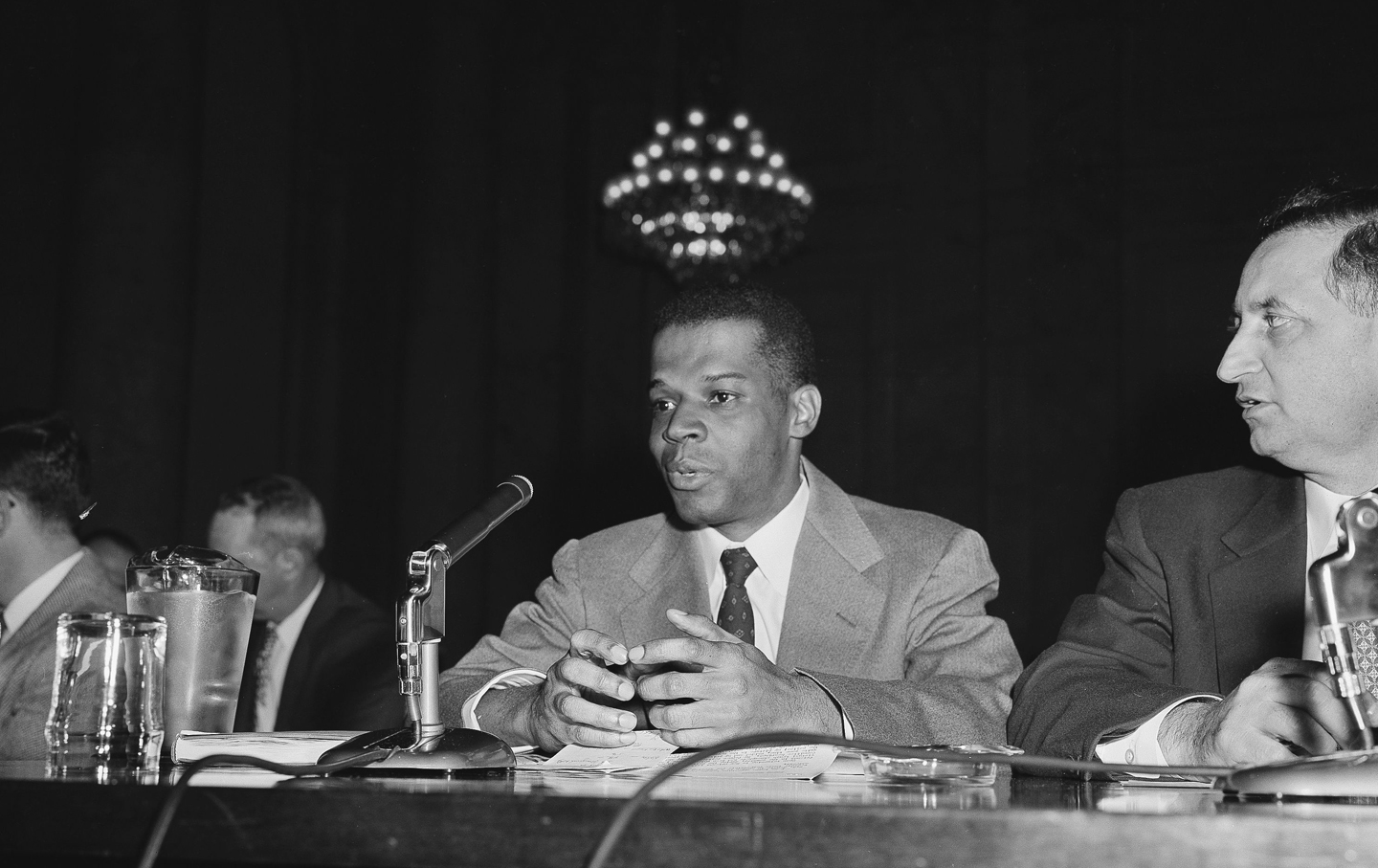
Some Disturbingly Relevant Legacies of Anticommunism Some Disturbingly Relevant Legacies of Anticommunism
The impact of Cold War anticommunism on our national life has been so profound that we no longer recognize how much we’ve lost.
Mar 23, 2015 / Books & the Arts / Victor Navasky
The Plain Sense of Things The Plain Sense of Things
December 6, 1952 After the leaves have fallen, we return To a plain sense of things. It is as if We had come to an end of the imagination, Inanimate in an inert savoir. It is difficult even to choose the adjective For this blank cold, this sadness without cause. The great structure has become a minor house. No turban walks across the lessened floors. The greenhouse never so badly needed paint. The chimney is fifty years old and slants to one side. A fantastic effort has failed, a repetition In a repetitiousness of men and flies. Yet the absence of the imagination had Itself to be imagined. The great pond, The plain sense of it, without reflections, leaves, Mud, water like dirty glass, expressing silence Of a sort, silence of a rat come out to see, The great pond and its waste of the lilies, all this Had to be imagined as an inevitable knowledge, Required, as a necessity requires. This article is part of The Nation’s 150th Anniversary Special Issue. Download a free PDF of the issue, with articles by James Baldwin, Barbara Ehrenreich, Toni Morrison, Howard Zinn and many more, here. Wallace Stevens (1879–1955) published ten poems in The Nation between 1936 and 1952.
Mar 23, 2015 / Books & the Arts / Wallace Stevens
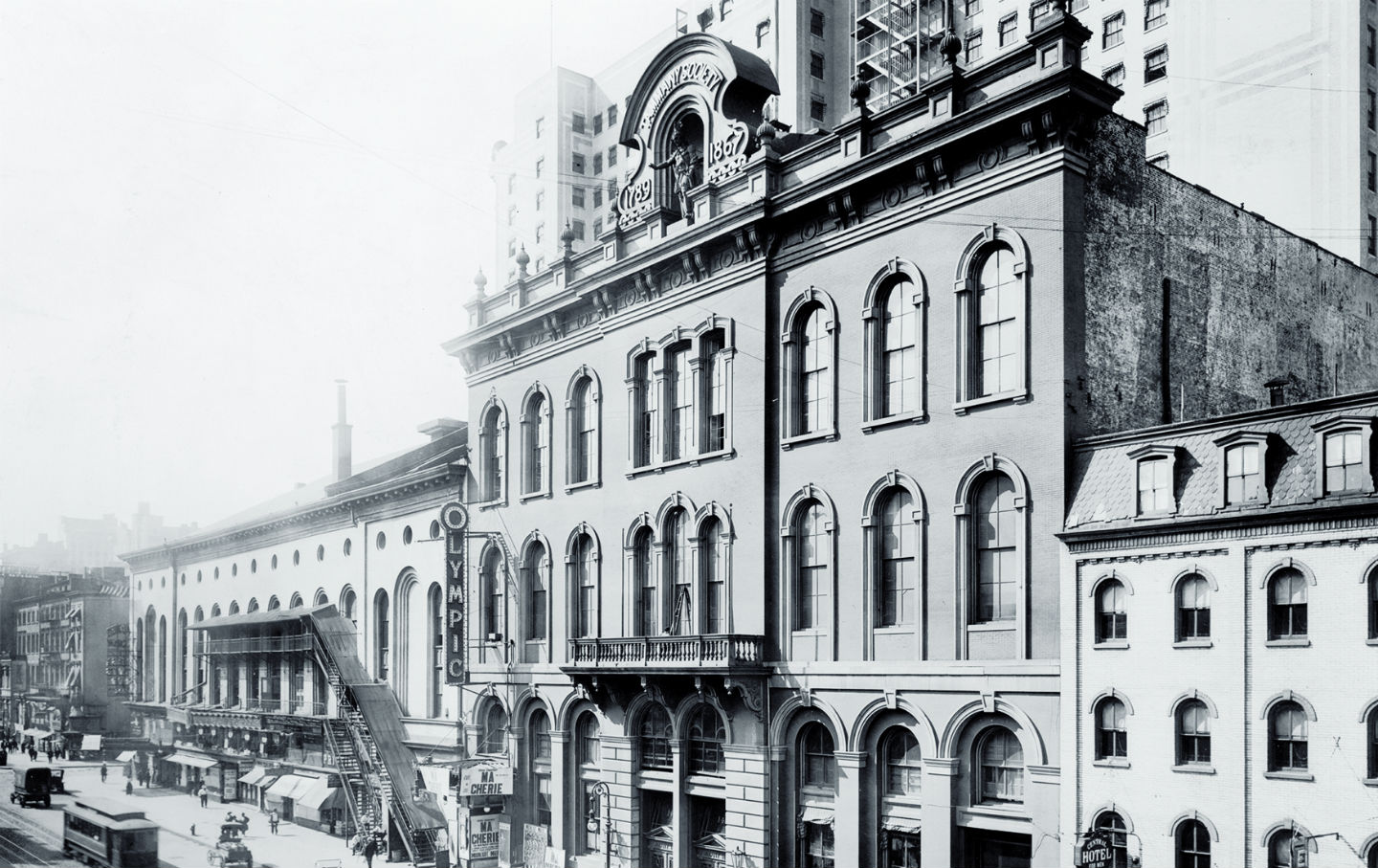
1875-1885: Custer’s Last Stand and the Power of Tammany Hall 1875-1885: Custer’s Last Stand and the Power of Tammany Hall
Just as soon as one "boss" is evicted, another rises to take his place.
Mar 23, 2015 / Feature / The Nation
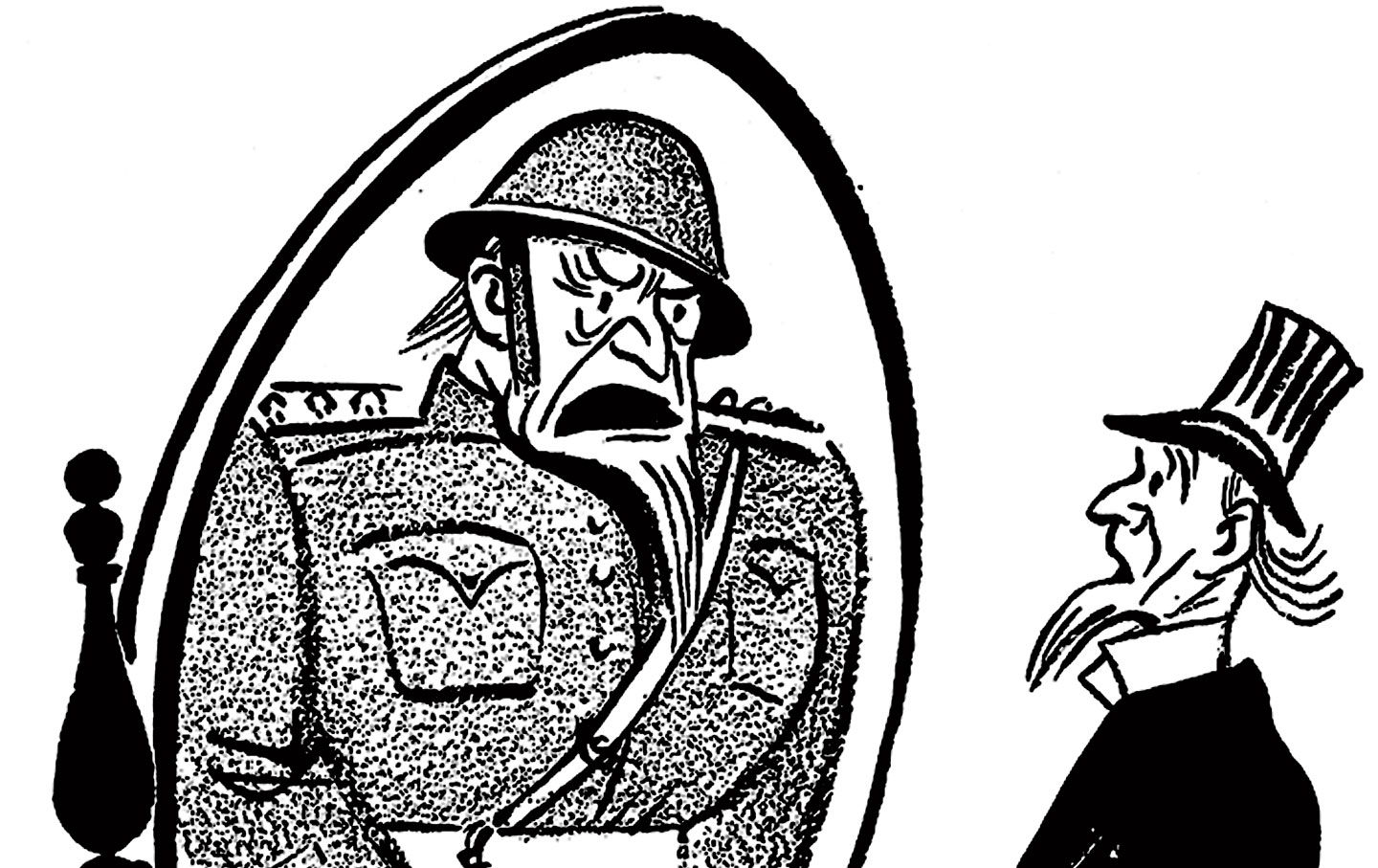
The Reporter Who Warned Us Not to Invade Vietnam 10 Years Before the Gulf of Tonkin The Reporter Who Warned Us Not to Invade Vietnam 10 Years Before the Gulf of Tonkin
A farsighted policy might do more to stem the Communist tide than sending a few more plane-loads of napalm.
Mar 23, 2015 / Feature / Bernard Fall and Frances FitzGerald
Magna Carta Messed Up the World, Here’s How to Fix It Magna Carta Messed Up the World, Here’s How to Fix It
The “logic” of capitalist development has left a nightmare of environmental destruction in its wake.
Mar 23, 2015 / Books & the Arts / Noam Chomsky
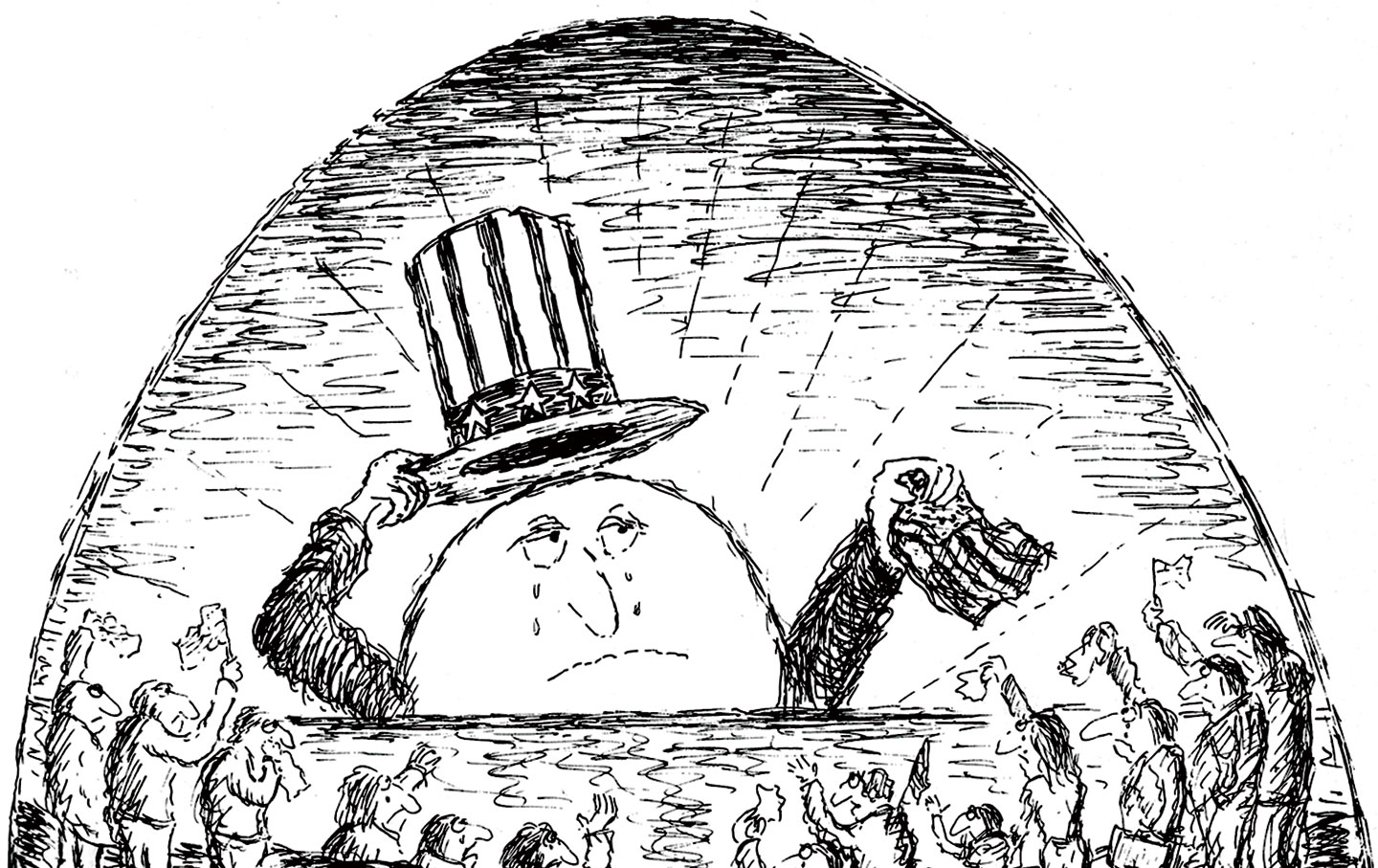
Is America Possible Without Empire? Is America Possible Without Empire?
Rather than sizzle or suffocate, let us get on with imagining a new America.
Mar 23, 2015 / Books & the Arts / William Appleman Williams and Greg Grandin
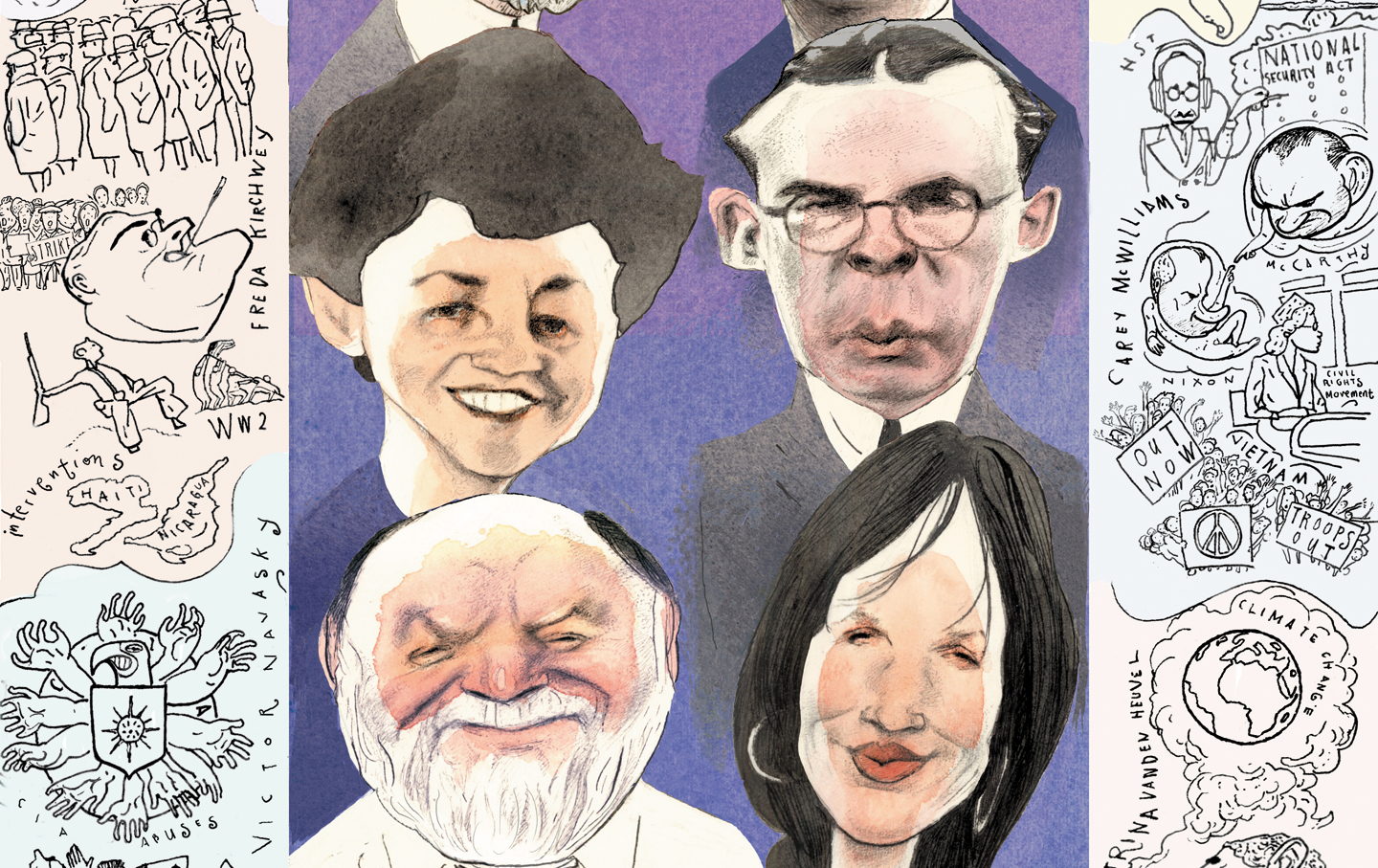
Freedom’s Song Freedom’s Song
Over The Nation’s 150-year history, each new generation of radicals and reformers has contested the promise—and the meaning—of freedom.
Mar 23, 2015 / Books & the Arts / Eric Foner

The Radical Future of Film The Radical Future of Film
A more convivial, expansive and life-affirming future is with us now—and the movies can help take us there.
Mar 23, 2015 / Books & the Arts / Stuart Klawans
And We Love Life And We Love Life
And we love life if we find a way to it. We dance in between martyrs and raise a minaret for violet or palm trees. We love life if we find a way to it. And we steal from the silkworm a thread to build a sky and fence in this departure. We open the garden gate for the jasmine to step out on the streets as a beautiful day. We love life if we find a way to it. And we plant, where we settle, some fast growing plants, and harvest the dead. We play the flute like the color of the faraway, sketch over the dirt corridor a neigh. We write our names one stone at a time, O lightning brighten the night. We love life if we find a way to it… (translated from the Arabic by Fady Joudah) This article is part of The Nation’s 150th Anniversary Special Issue. Download a free PDF of the issue, with articles by James Baldwin, Barbara Ehrenreich, Toni Morrison, Howard Zinn and many more, here. Born in a Galilee village later destroyed by the Israeli army, Mahmoud Darwish lived for years in exile in Beirut and Paris before returning to Palestine in 1996. The most widely translated modern Arab poet, Darwish died in 2008.
Mar 23, 2015 / Books & the Arts / Mahmoud Darwish
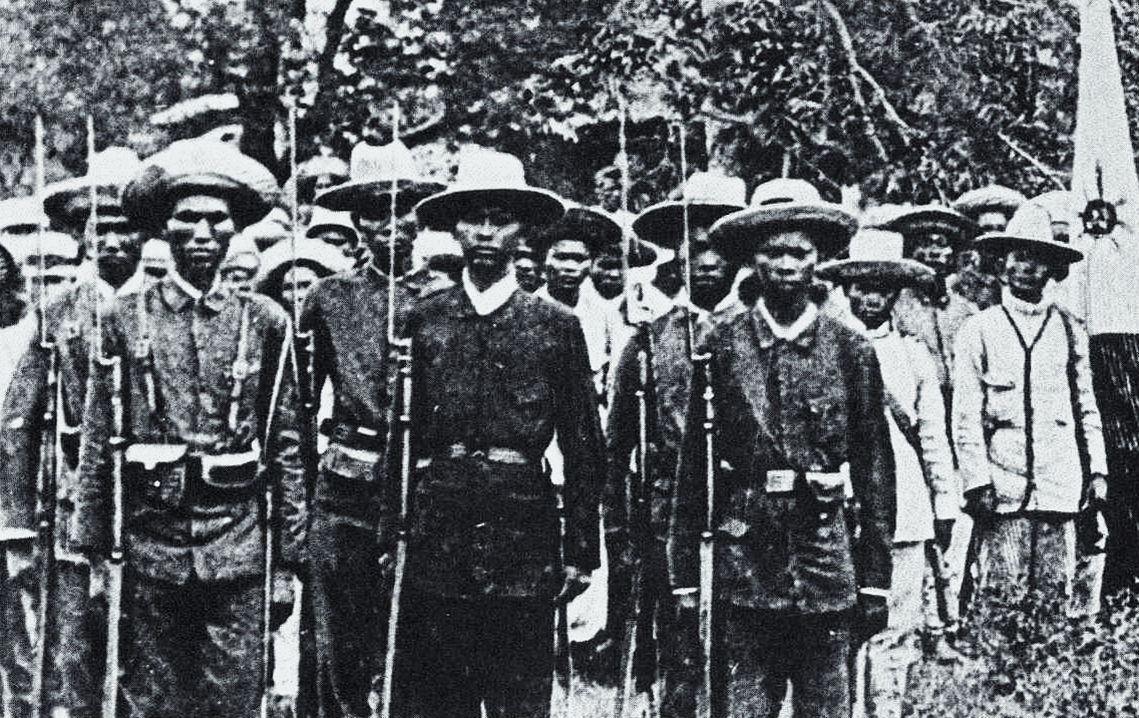
1895–1905: When the American Empire Was Born 1895–1905: When the American Empire Was Born
Whenever a small force of Americans undertakes an expedition, the woods and hills become alive with enemies.
Mar 23, 2015 / Feature / The Nation