
Letters Letters
No Nukes Are Good Nukes Michael T. Klare wants to support the agreement between the US government and the Iranian state [“For the Iran Nuke Deal,” May 4]. I am against Iran having nuclear bombs or nuclear-energy plants, because I am against any government having nuclear bombs or nuclear-energy plants. But who is the United States—armed to the eyebrows with nuclear weaponry and allied with the only nuclear state in the region—to tell Iran what to do? Suppose the Iranians demanded that the US dismantle its nuclear bombs, close down its nuclear-energy plants, withdraw from its approximately 135 overseas military bases, and cut off all aid to Israel? Suppose they then organized an international boycott of US trade, especially of petroleum, to enforce their demands. Would not US politicians and pundits cry bloody murder, denouncing this as an act of aggression against US sovereignty? It is shameful that the US debate should be limited to the “bomb Iran” crowd and the “bully Iran” crowd. The Nation should have a broader view. Wayne Price the bronx, ny Michael T. Klare Replies I agree with Wayne Price that the universal elimination of nuclear weapons should be our ultimate goal. The pact with Iran is not about the United States telling Iran what to do, but rather ensuring that it abides by its legal obligation, as a signatory of the Nuclear Nonproliferation Treaty, to refrain from the manufacture of nuclear weapons. If that can be accomplished in a peaceful manner, we all benefit. Michael T. Klare northampton, mass. In Defense of Incivility Thank you for Joan W. Scott’s article “The New Thought Police” [May 4]. It raises important but very subtle and tricky issues. On the one hand, I think it is incumbent upon all of us in academe to do our best not to be jerks through the kind of gratuitous incivility that helps to stereotype academicians as entitled, socially challenged brats. On the other hand, our dialogue does not have to be devoid of human emotion and passion. Honest disagreements sometimes go through stages of incivility—with harsh, even angry words exchanged—on the path toward healthier engagement. On an institutional level, civility codes can be used to silence or even bully dissenters. When one disagrees with the mainstream view, or a position imposed from on high, it can arouse passion, and sometimes emotions flare. As this piece suggests, university civility codes can easily be turned against people who are criticizing and protesting injustice, wrongful behavior, and bad decisions. Universities that impose civility codes are usually those that cannot manage by thoughtful, inclusive, quality leadership. Instead, they must mandate manners and punish those who venture beyond superficial politeness. David Yamada In “The New Thought Police,” Scott mentions the case of Leo Koch, a biology professor at the University of Illinois who lost his job for suggesting in the student newspaper that there should be “greater freedom in the conduct of sexual relations.” I knew Koch back in 1963. His letters published in the student newspaper did not result in a ruckus as long as they were simply signed “Leo Koch.” The ruckus started only when the editors violated Koch’s trust by identifying him as a faculty member. Edd Doerr silver spring, md. Did We Learn From Vietnam? George Black’s article for The Nation on the legacy of the Vietnam War [March 16] and Jon Wiener’s article on the 50th-anniversary commemoration of the Vietnam Peace Movement in Washington, DC [May 4], are commendable. But one would expect some commentary on the US wars since Vietnam—Afghanistan, Iraq, Yemen, Somalia, etc.—to say nothing of Obama’s drone wars. We seem not to have learned anything from Vietnam, since we’re repeating earlier mistakes in the name of national security—unfortunately, this time without a critical peace movement. Laura Nader berkeley, calif. Stormy Weather, Redux Eric Alterman is a journalist, but certainly not a historian [“Days of Crazy,” May 4]. As a member of that profession, I am obliged to tell him that contempt is not a tool in the writing of history. Yet that is what emerges from his remarks about the Weathermen and similar movements of the 1960s and ’70s. His retroactive use of categories like “fanatics” and “terrorists,” very much in the public mind in 2015, does nothing to increase our understanding of those times, but does show how a self-described “liberal” likes to conflate the left and the right, the better to promote his own version of the “center” as the only form of viable politics today. As a young faculty member at Columbia during the events of 1968, I knew many of those among the students who later turned to violence. Granted, their analyses were wrongheaded and their actions counter-productive, but they were not contemptible. As Alterman himself says, one cannot understand their motivations without reference to the Vietnam War and the general politics of the time. Finally, Alterman misleads us and obscures the reality of the period by labeling all the groups he mentions—notably the Black Panthers—idiots and murderers, so as to consign them to the dustbin of history. I can also tell him that the lawlessness of the Nixon administration and the FBI was not a reaction to the violence he indicts: The government had long been using illegal methods of surveillance and disruption of left-wing activity. Indeed, the knowledge that this was so may well have been one of the reasons for the next generation’s turn to violence. Jeffry Kaplow paris Eric Alterman Replies Actually, Eric Alterman is a historian, and has PhD parchment from Stanford University to prove it. The rest of Jeffry Kaplow’s silly missive is similarly fact-challenged and sloppily argued. It would take at least another column to refute all of it, but I would simply point out—again, purely as a factual matter—that nowhere in my column did I call “all the groups…mention[ed]— notably the Black Panthers—idiots and murderers, so as to consign them to the dustbin of history.” (Indeed, I hardly think of history as a “dustbin.” Does Mr. Kaplow?) If his is the best case that can be made for the actions of the actual idiots and murderers I discussed in my column, then it is a sorry one indeed. Eric Alterman brooklyn, ny
May 12, 2015 / Our Readers, Michael T. Klare, and Eric Alterman
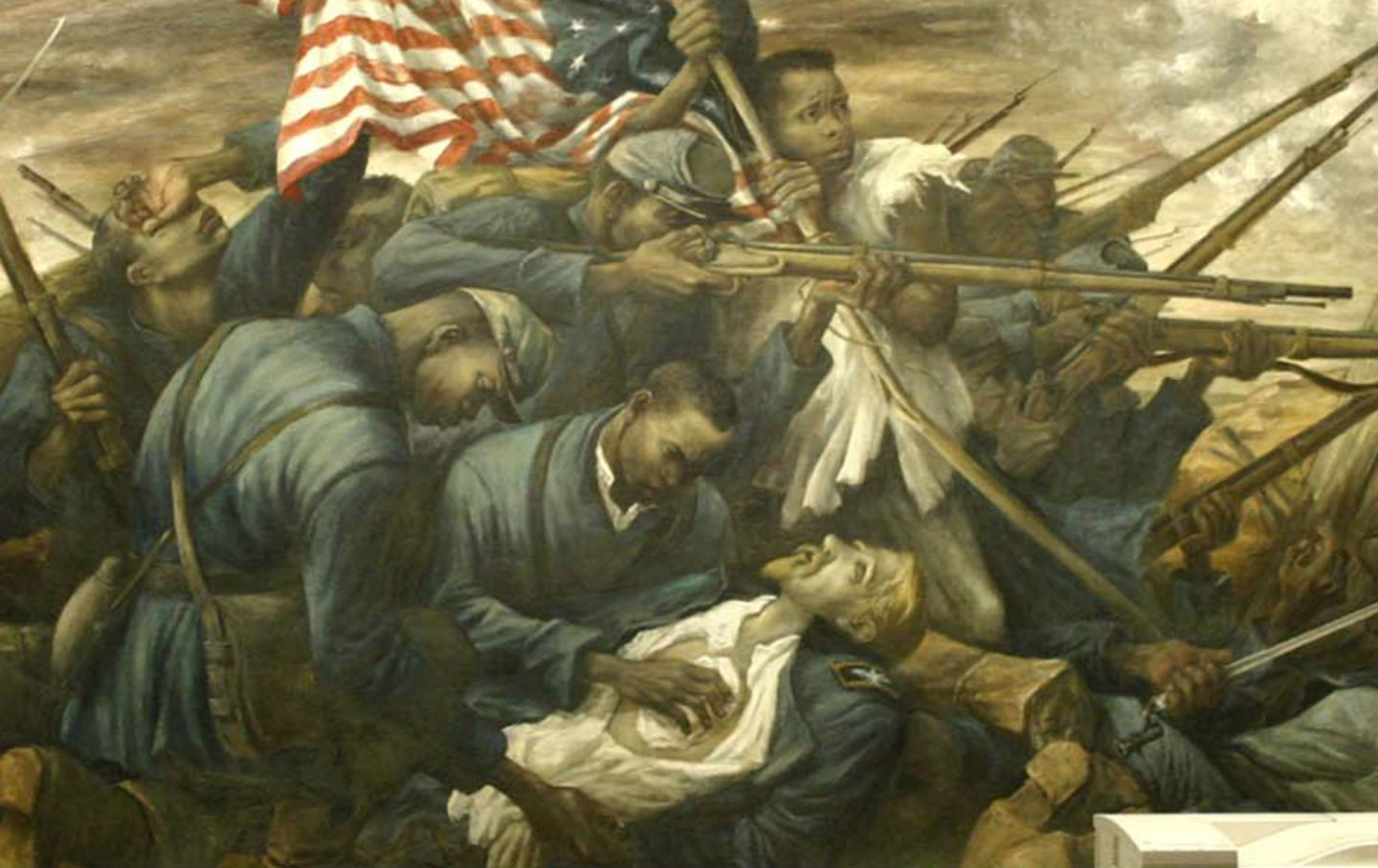
A Victory Parade 150 Years in the Making A Victory Parade 150 Years in the Making
The African American Civil War Memorial & Museum will honor black soldiers who were not welcome at the original Grand Review celebration.
May 11, 2015 / Richard Kreitner

Chris Burden and ‘The Other Vietnam Memorial’ Chris Burden and ‘The Other Vietnam Memorial’
Three million Vietnamese names, etched on copper plates 13 feet high.
May 11, 2015 / Jon Wiener
What Are ‘Nation’ Interns Reading the Week of 5/8/15? What Are ‘Nation’ Interns Reading the Week of 5/8/15?
What are Nation interns reading the week of 5/8/15?
May 8, 2015 / StudentNation / StudentNation
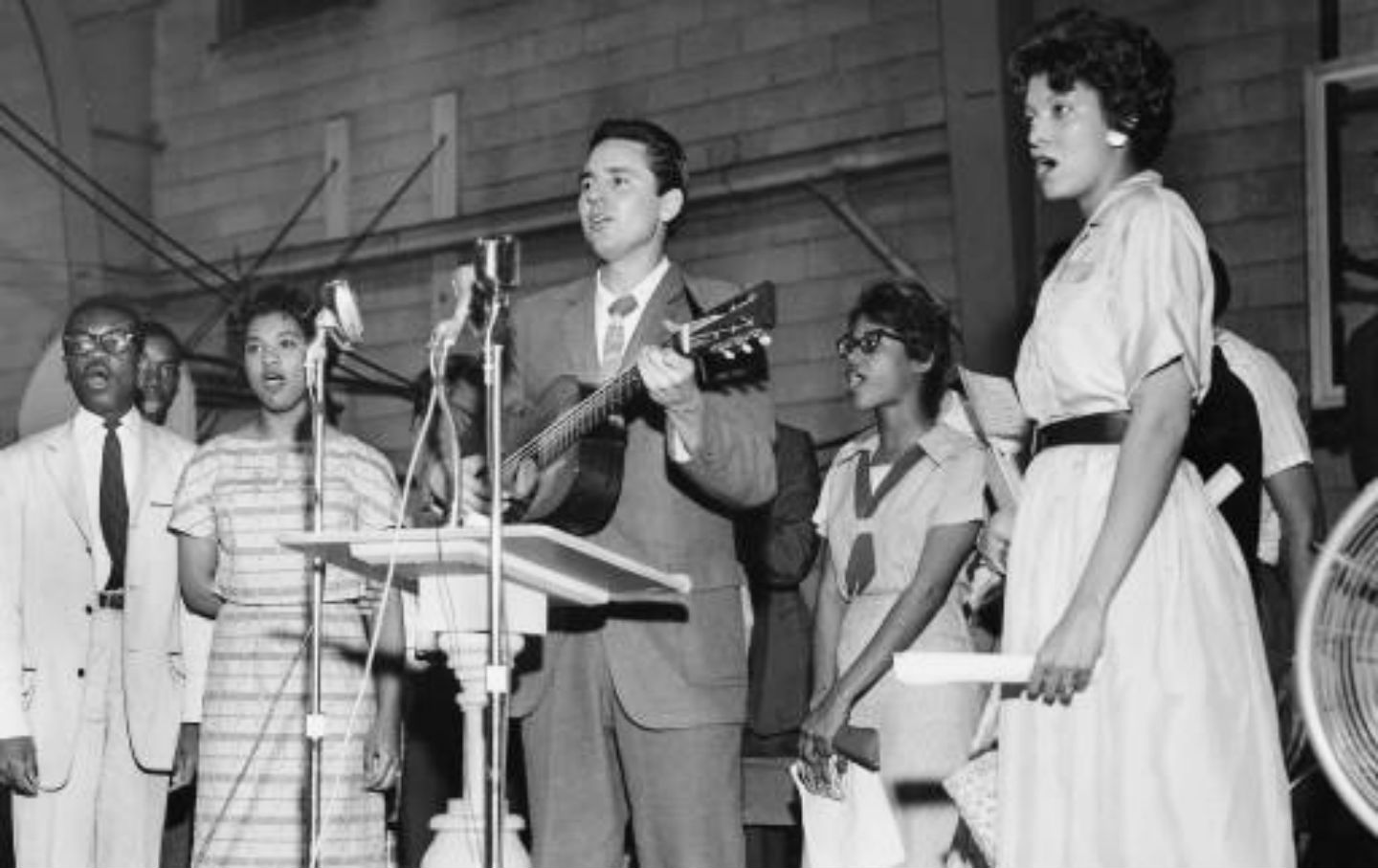
Remembering Guy Carawan: The Man Who Popularized ‘We Shall Overcome’ Remembering Guy Carawan: The Man Who Popularized ‘We Shall Overcome’
Guy Carawan's music had a message and his songs became the unofficial anthems of the Civil Rights movement.
May 7, 2015 / Peter Dreier

May 7, 1915: The Lusitania Sinks, Killing Over 1,000 Civilians May 7, 1915: The Lusitania Sinks, Killing Over 1,000 Civilians
"The torpedo that sank the Lusitania also sank Germany in the opinion of mankind."
May 7, 2015 / Richard Kreitner and The Almanac
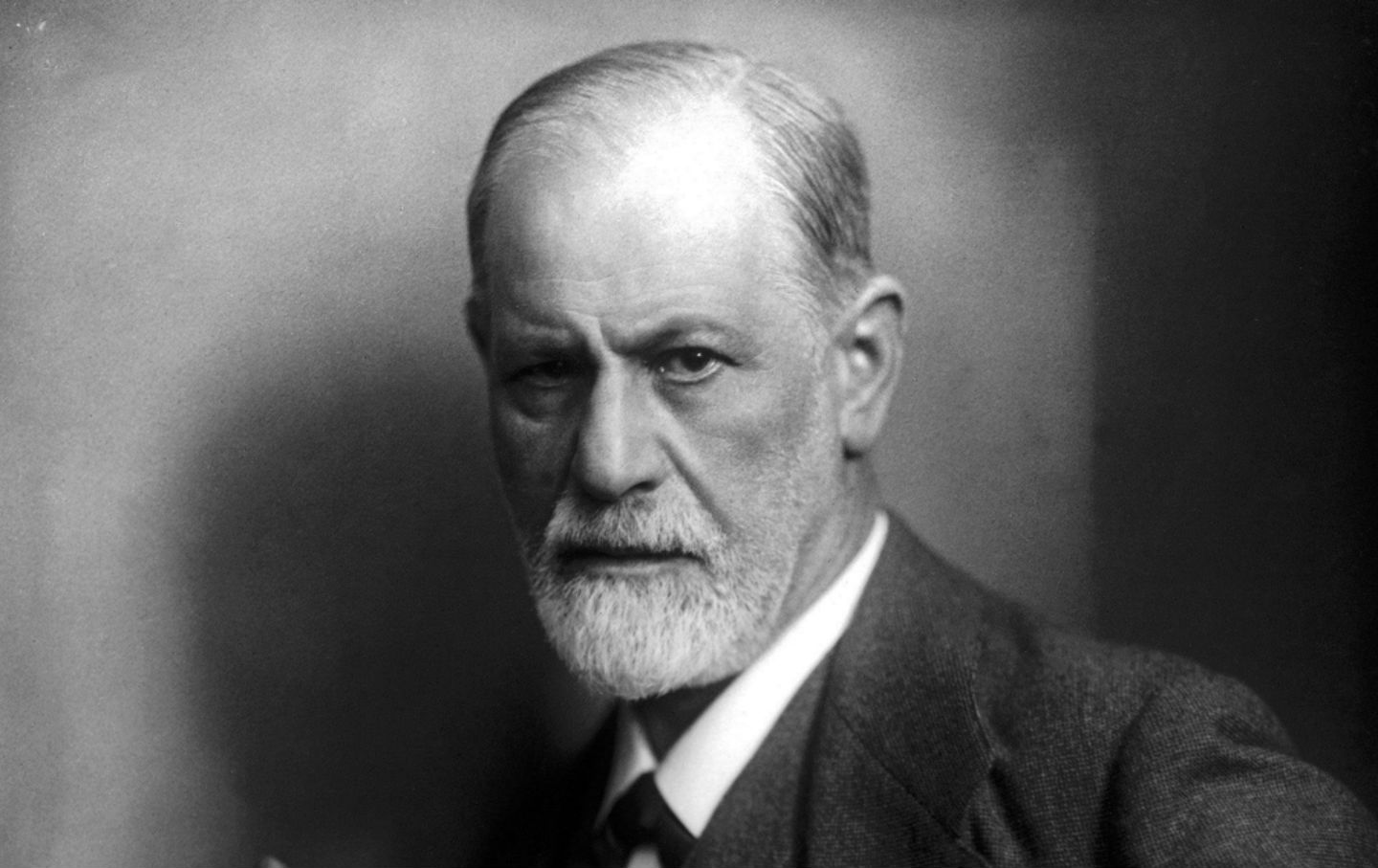
May 6, 1856: Sigmund Freud Is Born May 6, 1856: Sigmund Freud Is Born
“One cannot close this book without a sense of depression,” The Nation’s reviewer said of Freud’s The Interpretation of Dreams.
May 6, 2015 / Richard Kreitner and The Almanac

Inside Out Inside Out
With its new building, the Whitney Museum is now the best place to see modern and contemporary art in New York City.
May 6, 2015 / Books & the Arts / Barry Schwabsky
Crash-and-a-Half Crash-and-a-Half
Mourn the poem or porn locked inside or fried, the white scrambled pre-word, impulses so electric they’re post-, just the paths, the pulse. The embarrassment of backup forgotten, Alzheimer put on like a coat you paid a lot for, months owed to a machine. Here— take this, my life in numbered bundles. Don’t forget. Such blackness arrives always sudden and sad but peaceful, not even an accident this time. And you, half-brained, mea culpa the air where the data hadn’t risen to cloud height, so suitable for burial, disremembered, dismembered.
May 6, 2015 / Books & the Arts / Terese Svoboda

Critical Agents Critical Agents
How J. Edgar Hoover’s paranoid view of literature led him to target African-American writers.
May 6, 2015 / Books & the Arts / Peter C. Baker