
The Public Health Heroes of 2025
The Trump administration wants to destroy our health infrastructure. These warriors aren’t letting that happen without a fight.
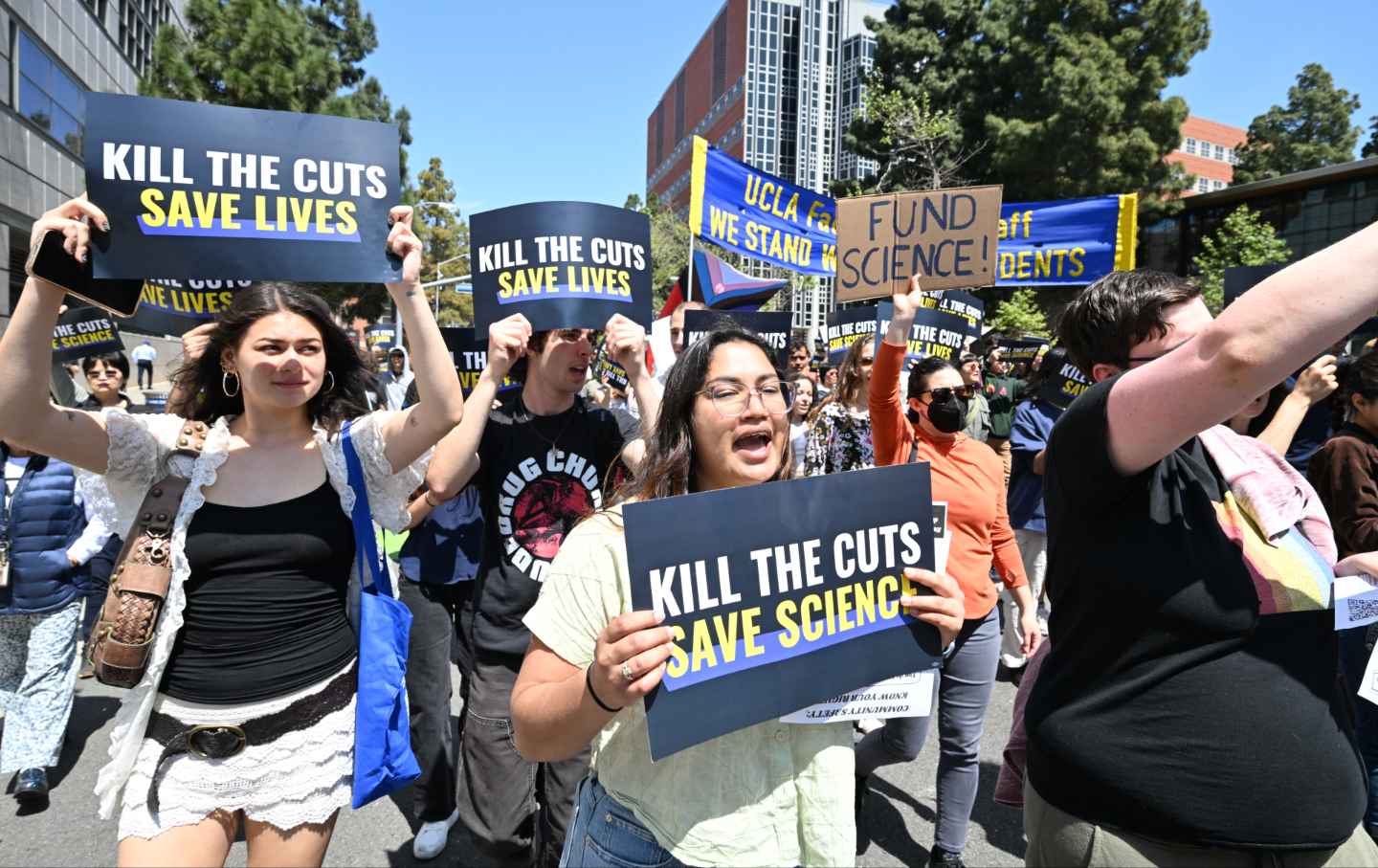
Students, researchers and demonstrators rally during a Kill the Cuts protest against the Trump administration’s funding cuts on research, health, and higher education at the University of California–Los Angeles on April 8, 2025.
(Robyn Beck / AFP via Getty Images)It’s that time of the year. Time for the “best of” 2025 lists. Movies. Books. Theater. Art. But why not the best of 2025 for “democratic governance of key public health and biomedical research institutions”? It may be a first time for this roll call, but it won’t be the last. Well, with the way things are going, it may be, but let’s not get ahead of ourselves.
I get asked a lot about how I can remain hopeful these days. These are some, just some, of the people, institutions, and groups who force me out of bed in the morning.
1. Our Nation’s Civil Servants
Between Russell Vought, Elon Musk, and RFK Jr., the leadership and staff of most federal agencies that are designed to protect our health and well-being have been purged, and frequently replaced with supremely unqualified hacks whose job is to make things even worse. The latest case in point? In December, BioSpace reported that 90 percent (!!!) of the Food and Drug Administration’s senior leadership from a year ago is gone.
That’s why the top slot on this list goes to our government’s heroic civil servants—the ones who hung on as long as they could, and the ones still trying to keep the lights on at the FDA, the CDC, the NIH, and all the other agencies our public health system relies on. Let me be clear: We are, by and large, fucked. But the only reason we’re not even more fucked is that these people are working day and night to keep what is left of these agencies afloat.
2. Those Who Stand Up and Fight
No one gets a PhD in how to engage in hand-to-hand combat with a competitive authoritarian regime hell-bent on destroying public health and biomedical research in America. Yet the unlikeliest of freedom fighters have emerged from the ranks of scientists, clinicians, legal scholars, students, retired civil servants, and former agency leaders. Some of them have flocked to groups like Stand Up for Science and Defend Public Health. Others are working locally on their campuses through the American Association of University Professors. But even more have organized into smaller groups, talking on secure platforms where they strategize together daily. This is important, as the distributed network architecture that is emerging is harder for the government to attack. It would be far easier for many of these individuals—who were trained to provide care or analyze data and likely expected to enjoy their youth or their golden years without having to do battle with Donald Trump—to keep their heads down and try to weather this current moment. Instead, they are stepping up in a big way.
3. The Data Gatherers
The Trump administration has deleted reams and reams of data and health information wholesale from agency websites. As Nancy Krieger from the Harvard School of Public Health bluntly put it earlier this year, this is “censorship. It’s effectively a digital book burning.” Virtually anything having to do with race, sexuality, or gender has been pulled down, and data on climate and the environment has been purged as well. But almost as soon as this censorship campaign began, academics and others swung into action to save this precious information, including groups like the Data Rescue Project, Harvard Law School Library Innovation Lab, the End of Term Web Archive, and the Environmental Data & Governance Initiative. We’re lucky that so much has been able to have been saved by these stewards of our data future.
4. The Receipt Keepers
The Trump administration has terminated thousands of federal grants across multiple agencies, undermining research and innovation for a generation or more. Labs have been shuttered, and talented scientists, both senior figures and trainees, are seeking opportunities in other fields, or even other countries. That’s why it matters that people are keeping receipts about the depth of the government’s destructiveness. For instance, Noam Ross, Scott Delaney, Anthony Barente, Emma Mairson, Eric Scott, and Mally Shan have established Grant Witness, which is cataloguing grant terminations at the National Institutes of Health, the National Science Foundation, and the Environmental Protection Agency. The fact that we have such a detailed record of these grant terminations is largely due to this volunteer effort. Another interdisciplinary team of researchers from the University of Maryland, College Park, the University of Pennsylvania, the University of Utah, the Georgia Institute of Technology and the University of Oregon has created the Science & Community Impacts Mapping Project (SCIMaP), which is detailing the current and future economic impact on states and countied of these cuts in terms of dollars and jobs lost. Want to know how your GOP member of Congress is shafting your hometown? SCIMaP has the receipts.
5. Good Reporters
Telling the story of these terrible years for public health and science requires journalists with deep knowledge. It is not surprising that health news site STAT has some of the best reporting of what is happening now, including a December multipart piece, “American Science, Shattered,” which is the most comprehensive telling of this year’s carnage out there. Max Kozlova young reporter at Nature, has won awards for his coverage of the attacks on science and public health this year and deserves the accolades. Other outlets like ProPublica and Wired have been tremendous resources this year too. ProPublica had its own big piece in June on the shattering of science, and Wired has been on the CDC beat with lots of stories this year on the beleaguered agency. These publications have been more reliable than big mainstream media outlets, with less equivocation and more dedication to speaking the plain truth to their readers.
Popular
“swipe left below to view more authors”Swipe →6. The Lawyers
The number of court cases against the Trump administration on public health and science alone has kept an army of lawyers at work nonstop for the past year. Whether challenging grant terminations, the cap on indirect research costs, or RFK’s horrendous vaccine policies, state attorneys general and lawyers with Public Citizen Litigation Group, Democracy Forward, and others have kept up a barrage of challenges for months now. These cases have not all been successful, but they’ve still been vital for getting the word out about what is happening—forcing the facts into the public domain where the administration has to answer for its actions in a court of law. Given our Supreme Court’s enthusiasm for siding with Trump, the persistence and commitment to this work is nothing short of heroic.
It’s actually amazing how many people have risen to the occasion when our institutions, including so many major news outlets, big law firms, and universities, have looked to hedge, cajole, capitulate, or collaborate. Many of us are worn out as we head into the holidays, but what a gift we represent to each other—those of us who continue to see hope and have worked so hard this year for a better future despite the darkness all around us.
Become a Sustaining Donor This September
Between the reemergence of right-wing red-baiting and Donald Trump’s use of the chilling National Security Presidential Memorandum–7 to criminalize left political organizing, we’re seeing McCarthyism reborn before our eyes.
This assault on democracy cannot be ignored or wished away. Resisting it requires bravery in the face of threats and repression, a steadfast commitment to the truth, and the unwavering belief that we can—and will—overcome this darkness.
We must have an independent media that sets the record straight, unearths corruption and abuses of power, and advances a politics of justice and dignity for all if we’re to win this fight.
That’s why I’m writing to you today. This September, The Nation needs to add 100 monthly donors to sustain our progressive journalism. Your contribution makes the next investigative report, the next truth-speaking column, and the next pathbreaking essay all possible.
I hope you’ll support our work with a recurring donation today. If you donate $10 or more a month, we’ll send you a brand new “Hands Off the Free Press!” sticker to recognise your commitment to our cause. Please, donate today.
Onward,
Katrina vanden Heuvel
Editor and Publisher, The Nation
More from The Nation
What Remains of Riis? What Remains of Riis?
A new members’ club has revived Riis Park’s long-vacant bathhouse, reopening old questions about whom the People’s Beach is really for.
When Texas Sex Ed Falls Short, Gen Z Women Turn to Social Media When Texas Sex Ed Falls Short, Gen Z Women Turn to Social Media
A 2025 study found that 70 percent of adolescents sought reproductive health information through social media platforms.
Justice for Macklemore Justice for Macklemore
The rapper has been dumped from Ed Sheeran’s tour for saying “free Palestine.” That’s a disgrace.
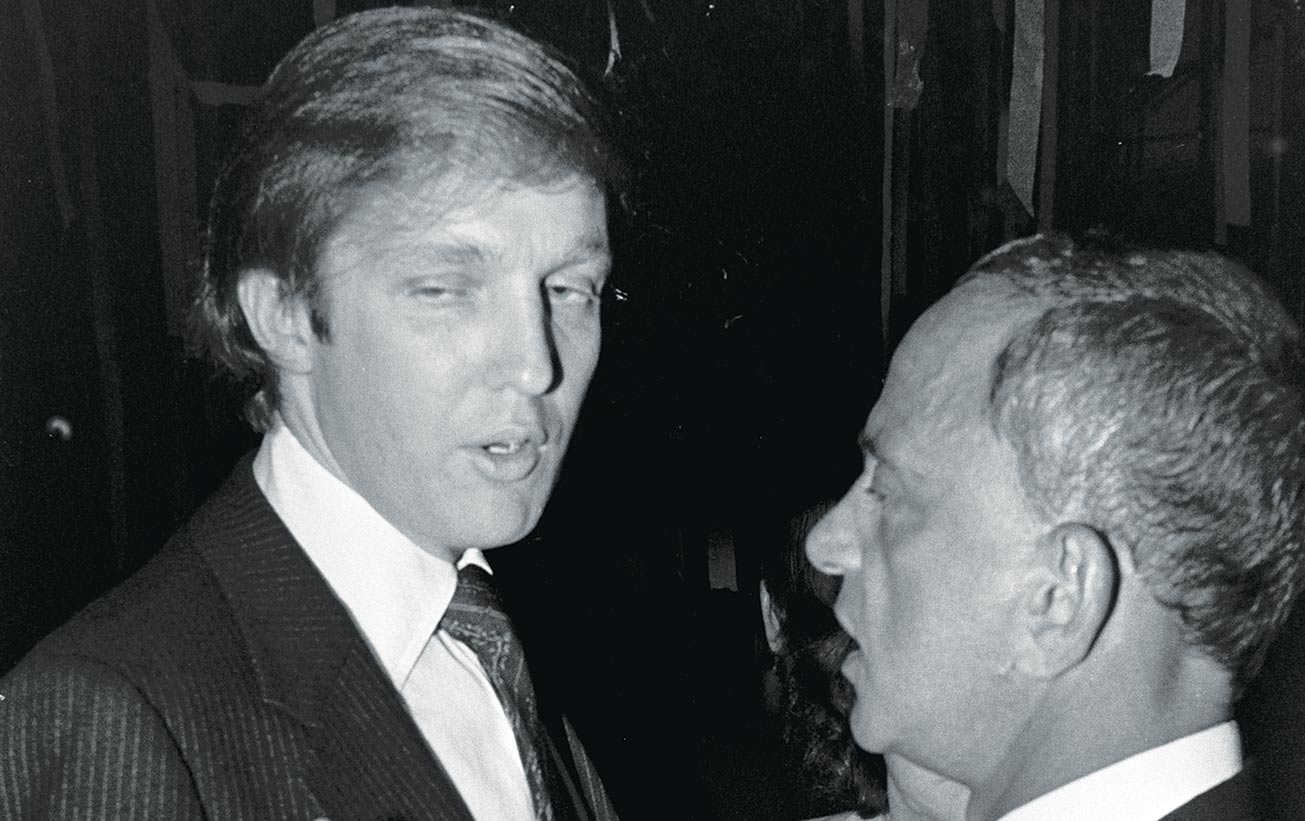
We Are Living Under Roy Cohnian Logic We Are Living Under Roy Cohnian Logic
The political fixer created a career for himself as a self-promoting, ubiquitous hustler. Like Trump, he got away with it by having the right friends.
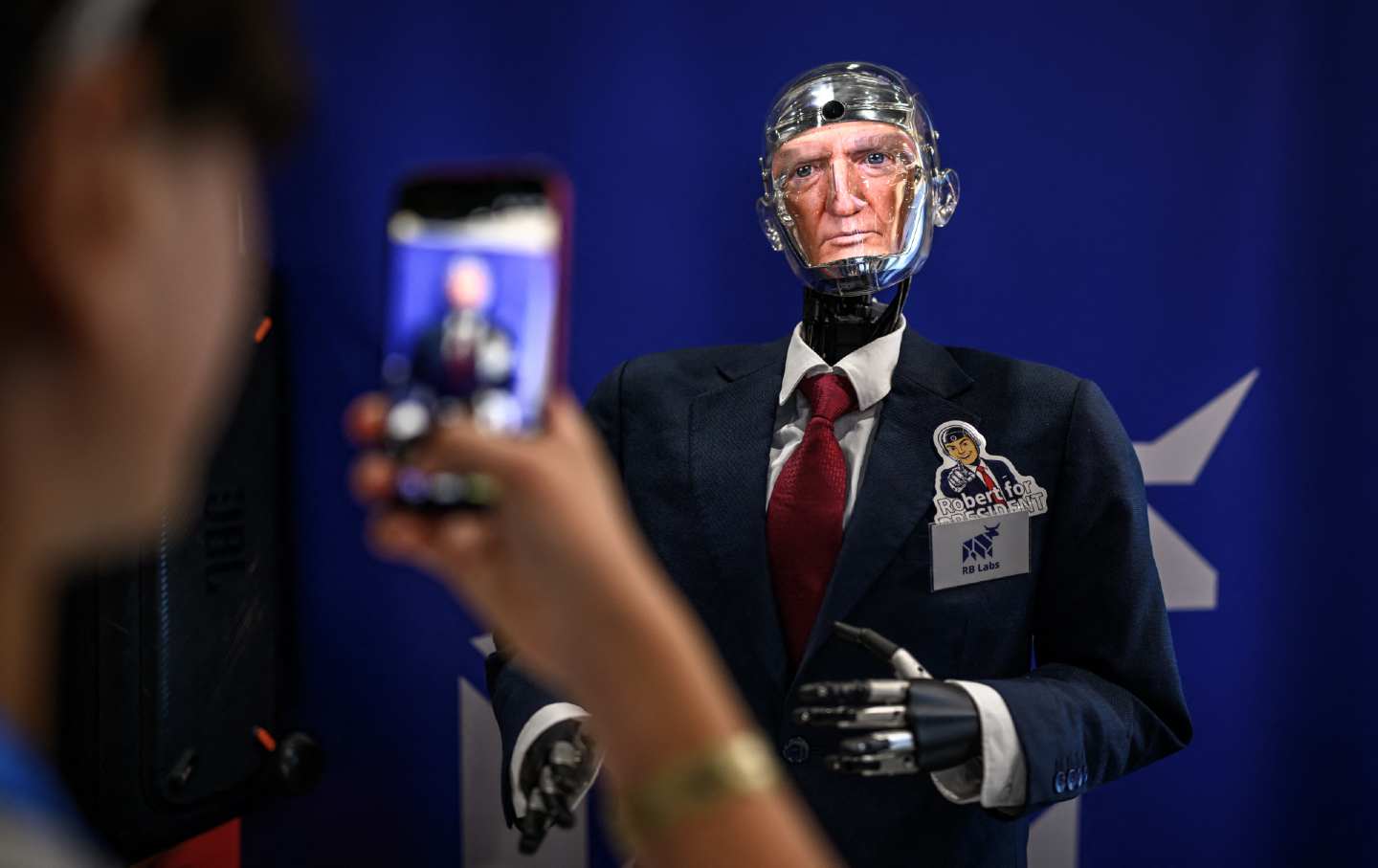
Time Has Run Out for AI Risk Deniers Time Has Run Out for AI Risk Deniers
The recent spate of reports about the technology’s destructive power underline two prime directives: Be afraid, and regulate aggressively.
Yale’s President Has Become a Shameful Collaborator With Trump Yale’s President Has Become a Shameful Collaborator With Trump
Maurie McInnis has the power to stand up to the administration. Instead, she’s caving.

