
Payback Time: Now It’s the Machinists’ Turn to Mount the Barricades
The current strike at Boeing over lost wages and stolen pensions is a fight that has been brewing for a long time.
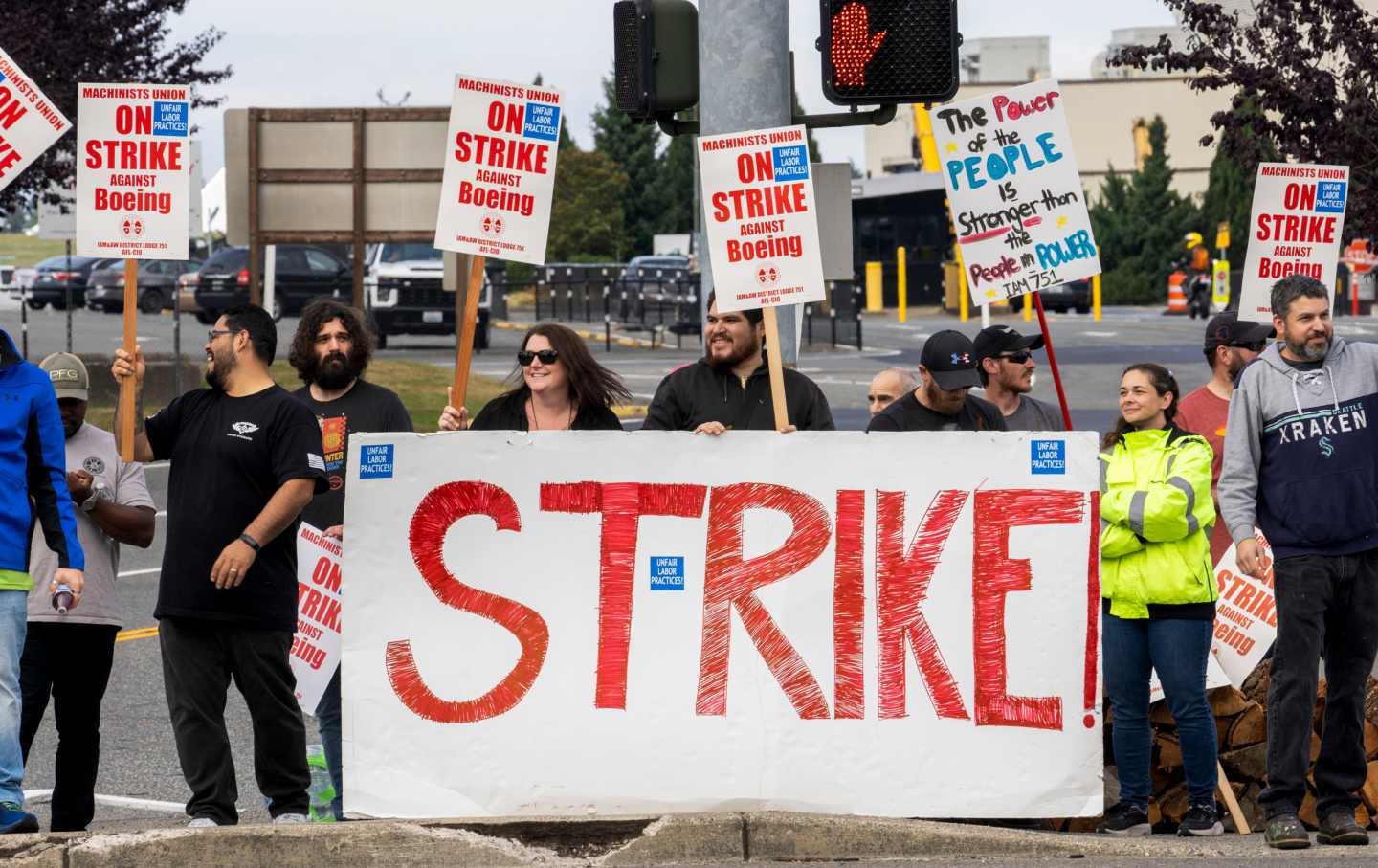
The big labor battles of the past year—from the Teamsters’ UPS contract fight to the autoworkers Stand Up strike, to the actors’ and screenwriters’ four-month walkout—herald a renewed determination by workers to claw back the billions of dollars stolen from them by corporate America in the last generation.
Next up: the 32,000 members of the International Association of Machinists and Aerospace Workers (IAM), who struck the aerospace giant Boeing on September 13 after rejecting—by 96 percent—an offer that failed to make up for a decade of stagnant wages and also failed to restore the members’ pensions, taken from them in bare-knuckle bargaining by the company a decade ago.
This fight has been building for a long time.
In late 2013, Boeing executives demanded that Washington State hand over $8.7 billion in tax benefits and workers accept major concessions, or the company would move thousands of production jobs out of state. Notwithstanding Boeing’s record profits, the Democratic state legislature caved, rushing into special session and passing an emergency law that handed Boeing the largest tax break in US history. Democratic Governor Jay Inslee hailed the measure as “a great step forward for the state of Washington.” Simultaneously, behind closed doors, national union leaders negotiated a 10-year deal with Boeing that froze the pension for incumbent workers, completely eliminated it for all future hires, and slashed pay. The union leaders forced a contract ratification vote during the company’s annual end-of-year shutdown, when many workers were out of town. The vote passed, but barely.
The workers’ rightful bitterness has had 10 years to marinate, during which time corporate executives and shareholders have reaped billions—while shamefully breaking their promise by cutting over 12,000 jobs in Washington State.
To hear it from workers on the picket line, this strike is not just about paychecks; it’s also about payback.
The company’s contract offer was “a slap in the face,” longtime Boeing worker Mari Baker told the BBC. “They just took everything away. They took away our pensions, they took away our bonuses that people rely on.”
The rejected offer kept wages shockingly low. New machinists working on $400 million airplanes would start out at $20–22 an hour—well below what it takes to afford a one-bedroom apartment in the Seattle area (and even less than what my teenage daughter makes at our local bakery, 15 minutes from the 737 assembly plant).
“Everybody’s going to fight,” striking machinist Jeff Dodge told me on the picket line outside the 737 plant. “I’m just real happy there’s a lot of people here who are willing to fight, because I’ve wanted to fight for a long time.”
The pension that the machinists lost was not particularly lucrative—around $2,000 a month for higher-seniority workers—but it provided retirees with a modicum of financial security on top of Social Security. It was a defined benefit plan—Boeing put money into the pension fund, and workers got a monthly pension check once they retired.
The business press is wont to label defined benefit plans “generous” or “rich,” but that’s just anti-worker rhetoric; pensions are simply a deferred pay bargain: Workers forego a portion of their earned wages now so they can get a reliable, consistent check during retirement.
Corporate executives despise defined benefit plans—at least for those outside the C-suite—because these pensions require the company to administer the fund and bear some risk. If fund investments fare poorly, the company has to pony up more money to cover future payouts. Over the last generation companies have replaced defined benefit pensions with defined contribution plans, like 401(k) plans, where the workers bear 100 percent of the savings and investment risk. In 1980, nearly 40 percent of US workers were covered by defined benefit plans; today, that figure is a paltry 8 percent. The switch allows companies to take future pension obligations off their balance sheets, boosting corporate cash and profits.
That’s why major employers have come so hard after workers’ pensions. They want workers to shoulder all the risk of saving for their twilight years.
Last year’s UAW Stand Up strike was powerful, yet it failed to budge the Big Three automakers on a central worker demand—restore the pension that the bosses seized in 2007 concessionary bargaining.
Winning the pension back at Boeing will be even harder.
The UAW members had a leadership geared up to fight for them and an $850 million strike fund to back them up. Union members were eligible for $500 a week in strike pay, beginning on the first strike day. That went a long way toward replacing lost income, while showing the bosses that workers were prepared to strike for the long haul.
In contrast, the machinists’ union leadership has not led this fight; they recommended a “yes” vote on the rejected contract offer. And under machinist union rules, Boeing workers get no strike pay until the third week of the walkout—and only $250 a week after that. That is hardly a sustainable paycheck, especially with a regional cost of living 37 percent above the national average.
Popular
“swipe left below to view more authors”Swipe →Meanwhile, Boeing executives are sitting on $12.6 billion in cash, enough to wait out the strikers for a very, very long time.
This is a fight that calls for the full engagement of the entire labor movement. If they really believe in the old labor movement slogan “An injury to one is an injury to all,” the AFL-CIO and national union leaders should be fundraising and pledging the $200 million that it will take to help keep the machinists on the picket lines into 2025. Wouldn’t that send a powerful message to Boeing executives?
Such a move should be eminently possible: The collective net assets of US unions nearly tripled in the last 20 years, to more than $29 billion, according to union researcher Chris Bohner. Investing less than 1 percent of that into winning back a pension at Boeing would strike a blow for workers everywhere.
But don’t hold your breath for that to happen. In the first week of the strike, the national AFL-CIO barely managed a handful of tweets and a short solidarity video. In contrast, when Boeing workers struck in 1995, national AFL-CIO leaders flew out to Seattle and mobilized the entire labor movement to support the strikers.
Yet, even were that to happen today, winning back the pension at Boeing would still be an uphill battle. The capitalist class resolved years ago to take back workers’ pensions. Having individual unions fight in turn to reclaim pensions—first the Teamsters, then the UAW, now the machinists—is like kids taking turns fighting the oversize schoolyard bully. That simply won’t work. To win back our pensions, labor must unite and strike capital as one.
If the Boeing machinists can’t get the company to concede on pensions in this bargaining round, at the least they should insist on a May 1, 2028, contract expiration date. That is when the Big Three auto contracts expire. Last year, UAW President Sean Fain challenged all unions to line up their contract dates. “If we’re truly going to take on the billionaire class and rebuild the economy so that it starts to work for the many and not the few, then it’s important that we not only strike, but that we strike together,” he said.
Imagine a 2028 strike initiated on May Day, not just at a single employer but across industries—aerospace, auto, food service, education, healthcare, logistics, and more. A national labor movement–wide strike has the potential to demand restoration of pensions, healthcare, and living wages for all workers.
Today, the Boeing machinists are fighting for what they richly deserve. The rest of the US labor movement can—and should—do much more than the feeble effort in evidence in the walkout’s first 10 days. They should make today’s strike as powerful as possible, while laying the groundwork for a 2028 general strike, mobilizing workers everywhere who, after decades of corporate thievery, are itching to fight back.
More from The Nation
My Years-Long Fight to Say “They” My Years-Long Fight to Say “They”
Over and over again, I would use the pronoun in my writing. Over and over again, editors would try to remove it.

The Anti-Intellectualism of the Silicon Valley Elite The Anti-Intellectualism of the Silicon Valley Elite
How the self-styled know-it-alls atop the knowledge economy want to dismantle the pursuit of knowledge for its own sake
The Supreme Court Just Condemned Countless Kids to Psychiatric Abuse The Supreme Court Just Condemned Countless Kids to Psychiatric Abuse
The court’s 8–1 ruling overturning Colorado’s ban on conversion therapy is a disaster for LGBTQ+ kids—and also for the healthcare profession.

The Norwegian Billionaire Who Broke the Iditarod The Norwegian Billionaire Who Broke the Iditarod
Alaska’s last great race has struggled to keep up its finances and increase participation. Now, a $300,000 gift from an “expedition musher” promises to transform the event.
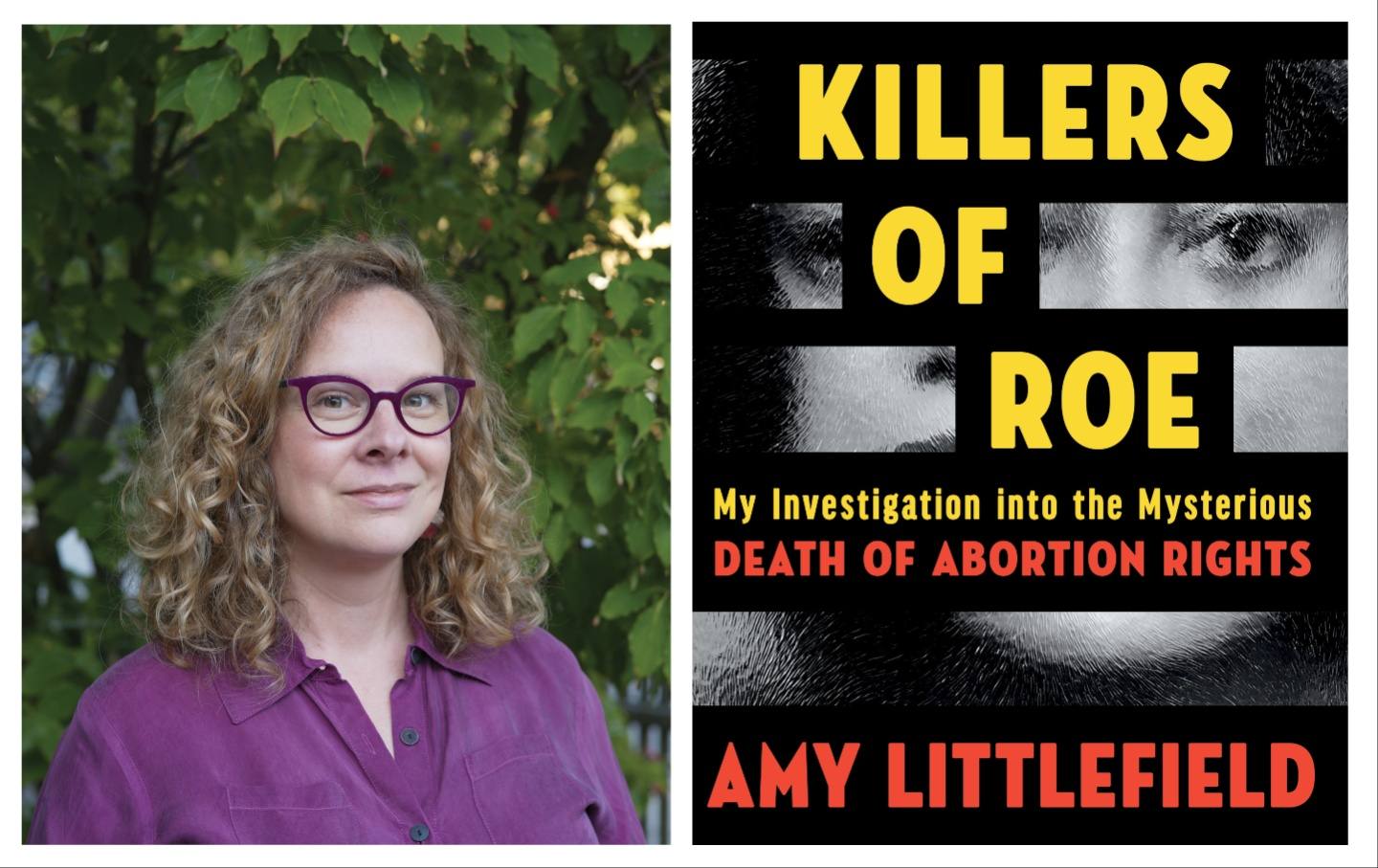
The Whodunit Investigating the Death of “Roe”: Q&A With Amy Littlefield The Whodunit Investigating the Death of “Roe”: Q&A With Amy Littlefield
Our abortion access reporter’s new book reports on the grassroots social movement that amassed enough power to overturn legal abortion, despite being a minority point of view.
The Lower Ninth Ward in New Orleans Can’t Get a Break The Lower Ninth Ward in New Orleans Can’t Get a Break
The neighborhood is facing an onslaught of catastrophic projects that could be more damaging than Hurricane Katrina.

