Trump’s Firing Frenzy Is Hitting the GOP Where It Hurts
As layoffs skyrocket, Trump’s own voters are feeling the pain. Will the backlash begin?
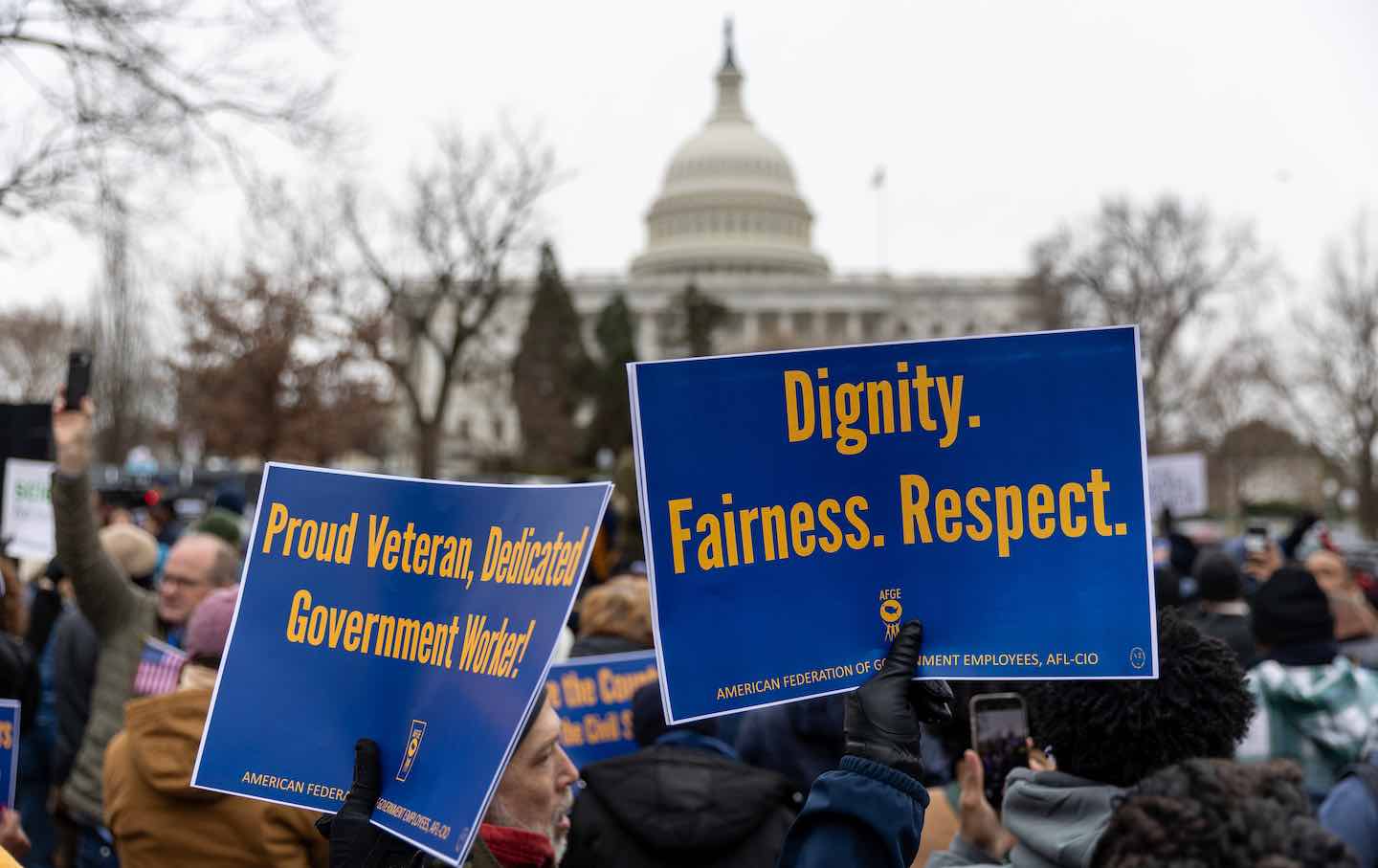
Members of the American Federation of Government Employees protest against firings during a rally to defend federal workers in Washington, DC, on February 11, 2025.
(Nathan Posner / Anadolu via Getty Images)
Thursday morning opened with the news that Donald Trump says he is cutting the department charged with rebuilding homes and infrastructure after major disasters—think Hurricane Helene and the California wildfires—by 84 percent. An already understaffed agency of 936 employees would be cut to 150.
It’s not the Federal Emergency Management Agency, which has already lost 200 staffers, but an office in the Department of Housing and Urban Development that assists FEMA. One of many ironies: The office also helps prevent false claims and abuse of funds. Something you’d think Elon Musk’s DOGE boys would like.
But it’s clear that they’re not about cutting waste but cutting programs in order to fund tax cuts for billionaires and subsidies to Musk’s companies.
In the one month since Trump’s inauguration, at least 200,000 federal “probationary” employees have been threatened with layoffs, but they haven’t all happened yet. Roughly 75,000 employees took a DOGE buyout, though some have found that the compensation contracts they signed are not being honored.
Vox has the best list of specific agency cuts to date. They include:
• Roughly 400 Federal Aviation Administration (FAA) workers
focused on research, science, and administrative support;• About 3,600 Health and Human Services workers, including
at least: 750 Centers for Disease Control and Prevention (CDC)
employees, at least 1,000 National Institutes of Health workers,
and 750 people at the Food and Drug Administration (FDA);• At least 400 Homeland Security employees, including 200
Federal Emergency Management Agency (FEMA)
employees;• About 2,300 at the Department of the Interior, including 800
at the Bureau of Land Management and 1,000 at the National
Parks Service;• More than 3,000 Forest Service employees at the Department
of Agriculture;• More than 1,000 Veterans Affairs professionals;
• At least 300 Environmental Protection Agency workers;
• More than 1,500 NASA employees (10 percent of the agency’s
workforce)
Of course, some mistakes were made during these mass firings. The Department of Agriculture laid off people working on bird flu who had to be hired back, and DOGE dismissed 300 people at the National Nuclear Security agency but had to hire back most of those people because… nuclear security is kind of important. For now.
This will ultimately hurt hundreds of thousands of people—and many of them are Trump voters. It turns out that military veterans are disproportionately represented among the DOGE cuts, because they disproportionately work in federal jobs. Two-thirds of veterans voted for Trump in 2024.
I will forgo jokes about the “Leopards Eating People’s Faces Party.” We want to help these people and welcome them into a coalition, not mock them.
Luke Graziani, a disabled 20-year Army veteran, found out Friday he had lost his job with the Bronx Veterans Affairs hospital, despite excellent performance reviews.
Other veterans are choosing to remain anonymous, including one in Northern Virginia who admitted to radio station WTOP that he and his wife voted for Trump. “I voted for Donald Trump. But this is not what I was expecting,” he said. “We didn’t think they were going to take a chain saw to a silk rug.”
Hudson Valley New York Democrat Representative Pat Ryan has the right idea. On Tuesday, he appeared with veterans in his district to protect the closure of a 20-bed Veterans Affairs affinity for veterans suffering from addiction.
But congressional Democrats have been slow to directly address the impacts of these cuts, to champion victims and make their stories visible. At one point, I heard it was partly because many people wanted to stay anonymous. But increasingly, named individuals are speaking out to the media.
On Wednesday, Politico had the story of Anthony Gardner, whose brother died on 9/11. Since then, he’s devoted his career to curating the memory of those who lost their lives, including first responders. Last week, he was among the 20 percent of employees laid off after a cut to the CDC’s World Trade Center Health Program.
He got written notice that he was being laid off because “your ability, knowledge and skills do not fit the Agency’s current needs, and your performance has not been adequate to justify further employment at the Agency”—though he had a history of glowing performance reviews.
In a joint statement, New York Senators Chuck Schumer and Kirsten Gillibrand wrote: “The Trump administration must come clean with whatever dirty deal they have planned for a health fund that should be about taking care of our 9/11 heroes—nothing more, nothing less.”
Popular
“swipe left below to view more authors”Swipe →But why aren’t they in front of cameras with sympathetic victims like Gardner, making these stories more vivid?
Red states too are feeling the pinch. In Idaho, home to seven national forests, fired employees protested draconian forest service cuts on Monday, alongside nationwide “Not My President’s Day” protests. Idaho’s GOP elected officials had no comment.
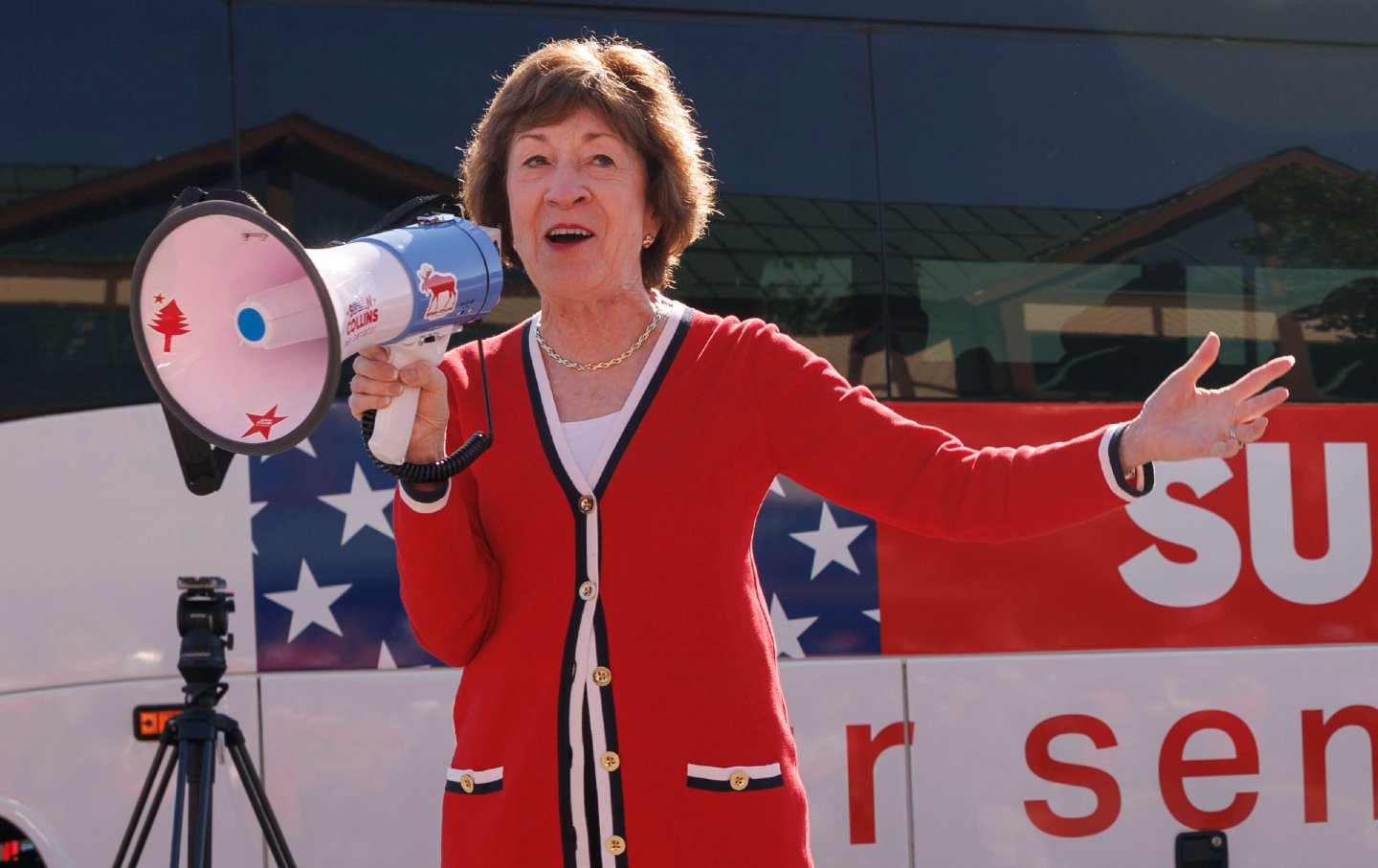
Generally, the GOP has been docile about these cuts—though they plead for special treatment for their constituents. Alabama Senator Katie Britt protested research cuts that would hit the state’s universities. Maine’s Susan Collins has expressed “concern” about cuts to forest and park services, as well as to research institutes. West Virginia Senator Shelley Moore Capito has likewise protested cuts—her disproportionately low-income state is among the most dependent on federal spending. But they haven’t banded together to oppose the clearly unconstitutional federal spending cuts, even as Congress famously has the “power of the purse.”
You’d think North Carolina Senator Thom Tillis would make some noise about an 84 percent cut to the agency helping to rebuild his state after Hurricane Helene. But Tillis was last quoted telling allies he wasn’t opposing Trump because of “credible death threats” against him for criticism of Trump’s cabinet picks.
I expect more from congressional Democrats, but they’ve been slow on the uptake. House Democratic leader Hakeem Jeffries is urging his members to bring some of these layoff victims as guests when Trump addresses Congress on March 4, but that strikes me as risky, and kind of late. Such addresses are normally big news nights for the president, mainly, and it’s hard to know how much attention minority-party “guests” will get in the coverage.
As more federal workers stage their own protests—from Washington, DC, to Portland, Oregon, to Philadelphia and, yes, Idaho—and also talk to the media using their names, it feels like there’s more opportunity for Democrats to channel a genuine grassroots backlash. DOGE is following the tech adage to “move fast and break things.” But by so rapidly creating real-life victims of its cruelty, it’s giving Democrats an opportunity they should take.
Become a Sustaining Donor This September
Between the reemergence of right-wing red-baiting and Donald Trump’s use of the chilling National Security Presidential Memorandum–7 to criminalize left political organizing, we’re seeing McCarthyism reborn before our eyes.
This assault on democracy cannot be ignored or wished away. Resisting it requires bravery in the face of threats and repression, a steadfast commitment to the truth, and the unwavering belief that we can—and will—overcome this darkness.
We must have an independent media that sets the record straight, unearths corruption and abuses of power, and advances a politics of justice and dignity for all if we’re to win this fight.
That’s why I’m writing to you today. This September, The Nation needs to add 100 monthly donors to sustain our progressive journalism. Your contribution makes the next investigative report, the next truth-speaking column, and the next pathbreaking essay all possible.
I hope you’ll support our work with a recurring donation today. If you donate $10 or more a month, we’ll send you a brand new “Hands Off the Free Press!” sticker to recognise your commitment to our cause. Please, donate today.
Onward,
Katrina vanden Heuvel
Editor and Publisher, The Nation