Trump’s “Big Beautiful Bill” Would Be a Disaster for Student Loan Borrowers
The proposed budget cuts would hurt millions of Americans, as the typical borrower with a college degree will see their student loan payments spike more than $2,928 per year.
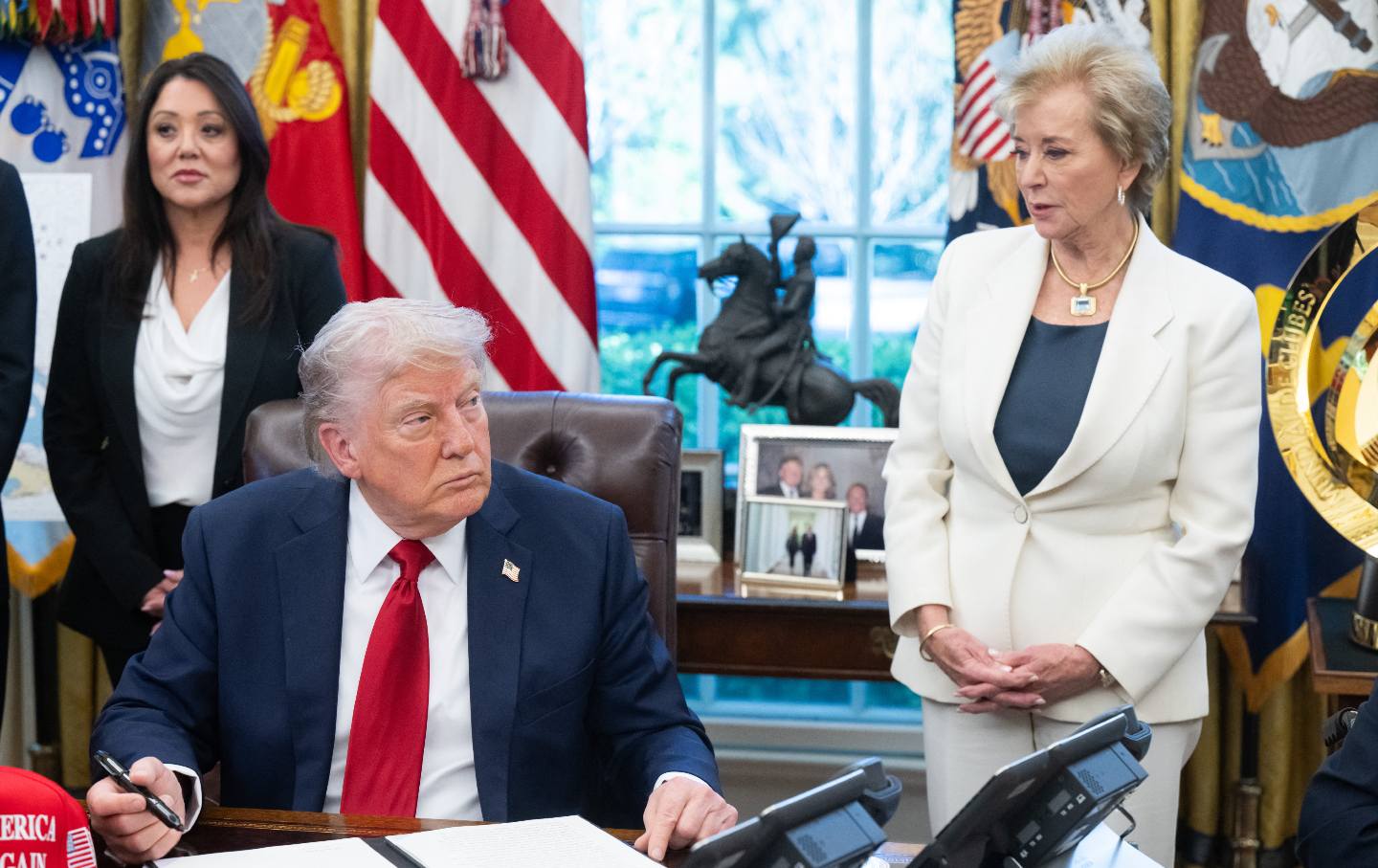
Donald Trump signs executive orders relating to higher education institutions, alongside US Secretary of Education Linda McMahon.
(Saul Loeb / Getty)
While Americans tighten their belts to cope with the economic ramifications of the current administration’s policies, Congress is about to make things worse through a process called “reconciliation.” “So here we are at a time in which the cost of college is already too high for millions of students,” said Senator Elizabeth Warren. “Donald Trump and his Republican buddies in Congress are not lowering them. They are adding $400 a month on average to the family’s costs.”
Reconciliation is a budgetary process that allocates the money in the current budget bill, letting Congress decide which programs it will fund and which programs will be cut. During the current reconciliation cycle, Republican leadership presented their “Big, Beautiful Bill” which includes severe rollbacks to crucial programs such as Medicaid, public broadcasting, SNAP Benefits, cancer research, student loan programs, and education.
What does that mean for Americans with student debt? Through budget cuts, Congress plans to gut $350 billion from the Department of Education, thereby eliminating plans like Income Contingent Repayment and Pay As You Earn, which allow hardworking families to secure more affordable student loan payment plans, while restricting eligibility requirements for programs like Public Student Loan Forgiveness. These repayment programs allow student loan borrowers to stay current on their accounts and avoid falling into default.
These cuts would hurt millions of Americans, as the typical borrower with a college degree sees their student loan payments spike more than $2,928 per year. This includes teachers, nurses, veterans, first responders, our neighbors, family members, and so many others. For many Americans, this is an increase that they cannot afford. “If my payments were taken off of income-based repayments, it could mean the difference between being able to afford a reliable vehicle, pay my mortgage, utilities and put food on the table for my children. I don’t qualify for SNAP and both my spouse and I have college degrees,” one borrower told us.
To replace the eliminated repayment plans, Congress has proposed a “Repayment Assistance Plan” that traps borrowers for the entirety of their repayment period. Borrowers enrolled in RAP won’t be able to change out of the plan, and it removes the ability to have a zero-dollar monthly payment, including for those who are unemployed, not making any income, or making below a certain amount. “When I fell into hard times, like job loss or illness, and didn’t have income, I barely made ends meet,” said Lizzie, a borrower from Illinois. “I was fortunate that there were income-driven repayment programs, but the accrued interest has just compounded my financial woes.”
RAP is overall more expensive than any of the currently existing repayment plans, and will only cause further financial strain on Americans. Not only will RAP impact millions of current borrowers in repayment; it will also negatively impact new college graduates who are about to enter repayment in a very uncertain job market.
The proposed budget cuts do not end there. For students still in college, the federal government would slash Pell Grant awards. These federal financial aid grants are designed to help the most vulnerable income-burdened students, yet they are the ones that would be most harmed through this reconciliation process. Graduate students are not safe either. Severe cuts to federally funded research are already impacting academia across the country. The federal government is also considering capping borrowing amounts to $200,000 of federal student loans per borrower for both undergraduate and graduate education combined, depriving countless students of a higher education.
What will happen if the bill passes? To put it bluntly, private lending will boom, millions of Americans with student debt will fall into default, more individuals and families will face economic hardship, colleges and universities will become underfunded, and students who dream of a college degree will lose accessibility to higher education. “If student loan payments increase, I worry about being able to afford all of our bills, including our mortgage,” said Aleena, a borrower from Michigan. “We are working so hard to stay ahead of debt, but life throws curveballs and it feels like we constantly live paycheck to paycheck.”
However, there is still hope. The reconciliation bill has not been passed, and there is still time to ensure that it does not move through the process to become law. Our representatives were voted in by the American people and are meant to serve the communities they represent. It is time to ensure that they vote on bills and legislation that benefit and protect their hardworking constituents.