
Tony Evers Did What Too Many Senior Democrats Have Not
Wisconsin’s governor was well positioned to win a third term. Instead, he cleared the way for a new generation of Democrats to run. Others should take note.
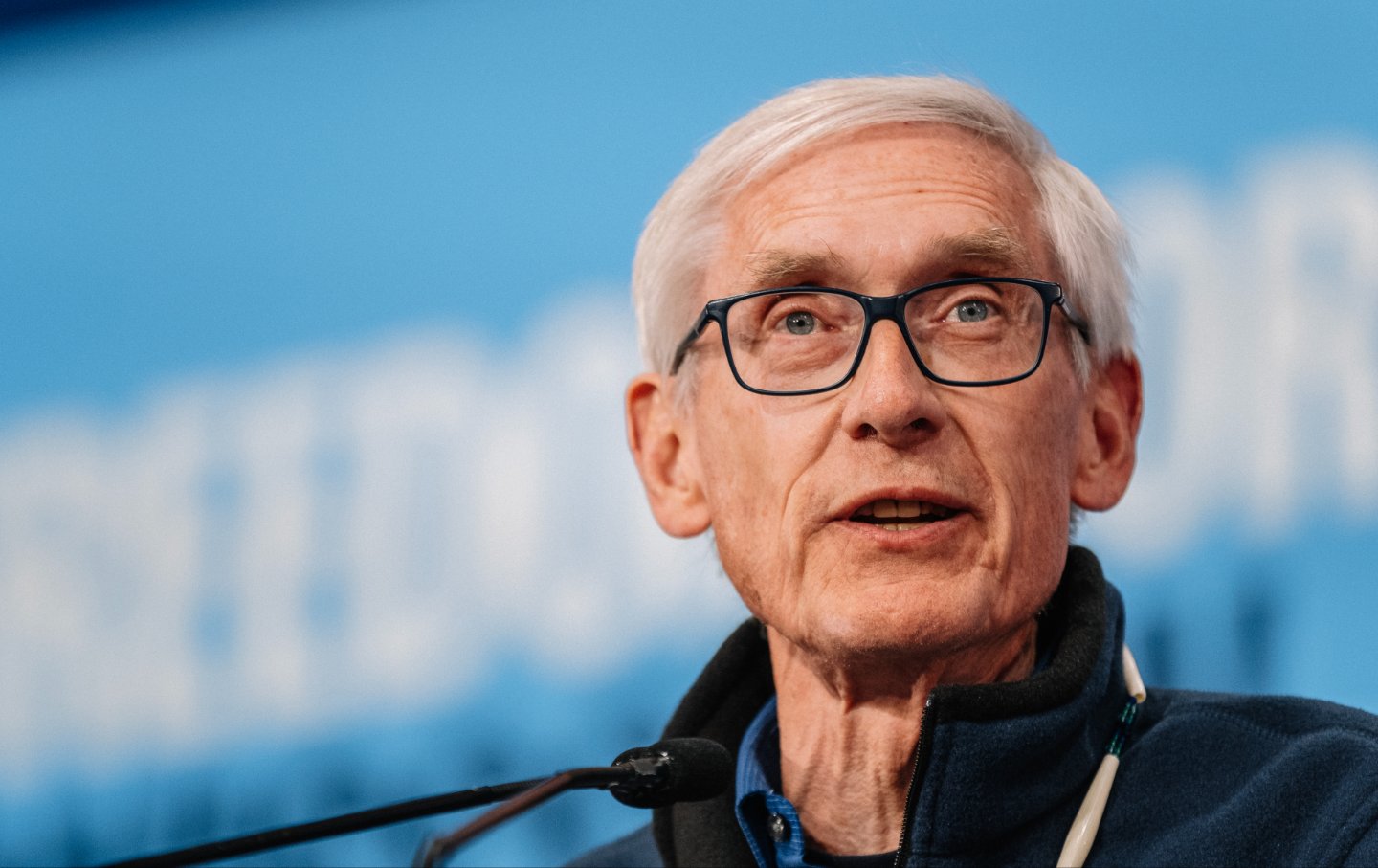
Tony Evers in 2024.
(Jim Vondruska / Getty Images)Wisconsin Governor Tony Evers gave Democrats, both in his home state and nationally, one of the greatest political boosts of the 21st century before he even took office. By upsetting then–Wisconsin Governor Scott Walker’s bid for a third term in 2018, Evers not only ousted the notorious administration of a billionaire-funded Republican. He also struck a crucial blow against an antidemocratic, power-grabbing approach to governance that had ripped apart the state in ways that both anticipated and intersected with Donald Trump’s presidencies.
Evers, a mild-mannered former science teacher and school administrator, was the antithesis to the arrogant, constantly calculating Walker. And to the self-aggrandizing politics of the Trump era. Recalling his first job working at a cheese factory, Evers explained, “I was a scrawny kid with glasses who grew up scraping mold off of cheese. I never dreamed that I’d end up governor of Wisconsin. But here I am.” Even Wisconsinites who disagreed with Evers appreciated the way he harked back to a more genteel era as a candidate and as a governor.
Unlike Walker, whose appeal wore thin after he sought and lost a 2016 presidential bid, Evers was well positioned to win a third term. One of the most steadily successful vote-getters in Wisconsin history, he’d already won five statewide contests—three for superintendent of public instruction and two for governor—and he was poised to secure another victory in 2026. Democrats were united behind him, and prominent Republicans were avoiding next year’s race. Yes, Evers was 73, but his energy and fundraising skills remained strong. Additionally, Wisconsin has a long history of electing Democratic governors when Republicans are in the White House, a factor that would have weighed in Evers’s favor even if Donald Trump and his congressional allies were not currently embroiled in scandal and tanking in the polls.
Most politicians would have taken these factors into consideration and decided to make one more run for reelection. But Evers announced Thursday, in his typically understated fashion, that he was bowing out. “I’ve spent 50 years in public service, and I’m damn proud I’ve devoted my career and most of my life to working for you, Wisconsin,” he said. “But the truth is that the only thing I love more than being your governor is being a husband, a dad, and a grandpa—and it’s time for me to focus on the things I enjoy and love doing with my family. So today, I’m announcing that I will not be running for a third term.”
Though Wisconsin Democrats would have preferred that Evers make another bid, his decision to stand down was another boost—or, at the least, an important signal—for his party.
The field of contenders to replace Evers began filling up immediately Thursday, as a crop of prominent Democratic contenders, most in their 30s and 40s, expressed interest in the race. That’s worth noting. Democrats are wrestling with the question of whether too many of their party leaders are too old—and about whether that reality could cost them politically, as it did when former President Joe Biden had to quit his reelection bid in 2024.
While the debate rages elsewhere, one of the nation’s longest-serving and most respected Democratic governors decided, as an incumbent with a clear path to reelection, that he was ready to hand off the baton.
“Retiring when his term ends to spend time with his family—and create space for the next generation of leaders in Wisconsin!—is worth celebrating,” announced Amanda Litman, the president and cofounder of the group Run for Something, and an outspoken advocate for generational change in the party. “Congrats on an incredible tenure, Gov. Evers! More politicians should take their cues from you.”
Evers is standing down at a time when his state party is strong, and its bench of prospective candidates for governor is crowded. That’s because, as former Democratic Party of Wisconsin chair Ben Wikler notes, Evers was a party builder. The governor attracted and supported young candidates for legislative seats and statewide posts—enthusiastically mounting his first gubernatorial bid on a ticket with 31-year-old lieutenant governor candidate Mandela Barnes. Evers was also a movement maker, who recognized that Democrats and progressives needed to recreate and extend coalitions that had been undermined during Walker’s eight-year assault on the state’s democratic infrastructure.
This may be something of a distant memory now, but Walker was a dominant figure in state and national politics when Evers took him on. Briefly the front-runner for the 2016 Republican presidential nomination, only to be upended by the more ruthless and media-savvy Trump, Walker presumed that he still had a lock on Wisconsin. The Republican governor and his right-wing legislative allies had changed election rules in order to secure their political fortunes, gerrymandered legislative districts to lock in GOP majorities in the statehouse, and manipulated the workings of government to make themselves—supposedly—unbeatable.
Evers proved the Republicans wrong. And he did so with the most unexpected of political tools: decency.
Like Jimmy Carter before him, Evers leaned into his rural background, unassuming style, and genuine sense of right and wrong. He was the opposite of a calculating politician. As such, pundits were surprised when, after serving three terms as an able if decidedly low-profile superintendent of public instruction, the former elementary school principal decided to challenge the most craven political opportunist Wisconsin had ever seen.
Political operatives underestimated Evers in 2018, but he never underestimated Wisconsin. Evers bet on the better angels of the state’s electorate—and their longing for a return to a more humane politics. It was a smart bet; the Democrat defeated Walker by just under 30,000 votes. Yet Republicans retained their gerrymandered control of the legislature, and did everything they could to disempower the “Plymouth progressive”—as Evers described himself, referencing his eastern Wisconsin hometown and the political tradition of former governor and US senator Robert M. La Follette, former governor and US senator Gaylord Nelson, former US senator Russ Feingold, former US representative Robert Kastenmeier, former secretary of state Vel Phillips, and so many other progressives who had made Wisconsin a North Star state in the struggle for economic, social, and racial justice.
As governor, Evers outwitted the Republicans again and again—by using his bully pulpit to scold rivals for their excessive partisanship, by making racial justice central to his mission (an outspoken supporter of the Black Lives Matter movement, he declared after a Minneapolis police officer murdered George Floyd, “His name was George Floyd. He was 46. His life matters and his family deserves justice”), and by building a distinctive urban-rural coalition. He made a point—as too few Democrats do—to visit every county and just about every rural school in Wisconsin. How many governors go out of their way to thank farmers for showing him their barns? Evers did. And when he won reelection in 2022, he carried a number of rural counties while boosting his margin of victory to four times what he had won by in 2018.
During his tenure, Evers has skillfully wielded the most powerful veto pen in the United States—going so far, with creative maneuvering in 2023, as establishing an avenue for local school districts to annually increase education funding for the next 400 years.
Popular
“swipe left below to view more authors”Swipe →Evers appointed record numbers of women and people of color to administrative and judicial positions. And when some Democrats blinked in the face of Republican attempts to divide voters with demagoguery, Evers was resolute—as was the case when he personally testified against anti-trans legislation and hoisted a Pride flag above the state Capitol. “Every day, but especially today and this month, we reaffirm our commitment to striving to be a place where every LGBTQ kid, person, and family can be bold in their truth and be safe, treated with dignity and respect, and welcomed without fear of persecution, judgment, or discrimination,” declared Evers this spring. “I promised long ago that, as governor, I would always fight to protect LGBTQ Wisconsinites with every tool and every power that I have. I will never stop keeping that promise.”
Evers was old-school in many senses. Yet he relished taking on Republican hypocrisy and authoritarianism with the zeal of youth. “So, would I win if I ran a sixth time [for statewide office]?” Evers asked rhetorically on Thursday. “Of course!” he replied.
But he won’t be running next year. He will be campaigning for a next-gen successor.
More from The Nation
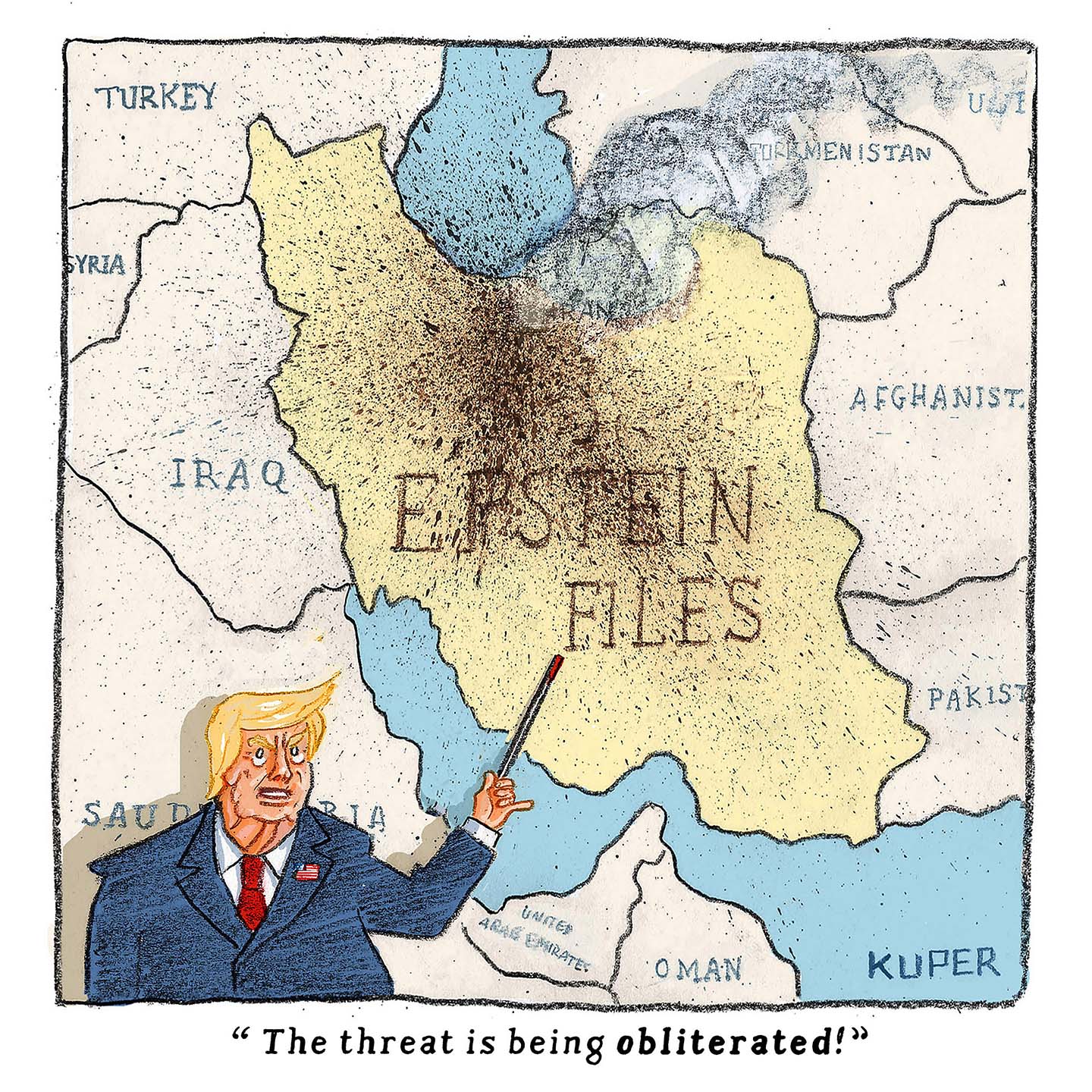
Trump’s Reason for War in Iran? Trump’s Reason for War in Iran?
Obliterating the Epstein files at any cost.
Why Can’t Top Democrats Just Say “No War With Iran”? Why Can’t Top Democrats Just Say “No War With Iran”?
The response to what could be the biggest geopolitical disaster of the 21st century is foot-dragging, silence, and sleepy, feigned opposition long after the deed is done.

This Is an Unnecessary, Unauthorized, and Unconstitutional War This Is an Unnecessary, Unauthorized, and Unconstitutional War
Congress has a duty to take up War Powers resolutions and assert its primacy over matters of war and peace.
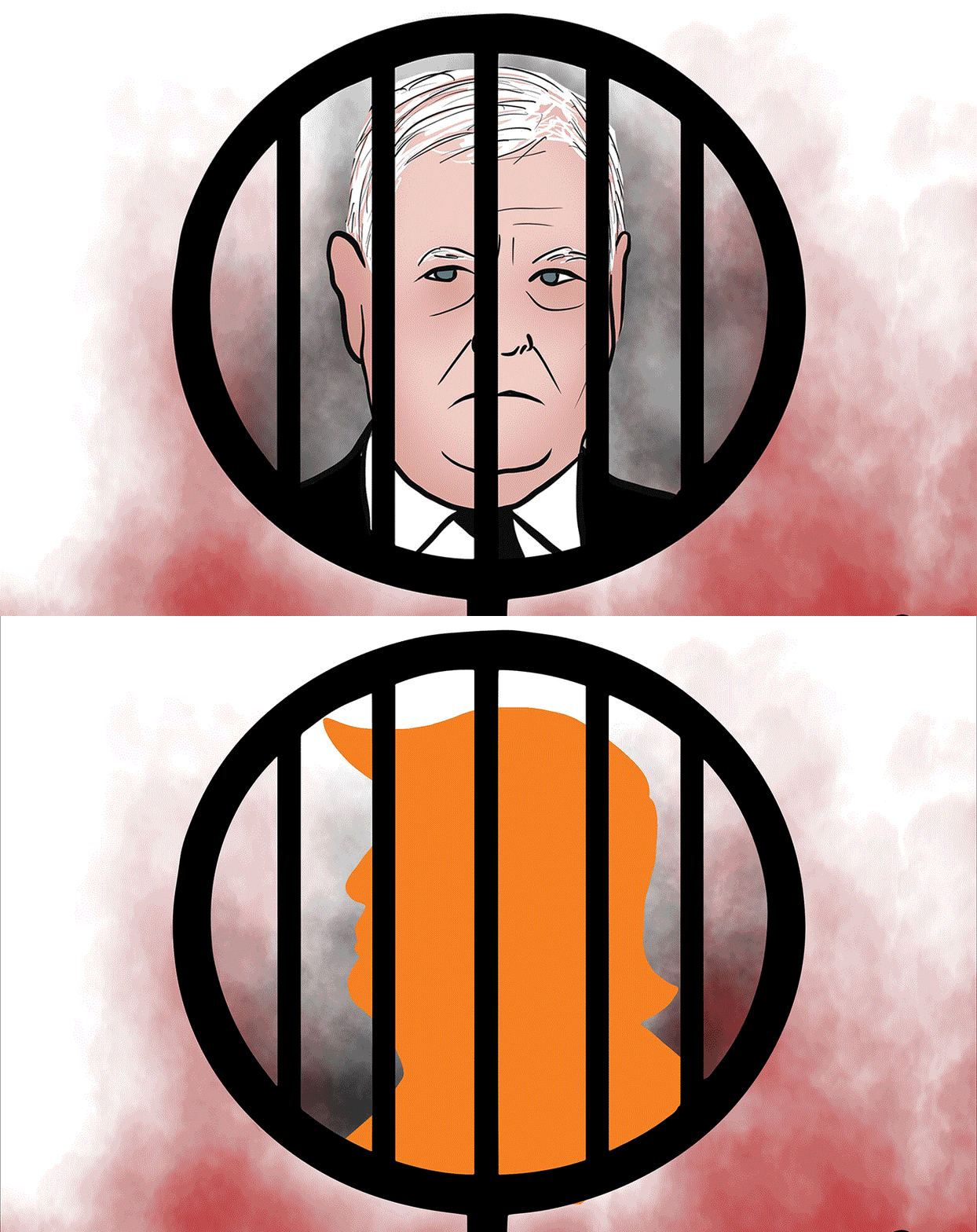
Will There Be Justice for Survivors? Will There Be Justice for Survivors?
The Epstein files have renewed scrutiny of alleged misconduct by powerful figures, including Donald Trump and Prince Andrew, raising ongoing questions about accountability and just...
New York City Hospitals Fold to Trump. Will Zohran Mamdani Defend Trans Care? New York City Hospitals Fold to Trump. Will Zohran Mamdani Defend Trans Care?
As a candidate, Zohran Mamdani made promises to New York City’s trans community. With two hospital systems ending trans youth care, he’s now facing his first test.
This Minnesota Winter Is the New Prague Spring This Minnesota Winter Is the New Prague Spring
I’ve studied Czechoslovakia in 1968. I live in Minneapolis. The similarities between the historic invasion and the current ICE “surge” are scary.

