Stop the Price Gouging
How the subscription squeeze is ending.
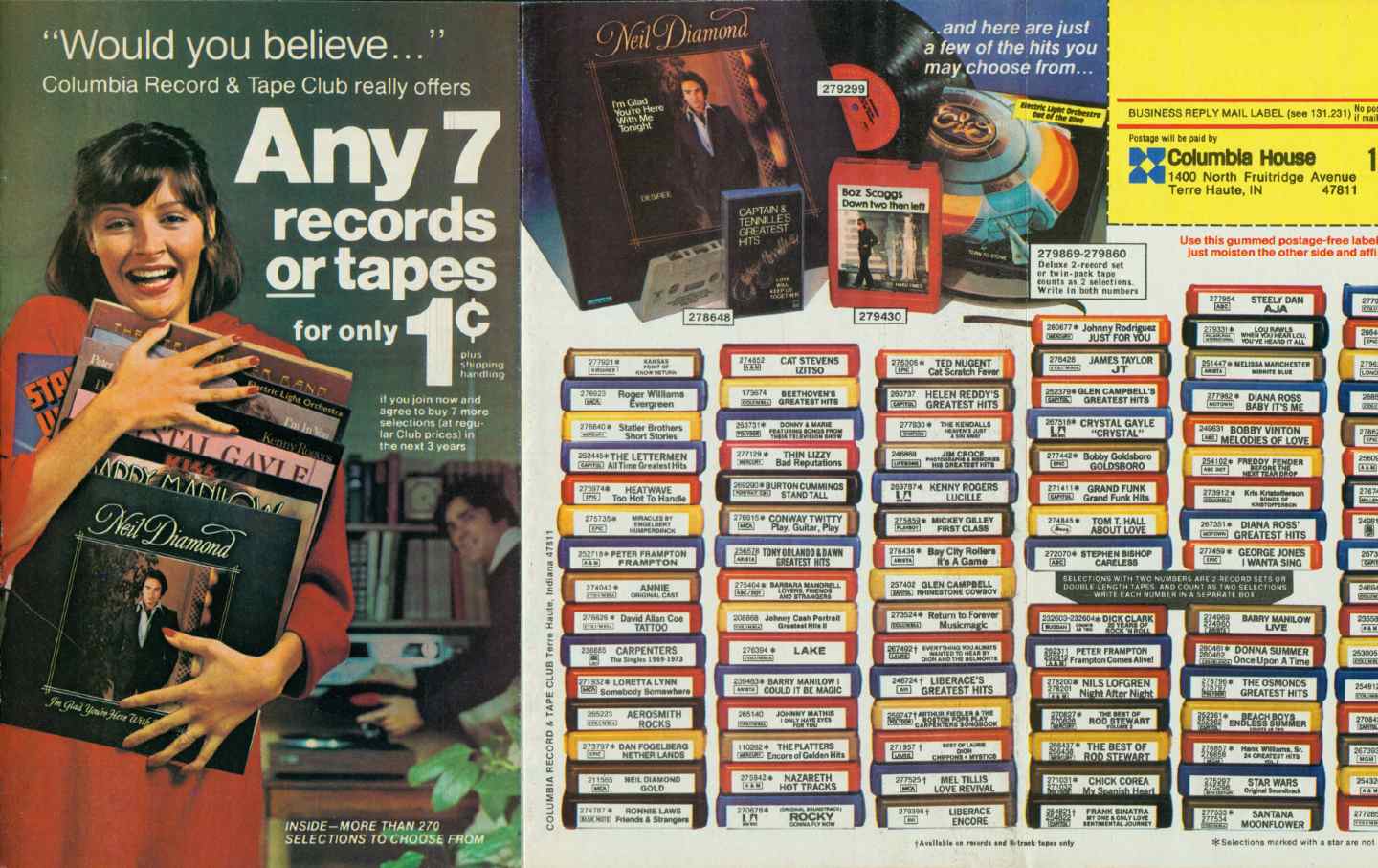
These days, you are lucky if you only get overcharged once. After all, what’s the fun in gouging you only once, when companies can use sneaky design tricks that manipulate your behavior and nudge you into handing over data or signing up for things you don’t need—to trick you into a monthly subscription and gouge you 12 times a year, possibly for the rest of your life, and sometimes even after you are dead? Companies have perfected the art of luring you into a subscription for all manner of everyday items—from razors to audiobooks to protein powder. And a few weeks ago, news broke that one of the original culprits of this approach, Columbia House, would shutter after seven decades of business. Columbia House is the company behind the infamous mail-order music club that lured customers in with teaser offers as low as a penny for 12 albums, only to lock them into expensive subscriptions that were notoriously difficult to escape. I should know: I was one of them.
In my teenage years in Music City, USA, I had an insatiable appetite for music. The only thing getting in the way of fulfilling my musical dreams was the sticker shock I faced at the checkout line at Sam Goody (RIP), a once-omnipresent album store. So when my friends and I discovered the Columbia House Record Club, it seemed like we’d found the ultimate loophole. It was a dream come true—until it became a pricey logistical nightmare.
There was a catch. There’s always a catch. In addition to the penny discs, the Record Club also sent you a few albums of their choosing. And unless you returned those selections within 10 days, you were obligated to keep them and to pick up the tab for them at—you guessed it—full freight. Industry insiders call this practice “negative option billing.” It’s a pricing trick in which a company continues to supply products or services until the customer affirmatively cancels—a precursor to the modern prechecked box. I didn’t always remember to send back the unwanted discs, and briefly ended up buried under a pile of unopened CDs before I managed to sift through the music club’s fine print and cancel my membership for good.
It turns out there are a whole lot of people like me—and companies know it. Schemes like the Columbia Record Club are a major source of revenue and profit. Companies know that you may forget to cancel a subscription for a product or service you no longer want, need, or use—for months or even years. That’s why they’re invested in making it lightning-fast to sign up. Their payment systems are integrated directly with your online bank account, and one-click checkout lets you tap, swipe, or blink your way into a subscription. And if that fails, they’ve got a whole host of design techniques to trick you into subscribing anyway. According to the Better Business Bureau, families lost more than $1 billion over 10 years due to losses from “free trials” alone.
But where they really excel is in making sure that once you’re in, you stay stuck. They bury the “cancel” or “unsubscribe” button behind a convoluted maze of Web pages and confirmation screens.
At one point, The Wall Street Journal’s subscription had become so notoriously hard to cancel—including a reported 25-minute hold time on the phone—that a clever critic made a viral meme suggesting the newspaper would sooner offer you a date with one of its journalists than let you hit “unsubscribe.” For many years, Planet Fitness wouldn’t even let you cancel online. These tactics are just the latest—and now far more ubiquitous—iteration of corporate profiteering.
Making it effortless to sign up and miserable to leave is big business, and the pandemic poured fuel on the fire as millions of shoppers shifted their shopping habits online. The Lina Khan Federal Trade Commission tried to implement a regulation making it as easy to cancel subscriptions as it was to sign up for them, but the proposal was ultimately struck down in the courts. But states and localities are stepping up to fill the gap, and there is some good news if you live in New York City. On October 1, Mayor Zohran Mamdani’s new “Click to Cancel” rule will take effect, giving New Yorkers the tools to beat back these subscription traps. Under the rule, companies must allow consumers to cancel a subscription in the same way they signed up. The process should be simple and accessible, and any tactics meant to stall or block cancellation are off the table. This “Click to Cancel” rule could save New Yorkers more than $1 million and at least 600,000 hours per year.
Columbia House might be closing its doors, but the impulses that fueled its business model are alive and well. Shopping in the digital age is exhausting and expensive. It’s past time to rein in these practices for good.