I’m Very Glad That New York Has Ranked-Choice Voting
I can vote for two candidates—Zohran Mamdani and Brad Lander—who’ve made climate a cornerstone of their campaigns, with real hopes that one or the other will prevail.
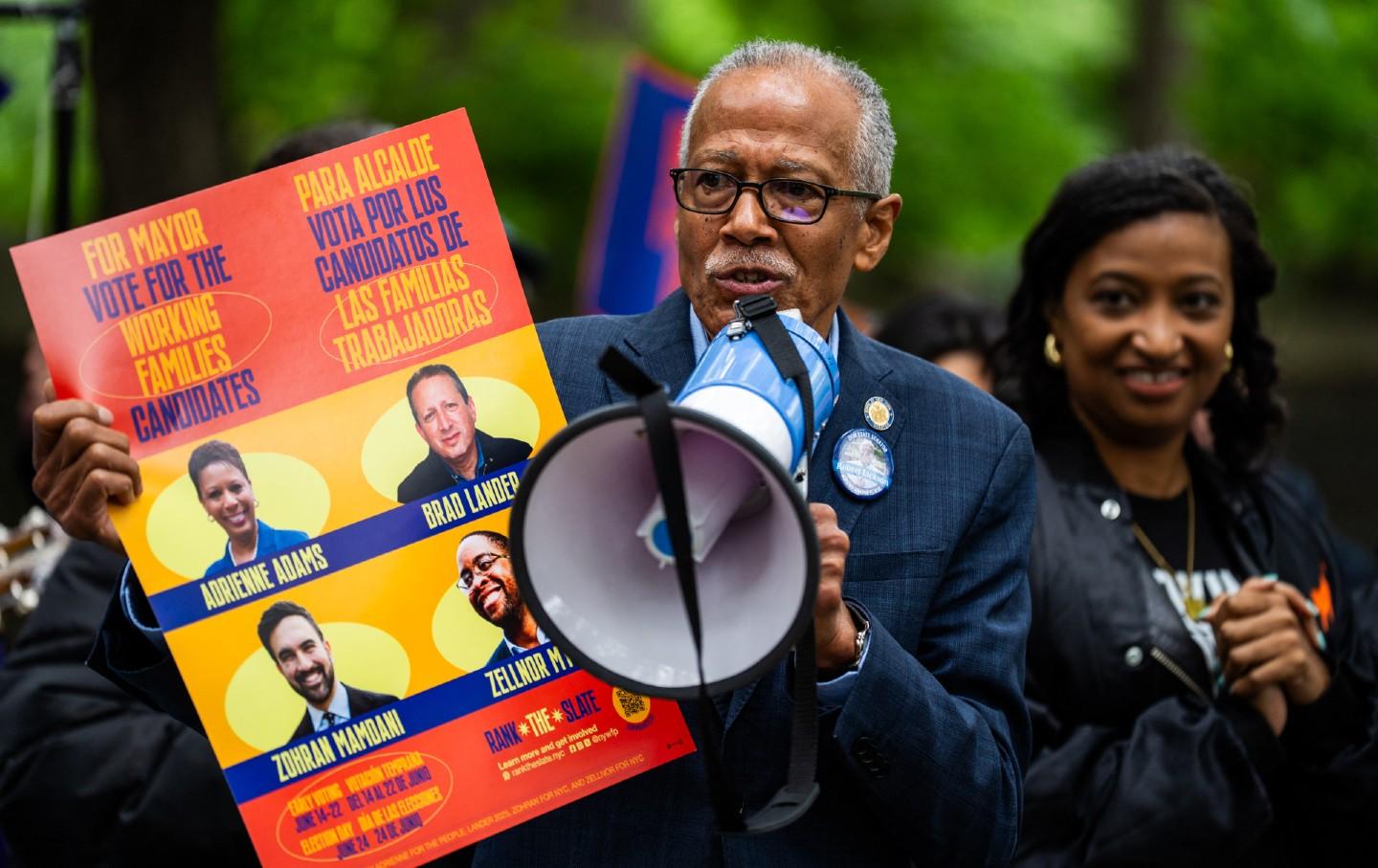
I was lucky enough as a young reporter to find myself covering elections in the only city in America that chose its leaders via ranked-choice voting (RCV). This was… a long time ago, and so it all happened on paper: Cambridge voters listed city councilor candidates, sometimes twenty or more, in order of preference, and then, over the course of a week, teams of older ladies physically distributed the ballots around an elementary school gymnasium. As candidate X with the lowest number of first place votes was disqualified, they would carry his ballots to the piles of the candidate listed second, and so on until only the winner remained.
All of this happens by computer now, in a burp. But it remains a splendid system. Usually people defend it on the correct grounds that you can vote for a third-party candidate without losing your vote—should they be eliminated, your ballot will go to your next-favorite choice. But there’s also the benefit that two good but similar candidates—the Bernie/Warren problem—don’t split the progressive vote.
I’ve long ago left New York City for the northern mountains, but I continue to follow its politics, in large part because they’re so important to the world. The city’s vast public pension fund, for instance, has been used in recent years to help advance the fight against climate change, more skillfully than most such instruments, and I’d like to see that continue. And New York’s sheer vastness and dynamism means it’s a great place to help lead the fight for change: the current effort, for instance, to refurbish large buildings to make them more efficient is showing the rest of the country what can be done.
So I’m very glad that New York has RCV, which means you can vote for two candidates who’ve made climate a cornerstone of their campaigns, with real hopes that one or the other will prevail. Zohran Mamdani, the young progressive who seems to be consolidating left votes, led the fight against a fracked gas power plant in his home turf of Astoria. He didn’t just say the right words—he mobilized an impressive fight to get it done.
Brad Lander, meanwhile, the city’s current comptroller, did something of inordinate value last month, standing up to Blackrock, which is essentially the same thing as standing up to capitalism. The financial giant needed to do some very specific things to start addressing the climate crisis, he said, or they would find themselves without New York’s hundreds of billions of dollars—this is at last the blue state equivalent of what red state treasurers have spent the last few years doing, which is intimidating the world’s financial powers. (Here’s the Financial Times >attesting to the global importance of his courage).
What I’m saying is, if your interest is the planet, both candidates have things to recommend them. Probably I’d vote Lander 1 and Mamdani 2, because I like kicking Big Money in the nuts more than anything else; maybe, when I walked into the booth, I’d switch those two on the grounds that younger is better. Maybe I’d argue myself out of that on the (somewhat sentimental) grounds that it’s hard to imagine New York without at least one representative of the liberal Jewish political heritage that’s done so much for us all, or on the slightly solider reasoning that New York’s vast bureaucracy might be less intimidating to someone who’s spent more time in it.
The point is, New Yorkers have a less excruciating choice than most of us in these situations. They don’t have to pretend they don’t have two excellent candidates (and actually several others). But remember—you don’t have to rank any more candidates than you want to. You also get the pleasure of leaving Eric Adams and Andrew Cuomo off your ballot, a satisfying (and electorally useful) dis that too few American voters are privileged to enjoy.
The slow spread of RCV is one of the life rings we can toss to try to rescue our drowning national politics. For now, enjoy it, you lucky New Yorkers!
Support independent journalism that does not fall in line
Even before February 28, the reasons for Donald Trump’s imploding approval rating were abundantly clear: untrammeled corruption and personal enrichment to the tune of billions of dollars during an affordability crisis, a foreign policy guided only by his own derelict sense of morality, and the deployment of a murderous campaign of occupation, detention, and deportation on American streets.
Now an undeclared, unauthorized, unpopular, and unconstitutional war of aggression against Iran has spread like wildfire through the region and into Europe. A new “forever war”—with an ever-increasing likelihood of American troops on the ground—may very well be upon us.
As we’ve seen over and over, this administration uses lies, misdirection, and attempts to flood the zone to justify its abuses of power at home and abroad. Just as Trump, Marco Rubio, and Pete Hegseth offer erratic and contradictory rationales for the attacks on Iran, the administration is also spreading the lie that the upcoming midterm elections are under threat from noncitizens on voter rolls. When these lies go unchecked, they become the basis for further authoritarian encroachment and war.
In these dark times, independent journalism is uniquely able to uncover the falsehoods that threaten our republic—and civilians around the world—and shine a bright light on the truth.
The Nation’s experienced team of writers, editors, and fact-checkers understands the scale of what we’re up against and the urgency with which we have to act. That’s why we’re publishing critical reporting and analysis of the war on Iran, ICE violence at home, new forms of voter suppression emerging in the courts, and much more.
But this journalism is possible only with your support.
This March, The Nation needs to raise $50,000 to ensure that we have the resources for reporting and analysis that sets the record straight and empowers people of conscience to organize. Will you donate today?