JD Vance, AppHarvest, and the Hazards of “Rural Vibes”
The Ohio senator was supposed to bring “rural credibility” to Donald Trump’s third run for the White House. But his only attempt at farming crashed and burned through $800 million.
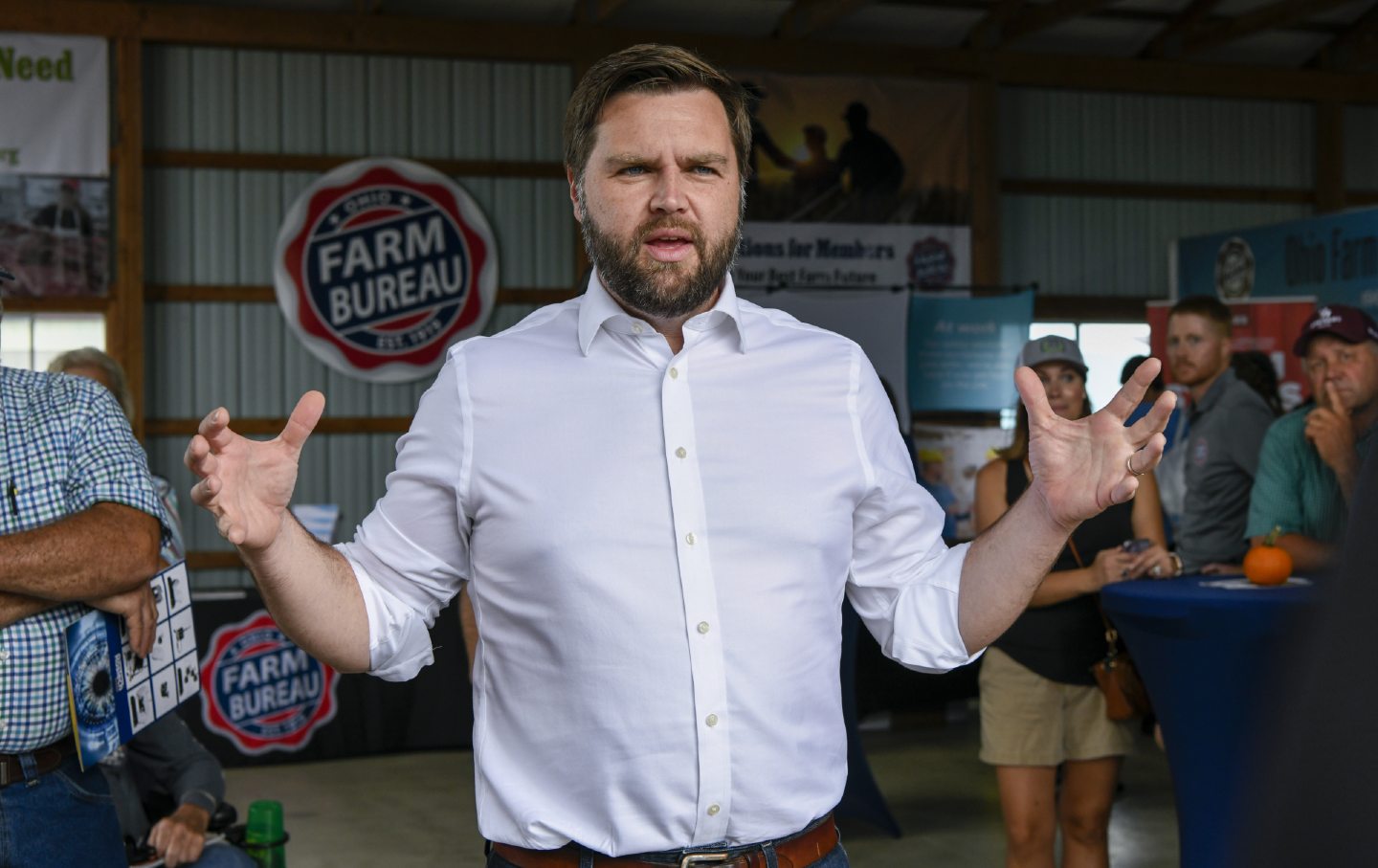
Whatever “rural credibility” is, JD Vance doesn’t have it. His one attempt at farming collapsed brutally—and burned through $800 million.
I’ve worked in agriculture for 27 years. I got started at 14 doing manual labor in the fields. I worked my way up, and I’ve spent the last decade coaching family farms and food businesses on how to farm profitably. Many of my farmers use greenhouses, the approach taken by AppHarvest—the Kentucky-based start-up that had JD Vance on the board of directors. All my farm clients started with far less money than AppHarvest did. And all of them are still in business—all together, they’re now worth $4 billion. I’m pretty familiar with rural problems. I’ve made my living solving them.
What’s the difference between Vance’s career and real success at solving rural problems? It’s the difference between reality and fantasy. In farming, success doesn’t come from vibes or a best-selling life story. It comes from doing the work, even when it’s hard. Real rural leadership isn’t giving speeches about rural problems and calling it a day. You’d better solve them. An authentic rural voice doesn’t just slap on a plaid shirt and repeat the conventional wisdom about rural life. An authentic rural voice will tell you where the conventional wisdom is wrong.
AppHarvest started with a lovely idea: build greenhouses in eastern Kentucky and create good jobs. And it should have worked! Based on reporting by CNN and The Grist, however, the company started going sideways long before Vance left the board in April 2021.
AppHarvest’s problems were dramatic: greenhouses where the temperatures went up to 125°F, little or no training for new employees, and turning to foreign contract labor to cover for leadership mistakes.
But these missteps are also familiar to anyone who’s worked in agriculture. New farmers almost always make the same mistake: believing that farming is hard, sure, but it’s simple. And I don’t blame people for believing that. It’s exactly what we’re all told about farming, isn’t it? “Agriculture is hard, but it’s simpler than the rat race!” If only that were true.
Here are some key details that AppHarvest reportedly got wrong:
- Make sure shelves and guide wires are sturdy enough to support the weight of the plants—and the crop.
- If you’re going to build your brand on “creating good jobs,” do that! Train people right. Pay them well. When you make promises to staff, keep them.
- Get the first greenhouse up and running before building a second (or a fifth) one. Give yourself time to learn from your mistakes!
- Last but not least, don’t let the greenhouse overheat. AppHarvest’s greenhouses frequently reached 125°F. Company leadership wrote it off as a “workers are complaining” problem. Here’s the thing: You can’t grow a viable crop in a 125°F greenhouse. AppHarvest was failing at the one thing a farm is supposed to do! And instead of fixing its busted greenhouses, it just brought on foreign contract workers who could be threatened with deportation if they didn’t keep working in 125°F conditions.
It’s easy to see why wealthy, powerful people want “rural” to be about style, not substance. Because once you scrub away that down-home nostalgia, rural problems are the same as everyone else’s. They’re real, and they need to be solved by real action. Sometimes that real action is building new companies and infrastructure to create livelihoods. Sometimes that real action is holding wealthy, powerful people to account. That’s real work. Every minute you spend putting on a folksy persona and talking about how much you understand rural problems is time you’re not doing anything about them.
Rural problems aren’t unique to rural areas. Not really. Rural decay? The United States has long been riddled with old ghost towns: communities that evaporated when a fish run, a silver seam, or a timber forest played out. And we didn’t learn from that. Instead, we just repeated the same story with manufacturing. Thousands of small towns and dozens of inner cities collapsed—because so many of our leading citizens never imagined the good times could ever end. Ghost towns aren’t a rural problem. They’re a wealthy, powerful people problem.
The rural struggle to maintain a middle class isn’t unique. Most people know about the South’s history of sharecropping. But they’re usually surprised to learn that in 1920, the heyday of Midwestern family farms, 40 percent of Iowa’s “family farmers” weren’t. They were tenants and sharecroppers. America’s agrarian glory days came from millions of people working richer people’s land. A century later, we’ve got the urban gig economy whose workers make just enough to pay the landlord and grocer and tech baron, but rarely get ahead. Hand-to-mouth living and poverty aren’t rural problems. They’re wealthy, powerful people problems.
Those are the realities that rural leadership needs to grapple with. They’re the realities all American leadership needs to grapple with. Folksiness won’t fix them. Neither will turning back the clock—because these problems have been with us for a long time. Leaders dressing themselves up as “rural” doesn’t solve problems: It’s a shortcut they use to avoid solving problems. It’s time we stopped buying it. Real solutions take competence and courage. And those can be found anywhere.
Support independent journalism that does not fall in line
Even before February 28, the reasons for Donald Trump’s imploding approval rating were abundantly clear: untrammeled corruption and personal enrichment to the tune of billions of dollars during an affordability crisis, a foreign policy guided only by his own derelict sense of morality, and the deployment of a murderous campaign of occupation, detention, and deportation on American streets.
Now an undeclared, unauthorized, unpopular, and unconstitutional war of aggression against Iran has spread like wildfire through the region and into Europe. A new “forever war”—with an ever-increasing likelihood of American troops on the ground—may very well be upon us.
As we’ve seen over and over, this administration uses lies, misdirection, and attempts to flood the zone to justify its abuses of power at home and abroad. Just as Trump, Marco Rubio, and Pete Hegseth offer erratic and contradictory rationales for the attacks on Iran, the administration is also spreading the lie that the upcoming midterm elections are under threat from noncitizens on voter rolls. When these lies go unchecked, they become the basis for further authoritarian encroachment and war.
In these dark times, independent journalism is uniquely able to uncover the falsehoods that threaten our republic—and civilians around the world—and shine a bright light on the truth.
The Nation’s experienced team of writers, editors, and fact-checkers understands the scale of what we’re up against and the urgency with which we have to act. That’s why we’re publishing critical reporting and analysis of the war on Iran, ICE violence at home, new forms of voter suppression emerging in the courts, and much more.
But this journalism is possible only with your support.
This March, The Nation needs to raise $50,000 to ensure that we have the resources for reporting and analysis that sets the record straight and empowers people of conscience to organize. Will you donate today?