
“They Will Attack Every Organized Worker in America”
Talking to the head of America’s largest union of federal workers about Trump’s assault on his members and all of labor.
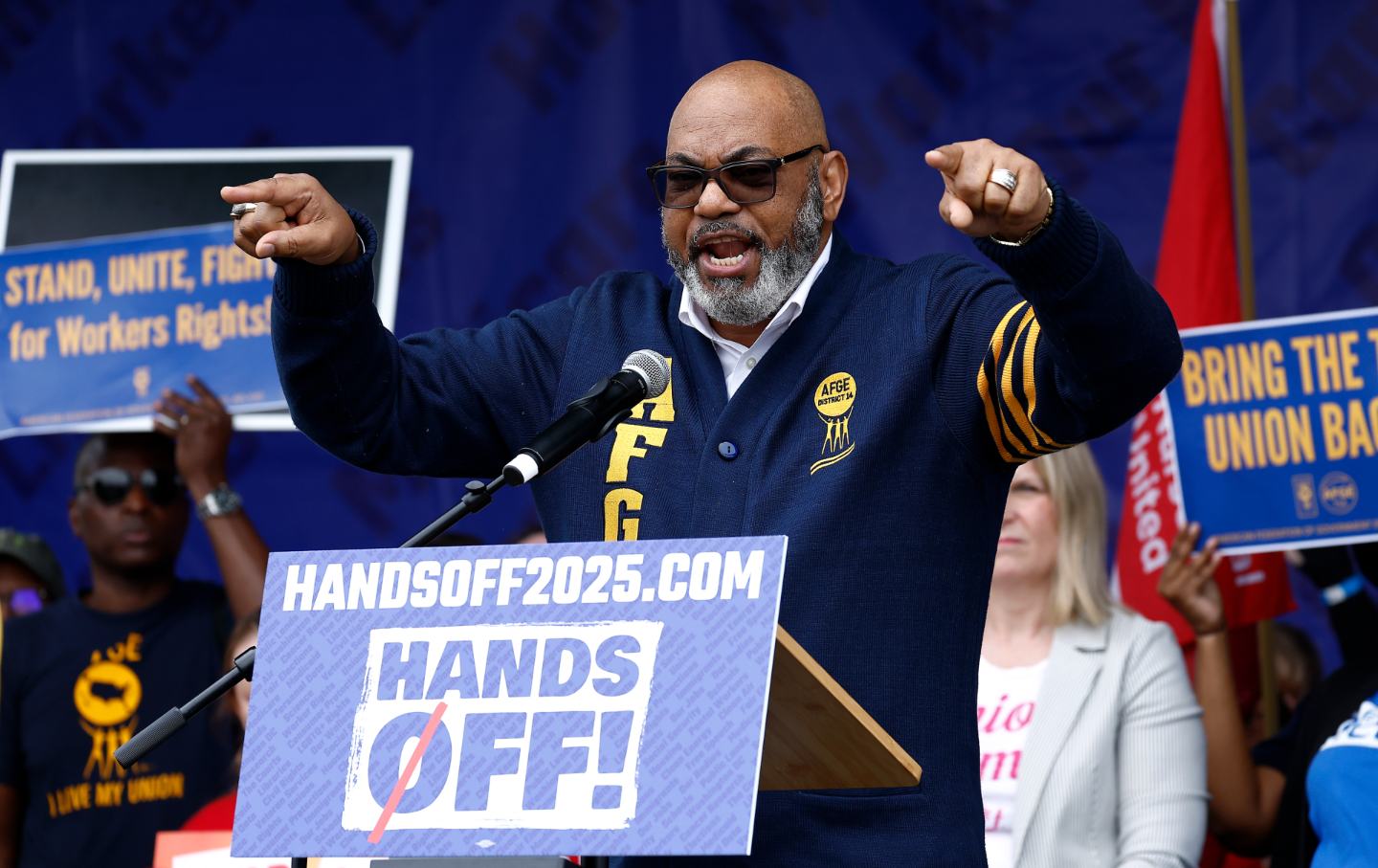
AFGE President Everett Kelley speaks during the Hands Off! day of action against the Trump administration and Elon Musk on April 5, 2025, in Washington, DC.
(Paul Morigi / Getty Images for Community Change Action)Donald Trump is no friend of organized labor.
Nor is Trump a friend of federal workers—or the unions that represent them. In fact, on March 27, the president issued an executive order demanding that most federal agencies terminate their union contracts. The president claimed he had the power to suspend collective bargaining for national security reasons—sparking ongoing legal and legislative battles.
No matter how these battles are resolved, there is no question that Trump—along with a wrecking crew that, for a time, included billionaire Elon Musk—is making the lives of hundreds of thousands of public-sector workers miserable.
That has put Everett Kelley, who heads the nation’s largest federal union, the American Federation of Government Employees (AFGE), at the center of the most far-reaching and consequential union struggle that is playing out on this contentious Labor Day.
Representing 820,000 workers in the federal government and the government of the District of Columbia, AFGE is battling to protect not just the jobs of its members, but services for the great mass of Americans whose health, safety and security are under threat from a privatization-scheming president and his Republican Congress.
As Labor Day approached, The Nation spoke with Kelley—an Army veteran and Baptist preacher who worked for decades at an Anniston, Alabama, Army depot, before becoming the president of his union and a national vice president of the AFL-CIO—about how workers are struggling to survive Trump’s war on the working class. The transcript has been lightly edited for clarity and length.
The Nation: On this Labor Day, is it fair to say that working Americans and their unions are facing one of the most brutal assaults in the history of American labor.
Everett Kelley: I totally agree that that is what’s happening! I’ve been a member of the AFGE since 1981. I’ve never seen an assault like this. Employees have to come to work every day and face uncertainty, because this administration has told them they want them to go—they don’t want them to be government employees. They are sitting at home with a [reduction-in-force] letter, and they’ve got a stack of bills to be paid. They have been stripped of their ability to organize by saying, “We won’t allow them to be in the union, we won’t allow them to pay union dues out of their paychecks.” Employees are being demoralized by every stretch of the imagination.
The Nation: The people you represent took federal employment because they wanted to serve their fellow Americans. Many of them are veterans who chose federal employment because they wanted to continue to do something for their country, correct?
Kelley: You’re exactly right. I’m a veteran myself. Thirty percent of the people we represent are veterans. The people that I represent are very patriotic employees. They take an oath when they come to work for the federal government, and they take that oath seriously.
I retired myself from the federal government—after 31 and a half years—and I’m proud of that. When we are working, we’re not working just to get paid. We are working to provide services to the American people.
The Nation: Tell me about some of those services.
Kelley: Making sure that the food that Americans eat is safe food. Making sure that the air that Americans breathe is safe to breathe. Making sure that the water is safe. Making sure that veterans, once they go and serve this country, come back and have support mechanisms through the VA. Making sure that our elders, when they reach retirement age, are supported when they file claims with the different agencies, when they need something from the Social Security Administration. Making sure, with FEMA, that when there is a disaster that you’ve got federal employees there to address the catastrophe. You also have people at the Federal Bureau of Prisons, making sure that our communities are safe. Just about any kind of job you can think of, the people I represent are doing it. And they are doing it to provide services to, and for, the American people.
The Nation: Most Americans are, I suspect, unaware of all the things that federal workers do.
Kelley: Federal employees do their jobs so well that, most of the time, nobody notices. It would only be noticed if they were failing. And they are not failing.
The Nation: There are plenty of things that the private sector does, but a lot of the jobs that the people you represent do really can’t be done well by the private sector.
Kelley: Absolutely.
Popular
“swipe left below to view more authors”Swipe →I do believe that what this administration is trying to do is to put the government in a mission-failure position so that they can contract out these jobs. That would be devastating because [with privatization] it would not be about providing service to the American people. It would be about making a profit.
The Nation: Trump and the Republicans get excited about privatization, but there’s a lot of evidence that privatization doesn’t work.
Kelley: It doesn’t work. When I was a federal employee, I worked for the Department of Defense. I’ve seen how the contractors hike up prices on things like a hammer. I remember the big story about contractors charging $600 for a hammer. That’s what you get when you contract out jobs and services.
The Nation: On this Labor Day, are there things you think that Americans who care about federal workers and federal unions should be focused on?
Kelley: We have a bill on the floor right now in Congress. It is HR 2550, the Protect America’s Workforce Act. That’s designed to restore collective bargaining rights back to federal employees. We’re asking every American to make a call to their member of Congress and to tell them to bring that bill to the floor. The bill is sitting there, but the speaker won’t let it come to the floor. We believe that, if there were a vote, we would win.
The Nation: While this is a fight for federal workers, it matters for private-sector workers, as well, doesn’t it?
Kelley: I hope that the American people will get behind workers and stand with them so that this administration does not beat out the unions. Although they are starting with AFGE, I believe that, if they are successful—and I don’t believe they will ultimately be successful—[the administration] will not stop there. I believe that they see us as the low-hanging fruit. I think that they will attack every organized worker in America if they are given the green light to do so.
Become a Sustaining Donor This September
Between the reemergence of right-wing red-baiting and Donald Trump’s use of the chilling National Security Presidential Memorandum–7 to criminalize left political organizing, we’re seeing McCarthyism reborn before our eyes.
This assault on democracy cannot be ignored or wished away. Resisting it requires bravery in the face of threats and repression, a steadfast commitment to the truth, and the unwavering belief that we can—and will—overcome this darkness.
We must have an independent media that sets the record straight, unearths corruption and abuses of power, and advances a politics of justice and dignity for all if we’re to win this fight.
That’s why I’m writing to you today. This September, The Nation needs to add 100 monthly donors to sustain our progressive journalism. Your contribution makes the next investigative report, the next truth-speaking column, and the next pathbreaking essay all possible.
I hope you’ll support our work with a recurring donation today. If you donate $10 or more a month, we’ll send you a brand new “Hands Off the Free Press!” sticker to recognise your commitment to our cause. Please, donate today.
Onward,
Katrina vanden Heuvel
Editor and Publisher, The Nation
More from The Nation
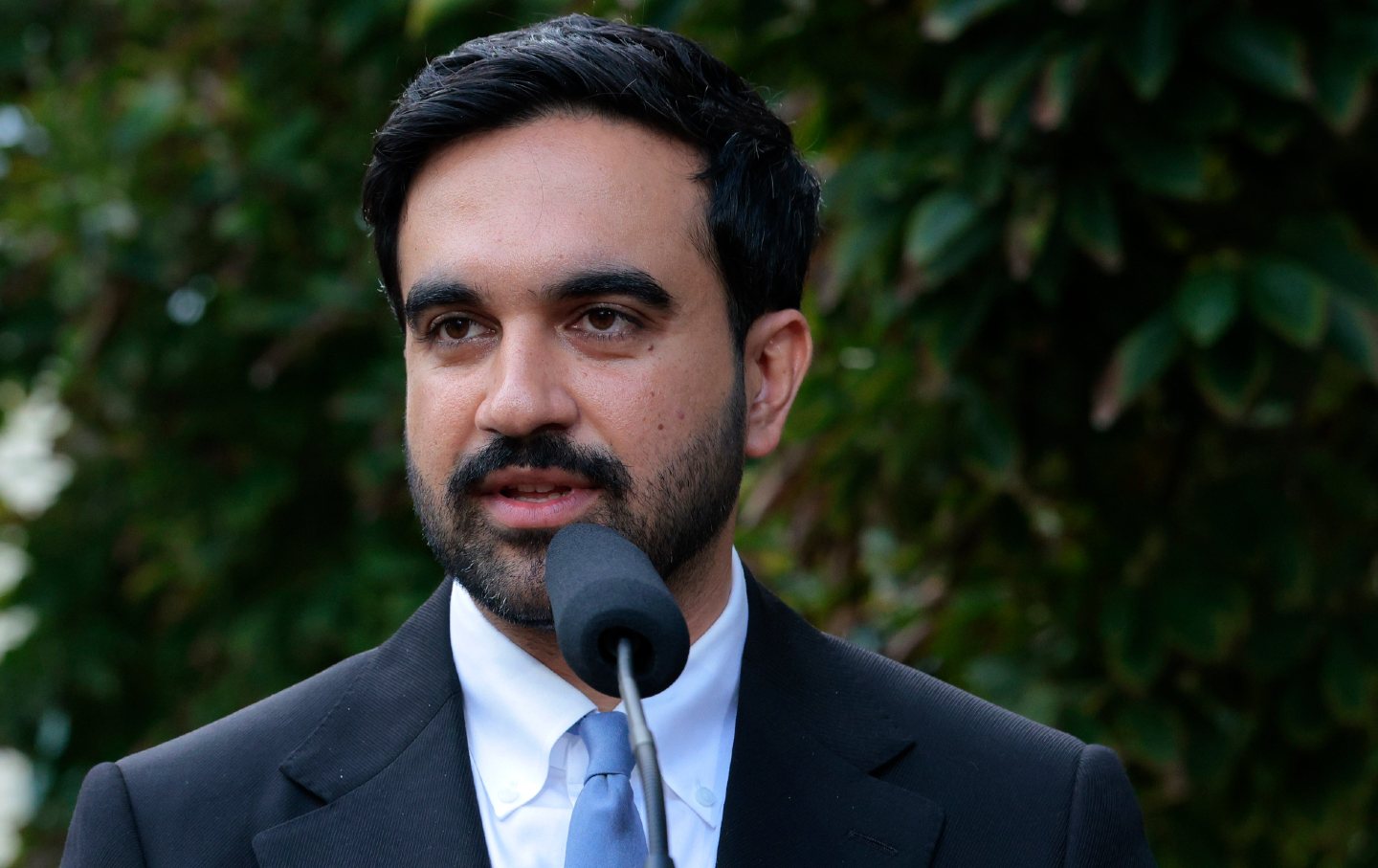
Zohran Mamdani Hosts the World Zohran Mamdani Hosts the World
In a meeting with mayors from around the globe, Mamdani argued that the left must fix everyday problems—or the right will find someone to scapegoat for them.

Is There Any Good News Left? Is There Any Good News Left?
Despite what our algorithms suggest, there’s still news worth celebrating.

CEOs Are Losing Control of AI CEOs Are Losing Control of AI
With no slowdown from Trump’s administration.
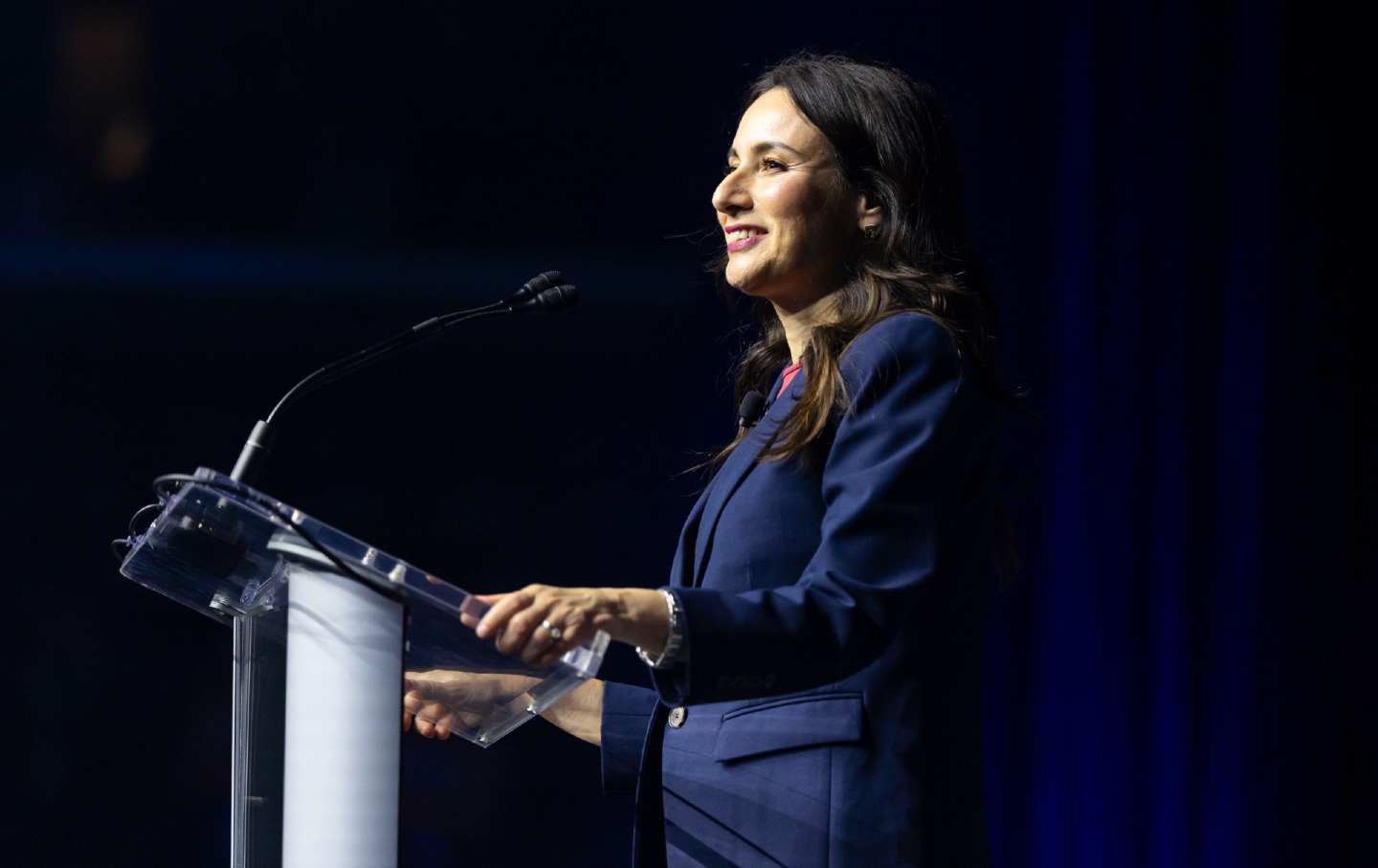
Gina Hinojosa: “We Flip Texas, and It’s Over” Gina Hinojosa: “We Flip Texas, and It’s Over”
Talking to Texas gubernatorial candidate Gina Hinojosa about what redistricting could mean and how a new generation of Democrats is speaking more directly to voters.
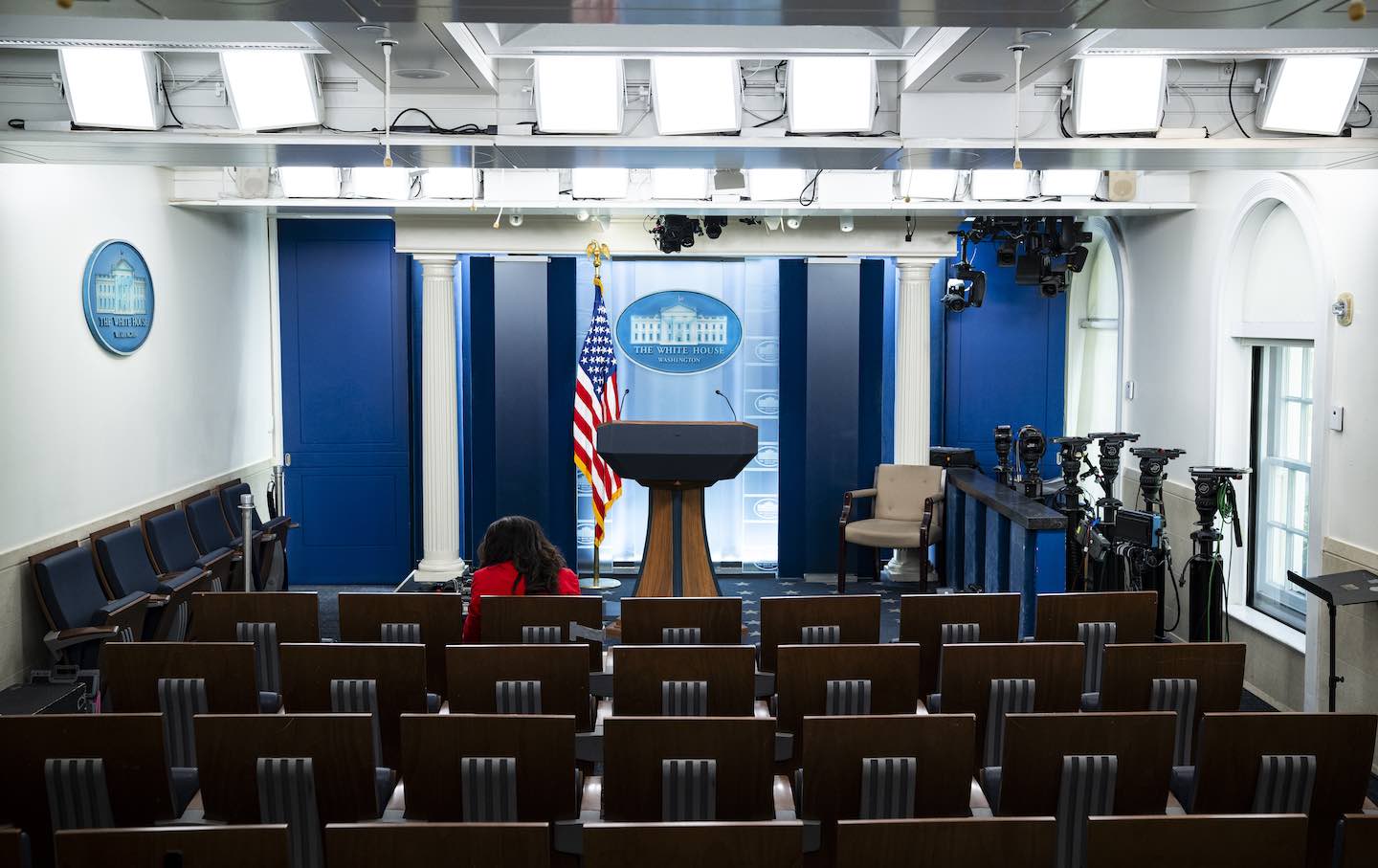
Trump Wants to Keep Journalists Out of the White House. He Should Get His Wish. Trump Wants to Keep Journalists Out of the White House. He Should Get His Wish.
The president has banned MS NOW, CNN, and Politico from attending press briefings. The rest of the media should respond with a boycott.

