
The Democratic Party Remains Committed to Learning Nothing From Its 2024 Defeat
The Democratic National Committee’s forthcoming “autopsy” is a cover-up to protect the failed leaders who twice lost to Trump.
Defeat can be soul-crushing, but at least offers the consolation of education—although this is only true only if one is willing to learn. Surveying the failure of many of the radical causes he had supported, the great historian Eric Hobsbawm once reflected, “Nothing…can sharpen the historian’s mind like defeat.” Hobsbawm’s adage is certainly true of himself and many others. He cited an essay by the German historian Reinhart Koselleck that listed an impressive array of thinkers who enriched our understanding of the world by reflecting on the defeat of the political causes and national struggles they had placed their hopes in—intellectual titans such as Thucydides, Polybius, Sallust, Tacitus, Commines, Machiavelli and Marx. According to Koselleck, “In the short run history may be made by the victors. In the long run the gains in historical understanding have come from the defeated.”
But learning from failure is a choice, not an inevitability. In truth, the far more common experience is the vanquished not becoming wiser but indulging in excuse making, finger-pointing recrimination, and conspiratorial delusion. After the Bay of Pig fiasco in 1961, John F. Kennedy repeated and popularized a venerable epigram: “Victory has a hundred fathers and defeat is an orphan.”
Certainly, it is the case that the Democratic Party elite in the last decade has not reacted to two crushing losses to Donald Trump in presidential elections with the spirit of candid self-criticism. Rather, party leaders have preferred to indulge in self-exculpation and find scapegoats for their own failures. In 2017, Vox reported that
Hillary Clinton doesn’t believe she or her campaign made any significant mistakes in the 2016 election. But speaking at the Code Conference on Wednesday, she had a long list of others she blames for her defeat.
She points the finger at Russia, fake news, the sorry state of the Democratic Party, sexism, and the media that covered the email scandal “like Pearl Harbor,” among others.
Strikingly, the Clinton campaign never released a formal postmortem on the 2016 election, which left the party with an array of partial reports from divergent groups offering competing explanations that were little more than factional briefs.
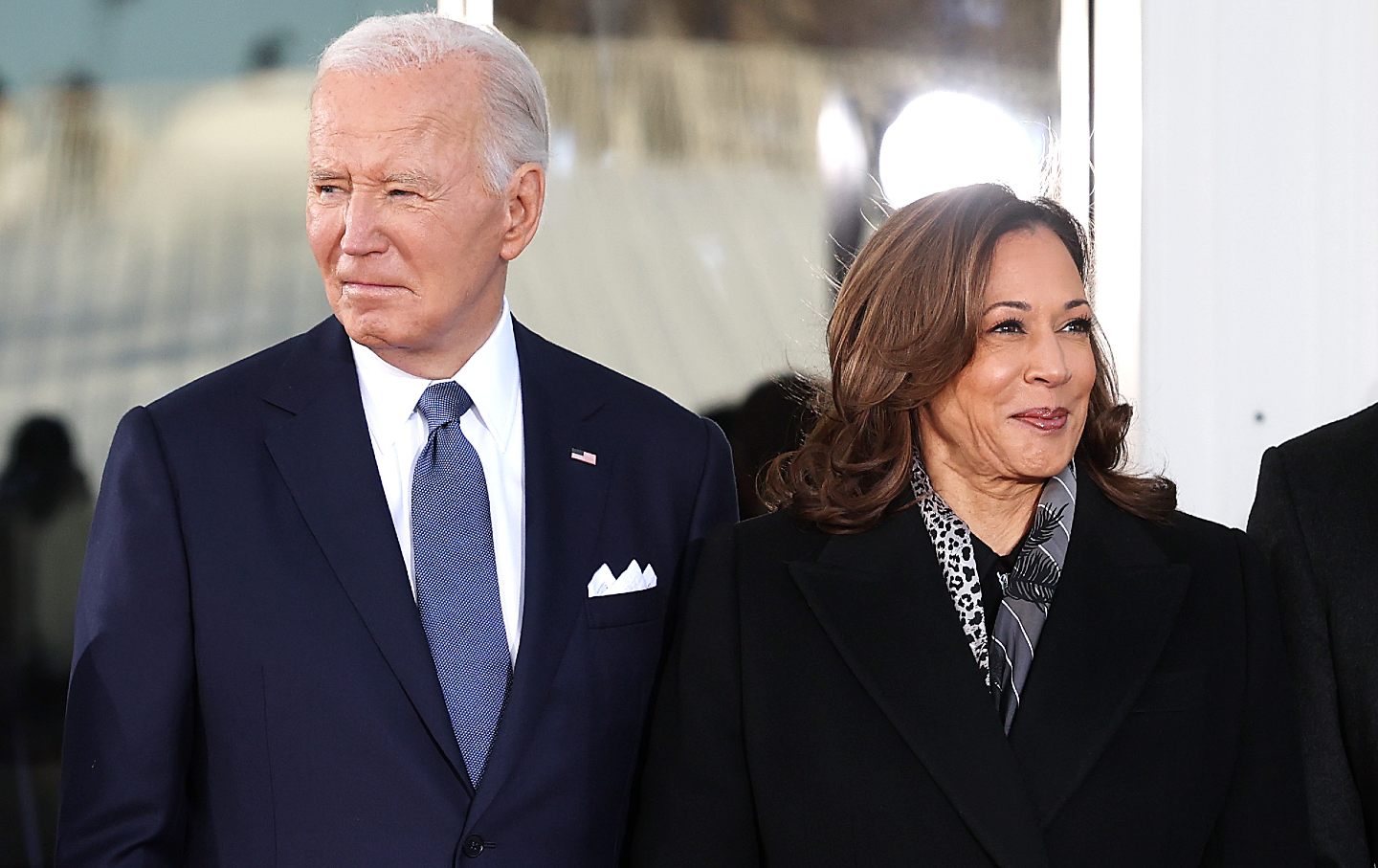
With the 2024 defeat, the Democratic National Committee has commissioned an autopsy, which is currently being prepared by Paul Rivera, a longtime party insider. There is, alas, no reason to hope for much from this forthcoming postmortem. On Saturday, The New York Times reported that this will follow the Clintonian model of avoiding self-criticism and instead blame convenient scapegoats, that it is “expected to mostly steer clear of the decisions made by the Biden-turned-Harris campaign and will focus more heavily instead on actions taken by allied groups.”
The audit, which the committee is calling an “after-action review,” is expected to avoid the questions of whether former President Joseph R. Biden Jr. should have run for re-election in the first place, whether he should have exited the race earlier than he did and whether former Vice President Kamala Harris was the right choice to replace him, according to the people briefed on the process so far.
Nor is the review expected to revisit key decisions by the Harris campaign—like framing the election as a choice between democracy and fascism, and refraining from hitting back after an ad by Donald J. Trump memorably attacked Ms. Harris on transgender rights by suggesting that she was for “they/them” while Mr. Trump was “for you”—that have roiled Democrats in the months since Mr. Trump took back the White House.
Instead of focusing on decisions made by Harris, Biden, and their key advisers, the report is preparing to make a scapegoat of Future Forward, a Ssuper PAC that spent $560 million on the election. The indictment is that Future Forward focused excessively on TV ads, didn’t coordinate messaging with the Harris campaign, and didn’t do enough attacks on Trump. This litany of complaints against Future Forward is a familiar one, having already been made last October in leaks from the Harris campaign that were clearly designed to preemptively win the blame game.
The problem with this narrative is that even if one stipulates for the sake of argument that every accusation against Future Forward is true, it doesn’t really explain the scale of the 2024 defeat. After the January 6 botched coup attempt, Donald Trump was a disgraced figure with an approval rating of 34 percent (which, combined with a disapproval rating of 62 percent gave him the lowest net popularity of any modern president). From this low point, Trump went on to not just recapture the White House but to win on a startling scale: He became the first Republican to win the popular vote since 2004—in fact, indeed the first Republican to win the popular vote without the advantage of incumbency since 1988. Trump won all the swing states and made massive gain among groups that are Democratic Party mainstays such as young people and people of color. The extent of the Democratic Party’s loss can’t be chalked up to a bad advertising campaign. It was a historic repudiation of the party—all the worse because Trump himself remained personally unpopular and distrusted by the electorate.
To write about the 2024 without talking about the decisions made by Biden, Harris, and their inner circle is, as the Times suggests, “like eating at a steakhouse and then reviewing the salad.” An election autopsy exonerating Biden and Harris can also be compared to a production of Hamlet that leaves out not just the Prince of Denmark but also Claudius, Gertrude, the Ghost, and Ophelia. The result, as Tom Stoppard showed with Rosencrantz and Guildenstern are Dead, is a very different play, entertaining but hardly Shakespeare.
After the 2012 electoral defeat, the Republicans had two major autopsies, an official one and an unofficial but influential analysis. The official analysis, titled the Growth and Opportunity Project, noted that Mitt Romney’s campaign was too ideologically rigid in its anti-immigration message and alienated potential Latino voters. More prophetic was the analysis in late 2012 by Sean Trende in Real Clear Politics that took the opposite tack. Trende noted that roughly 7 million white voters, some of whom had gone for Obama in 2008 and some for McCain, had abstained from the election.
Trende posited, quite reasonably, that these 7 million missing white voters were alienated by the direction of American politics, found little appeal in Mitt Romney’s open disdain for the struggles of poorer Americans (as in his infamous lambasting of the “47 percent” of who don’t pay income tax), and were waiting for a politician who spoke to their economic anxieties.
Popular
“swipe left below to view more authors”Swipe →While Donald Trump is an instinctive politician, his 2016 campaign was run by figures such as Steve Bannon who were acutely aware of the issue of the missing white voters. Trump’s winning policy platform—his combination of economic protectionism, a unilateralist foreign policy and immigration restriction unified under the slogan America First—was perfectly tailored to energize these missing white voters.
As in 2012, the most important voters in 2024 were the ones who didn’t show up. In 2020, Joe Biden won 81 million votes, while in 2024 Harris only got 75 million votes. Only some of those missing votes went to Trump, who increased from 74 million votes to 77 million votes. These changes took place in the context of an expanding electorate. In 2020 there were 168 million registered voters, while in 2024 there were 174 million registered voters.
Who were the missing Democratic Party voters in 2024? Polling conducted by Lake Research Partners for the donor group Way to Win shows that these voters tended to be economic populists who were disillusioned by the Biden administration. As Rolling Stone reports:
Perhaps unsurprisingly, the politicians most popular among the voters polled were the ones who have long campaigned on making health care accessible to all, and making billionaires pay their fair share: Senator Bernie Sanders (I-Vt.) and Rep. Alexandria Ocasio-Cortez (D-N.Y.) were far and away the favorite candidates of voters polled. Seventy eight percent of those polled held favorable views of Sanders, and 64 percent had favorable views of AOC.
To be sure, these are national findings, and political strategists usually prefer zeroing in on the electorates of swing states. But the focus on swing states is itself myopic and distorting. Having a resonant and confident national message helps build enthusiasm in swing states. Democrats have never won the Electoral College without also winning the national popular vote.
The upcoming DNC autopsy is shaping up to be an exercise in deflection, distraction, and scapegoating. A more honest autopsy would run something like this: The original sin of the campaign was Joe Biden’s decision to run again—despite polling repeatedly showing voters thought he was too old and frail for the job. This decision disillusioned voters and made Donald Trump a plausible alternative. When Biden finally dropped out, Kamala Harris initially won a wave of support from those disillusioned voters. But she frittered it away by refusing to dissociate herself from Joe Biden’s unpopular policies (including, for a crucial bloc of younger voters, Biden’s unwavering support of Israel’s horrific Gaza onslaught). At the behest of Wall Street donors, Harris watered down the message of economic populism. Knowing that progressive voters were alienated, the Harris campaign tried to make up for these lost voters by making a pitch to Never Trump Republicans and embracing figures such as Liz Cheney. This gambit was a disaster that further alienated progressive voters.
It’s perhaps too much to expect Democratic Party leaders to make such an analysis, which has the virtue of being truer to the facts, but the fault of requiring that they take responsibility for their failed decisions. But if they refuse to admit their mistakes, the only path forward is for these party leaders to be replaced. Donald Trump harnessed the anger of Republicans at the 2012 loss to displace the party’s leadership. Given the fact that their party leaders are clearly committed to learning nothing from history, Democrats need a similar insurrection.
Become a Sustaining Donor This September
Between the reemergence of right-wing red-baiting and Donald Trump’s use of the chilling National Security Presidential Memorandum–7 to criminalize left political organizing, we’re seeing McCarthyism reborn before our eyes.
This assault on democracy cannot be ignored or wished away. Resisting it requires bravery in the face of threats and repression, a steadfast commitment to the truth, and the unwavering belief that we can—and will—overcome this darkness.
We must have an independent media that sets the record straight, unearths corruption and abuses of power, and advances a politics of justice and dignity for all if we’re to win this fight.
That’s why I’m writing to you today. This September, The Nation needs to add 100 monthly donors to sustain our progressive journalism. Your contribution makes the next investigative report, the next truth-speaking column, and the next pathbreaking essay all possible.
I hope you’ll support our work with a recurring donation today. If you donate $10 or more a month, we’ll send you a brand new “Hands Off the Free Press!” sticker to recognise your commitment to our cause. Please, donate today.
Onward,
Katrina vanden Heuvel
Editor and Publisher, The Nation
More from
Jeet Heer 

Even Republicans Are Figuring Out That Pete Hegseth Is a Disaster Even Republicans Are Figuring Out That Pete Hegseth Is a Disaster
Hegseth was always a horrible choice for defense secretary. At long last, some in the GOP are admitting it.
Why Aren’t We Talking About the Warmongering Lies of Mike Rogers? Why Aren’t We Talking About the Warmongering Lies of Mike Rogers?
The media’s relentless focus on Hasan Piker allows the dishonest GOP hawk (and actual Michigan Senate candidate) to evade scrutiny.
MAGA Is Exploiting the Lindsay Clancy Case to Try to End Voting for Women MAGA Is Exploiting the Lindsay Clancy Case to Try to End Voting for Women
As Trump subverts elections, his most ardent fans want to overturn the 19th Amendment.

Accountability for the Gaza Genocide Can’t Focus on Netanyahu Alone Accountability for the Gaza Genocide Can’t Focus on Netanyahu Alone
Getting rid of one bad leader won’t bring justice.

In Trump’s Mafia, Even Goons Can Do Billion-Dollar Shakedowns In Trump’s Mafia, Even Goons Can Do Billion-Dollar Shakedowns
Corey Lewandowski is a disposable underling, but he’s protected enough to scorn the law.

Maria Bartiromo Was Fired for the Wrong Reason Maria Bartiromo Was Fired for the Wrong Reason
For Fox News, blind servility to Trump is fine until it hits the bottom line.

