Reclaiming the Democratic Party for Working Families
A call to action.
It is no secret that Democrats face a growing threat: a Republican Party competing for the votes of working-class Americans not just on the issues of crime, immigration, and race, but also on economic issues that once reliably belonged to Democrats. This shift was clear in the 2024 election results and key new Republican policy initiatives. The problem is not the Republican competition, but more significantly… we do not know that Democrats are focusing on critical economic issues! For decades, the Democratic Party has failed to define a clear economic agenda for working Americans.
On the eve of the 2004 Democratic Convention in Boston, legendary Washington Post columnist David Broder published an article titled “SEIU Chief Says the Democrats Lack Fresh Ideas.” It captured the frustration that I, along with Bruce Raynor and other labor leaders, felt toward a Democratic Party that seemed more focused on the interests of people with wealth rather than people that worked.
At that convention, we voiced our concerns that motivating blue-collar families to vote for Democrats was becoming increasingly difficult. John Kerry and party leaders refused to address the realities of the Wal-Mart economy—a system where employers deliberately kept wages low and hours short, forcing workers to rely on Medicaid and food stamps just to survive. Beyond that, Democrats had supported policies that devastated workers, including NAFTA, China’s admission to the WTO, and the deregulation of trucking and airlines.
Democrats had transformed their party away from working-class, non-college-educated families and toward a chardonnay-sipping, latte-drinking, Volvo-driving, college-educated donor elite—a group more focused on winning policy debates than connecting with working people. Now, more than 20 years later, Democrats are paying the price for that neglect.
A New Challenge: Republicans Competing for Working-Class Votes
One needs to look no further than these current Republican initiatives to appreciate an emerging shift by some elements of the Republican Party.
Senator Josh Hawley (R-MO) introduced labor law reform legislation addressing captive audience speeches and first-contract arbitration—two critical issues for union organizing.
Vice President JD Vance proposed a $5,000 child tax credit to ease financial burdens on families.
Donald Trump proposed ending taxes on overtime, Social Security benefits, and income below $150,000.
The Republican National Convention welcomed Teamsters President Sean O’Brien, who—despite criticism from Democrats—used the platform to deliver a clear, anti-corporate, pro-union message.
Yet, despite these gestures, the new Trump administration seems determined to continue its assault on workers:
Revoking the $15-an-hour minimum wage for federal contractors.
Popular
“swipe left below to view more authors”Swipe →Weakening standards that require only responsible contractors to receive government projects.
Illegally firing NLRB members to cripple the agency’s ability to protect workers, while Elon Musk challenges its constitutionality.
Breaking contracts with every federal union.
Raising prices through indiscriminate tariffs.
Appointing renowned union-buster Elon Musk to oversee reckless firings and union-busting of government unions.
President Biden was a true pro-union, pro-US manufacturing president. But now, voters see a Republican Party—not the Democrats—saying they are going to stand up for American jobs, embracing tariffs not just to protect existing jobs but to expand manufacturing.
So what exactly are Democrats fighting for?
Lower out-of-pocket healthcare costs or adding home care, dental, and vision coverage to Medicare?
Ending stock trading by Congress or billionaires’ dominating spending in elections?
Extending to all Americans the 30–40 percent Medicare prescription drug discounts on all prescriptions that veterans receive through VA-negotiated prices?
Raising the minimum wage or expanding overtime pay eligibility?
Raising taxes on billionaires and ending taxes on every working American below a certain income?
Free community college?
Stopping corporate price gouging or using tariffs to protect American manufacturing jobs?
The problem is: We do not know!The Democratic Party has failed to define a clear economic agenda for working Americans.
Lessons From the Past: Change to Win and Primary Challenges
Twenty years ago, we recognized these issues and tried to refocus the Democratic Party on workers.
In 2005, frustrated by a labor movement often acting as pawns of the Democratic Party, many of us left the AFL-CIO to build Change to Win, a new labor federation seeking to be a watchdog for our members, not a lapdog for politicians.
But Democrats continued to take workers for granted. So we raised the stakes.
We founded a political action committee, They Work for Us, with a simple mission: challenge Democrats in primaries who campaigned as champions of workers but abandoned their promises once in office. But some of They Work for Us’s original labor supporters got cold feet about taking on Democratic leadership, and the project was shut down.
President Obama’s election in 2008 masked the continued erosion of the Democrats focus on a party of workers. Democrats flushed with victory, largely on the incredible gifts of the young senator, did not listen carefully enough to growing concerns of the 60 percent of Americans without a college degree, and the 30 percent of college graduates earning less than $40,000 a year—people who felt that work no longer pays enough to support a family, and that the system is rigged against them.
The voices of the Democratic cultural and economic elite often drowned out these real concerns of working people.
And Democrats continued to nominate too many professional politicians, lawyers, and businesspeople—instead of candidates like:
- Dan Osborn—a former union worker who ran an independent Senate campaign in Nebraska.
- Marty Walsh—a former construction worker and labor leader who became mayor of Boston and secretary of labor.
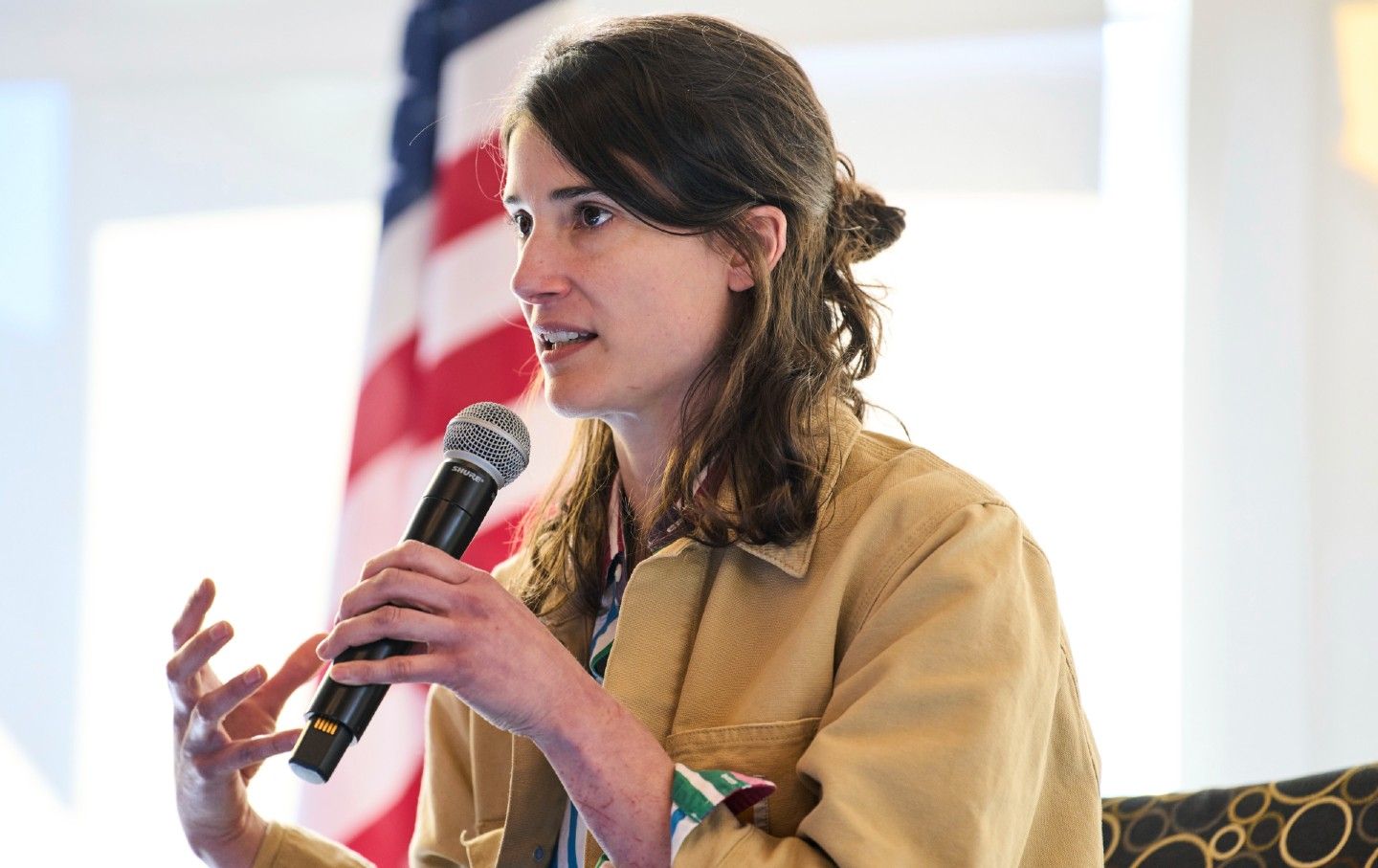
- Representative Marie Gluesenkamp Pérez—an auto repair shop small-business owner who connected with working-class voters.
- We need leaders with a clear economic agenda—leaders who are comfortable in a union hall, on a construction site, or a Little League game.
A Call to Action
We hope our brothers and sisters in the labor movement will step up and lead—starting with a resurgence of organizing. That means deploying billions of dollars of the $18 billion in revenue and the $35 billion in assets currently sitting idle in banks and investments to target the large technology, healthcare, grocery, trucking, and manufacturing corporations undermining union wages.
Organizing is not just about the workplace—but also produces political change.
Union members vote more pro-worker than their non-union counterparts.
In Union, a labor-led project in Michigan, Wisconsin, and Pennsylvania, proved that year-round economic education can significantly shift votes among former union members and working-class families.
Targeting anti-union, multibillion-dollar corporations forces politicians to pick a side.
Unions Must Demand More—From Both Parties
It is time—long overdue—for labor unions to challenge both Democrats and Republicans.
Unions should lead with a plan to:
1. Hold politicians accountable to an “economic contract for working families” and demand that any candidate seeking union support commit to it.
2. Deploy a minimum of $3 billion a year of the more than $18 billion of annual union dues and $35 billion in labor assets to major organizing efforts targeting corporate giants that suppress wages, cut benefits, and gouge consumers. This should include hiring 20,000 organizers (about $2 billion).
3. Immediately launch campaigns in key 2026 electoral districts to educate members and their communities on a pro-worker economic agenda.
4. Spark both an internal membership and national conversation on federally guaranteeing existing workers’ pensions and Social Security and stopping all union busting, including reversing the busting of federal union recognition and prohibiting the privatization of the Postal Service. Then leaders should ask union members to vote for a National Day of Retirement and Worker Security, supporting coordinated actions at union and non-union worksites across the country.
The future of work and working families is not a matter of chance—it is a matter of choice.
It is time for unions and Democrats to decide.
Become a Sustaining Donor This September
Between the reemergence of right-wing red-baiting and Donald Trump’s use of the chilling National Security Presidential Memorandum–7 to criminalize left political organizing, we’re seeing McCarthyism reborn before our eyes.
This assault on democracy cannot be ignored or wished away. Resisting it requires bravery in the face of threats and repression, a steadfast commitment to the truth, and the unwavering belief that we can—and will—overcome this darkness.
We must have an independent media that sets the record straight, unearths corruption and abuses of power, and advances a politics of justice and dignity for all if we’re to win this fight.
That’s why I’m writing to you today. This September, The Nation needs to add 100 monthly donors to sustain our progressive journalism. Your contribution makes the next investigative report, the next truth-speaking column, and the next pathbreaking essay all possible.
I hope you’ll support our work with a recurring donation today. If you donate $10 or more a month, we’ll send you a brand new “Hands Off the Free Press!” sticker to recognise your commitment to our cause. Please, donate today.
Onward,
Katrina vanden Heuvel
Editor and Publisher, The Nation
More from The Nation

How Joe Biden Helped Cause a Genocide in Gaza How Joe Biden Helped Cause a Genocide in Gaza
An interview with reporter Akbar Shahid Ahmed about his new book, “Crossing the Red Line.”


Transphobia Isn’t Winning Votes. But It Is Making Our Lives Much Worse. Transphobia Isn’t Winning Votes. But It Is Making Our Lives Much Worse.
Trans people must now live out another election cycle knowing our friends, family, coworkers, and neighbors are being flooded with agitprop designed to dehumanize us.

A Premature Farewell to the Ignominious Speaker Mike Johnson A Premature Farewell to the Ignominious Speaker Mike Johnson
If Democrats win the House in the midterms, as expected, Mike Johnson won’t hold the gavel in any meaningful way again.
Zohran Mamdani Hosts the World Zohran Mamdani Hosts the World
In a meeting with mayors from around the globe, Mamdani argued that the left must fix everyday problems—or the right will find someone to scapegoat for them.