
Republicans Just Voted to Do Immoral and Irreparable Harm to the United States
The GOP chose to betray both morality and economic common sense by approving Trump’s one big, ugly bill.
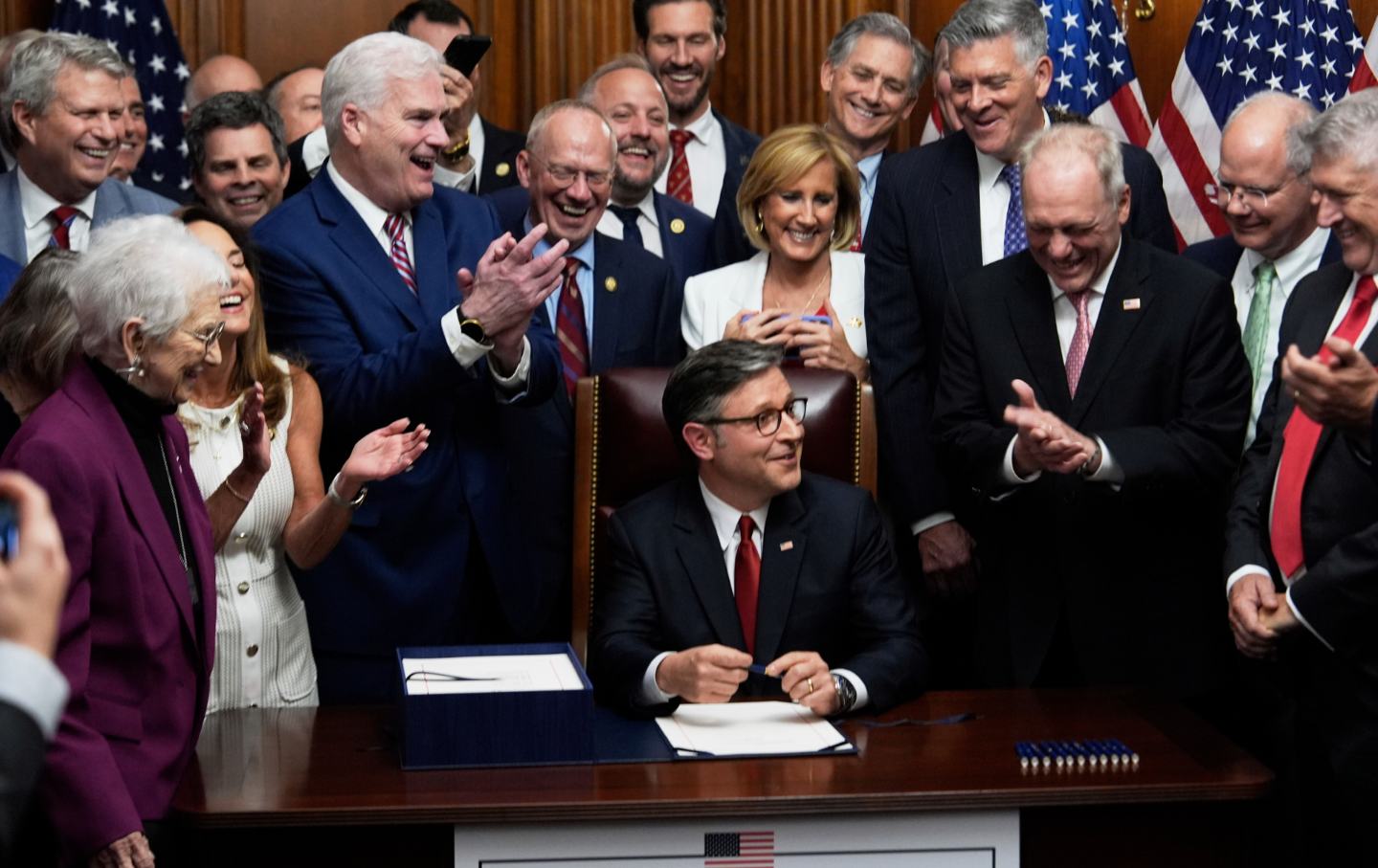
Speaker Mike Johnson (R-LA), surrounded by Republican members of Congress, signs President Donald Trump’s signature bill of tax breaks and spending cuts at the Capitol, July 3, 2025.
(Julia Demaree Nikhinson / AP)During the tortured final congressional debate before the US House of Representatives approved the legislative monstrosity that Donald Trump dubbed “the one big, beautiful bill”—and that detractors have more accurately described as “the one big ugly bill”—US Representative Don Beyer delivered a moment of moral clarity.
“From the Gospel of Matthew,” began the Virginia Democrat, who read aloud from the floor of the House:
I was thirsty, and you gave me drink.
I was a stranger, and you took me in.
I was naked, and you clothed me.
I was sick, and you visited me.
I was in prison, and you came unto me.
Inasmuch as you have done it unto one of the least of my brothers, you have done it unto me.
When he had finished the biblical reading, Beyer said, “Mr. Speaker, the bill before us takes food and drink from the mouths of the poor. It takes healthcare from the sick. A vote for this bill betrays these Gospel teachings, and in our hearts all of us know it.”
Beyer was right. Every member of Congress, be they liberal or conservative, Democratic or Republican, knew that the bill, which was ultimately approved on Thursday by a 218–214 vote, was written in a way that would:
- Cause 17 million Americans to lose healthcare
- Make the largest-ever cuts to Medicaid and Supplemental Nutrition Assistance Program (food stamp) benefits
- Cause the closure of nursing homes and rural hospitals across the United States
- Hike housing, healthcare, and energy costs
- Supercharge Trump’s authoritarian anti-immigrant agenda
- Deliver massive new tax benefits for the wealthiest Americans, while increasing costs and taxes for the working class
The Trump administration’s primary domestic policy scheme was unanimously opposed by both House and Senate Democrats, who recognized the moral and practical disaster that will unfold thanks to the legislation. It was supported by the vast majority of Republicans in the Senate—where Vice President JD Vance broke a 50–50 tie vote—and in the House, where all but two GOP members, who often preach about morality, put aside their consciences in order to do Trump’s bidding.
Popular
“swipe left below to view more authors”Swipe →Congressional Republicans did their best to make the debate about everything but what was in the bill. They did not want to face the moral implications of what they were doing to the least of their brothers and sisters. But the truth was unavoidable. Twenty American Catholic bishops and leaders of the Sisters of Mercy community of Roman Catholic women joined Lutheran, Episcopalian, Presbyterian, Baptist, African Methodist Episcopal Church, Muslim, and Jewish faith leaders in signing a letter to members of Congress that warned about the ways in which the measure targets asylum-seekers and refugees—and the faith communities that serve them—by causing chaos and by driving the working poor deeper into poverty.
“According to the nonpartisan Congressional Budget Office (CBO), the bill transfers wealth from those in the bottom 10 percent of income to those in the top 10 percent of income in our nation, increasing the already large gap between the rich and the poor,” explained the His Eminence Cardinal Robert W. McElroy, Archbishop of Washington, DC, and other religious leaders, who added, “From our various faith perspectives, the moral test of a nation is how it treats those most in need of support. In our view, this legislation will harm the poor and vulnerable in our nation, to the detriment of the common good.”
Support independent journalism that does not fall in line
Even before February 28, the reasons for Donald Trump’s imploding approval rating were abundantly clear: untrammeled corruption and personal enrichment to the tune of billions of dollars during an affordability crisis, a foreign policy guided only by his own derelict sense of morality, and the deployment of a murderous campaign of occupation, detention, and deportation on American streets.
Now an undeclared, unauthorized, unpopular, and unconstitutional war of aggression against Iran has spread like wildfire through the region and into Europe. A new “forever war”—with an ever-increasing likelihood of American troops on the ground—may very well be upon us.
As we’ve seen over and over, this administration uses lies, misdirection, and attempts to flood the zone to justify its abuses of power at home and abroad. Just as Trump, Marco Rubio, and Pete Hegseth offer erratic and contradictory rationales for the attacks on Iran, the administration is also spreading the lie that the upcoming midterm elections are under threat from noncitizens on voter rolls. When these lies go unchecked, they become the basis for further authoritarian encroachment and war.
In these dark times, independent journalism is uniquely able to uncover the falsehoods that threaten our republic—and civilians around the world—and shine a bright light on the truth.
The Nation’s experienced team of writers, editors, and fact-checkers understands the scale of what we’re up against and the urgency with which we have to act. That’s why we’re publishing critical reporting and analysis of the war on Iran, ICE violence at home, new forms of voter suppression emerging in the courts, and much more.
But this journalism is possible only with your support.
This March, The Nation needs to raise $50,000 to ensure that we have the resources for reporting and analysis that sets the record straight and empowers people of conscience to organize. Will you donate today?
More from The Nation
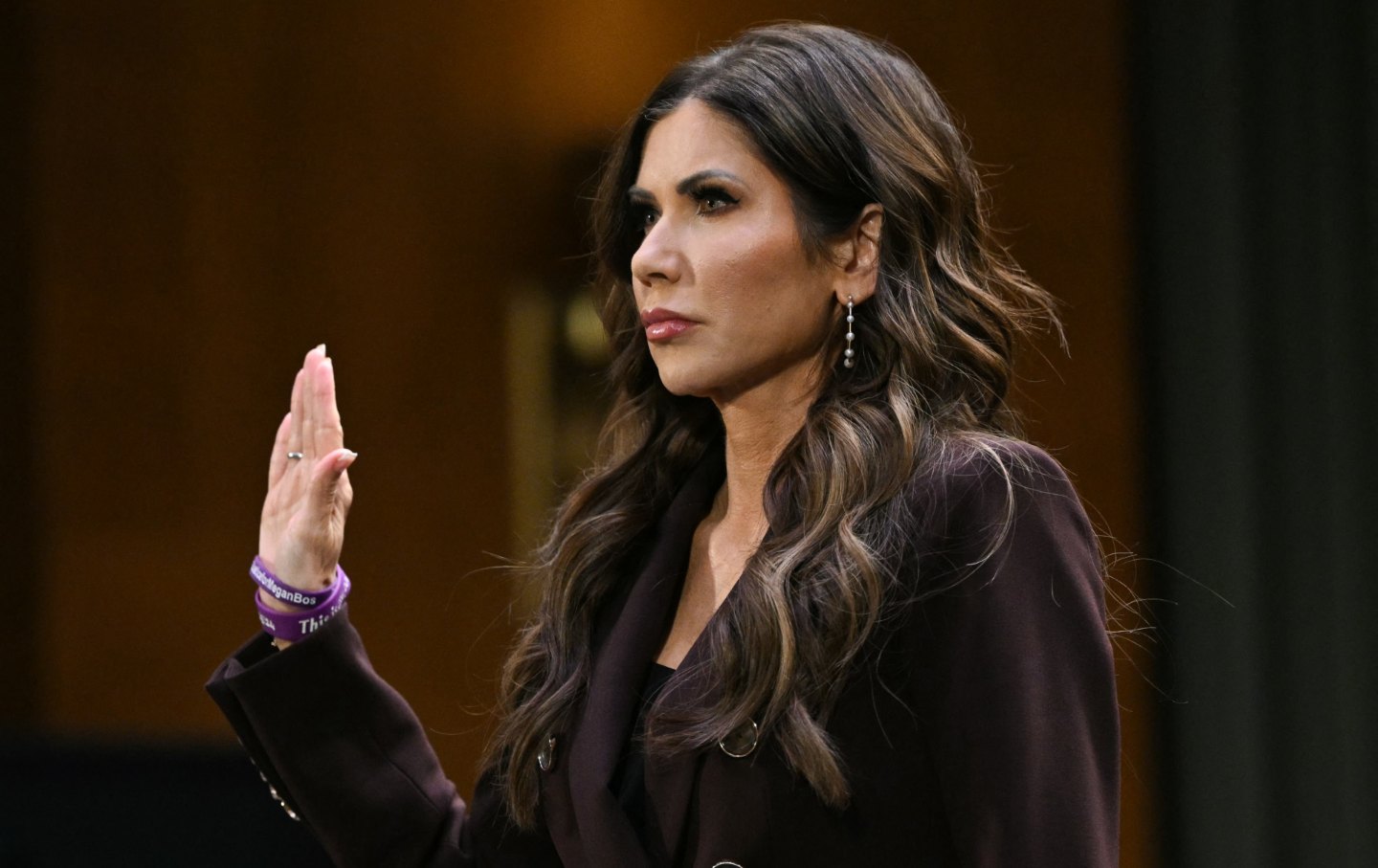
Celebrate Kristi Noem’s Firing. But Keep Protesting ICE. Celebrate Kristi Noem’s Firing. But Keep Protesting ICE.
Finally, someone in the administration is paying for their cruelty and incompetence.
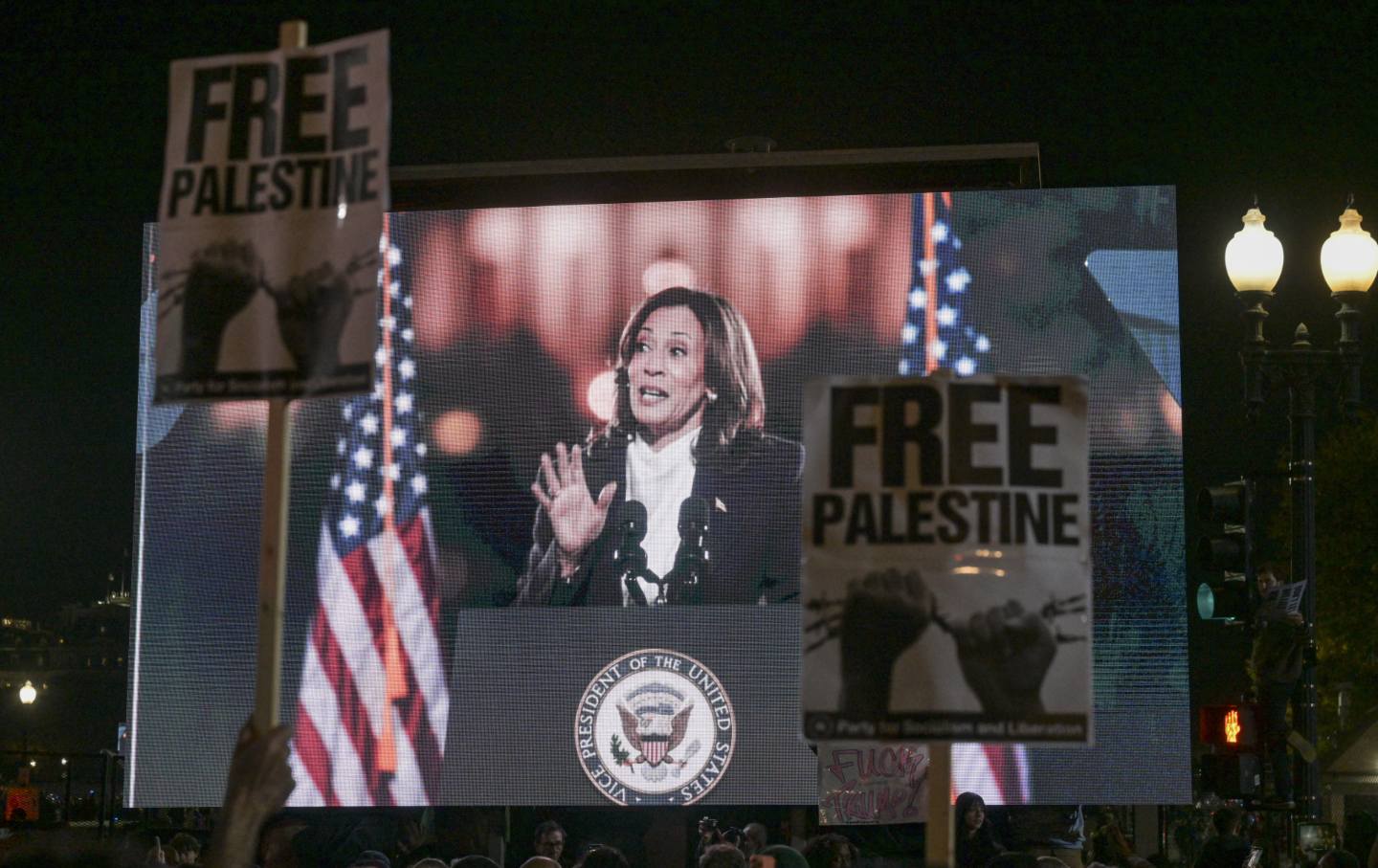
We Don’t Need an Autopsy to Tell Us the Democrats Failed on Gaza We Don’t Need an Autopsy to Tell Us the Democrats Failed on Gaza
The DNC is allegedly hiding a report showing that Kamala Harris’s Gaza policy helped cost her the 2024 election. But that report won’t tell us anything we don’t already know.

Texas’s Senate Primary Has Already Made History—and It’s Not Over Yet Texas’s Senate Primary Has Already Made History—and It’s Not Over Yet
Democratic nominee James Talarico is getting national media attention, but the real story is sky-high voter turnout, even amid GOP bids to suppress balloting
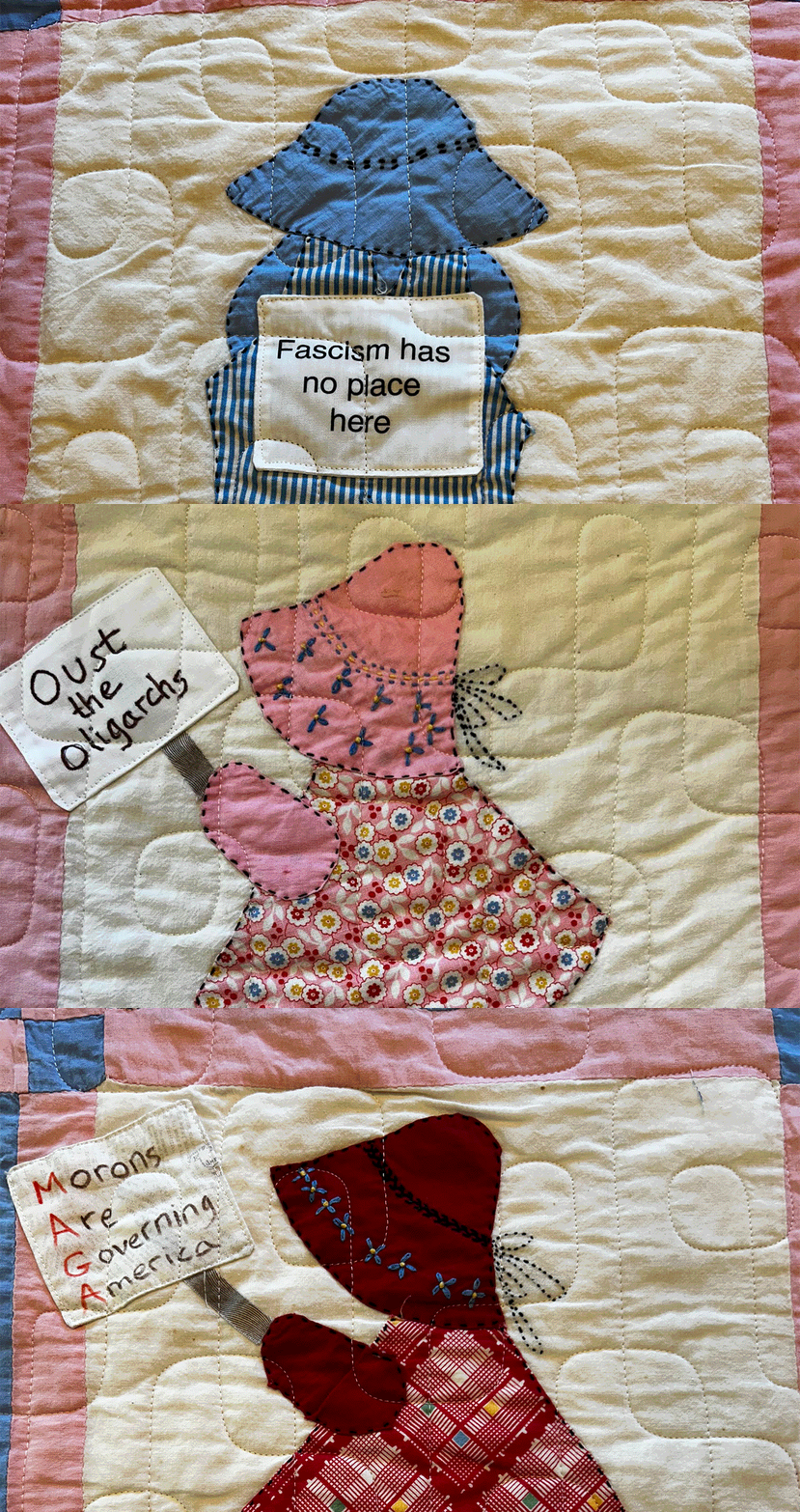
Quilted Messages Quilted Messages
Sunbonnets carrying not-so-sunny truths.
How the Theatrics of Mamdani’s Trump Meeting Backfired How the Theatrics of Mamdani’s Trump Meeting Backfired
By pandering to the president’s vanity, the New York mayor reinforced Trump’s image as a strongman commanding deference—an especially bad look on the eve of Trump’s war with Iran

Students in New York Are Going Hungry. How Can Mamdani Help? Students in New York Are Going Hungry. How Can Mamdani Help?
With plans for city-owned grocery stores and a focus on affordability, the new mayoral administration offers fresh hopes of successfully confronting the food crisis among students...

