Oatly Says Climate Action Now
The world’s largest oat drink company is printing summaries of what it calls “the ultimate climate solution” on every carton it produces.
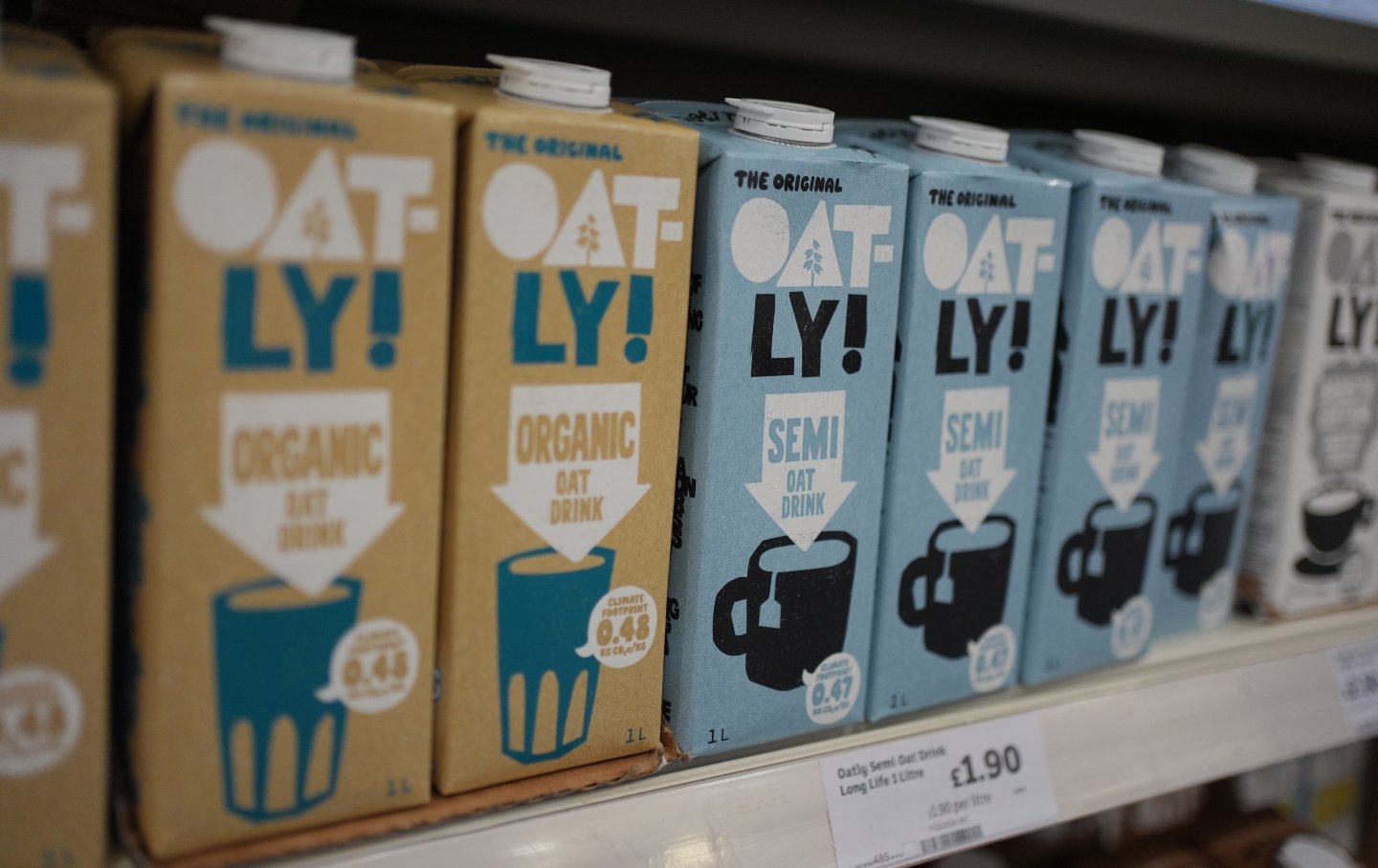
A shelf of Oatly drinks in a London supermarket.
(Yui Mok / PA Images via Getty Images)Millions of oat milk drinkers around the world are about to learn that a supermajority of people want stronger climate action. Oatly, the world’s largest oat drink company, is printing summaries of what it calls “the ultimate climate solution” on every carton it produces. In 2025, the company reported selling 593 million liters of oat milk and related products across more than 40 countries. The goal, Oatly’s senior sustainability director Caroline Reid wrote on LinkedIn, is to “unlock the power of the 89% of people” who want governments to tackle the climate crisis. This summer, that crisis has led to at least 35,000 excess deaths from extreme heat in Europe alone.
Oatly launched the awareness campaign in response to Covering Climate Now’s 89 Percent Project. The Guardian, Agence France-Presse, and dozens of other CCNow partners have been reporting for more than a year on peer-reviewed studies and opinion surveys that found that 80 to 89 percent of the world’s people want governments to “do more” about climate change. The exact percentage varies by country: In Germany (which happens to be the biggest national market for oat milk), it’s 86 percent; in India, it’s 80 percent; in the United States, it’s 74 percent. The catch is that most of these people don’t realize they are the overwhelming majority, so they tend to stay silent on climate issues.
What makes the 89 percent message “the ultimate climate solution” is that it makes many other solutions—from technologies such as rooftop solar to policies such as ending fossil fuel subsidies—more achievable. “Governments can enable and support the transition” away from fossil fuels, Reid said, and they’re more likely to do so if a massive majority of people “use your voice, use your vote.”
Oatly presents the 89 percent solution with the same puckish humor its packaging has long featured, but with an extra visual wink. The text occupies one side of each carton and is divided into two blocks. The first block is 11 words long and reads, “Politicians, these eleven words represent people not interested in climate action.” The second block’s 89 words represent “people who want their leaders and governments to take more action.” They inform the politicians that “a lot of voters could swing your way” if you take action before reassuring them, “Not that we think you’re interested in getting votes for whatever reason, no, of course not.”
Oatly’s initiative, launched last week in its home country of Sweden before expanding internationally, follows a separate 89 percent campaign that began earlier this year in Japan. Starting in April 2026 and running for the next two years, every TV station and network in Japan will air public service commercials saying that 89 percent of Japan’s people want stronger climate action, so no one should be afraid to talk about it. In June, in a related initiative, 136 Japanese news outlets also began spreading the 89 percent message via social media platforms, news releases, and other forms of public communication.
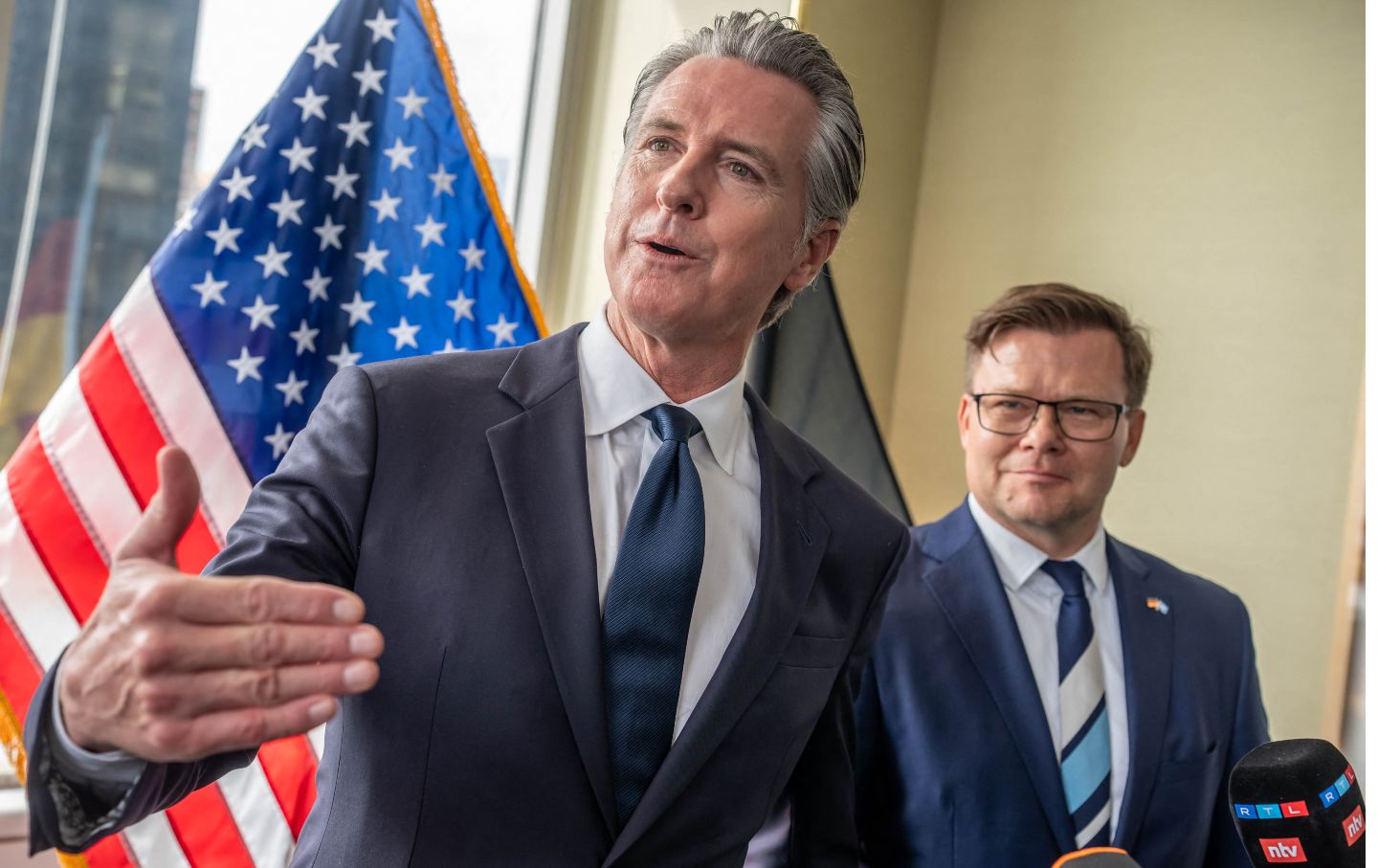
The 89 Percent Project continues in September with a CCNow interview with California Governor Gavin Newsom. Building on California’s history of bipartisan environmentalism, Newsom’s eight years in office have seen an aggressive expansion of renewable energy even as the state’s economy remains the world’s fourth largest. CCNow will interview Newsom, a likely 2028 presidential candidate, on September 23 as part of New York Climate Week.
It’s worth emphasizing how exceptional an 80 to 89 percent level of support is for any public issue. When journalists cover elections, we typically label any victory with 60 percent or more of the vote a “landslide.” An 80 to 89 percent result would be a “super-landslide.” Even in the US, a petrostate in all but name, 74 percent of people support stronger climate action.
Despite this clear global supermajority, most politicians in most countries have not implemented most of the policies and technologies needed to curb global warming. After all, even to propose such measures has long been fiercely opposed by arguably the richest, most powerful economic enterprise in history: the private and state-owned companies of the international fossil fuel industry.
The industry has spent decades and vast amounts of money backing politicians that will do its bidding and opposing those who won’t, while also denying the science showing that burning too much oil, gas, and coal would catastrophically overheat the planet. As extreme weather has gotten worse in recent years, outright denial has become less tenable and the industry and its allies have pivoted to arguing that climate change is simply too controversial to even talk about, much less to tackle. Some erstwhile supporters of climate action followed suit, as prominent voices in politics, civil society, and the media embraced “climate hushing.”
The fact that most people favoring stronger climate action mistakenly believe that they are the minority is a perverse tribute to the effectiveness of the industry’s propaganda. The 89 percent data tell a decidedly different story: They show that an enormous if largely dormant constituency of people in most countries would welcome straight talk and commonsense solutions to a crisis that is increasingly affecting their lives.
This public sentiment represents a game-changing opportunity for politicians, activists, and citizens who care about preserving a livable planet, and also sends a message to journalists and newsrooms: Don’t fall for climate hushing. The vast majority of your audience wants to know more about climate change, how it connects to the extreme weather they are experiencing, and especially how it can be tackled. That’s a subject full of drama, consequences, and heroes and villains—the essence of good storytelling. It’s high time we tell it.