
One Buyout After Another
The multibillion-dollar takeover bids targeting Warner Bros. Discovery show how Trump’s corrupt model of governance-by-payback could destroy Hollywood.
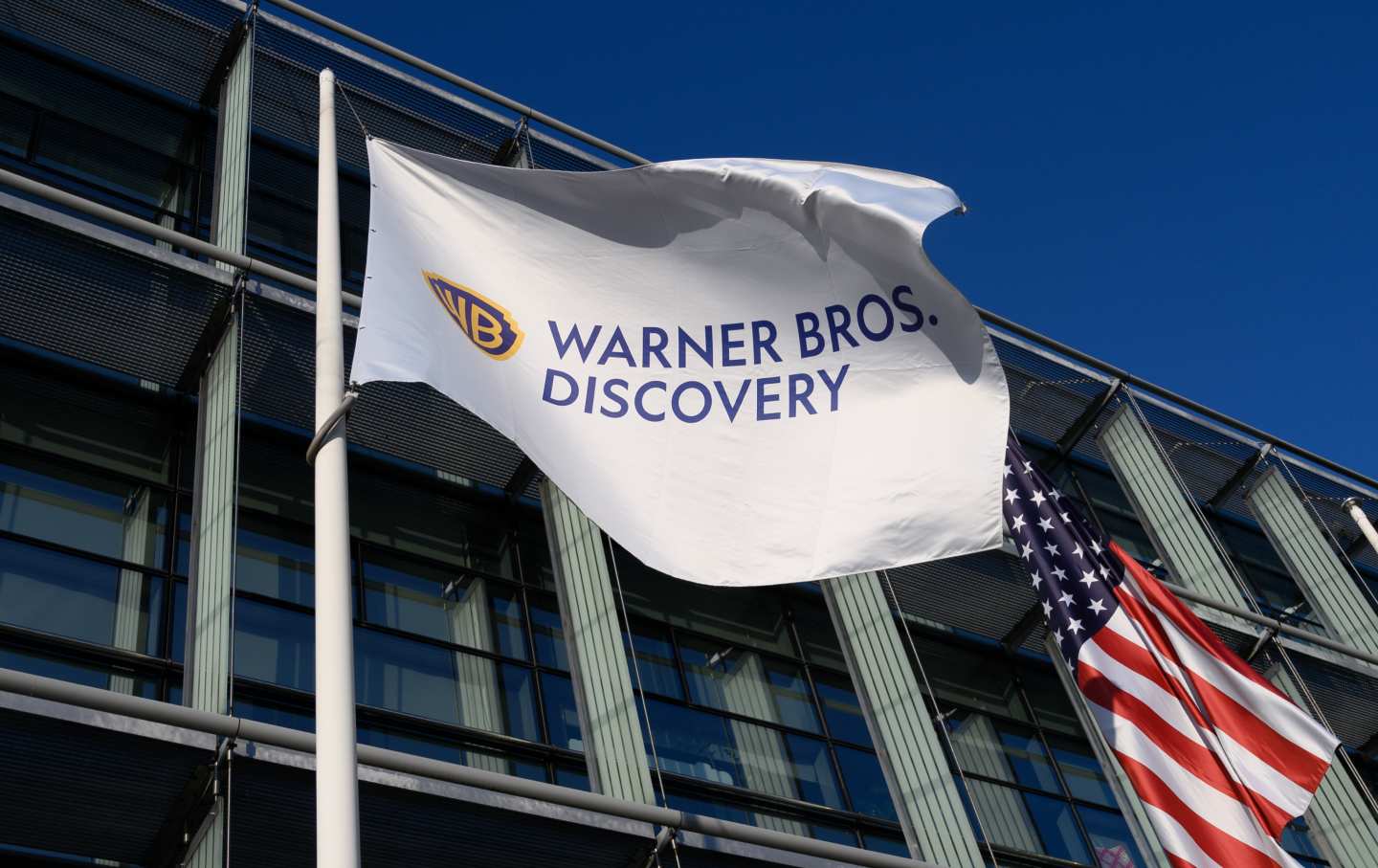
The Warner Bros. Discovery flag alongside the American one, outside Warsaw’s TVN broadcasting studio
(Aleksander Kalka / NurPhoto via Getty Images)
“None of them are particularly great friends of mine,” President Donald Trump told reporters on Monday, while discussing whom he favored in the current multibillion-dollar financial fistfight over the future of Warner Bros. Discovery (WBD). Trump was referencing the two current suitors for the beleaguered, serially merged Warner Bros. entertainment empire: Paramount-Skydance and Netflix. Trump’s announcement that he had no “great friends” in the messy WBD takeover war must have come as a surprise to the Paramount-Skydance bidding group, which includes the president’s son-in-law Jared Kushner.
The latest twist in the WBD saga is that Paramount is mounting a hostile takeover for the company, just days after the news broke that WBD’s CEO David Zaslav and the company had accepted Netflix’s $82.7 billion cash-and-equity bid. Paramount is offering to buy out WBD shareholders directly for $108 billion. David Ellison, the Skydance CEO who put together an investor group that includes three Middle Eastern sovereign wealth funds, Kushner’s Affinity Partners, and the largesse of his Silicon Valley mega-tycoon dad, Larry Ellison, promises a smooth ride for the merger in Washington, since the Ellisons’ close alliance with Trump will win them the necessary regulatory approvals.
It’s certainly true that Trump hasn’t been shy about using the federal agencies he controls—the Federal Communications Commission, and now the Federal Trade Commission for this merger—to exact tribute from media companies like Disney/ABC and CBS. And the Ellisons have been doing their utmost to uphold their end of the Trump kickback system of government. Just two weeks ago, Paramount acquiesced to Trump’s wish that the studio distribute Rush Hour 4, a Jackie Chan–Chris Tucker action comedy sequel that absolutely no one has been demanding. Trump wants it directed by Brett Ratner, who just completed a $40 million documentary on first lady Melania Trump for Amazon. Ratner got #MeToo’d in 2017 and remains so toxic in Hollywood that not only did Warner Bros. (which owns the franchise) refuse to make it with him but Paramount solely agreed to distribute it—the funders springing for Ratner’s Hollywood rehab project remain a mystery.
Paramount’s strategists no doubt counted on the Ratner deal’s receiving Trump’s favor—but they clearly didn’t reckon on the mercurial mind of Donald Trump. What apparently undermined their plan was something the president thought he was safe from on CBS: journalism. Last Sunday, the Ellisons’ TV network presented an extended interview on 60 Minutes with Trump’s chief MAGA critic, Representative Marjorie Taylor Greene. She aired a list of grievances against her onetime hero, assailing Trump for blocking the release of the Epstein files, bypassing critical healthcare subsidies, and failing to deliver on affordability. She also rebuffed Trump’s social media posts calling her a traitor by claiming that she, not Trump, was advancing the America First agenda; it was he, after all, who welcomed the crown prince of Saudi Arabia Mohammed bin Salman (MBS), President al-Sharaa of Syria, and NYC Mayor-elect Zohran Mamdani into the White House. She rightly called MBS out for the murder of dissident journalist Jamal Khashoggi, al-Sharaa for his Al Qaeda past—and then lumped Mamdani in with them as if their shared religion equates him with a despot and a terrorist.
On Monday, Trump fired up a Truth Social counterattack again targeting “Marjorie Traitor Greene” and then the Ellisons. “My real problem with the show, however, wasn’t the low IQ traitor, it was that the new ownership of 60 Minutes, Paramount, would allow a show like this to air. THEY ARE NO BETTER THAN THE OLD OWNERSHIP, who just paid me millions of Dollars for FAKE REPORTING about your favorite President, ME! Since they bought it, 60 Minutes has actually gotten WORSE!”
Well, so much for the Ellisons’ plan to bring in their big gun in the White House to close the deal. Instead, it appears to be aimed right at them. CBS News editor in chief Bari Weiss apparently does not understand the mission. Making CBS more MAGA-friendly does not mean airing the views of MAGA critics of the president. It means never airing the views of critics of the president. Loyalty in Trumpland is transactional, absolute—and always a one-way street.
What gets lost in all the court comedy is that the fate of the movie industry and the cinematic experience itself is at stake. No matter which suitor wins, moviegoers lose. To see that, all you have to do is look at the Warner Bros. 2025 slate of film offerings under the Zaslav regime and Hollywood’s current awards season. WBD was formed only in 2022, and it was buried in debt. Zaslav managed to rescue its film studio from the wreckage and entanglements just in the last year or so. This week, Warner Bros. earned 16 nominations from the Golden Globes. Paul Thomas Anderson’s One Battle After Another landed nine, following a slew of “best picture” accolades from the Los Angeles Film Critics Association, the New York Film Critics Circle, and the National Board of Review. The other WB nominees include Ryan Coogler’s Sinners and Zach Cregger’s Weapons. The studio racked up so many Golden Globe nominations that its own films compete against one another in various categories—a scenario that may well repeat at the Oscars.
Warners isn’t an indie awards-season prestige operation like Neon or A24—it’s a mainstream popcorn studio. For a generation now, a constant complaint about the Oscars is that few people ever see the indie and art-house movies the Academy nominates. Just as Warner Bros. begins making ambitious features that close that gap, it’s now fodder for conglomeratized content mills.
Its year-long golden age officially came to a close with the news of Netflix’s planned acquisition. The outcry from the industry includes an op-ed from Jane Fonda, the repudiation of both WBD suitors by the Writers Guild of America, and an anonymous letter from A-list filmmakers determined to stop the Netflix deal. As they put it, “Netflix views any time spent watching a movie in a theater as time not spent on their platform. They have no incentive to support theatrical exhibition, and they have every incentive to kill it.”
You can see that incentive guiding the theatrical release of Netflix’s highest-profile production of the year, Guillermo Del Toro’s Frankenstein. The streaming giant scored 13 nominations from the Golden Globes on Monday, and Frankenstein led the pack with five. At first glance, it appears that Netflix did what one hopes any great Hollywood studio would do—it backed a multi-Oscar-winning auteur on a dream project with a reported $120 million budget. Yet the devil’s bargain is Netflix’s decision to release Del Toro’s movie to both much fanfare and theatrical irrelevance. After orchestrating Frankenstein’s high-profile premiere, the company waited just 21 days into its theatrical release to place the film on its streaming platform. To date, it has yielded a total worldwide box office of $480,678. The money doesn’t speak to the success or quality of Del Toro’s movie—but it does speak to how hostile Netflix is to the idea that movies should lure audiences out of their own living rooms. Frankenstein’s limited run, like most Netflix theatrical limited releases, was meant to qualify it for the Oscars. In other words, it’s a movie whose backers always meant it as a TV production.
Whether this becomes a new standard in filmmaking may largely be up to Trump. His comments on the rivalry between Netflix and Skydance-Paramount made it clear that he sees himself as a central player. “I know the companies very well,” he said on Monday. “I know what they are doing. But I have to see…what percentage of the market they have. We have to see the Netflix percentage of market, Parmount percentage of market.” Trump likely cares less about market domination than his own ability to call the shots and get paid one way or another—but he’s planning to take that role very seriously.
As for Skydance-Paramount, on a Tuesday media call, David Ellison laid out his new bidding strategy while making a hard pitch that his company is a more trustworthy guardian of Hollywood’s creative legacy. He leaned into the creative community’s fears about Netflix. “Paramount is committed to growing the film and TV output of both businesses, including a theatrical slate of 30 plus theatrical releases per year,” he said. “We’re going to satisfy the needs of the moviegoing public.”
Thirty movies a year sounds great. But from one studio? When it comes to market share, having one mega-studio backing that many films gives one pause. When Ellison says “both businesses,” what does he mean? When Disney bought 21st Century Fox from Rupert Murdoch in 2019, it transformed the studio into an imprint of Disney, following the model it pursued in its purchases of Lucasfilm and Marvel. Instead of a rival studio offering an alternative to Disney, Fox became a subsidiary that exists chiefly to advance Disney’s agenda. That’s all Warner Bros. would become under Skydance.
As for the audience, the Ellisons seem keen to emblazon the MAGA worldview across their properties, to judge both by the Trumpian makeover of CBS News and Paramount’s involvement in Rush Hour 4. There’s nothing wrong with David Ellison imposing his vision on his studio. It would, in some respects, be a welcome change for a studio owner to make movies with something more at stake than the flogging of well-worn intellectual properties and retooling an endless stream of comic-book franchises. Ellison would hardly be the first studio boss with conservative views. In the old studio era, Louis B. Mayer and Irving Thalberg were well-known supporters of President Herbert Hoover and had no problem imposing those views on their films. Their crosstown rivals, Harry and Jack Warner, supported FDR’s New Deal and happily did the same with their movies.
Should the Ellisons buy Warner Bros., it’s hard to see them going out of their way to make films likely to offend MAGA sensibilities such as One Battle After Another (anti-ICE) or Sinners (anti-assimilation, anti–white supremacy), or Superman (pro-immigrant)—especially when they need to keep Trump happy. Earlier this year, Warner Bros. backed Mickey 17 by Bong Joon Ho—the filmmaker whom Trump denounced when his Korean-produced film Parasite won Best Picture in 2019.
Popular
“swipe left below to view more authors”Swipe →David Ellison running his studio with a right-wing point of view would give filmmakers with similar or adjacent views a place to go. You do not have to root for them; you do not have to pay to see them, and you do not gotta hand it to their politics under any circumstances—but libertarians, conservatives, and/or MAGA artists like Clint Eastwood, Sydney Sweeney, Jason Reitman, David Mamet, Sylvester Stallone, Arnold Schwarzenegger, Taylor Sheridan, and Jon Voight have made some great movies.
Would Ryan Coogler or Paul Thomas Anderson find a home there? That’s doubtful—after all, Trump pulled for Paramount to acquire CNN in the WBD deal for one simple and petty reason: to silence criticism on a cable network he’s long reviled. Stephen Colbert and Jimmy Kimmel were two early victims of Trump’s media wrath. It’s a no-brainer that there would be more. And it’s why Trump abruptly withdrew his favor from Paramount when CBS not only failed to silence but actually platformed one of his most influential critics in the conservative movement.
It’s bad for the industry if Warner Bros. winds up as a “content” producer in a streaming empire out to crush the theater business. It’s equally bad if the studio ends up as a production company within a conglomerate following marching orders from the White House to make Rush Hour 4, 5, and 6. The best possible result would be for Trump to block both offers—a reasonable scenario in a normal administration—but who could afford to write him the check to do it?
Support independent journalism that does not fall in line
Even before February 28, the reasons for Donald Trump’s imploding approval rating were abundantly clear: untrammeled corruption and personal enrichment to the tune of billions of dollars during an affordability crisis, a foreign policy guided only by his own derelict sense of morality, and the deployment of a murderous campaign of occupation, detention, and deportation on American streets.
Now an undeclared, unauthorized, unpopular, and unconstitutional war of aggression against Iran has spread like wildfire through the region and into Europe. A new “forever war”—with an ever-increasing likelihood of American troops on the ground—may very well be upon us.
As we’ve seen over and over, this administration uses lies, misdirection, and attempts to flood the zone to justify its abuses of power at home and abroad. Just as Trump, Marco Rubio, and Pete Hegseth offer erratic and contradictory rationales for the attacks on Iran, the administration is also spreading the lie that the upcoming midterm elections are under threat from noncitizens on voter rolls. When these lies go unchecked, they become the basis for further authoritarian encroachment and war.
In these dark times, independent journalism is uniquely able to uncover the falsehoods that threaten our republic—and civilians around the world—and shine a bright light on the truth.
The Nation’s experienced team of writers, editors, and fact-checkers understands the scale of what we’re up against and the urgency with which we have to act. That’s why we’re publishing critical reporting and analysis of the war on Iran, ICE violence at home, new forms of voter suppression emerging in the courts, and much more.
But this journalism is possible only with your support.
This March, The Nation needs to raise $50,000 to ensure that we have the resources for reporting and analysis that sets the record straight and empowers people of conscience to organize. Will you donate today?
More from The Nation
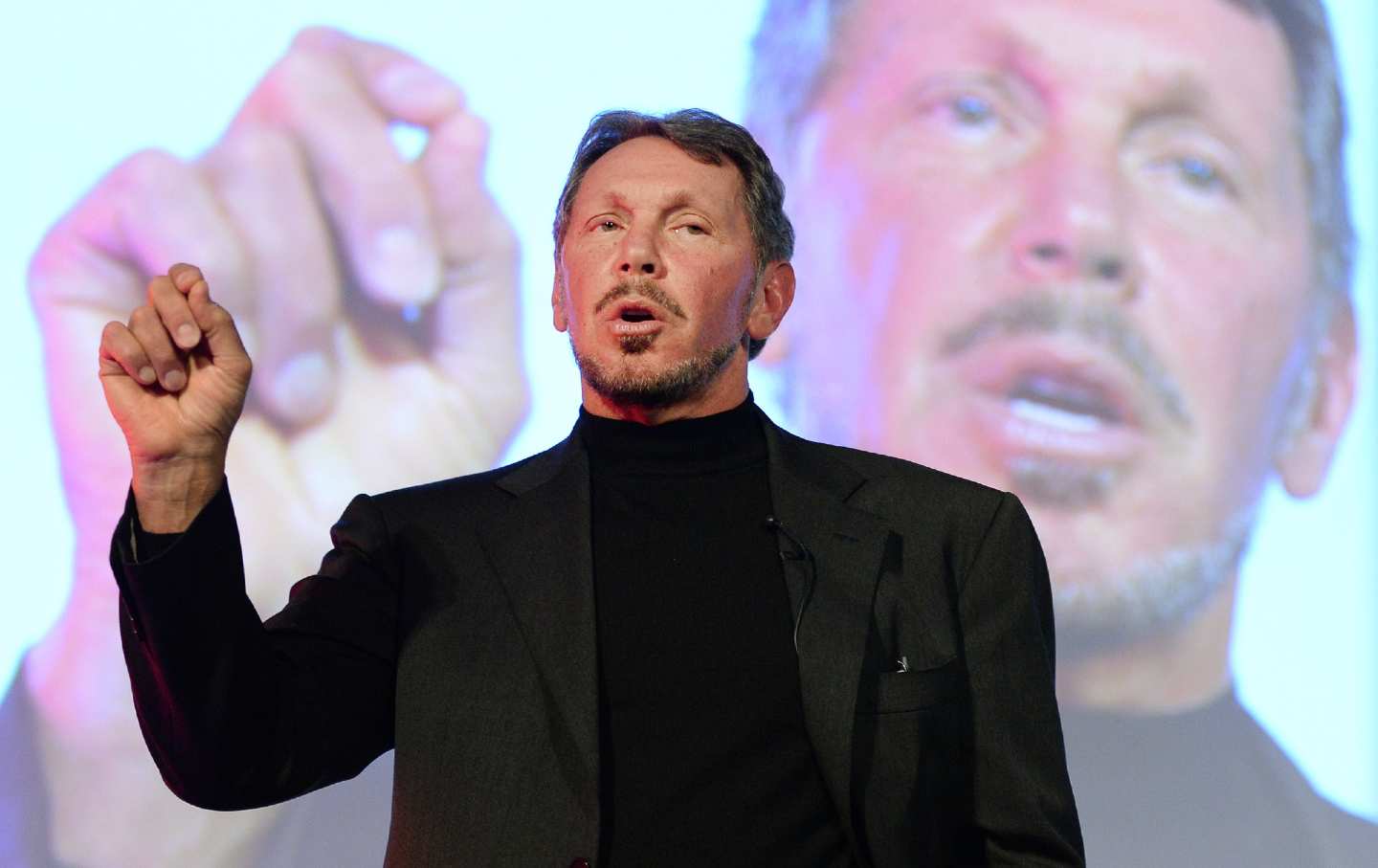
How Larry Ellison’s Acquisition Binge Began in Hawaii How Larry Ellison’s Acquisition Binge Began in Hawaii
In 2012, the Oracle CEO bought most of the island of Lānaʻi. What happened next doesn’t bode well for his new empire of media properties.
Larry Summers, We Knew Ye Too Well Larry Summers, We Knew Ye Too Well
The former Harvard president and Treasury secretary has resigned over humiliating disclosures in the Epstein files. But will that be enough to keep an ardent neoliberal down?

Binance’s MAGA-Branding Strategy Binance’s MAGA-Branding Strategy
The world’s largest crypto exchange often operates beyond the reach of the law. Now it’s helping to enrich the Trump family.

How Brothel Workers in Nevada Just Made Labor History How Brothel Workers in Nevada Just Made Labor History
The courtesans at Sheri’s Ranch were staring down a horrifying new contract. So they did what workers everywhere do: They got organized.
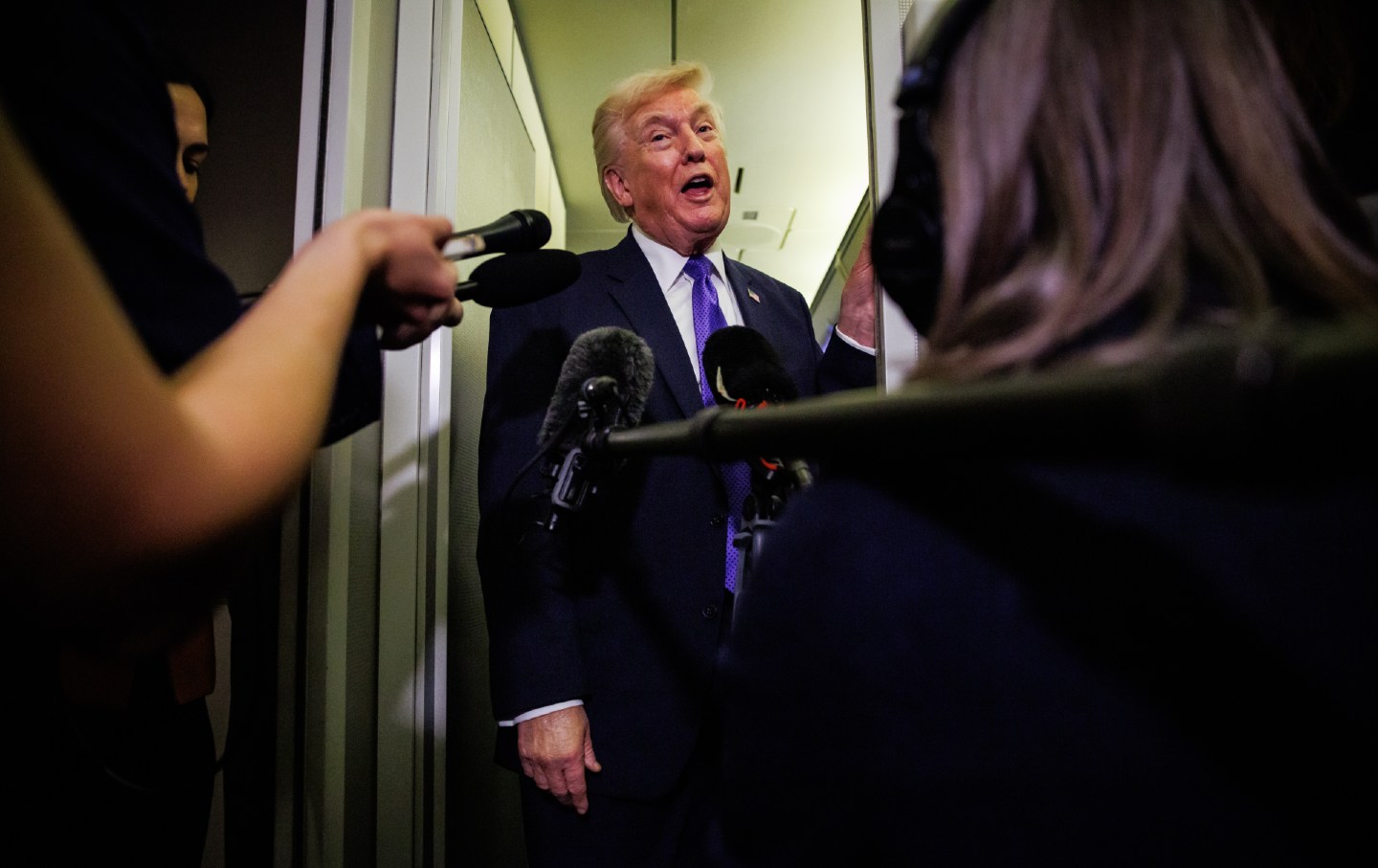
Don’t Let Trump Fool You. The Economy Is Bad, and He Is to Blame. Don’t Let Trump Fool You. The Economy Is Bad, and He Is to Blame.
The Trump administration’s efforts to distract from the bad economy just divert attention from one dumpster fire to another.
Why Elon Musk’s Latest Mega Merger Is Little More than Vaporware Why Elon Musk’s Latest Mega Merger Is Little More than Vaporware
The tech mogul and would-be space pioneer is mashing up his properties once more in a deal that's unlikely to achieve escape velocity .

