Molly Crabapple’s Time Capsule of Resistance
A new set of note cards by the artist and writer documents scenes of protest in the 21st century.
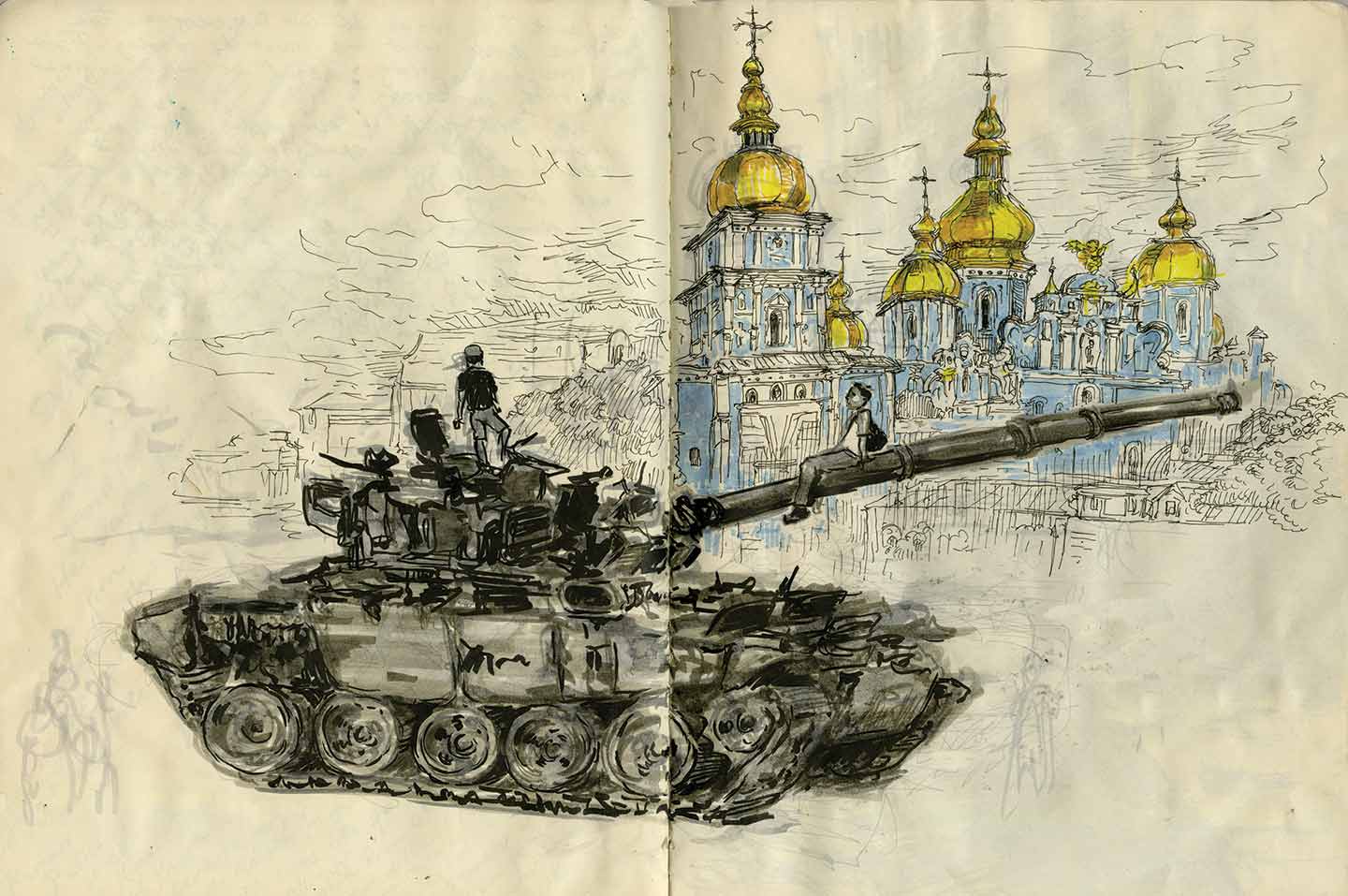
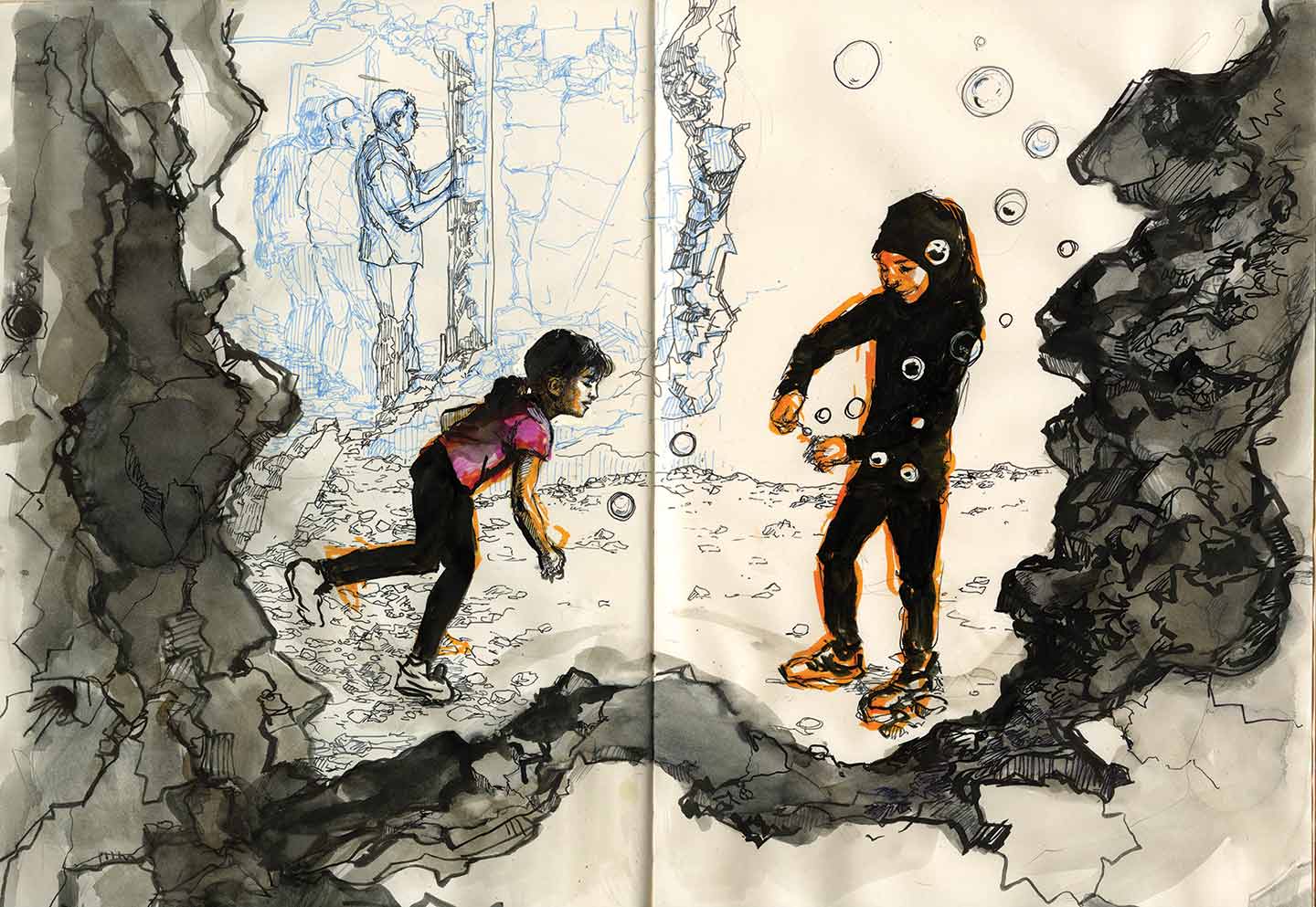
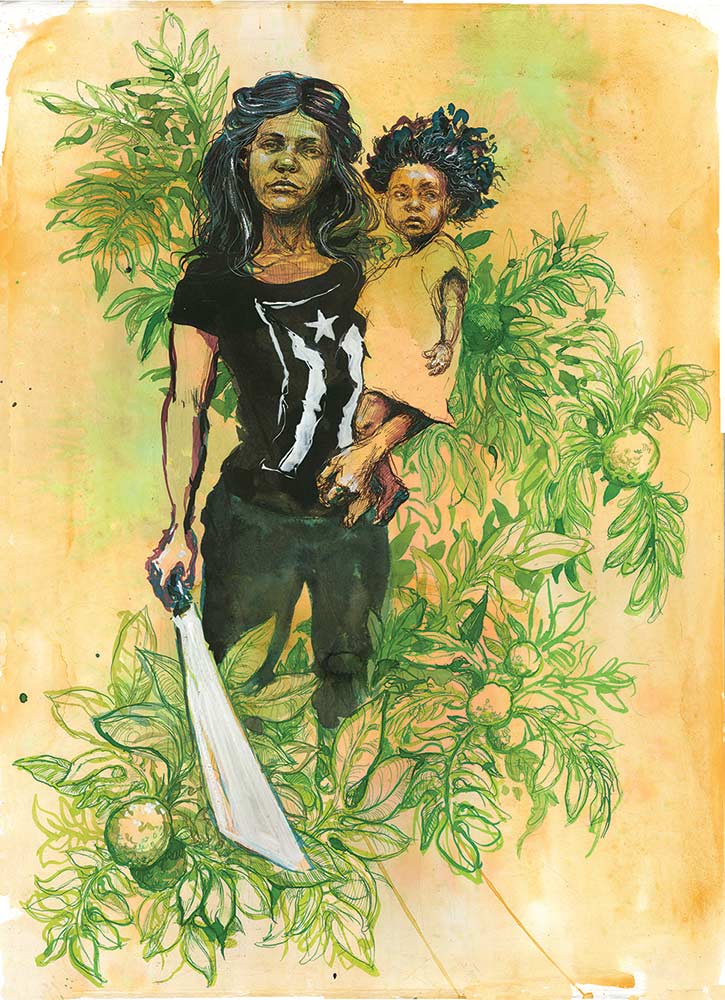
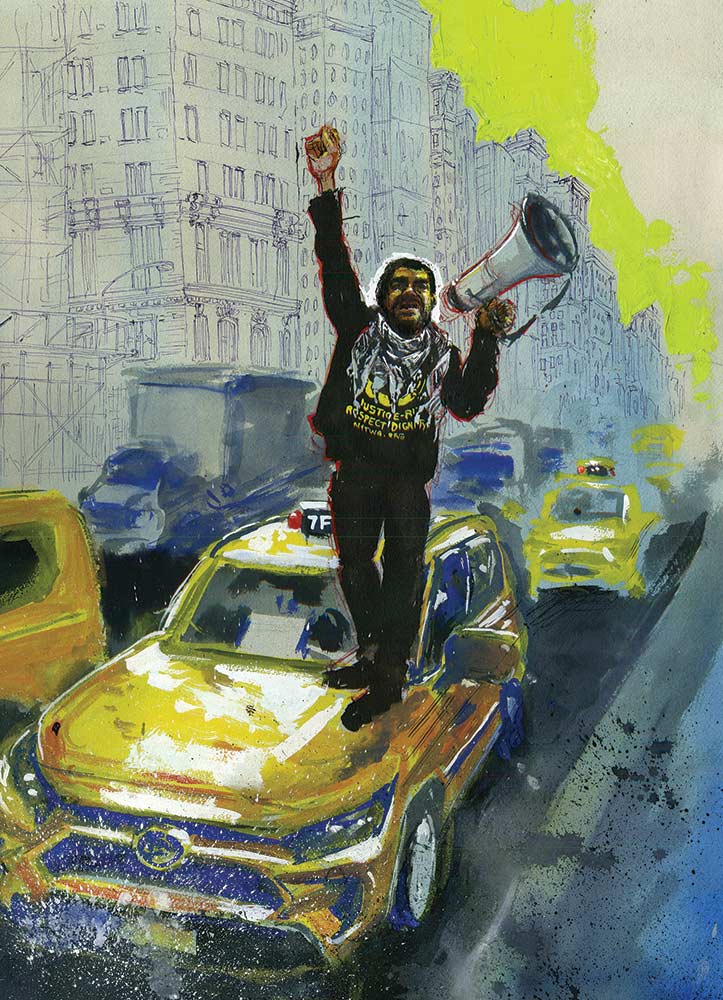
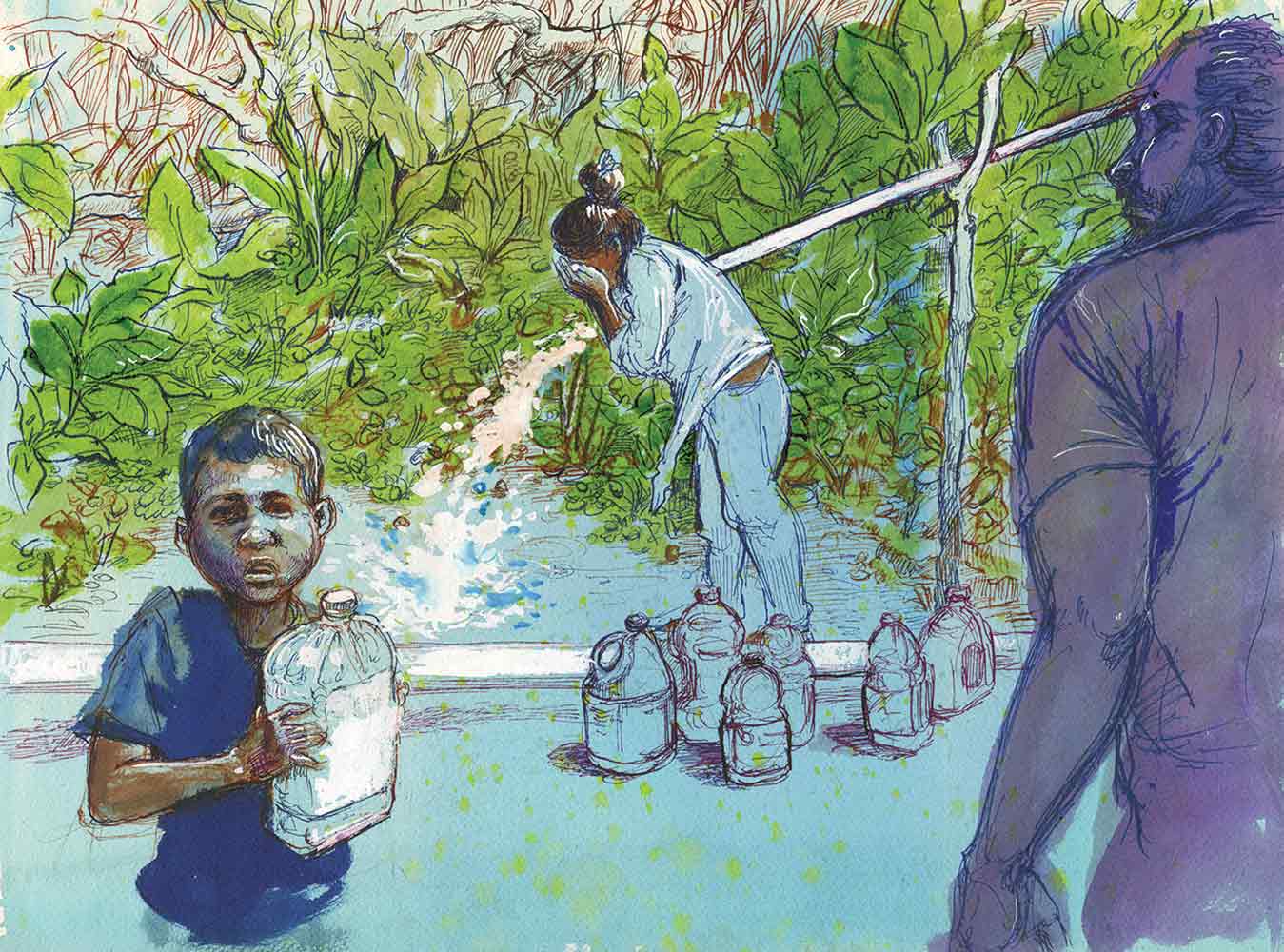
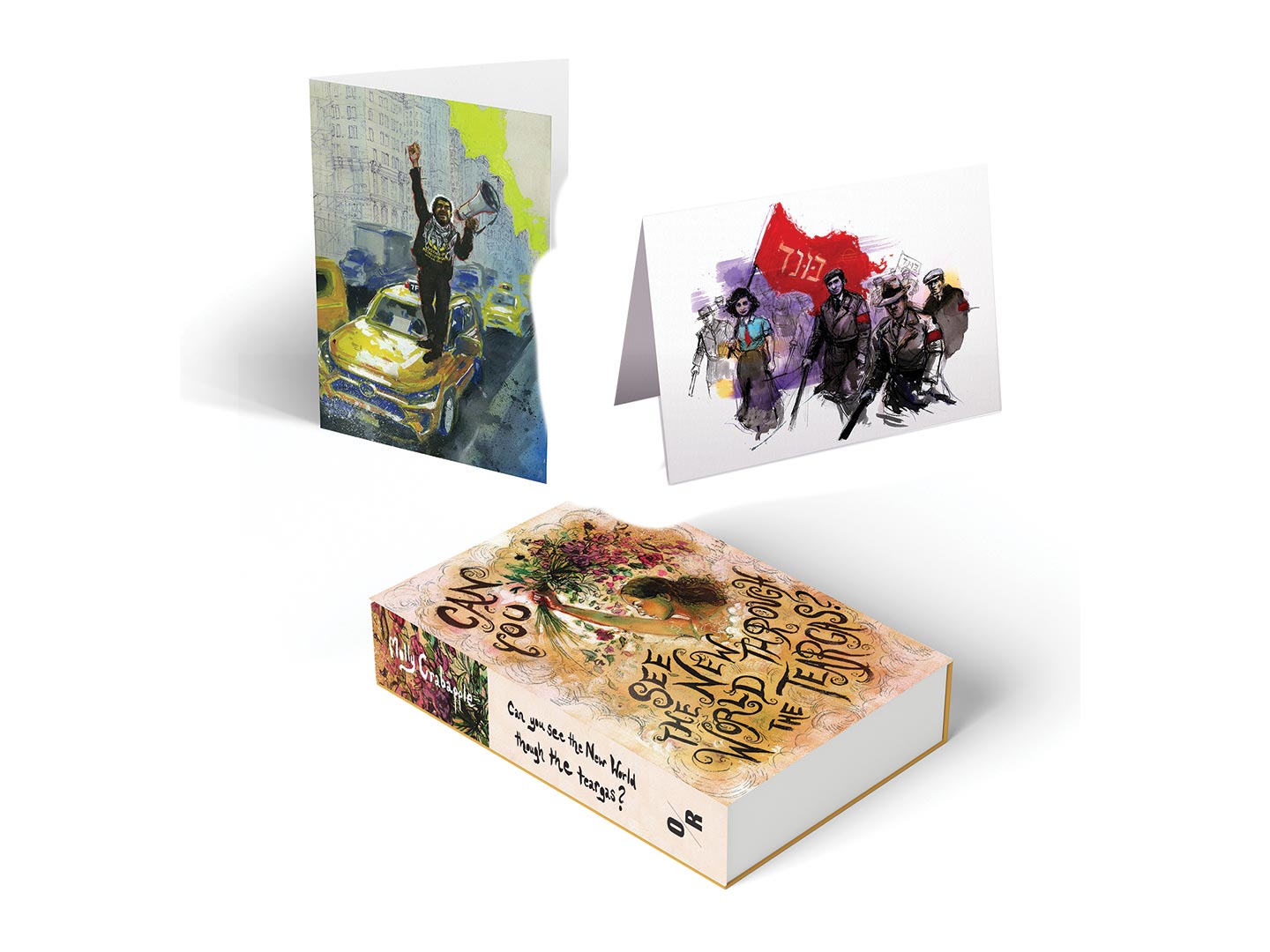
I’ve spent the past 15 years traveling around the world and documenting history as it happens. I use my sketch pad the way a photojournalist might use their camera: to capture scenes of protest, celebration, repression, and revolt. OR Books has gathered some of my favorite pieces for a collectible note-card set, titled Can You See the New World Through the Teargas? Use these cards to write love letters or ransom notes. Or get them framed for your wall. And remember: Every handwritten letter is a rebellion against Silicon Valley dystopia.
The pictures in this set range from kids playing with their kitten in the Aida Refugee Camp near Bethlehem, to a showtime dancer doing backflips in a New York City subway car, to images from the trial of Luigi Mangione. For all of them, I tried to use the lessons I first learned at 20 while sketching next to the stages of underground nightclubs. Each fleet-footed second is a universe of impossible richness. Look hard. Draw fast. Be ruthless. Get it right.
Your support makes stories like this possible
From Minneapolis to Venezuela, from Gaza to Washington, DC, this is a time of staggering chaos, cruelty, and violence.
Unlike other publications that parrot the views of authoritarians, billionaires, and corporations, The Nation publishes stories that hold the powerful to account and center the communities too often denied a voice in the national media—stories like the one you’ve just read.
Each day, our journalism cuts through lies and distortions, contextualizes the developments reshaping politics around the globe, and advances progressive ideas that oxygenate our movements and instigate change in the halls of power.
This independent journalism is only possible with the support of our readers. If you want to see more urgent coverage like this, please donate to The Nation today.