
New York City Might Elect a Truly Progressive Mayor—Thanks to Ranked-Choice Voting
Mamdani’s campaign deserves credit for offering a clear, inspiring, progressive message. But ranked-choice voting is also helping to make him competitive.
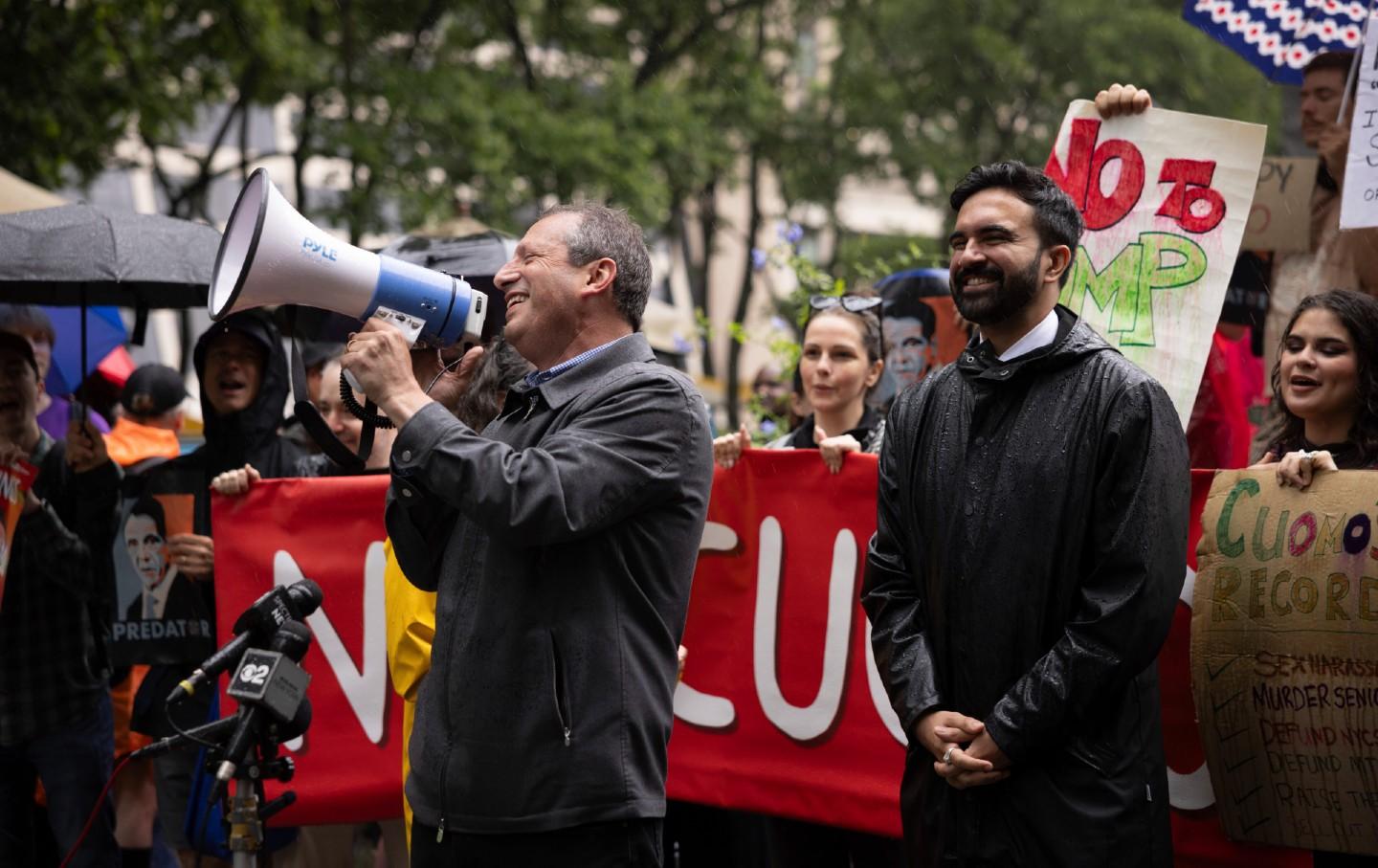
With a week left until New York’s Democratic mayoral primary, one might have thought that former governor Andrew Cuomo would be measuring the drapes at Gracie Mansion. Real estate developers, corporations like Doordash, a smattering of billionaires and even Billy Joel have shoveled cash into his campaign, with his Super Pac spending more money than any other outside force in the city’s political history. This is on top of his entering the race with a major name-recognition advantage, amounting to a 20- or 30-point lead as recently as May.
But according to a new poll, Zohran Mamdani—the insurgent state assemblyman and democratic socialist whom The Nation recently co-endorsed along with fellow mayoral candidate New York City Comptroller Brad Lander—has pulled ahead of Cuomo for the first time.
And while Mamdani’s campaign deserves credit for offering a clear, inspiring, progressive message, the fact that he is competitive can also be partly credited to New York City’s ranked-choice voting (RCV) system. It’s a winning system for candidates who would otherwise be sidelined or would cannibalize one another’s support—and for voters who can finally cast their ballots based on policy rather than pragmatism.
America’s politics have long been dominated (or diluted) by first-past-the-post voting. In it, citizens cast their ballot for one candidate, and whoever receives the most votes wins. Straightforward as it seems, this method forces an either/or choice, often resulting in voters’ deciding between the lesser of two evils. Not only does this reinforce a two-party duopoly in general elections, but it also incentivizes a binary choice between the two leading candidates in primaries.
For the candidates themselves, the system encourages scorched-earth campaigns that divide parties and inflame the narcissism of small differences. The progressive Senators Bernie Sanders and Elizabeth Warren came into the 2020 Democratic presidential primary as allies with much more in common ideologically than their centrist opponents. But there was no electoral incentive for either of them to form an alliance with the other. Instead, they fought to consolidate a minority faction within the party, and got mired in a grisly and public feud. The mudslinging did leave one person standing—Joe Biden.
In contrast, RCV makes it possible for dark-horse candidates to work together. After Mamdani’s campaign reached the fundraising limit, he urged his supporters to donate to a fellow anti-Cuomo candidate, Adrienne Adams. Adams, in turn, has maintained a focus on criticizing Cuomo, even deleting a tweet that was perceived as a swipe at Mamdani. These contenders are making it clear they truly believe—as The Nation’s editorial board wrote in our endorsement—New Yorkers deserve better than Andrew Cuomo.
Critics of ranked-choice voting argue that it’s too confusing, but successful implementations of the system in other jurisdictions suggest otherwise. In Alaska’s 2022 congressional special election, the first statewide RCV election there, 85 percent of people who cast their ballots said they found the method to be simple. It also enabled the Democrat Mary Peltola to fend off an extremist challenge from Sarah Palin. Maine has also seen promising results from RCV, with 60 percent of its voters favoring the system. Cities like Minneapolis and Cambridge, Massachusetts, have enjoyed higher turnout after the implementation of RCV.
But RCV is only as effective as its participants make it. Ahead of New York City’s mayoral primary in 2021, I wrote a column expressing high hopes for how the debut of RCV could reshape the city’s politics. But that race became chaotic for other reasons.
Scott Stringer and Dianne Morales’s campaigns collapsed. Advocacy groups had to un-endorse and re-endorse—in some cases, multiple times. There was a progressive effort to coalesce around Maya Wiley, including a belated endorsement from Alexandria Ocasio-Cortez. Meanwhile, pragmatists who felt Eric Adams and Andrew Yang lacked substance turned to the sanitation commissioner, Kathryn Garcia. If Wiley and Garcia had cross-endorsed, one of them might have defeated Adams. Instead, Adams won the primary in the final round by just over 7,000 votes.
This time, the mayoral candidates seem to have learned. On Friday, Mamdani and Lander cross-endorsed each other, encouraging their supporters to rank the other second. Mamdani explained the decision with a refreshing mix of idealism and realism: “This is the necessary step to ensure that we’re not just serving our own campaigns—we’re serving the city at large.” This was followed by another cross-endorsement, between Mamdani and former assemblyman Michael Blake, on Monday. And the national progressive movement is much more united than it was in 2021, with both Ocasio-Cortez and Sanders endorsing Mamdani in the home stretch this time.
By treating each other like allies rather than adversaries, the anti-Cuomo coalition might just prevail. If anything, it is the establishment wing of the New York Democratic party that is struggling to coalesce—as evinced by The New York Times’ non-endorsement endorsement that, if you squint, could be perceived as encouraging New Yorkers to support Cuomo, Lander, hedge fund manager Whitney Tilson, or flee the city.
The Nation has a long history of covering New York’s mayoral races. Although no New York mayor has been elected to higher office since 1869—just four years after the magazine was founded—the office has long held fascinating implications for American progressivism.
Popular
“swipe left below to view more authors”Swipe →Fiorello La Guardia, whom Mamdani and Lander have both named as the greatest mayor in the city’s history, took office at the height of the Great Depression and led the city through the Second World War. Over 12 years of cascading crises, he transformed the city with a bold vision characterized by expanding public housing and public spaces, curbing corruption, and unflinchingly supporting the reforms of the New Deal.
Now, nearly a century later, New Yorkers have an opportunity to bring the city into a new era once again. And ordinarily, making that kind of change possible would require making a tough choice. But if it happens this time, it will be because of a ranked choice.
Support independent journalism that does not fall in line
Even before February 28, the reasons for Donald Trump’s imploding approval rating were abundantly clear: untrammeled corruption and personal enrichment to the tune of billions of dollars during an affordability crisis, a foreign policy guided only by his own derelict sense of morality, and the deployment of a murderous campaign of occupation, detention, and deportation on American streets.
Now an undeclared, unauthorized, unpopular, and unconstitutional war of aggression against Iran has spread like wildfire through the region and into Europe. A new “forever war”—with an ever-increasing likelihood of American troops on the ground—may very well be upon us.
As we’ve seen over and over, this administration uses lies, misdirection, and attempts to flood the zone to justify its abuses of power at home and abroad. Just as Trump, Marco Rubio, and Pete Hegseth offer erratic and contradictory rationales for the attacks on Iran, the administration is also spreading the lie that the upcoming midterm elections are under threat from noncitizens on voter rolls. When these lies go unchecked, they become the basis for further authoritarian encroachment and war.
In these dark times, independent journalism is uniquely able to uncover the falsehoods that threaten our republic—and civilians around the world—and shine a bright light on the truth.
The Nation’s experienced team of writers, editors, and fact-checkers understands the scale of what we’re up against and the urgency with which we have to act. That’s why we’re publishing critical reporting and analysis of the war on Iran, ICE violence at home, new forms of voter suppression emerging in the courts, and much more.
But this journalism is possible only with your support.
This March, The Nation needs to raise $50,000 to ensure that we have the resources for reporting and analysis that sets the record straight and empowers people of conscience to organize. Will you donate today?
More from The Nation
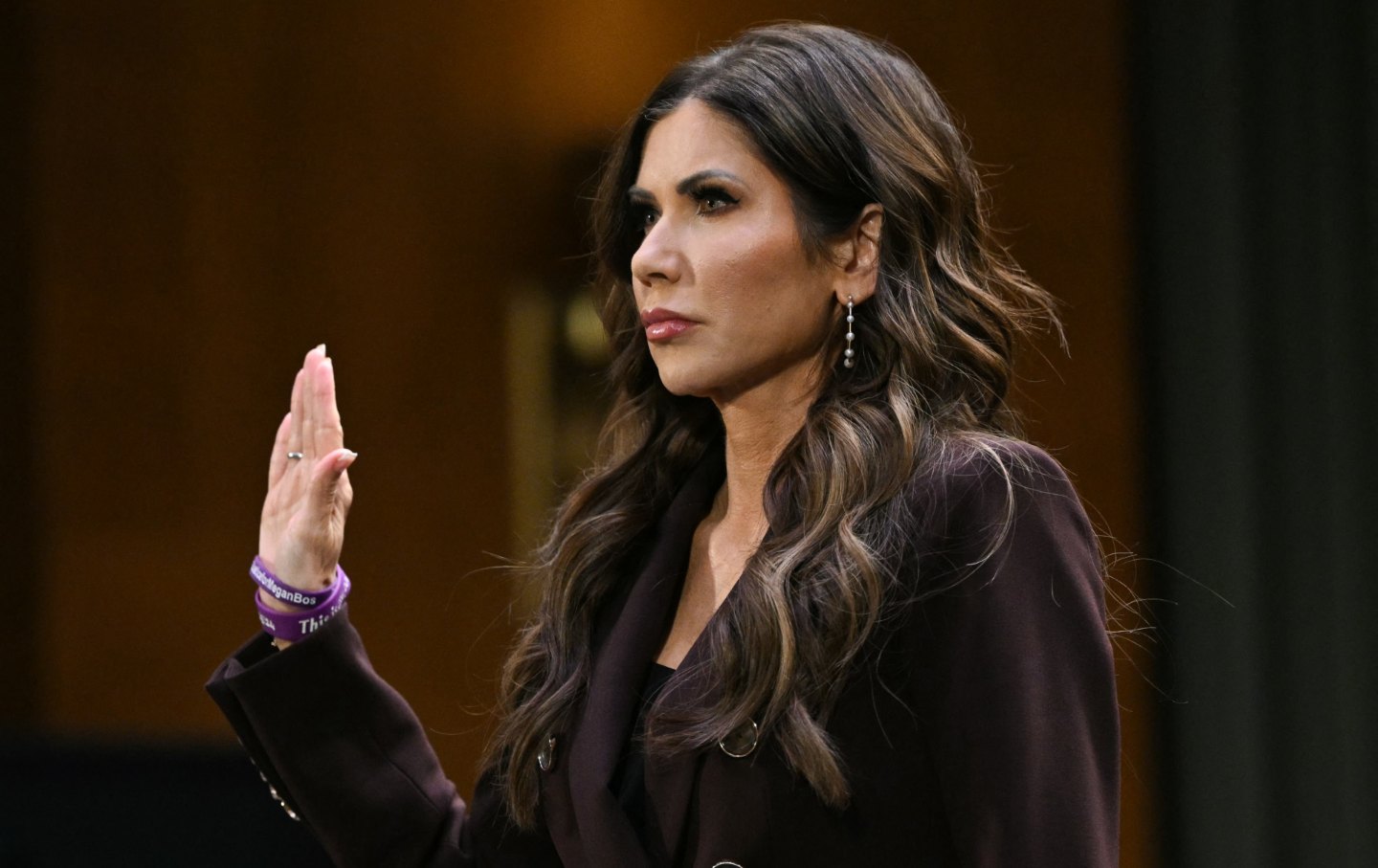
Celebrate Kristi Noem’s Firing. But Keep Protesting ICE. Celebrate Kristi Noem’s Firing. But Keep Protesting ICE.
Finally, someone in the administration is paying for their cruelty and incompetence.

Trump and His Soulless Cronies Have Managed to Suck the Joy Out of the World Cup Trump and His Soulless Cronies Have Managed to Suck the Joy Out of the World Cup
Not even soccer is immune from Trump’s reverse Midas touch.

The Real Reason Americans Love Guns The Real Reason Americans Love Guns
With a weak social safety net, a gun offers a false sense of personal power and security.
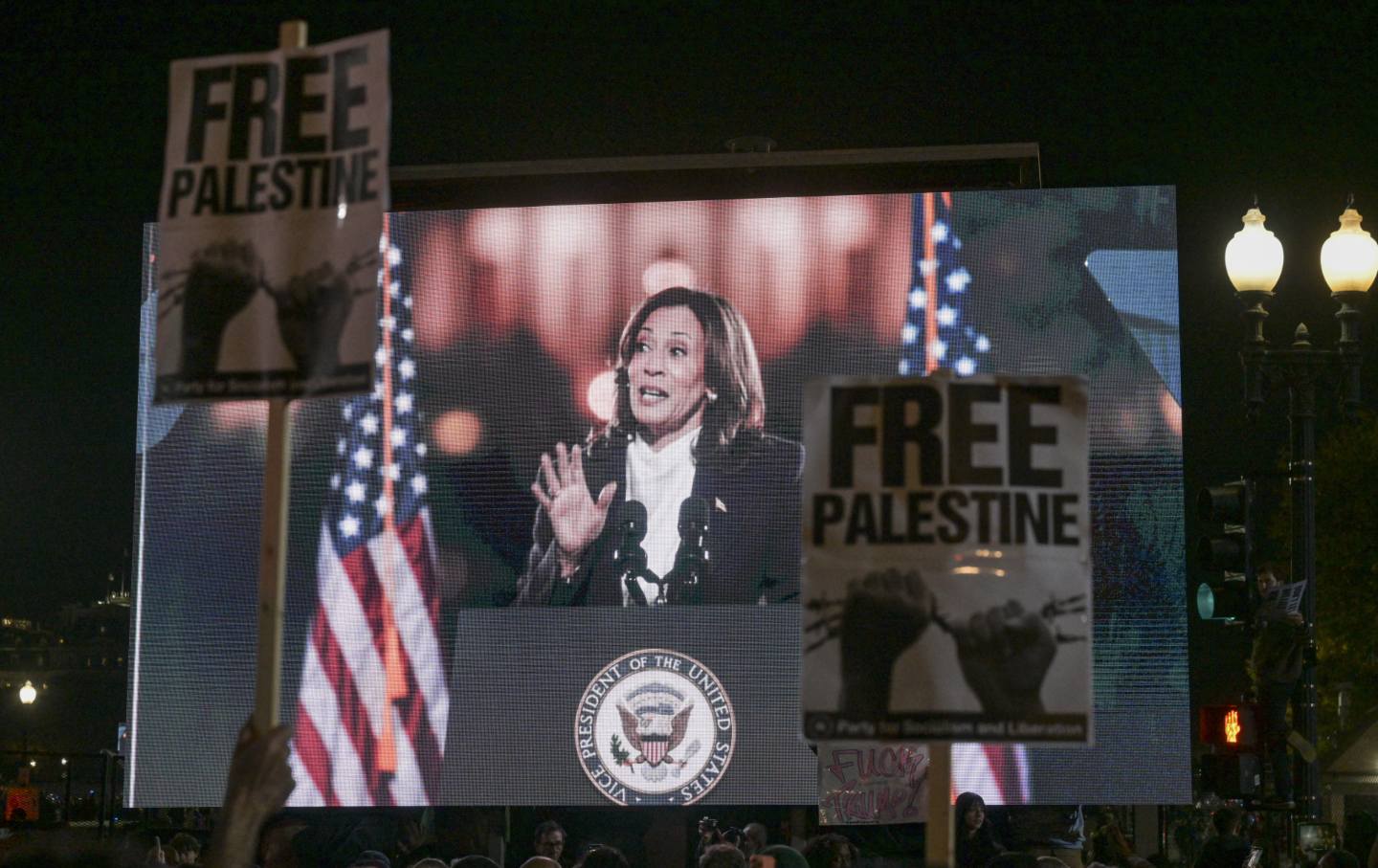
We Don’t Need an Autopsy to Tell Us the Democrats Failed on Gaza We Don’t Need an Autopsy to Tell Us the Democrats Failed on Gaza
The DNC is allegedly hiding a report showing that Kamala Harris’s Gaza policy helped cost her the 2024 election. But that report won’t tell us anything we don’t already know.

Texas’s Senate Primary Has Already Made History—and It’s Not Over Yet Texas’s Senate Primary Has Already Made History—and It’s Not Over Yet
Democratic nominee James Talarico is getting national media attention, but the real story is sky-high voter turnout, even amid GOP bids to suppress balloting
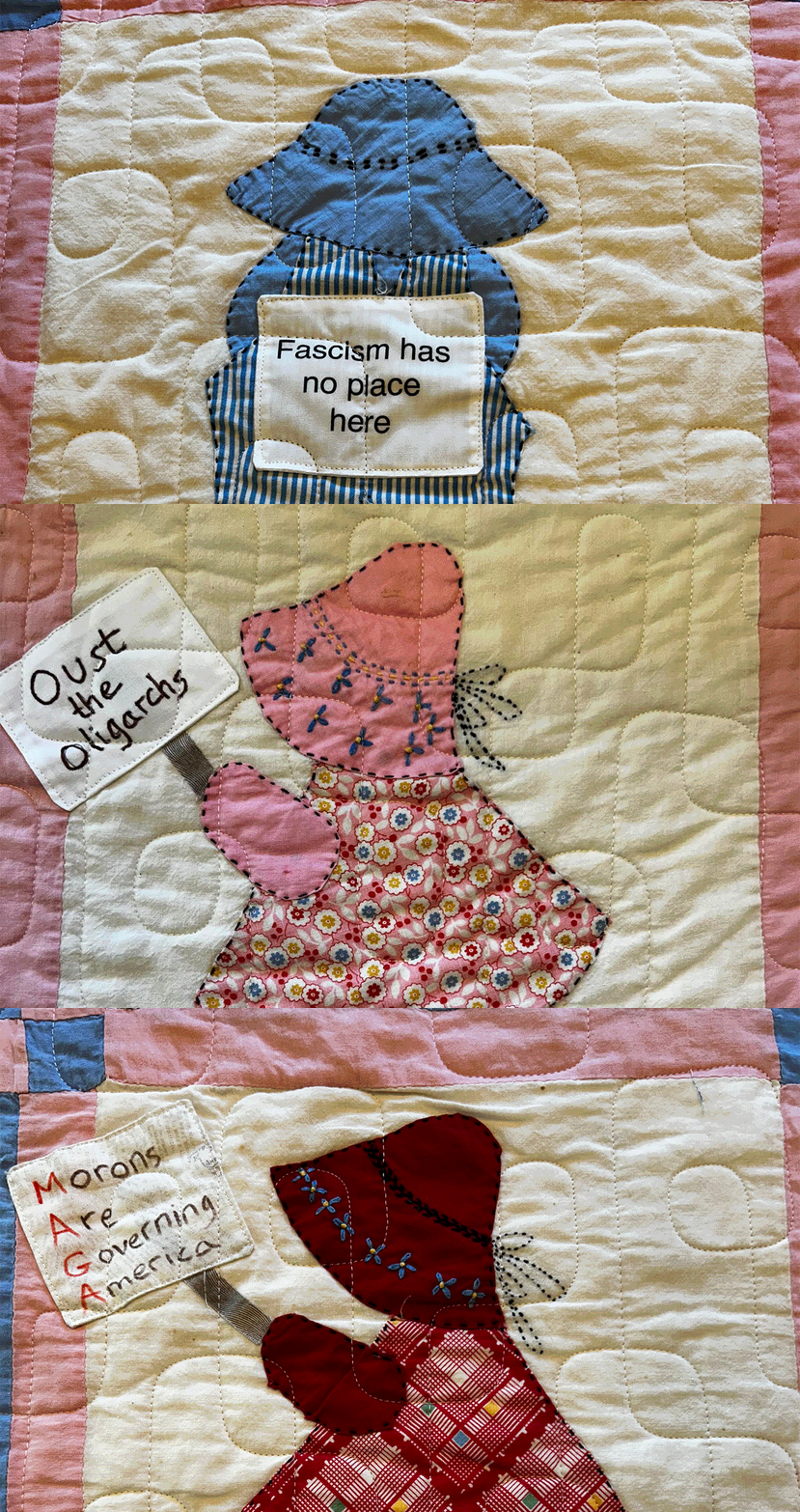
Quilted Messages Quilted Messages
Sunbonnets carrying not-so-sunny truths.

