4 Facts You Need to Counter Trump’s Lies About Mail-In Voting
Mail-in ballots are safe, accessible, and deeply American.
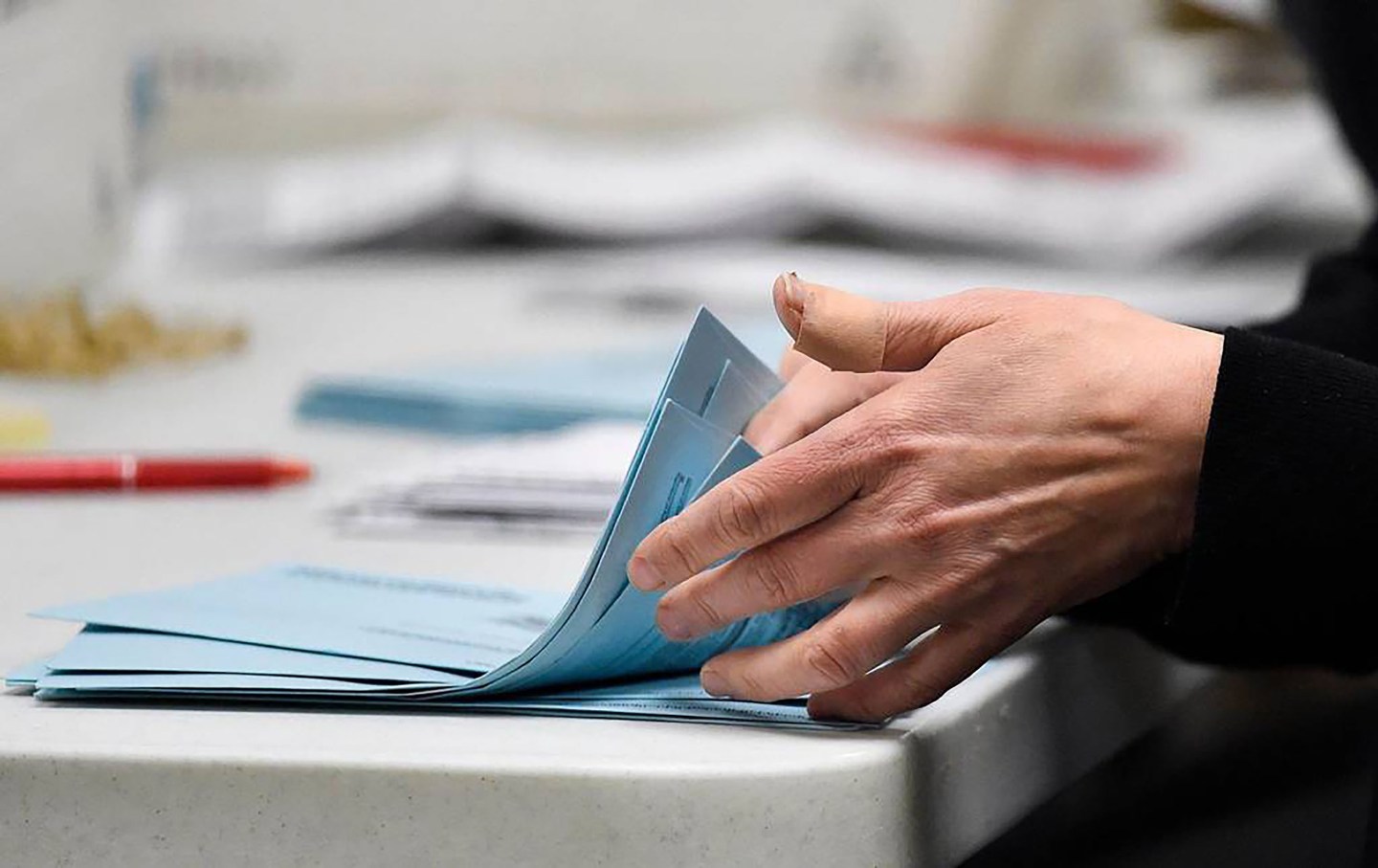
Is it Groundhog Day? Because the president is still repeating the same tired lies about mail-in ballots that he’s been pushing for nearly a decade. These claims have been investigated, litigated, and debunked—sometimes by his own allies—yet they keep returning because they serve a purpose: to sow doubt, decrease confidence, and weaken democracy.
Many have already zeroed in on the president’s utter lack of legal authority to restrict, much less eliminate, states’ use of mail ballots. Even Congress’s authority, under Article I Section 4 of the US Constitution, is severely limited.
But just as important is the complete and utter inaccuracy of every one of his accusations. Here’s the facts to counter the lies about mail ballots, whether you think of them as absentee voting, vote by mail, or vote at home.
First: It’s nothing new. Mail-in voting began in the Civil War as a way to ensure that the soldiers who were fighting for the future of their country could have a say in who would be leading it. In the 1864 election, almost all of the union states adopted absentee voting for soldiers, much of which used mail-in ballots. The idea was simple: If you are willing to risk your life for democracy, you should be able to participate in it. It’s still the case today, when mail-in ballots are how military members and their families vote. If it’s good enough and secure enough for them, shouldn’t it be for everyone?
Second: This isn’t a partisan issue. Republicans, Democrats, and independents all use mail-in ballots. What studies do show is that easier access to mail ballots leads to higher turnout, without tilting the scales. In 2020, states that automatically delivered a ballot to every eligible voter had an average increase in voter turnout of 5 percent. States that increased access to mail ballots between 2018 and 2022 saw an increase in turnout by disabled voters of 5.3 percent. States with universal Vote-at-Home systems that automatically deliver a ballot to every active registered voter, for every election, have consistently higher turnout, year after year, election after election.
Third: Fraud? Nope. The Heritage Foundation maintains a national database of election fraud cases. Over decades, among billions of ballots cast, it has found only a handful of instances involving mail ballots—a rate so close to zero that it rounds down. Why? Because mail voting has multiple layers of security: Every ballot is tied to an individual voter with a unique barcode, signatures are verified, and ballots are tracked at every stage. The “ballot stuffing” myth is just that, and belongs in the same category as flat-earth theory.
Fourth: Too costly? Just the opposite. When Colorado transitioned to a universal Vote-at-Home system, election costs dropped by 30–40 percent. That’s fewer polling places, less staffing, and lower logistical overhead.
Finally: The assaults on mail ballots are about power and participation, and who gets to have it. Mail ballots are not partisan. They’re not experimental. They’re not dangerous. They’re safe, accessible, inclusive, and deeply American. Voting at home doesn’t undermine democracy; it delivers democracy, one voter at a time.
Become a Sustaining Donor This September
Between the reemergence of right-wing red-baiting and Donald Trump’s use of the chilling National Security Presidential Memorandum–7 to criminalize left political organizing, we’re seeing McCarthyism reborn before our eyes.
This assault on democracy cannot be ignored or wished away. Resisting it requires bravery in the face of threats and repression, a steadfast commitment to the truth, and the unwavering belief that we can—and will—overcome this darkness.
We must have an independent media that sets the record straight, unearths corruption and abuses of power, and advances a politics of justice and dignity for all if we’re to win this fight.
That’s why I’m writing to you today. This September, The Nation needs to add 100 monthly donors to sustain our progressive journalism. Your contribution makes the next investigative report, the next truth-speaking column, and the next pathbreaking essay all possible.
I hope you’ll support our work with a recurring donation today. If you donate $10 or more a month, we’ll send you a brand new “Hands Off the Free Press!” sticker to recognise your commitment to our cause. Please, donate today.
Onward,
Katrina vanden Heuvel
Editor and Publisher, The Nation