
Why the Environmental Justice Movement Should Support the UAW Organizing Drive
A progressive version of the right’s Southern strategy could remake our politics—and ensure that the cars of the future, and the batteries they run on, are built by union labor.
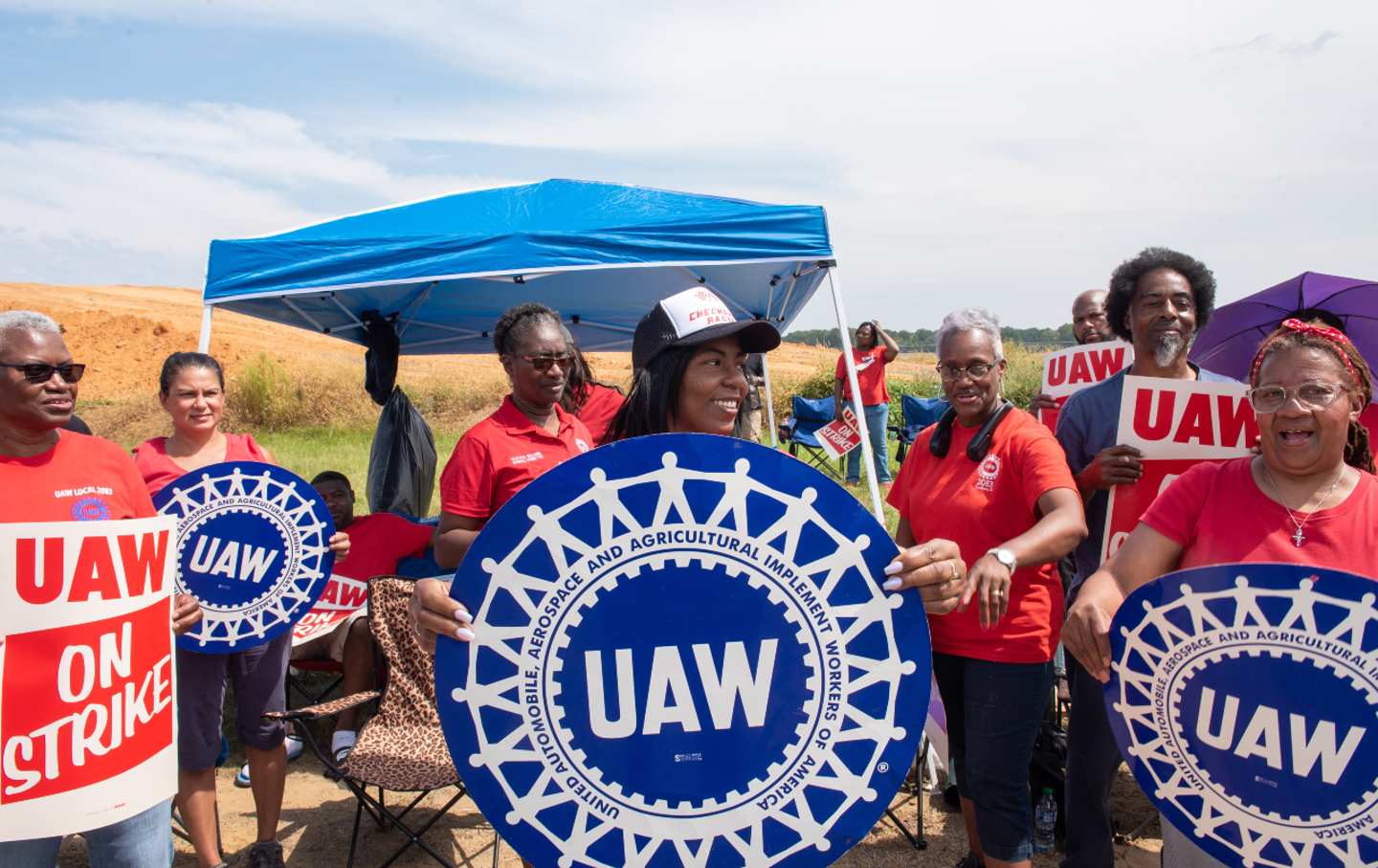
While analysts have pointed to a recent slowing in demand for electric vehicles (EVs), the long-term picture remains clear: Annual global EV sales are projected to nearly triple between now and 2030. That trend represents some potential good news for the climate. But it’s also raised concerns—most sharply reflected in last year’s strike by the United Auto Workers (UAW)—about what will happen to both existing and prospective workers.
One big problem: The new “Battery Belt”—prompted by federal policies to move to zero emission vehicles and build an adequate charging infrastructure—is being developed in many Southern states where manufacturers seek to take advantage of low wages, few regulations, and a divided working class.
While we can’t stop the flow of federal climate dollars to those states—a fiscal largesse that seems particularly ironic since so many of their Republican leaders deny climate change—we can and should change the conditions that make them a lure for multinationals seeking to exploit low costs. That, in turn, requires widening the circle of support for a truly transformative move to a clean energy economy.
The combination of worker vulnerability and political division in the South has deep historic roots. The field of exploitative corporate dreams was made possible by a US labor movement that has never been able to follow through on its post–World War II promise to organize the South—a region whose anti-union politics stem in part from a legacy of slavery and racism.
But change may be coming. Even as presidential candidate Donald Trump was trolling autoworkers to persuade them that electrical vehicles would be the end of their jobs, the UAW’s 2023 strike led to contracts that raised wages, did away with two-tier labor systems, and opened the way to unionization up and down the supply chain for electric vehicles.
UAW president Shawn Fain has now promised to build upon the UAW’s victory by undertaking an aggressive organizing campaign at the many nonunion auto plants in the Southern US, as well as the Tesla manufacturing plant in Fremont, Calif. The promise to organize Tesla got the attention of CEO Elon Musk; in January of this year, he raised the wages of his workers at the Fremont plant in a preemptive attempt to head off unionization.
This sort of geographic focus—basically, a progressive version of the right’s infamous Southern strategy to tilt the nation rightward—is vital for the future of labor, but it is also crucial for anyone concerned about the environment. Saving the next generation from environmental catastrophe will not be possible if a working class vulnerable to fears of job loss remains political fodder for climate deniers stoking those concerns.
If this is an all hands-on-deck moment to protect our environment and our workers, support for the environmental justice (EJ) movement is crucial. After all, the EJ movement organizes primarily in working-class communities, often but not exclusively of color, throughout the United States. Those communities share a common interest in good jobs and in addressing the concerns of neighborhood residents who suffer most from fossil fuel extraction, refining, and transportation.
But to do this, the distance between labor and community must be closed. In discussing the future of EJ organizing, Ben Jealous, former head of the NAACP and now the first Black executive of the Sierra Club, recently commented, “What we’ve been doing wrong as a movement is failing to meet people where they are.” That’s exactly the challenge for alliance-building as well.
To meet people where they are, the UAW will need to prioritize organizing and persuade companies to hire Southern Black workers, who suffer the highest rates of poverty and unemployment (a task also being taken up by Jobs to Move America, a group that stems from a campaign for good jobs from transportation investments in Los Angeles, where both of us currently live).
Recognizing the corrosive impact of racism on both solidarity and public health, the UAW and labor allies should also support efforts by “fence-line” communities of color to reverse the damages wrought by a petroleum industry that we as a nation should be trying to leave behind.
And the EJ movement, often rightly fueled by immediate public health concerns, needs to take advantage of the new opportunities to go beyond the good work of resisting or remedying hazards and increasingly take on the complex tasks of working with labor to secure quality employment, particularly in what is slated to be such a vibrant new EV industry.
Of course, alliances are built, not born, patiently assembled not simply assumed. It will take communication and collaboration to make any coalition real. It will also take resources—and the UAW has announced that it is setting aside $40 million for organizing up and down the EV supply chain, more than it has ever committed to such an effort. Making sure that some of that money goes to forging ties with EJ groups could be helpful.
Popular
“swipe left below to view more authors”Swipe →EJ organizations are not as flush and will likely need philanthropic help to strengthen their ability to step up fully to this historic opportunity. Funders are already helping to build capacity so that such groups can take full advantage of the Biden administration’s Justice40 effort to invest climate dollars in disadvantaged communities. This is another need and another opening for support.
With the current blip in EV demand, it can be easy to lose sight of the bigger picture: This is a growing industry with billions of dollars already committed to a drivetrain conversion. Likewise, it can be easy to forget that it’s the same political forces who are squeezing labor that are also denying climate change and dismissing the realities of structural racism. The moment is now to build a movement linking labor and communities of color for a just transition to a healthier environment and economy.
More from The Nation
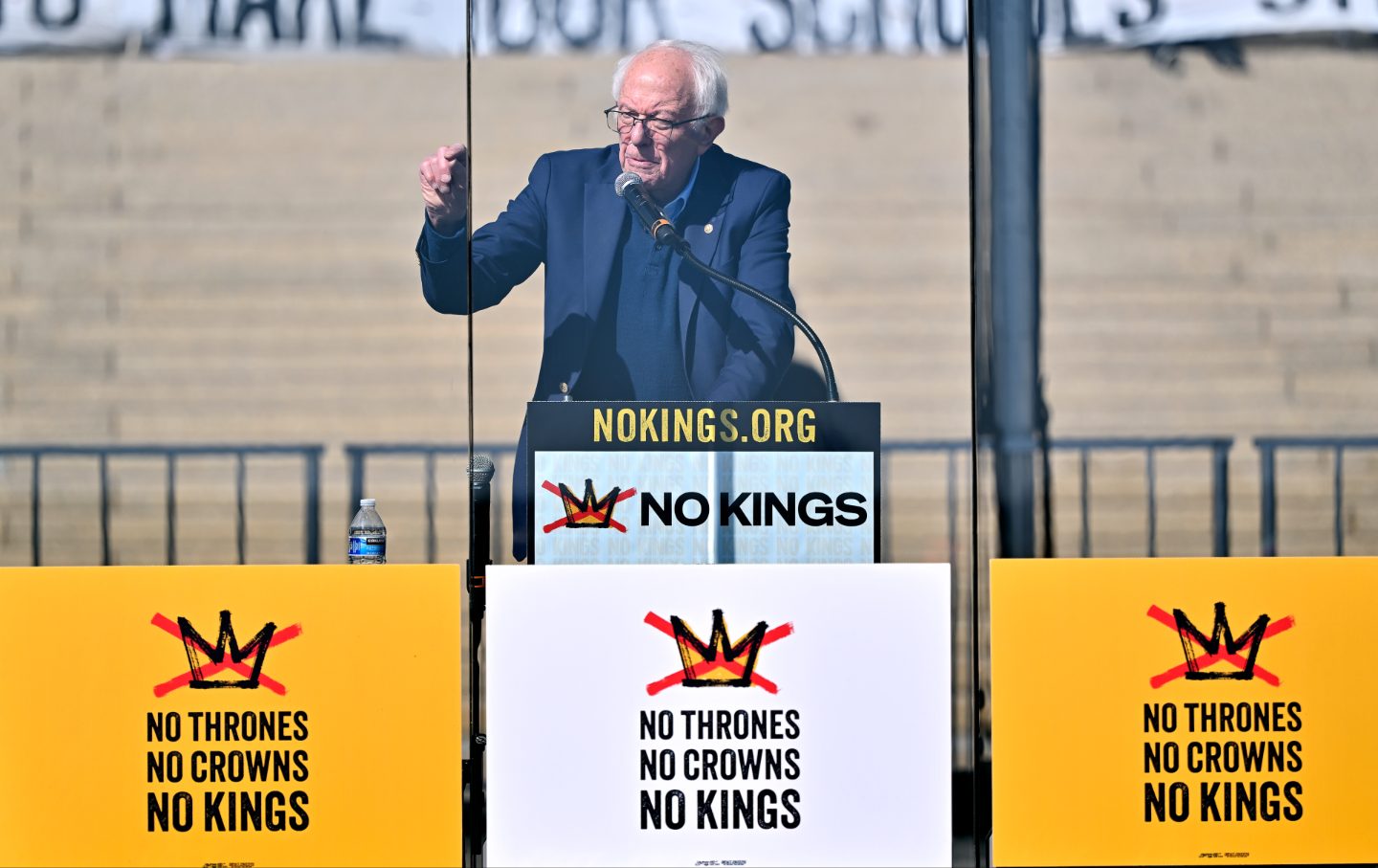
Bernie Sanders: “This War Must End Immediately!” Bernie Sanders: “This War Must End Immediately!”
The senator delivered a powerful message on Iran at the No Kings Rally in Minnesota.
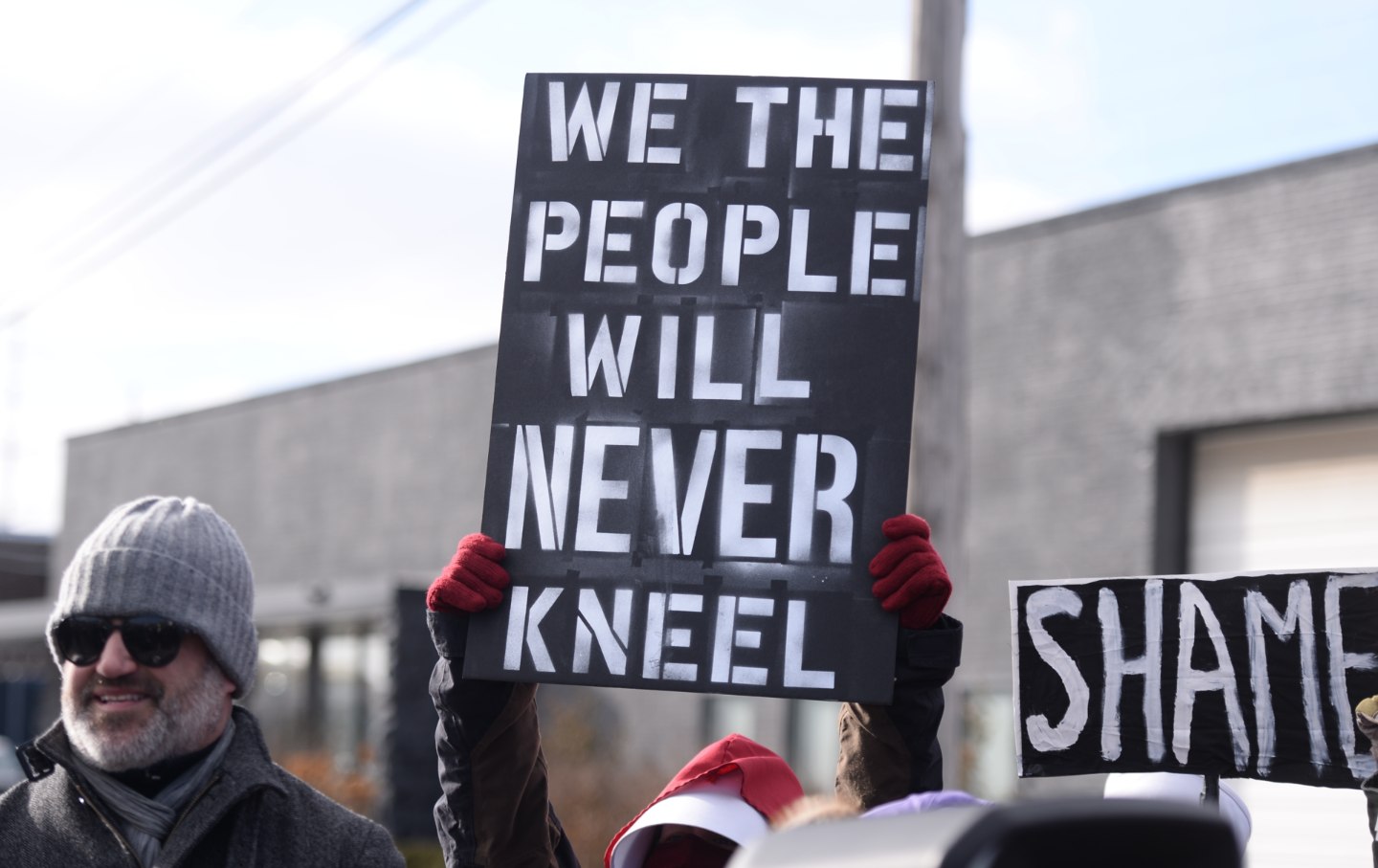
No Kings! No Wars! No Kings! No Wars!
The founders of the United States feared monarchically inclined presidents who could wage wars of whim.
What We Must Learn From the Revelations About Cesar Chavez What We Must Learn From the Revelations About Cesar Chavez
The sexual predations of the late labor leader follow a depressingly familiar pattern in left organizing circles.
Dolores Huerta: “My Silence Ends Here” Dolores Huerta: “My Silence Ends Here”
The labor movement icon speaks out after revealing that she was sexually assaulted by Cesar Chavez.

Trump Wants to Criminalize Dissent. This Texas Case Could Help Him Do It. Trump Wants to Criminalize Dissent. This Texas Case Could Help Him Do It.
The Prairieland Defendants are on trial in a case that could set a chilling precedent for the right to protest in the United States.

