
The Double-Edged Virality of Portland’s Protests
The city’s anti-ICE actions and No Kings demonstration have commanded mass attention, but still are no match for the impunity of the MAGA deportation state.
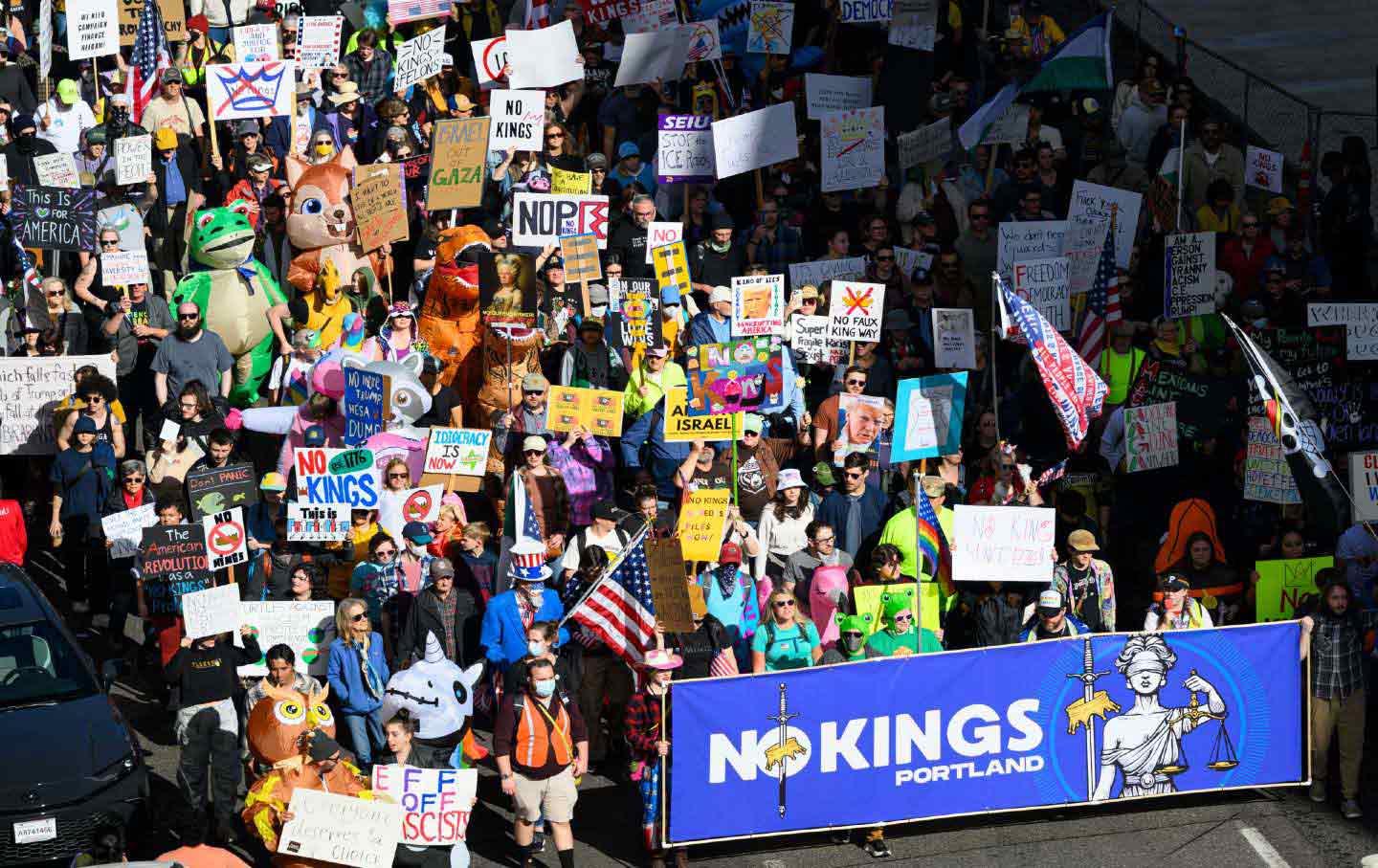
Last week, perennially trendy Portland sandwich shop Lardo posted an image on its Instagram timeline of a man in a frog costume drinking a beer. On the face of it, it was kind of funny, but the caption told an entirely more nuanced story: If you were to show up at the restaurant’s downtown location that weekend during the No Kings protest wearing an inflatable costume, you could have a beer for $3, but if you wore a frog costume, you could have a beer for free. It was the most popular post in the history of Lardo’s social media accounts.
In a few months, or maybe even weeks, none of this will make any sense to anyone. But it struck a chord locally, if not nationally, because no one was hotter in these streets than the Portland inflatable costume protesters—a loose coterie of three frogs, one chicken, some glow-in-the-dark cows, and whatever stray costumes well-wishers donated down the stretch. They sought to, in a very vague way, push back against Trump’s perception and characterization of Portland as an urban war zone by wearing funny costumes to protest outside the ICE offices, located in a privately owned building on the South waterfront next to the sprawling Oregon Health & Science University campus, apple of the state’s medical eye.
This was a much-needed high-profile win for a city whose image, and real material outlook, had been decimated by the now-almost-unbelievable (in retrospect) showdown between antifa protesters and the Portland Police Department that raged across downtown Portland every day for roughly 200 days in late 2020. This was the initial reason that conservatives and Fox News turned Portland’s “inferno urban hellscape” into a regular bump on the chyron. However, they weren’t entirely wrong. It is hard to overstate how weird it is to have a highly militarized police department engaging in a sprawling street fight, audible from all across the city, every single night for 100 days—ostensibly over the need to protect Black motorists from police brutality in a city that is very white (88 percent white, to be precise, and just 6 percent Black). When the smoke had cleared, if not the mind-bogglingly potent and well-stocked tear gas selection the police department doused the protesters with at the slightest provocation, the city had become a bedraggled entry in the American right’s catalogue of horrors.
While the pandemic was as much to blame for Portland’s abrupt economic downturn as the protests, the latter made it all but impossible for the city to shake the perception of it as a place that was mired in a dystopic tailspin, perhaps of its own design. The police used their role in the protest crackdown and long accumulation of overtime hours as leverage in a labor negotiation that resulted in basically all of them getting hero-level bonuses simply for having been on the force during this difficult time. They then practically disappeared off the streets for a year, declining to even enforce traffic laws, much less do anything about the open-air drug bazaar proliferating in what was left of downtown Portland. The only bright spot there was that pretty much everyone had Narcan—meaning that if your heart had stopped during an overdose, the cops could bring you back to life immediately without having to try too hard to find anyone who had some.
Now that Portland is in the news for protesting in a good way, the city’s PR elite can see an opening to reverse engineer its battered brand. Nothing looks less like the black bloc trying to kneecap police officers with various steampunk torture devices than doofy slackers putting in long hours outside ICE offices, wearing ridiculous costumes, and turning the other cheek by never even pretending to be anything other than a huge pain in the ass.
The No Kings protest was a massive success in Portland, judging by the sheer scale of the turnout and the bird’s-eye-view photo ops. Forty thousand people lined the streets to show open-ended solidarity, albeit in a self-aware flourish that maximized virality over tangible civic victories. Despite being the birthplace of the inflatable costume heroes who transformed Portland’s place in media imagination, the mood at the protest was decidedly not fun; rather, it was bleak, and oddly cynical. It felt more like a soundstage than a city block, with dozens of livestreamers fanning out from any action, trying to get the best, most dramatic angle possible. To their credit, the streamers were very good at making a fairly unremarkable city block look like a vast canvas of action. This also meant that watching highlights and scrolling through the stream on your phone on the way over was a good deal more exciting than standing there watching streamers find their perfect shot. Some of the most widely viewed content came from unabashedly pro-Trump, pro-ICE creators. But their messaging was largely slathered on after-the-fact as social copy. They were on the scene to harvest footage of unruly protesters, not to mix it up and make themselves the story.
Saturday’s No Kings crowd included a decent number of no-kick spillover protesters and possibly boost-up costume protesters. As the proceedings built to a head around midnight, Portland cops reverted to form, and began throwing tear gas. By early Sunday, the ongoing ICE protests were back to pre-weekend numbers, and on Monday the US Court of Appeals for the Ninth Circuit reversed a lower court’s ban on Trump’s plan to send National Guard troops to intimidate protesters at the ICE facility, reinstating Stephen Miller’s shock-and-awe response protocols.
That was possibly the anticlimactic denouement of this latest chapter in Portland protest art, but something far more telling had preceded it: On Friday, the first night of the protest weekend, at exactly midnight, a bunch of heavy-armored guards came out of the gate and cleared the way for a long column of unmarked cars to peel out into the cold, damp, dark, slightly evil-seeming night. This seemed to be a battalion of ICE agents, presumably setting out to do the things that make everyone so mad about ICE in the first place, to such an extent that they need to dress up as a chicken or a frog and protest.
The weird thing, though, was how completely unperturbed everyone at the protests seemed by these cars going to menace, detain, and rendition the people whom they wanted to protect. It was as if the actual fight for them was over the cement, concrete, and asphalt they would stand on until they didn’t want to stand there anymore. The actual deployments of ICE agents seemed almost an afterthought.
As I watched this scene, I had the uneasy sense that the provocations of the demonstrators weren’t so much concerned with the ability of individual ICE employees to keep their cool or to be unleashed by the agency’s new mass deportation targets to push the protesters around and not get in trouble for it. This was the institutional arm of exactly the injustice that the protesters were supposedly trying to prevent. As the cars drifted out into the night, it was hard to not read the apparent late-night deployment as a flex whose significance had been entirely lost on its intended audience. Imagining where one single car was going, what the agents inside it would do, and how it might upend people’s lives, and how little anyone would ever hear anything about what happened, was a chilling prelude to the weekend’s No Kings counter-flex.
Support independent journalism that does not fall in line
Even before February 28, the reasons for Donald Trump’s imploding approval rating were abundantly clear: untrammeled corruption and personal enrichment to the tune of billions of dollars during an affordability crisis, a foreign policy guided only by his own derelict sense of morality, and the deployment of a murderous campaign of occupation, detention, and deportation on American streets.
Now an undeclared, unauthorized, unpopular, and unconstitutional war of aggression against Iran has spread like wildfire through the region and into Europe. A new “forever war”—with an ever-increasing likelihood of American troops on the ground—may very well be upon us.
As we’ve seen over and over, this administration uses lies, misdirection, and attempts to flood the zone to justify its abuses of power at home and abroad. Just as Trump, Marco Rubio, and Pete Hegseth offer erratic and contradictory rationales for the attacks on Iran, the administration is also spreading the lie that the upcoming midterm elections are under threat from noncitizens on voter rolls. When these lies go unchecked, they become the basis for further authoritarian encroachment and war.
In these dark times, independent journalism is uniquely able to uncover the falsehoods that threaten our republic—and civilians around the world—and shine a bright light on the truth.
The Nation’s experienced team of writers, editors, and fact-checkers understands the scale of what we’re up against and the urgency with which we have to act. That’s why we’re publishing critical reporting and analysis of the war on Iran, ICE violence at home, new forms of voter suppression emerging in the courts, and much more.
But this journalism is possible only with your support.
This March, The Nation needs to raise $50,000 to ensure that we have the resources for reporting and analysis that sets the record straight and empowers people of conscience to organize. Will you donate today?
More from The Nation
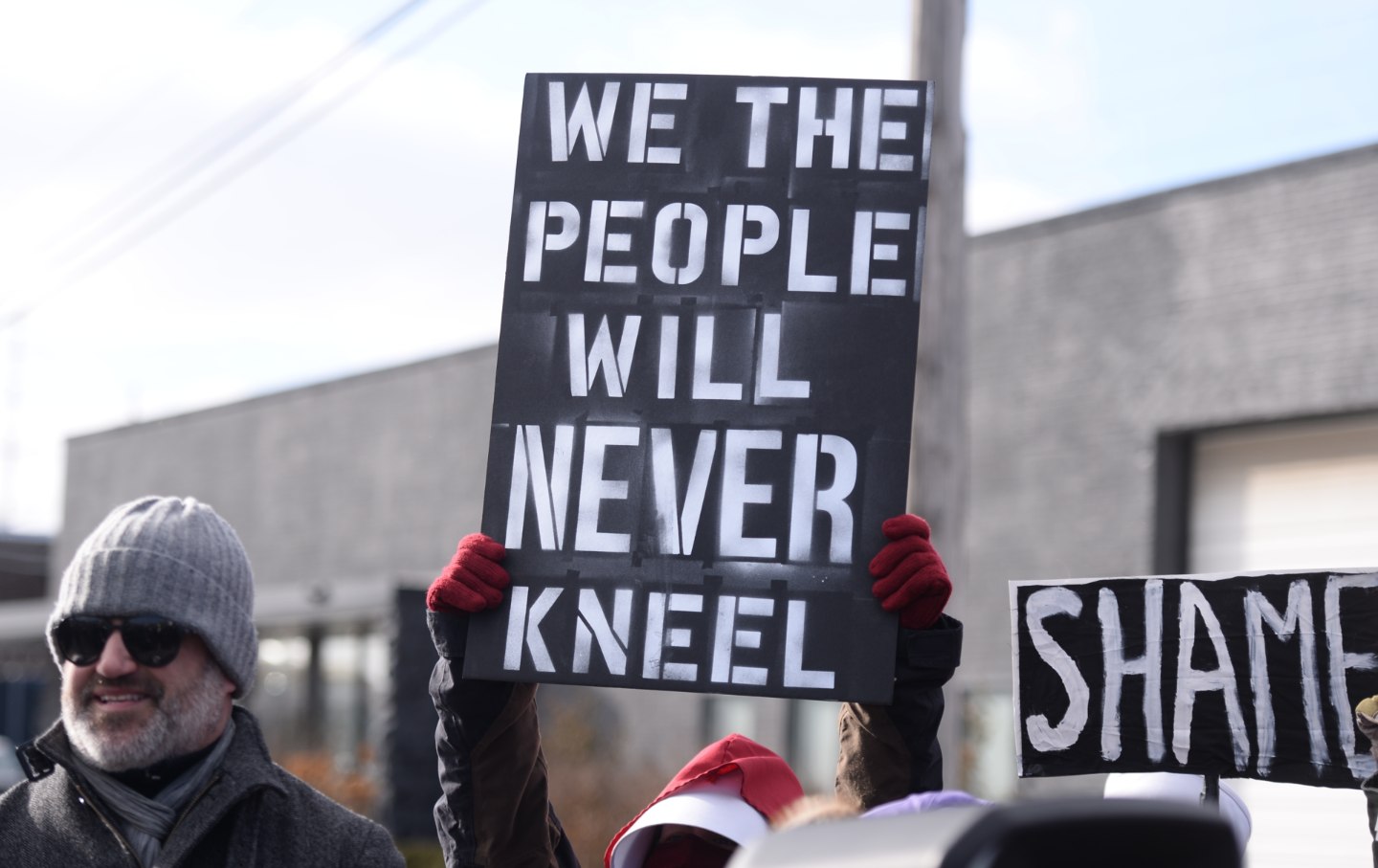
No Kings! No Wars! No Kings! No Wars!
The founders of the United States feared monarchically inclined presidents who could wage wars of whim.
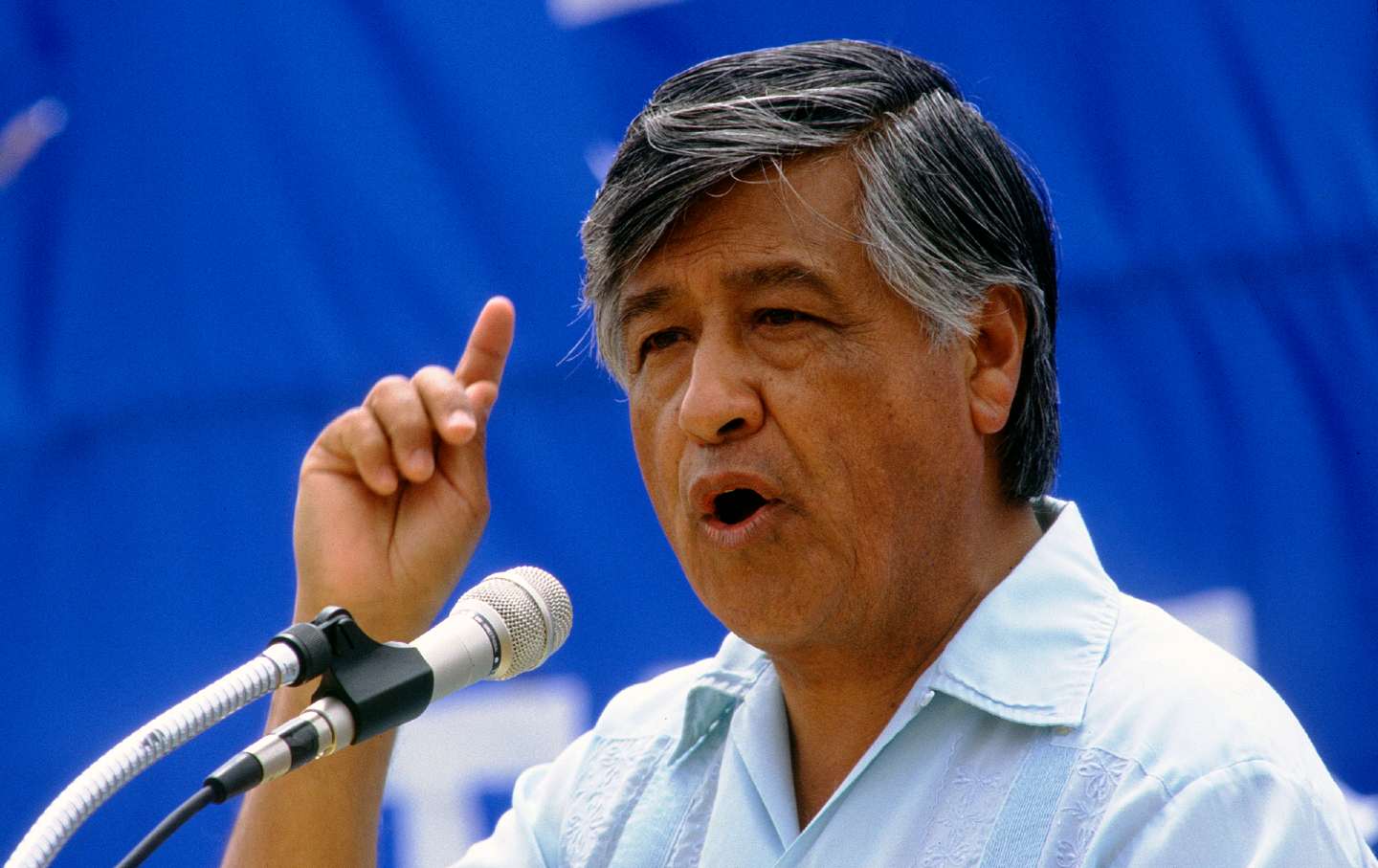
What We Must Learn From the Revelations About Cesar Chavez What We Must Learn From the Revelations About Cesar Chavez
The sexual predations of the late labor leader follow a depressingly familiar pattern in left organizing circles.
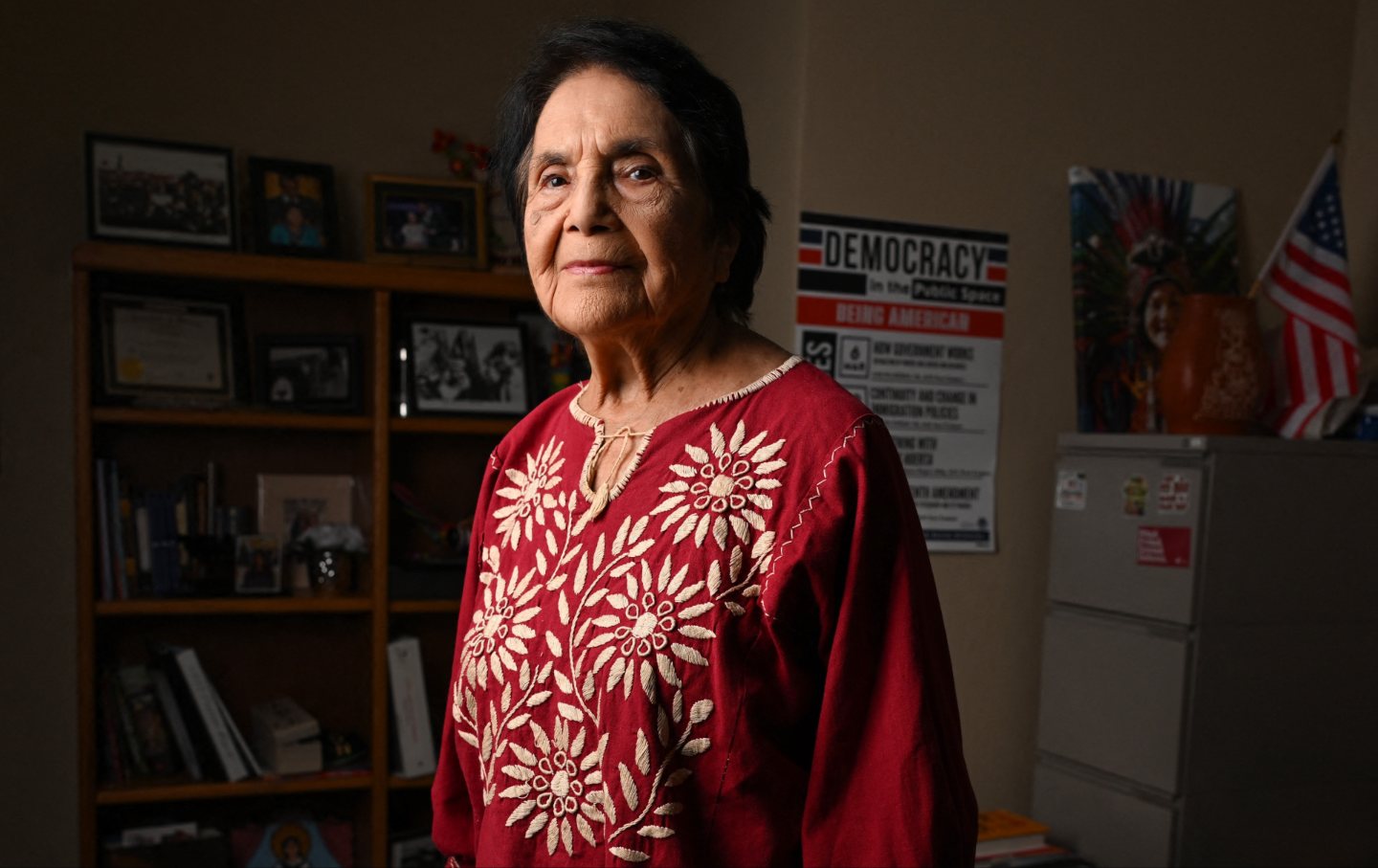
Dolores Huerta: “My Silence Ends Here” Dolores Huerta: “My Silence Ends Here”
The labor movement icon speaks out after revealing that she was sexually assaulted by Cesar Chavez.

Trump Wants to Criminalize Dissent. This Texas Case Could Help Him Do It. Trump Wants to Criminalize Dissent. This Texas Case Could Help Him Do It.
The Prairieland Defendants are on trial in a case that could set a chilling precedent for the right to protest in the United States.
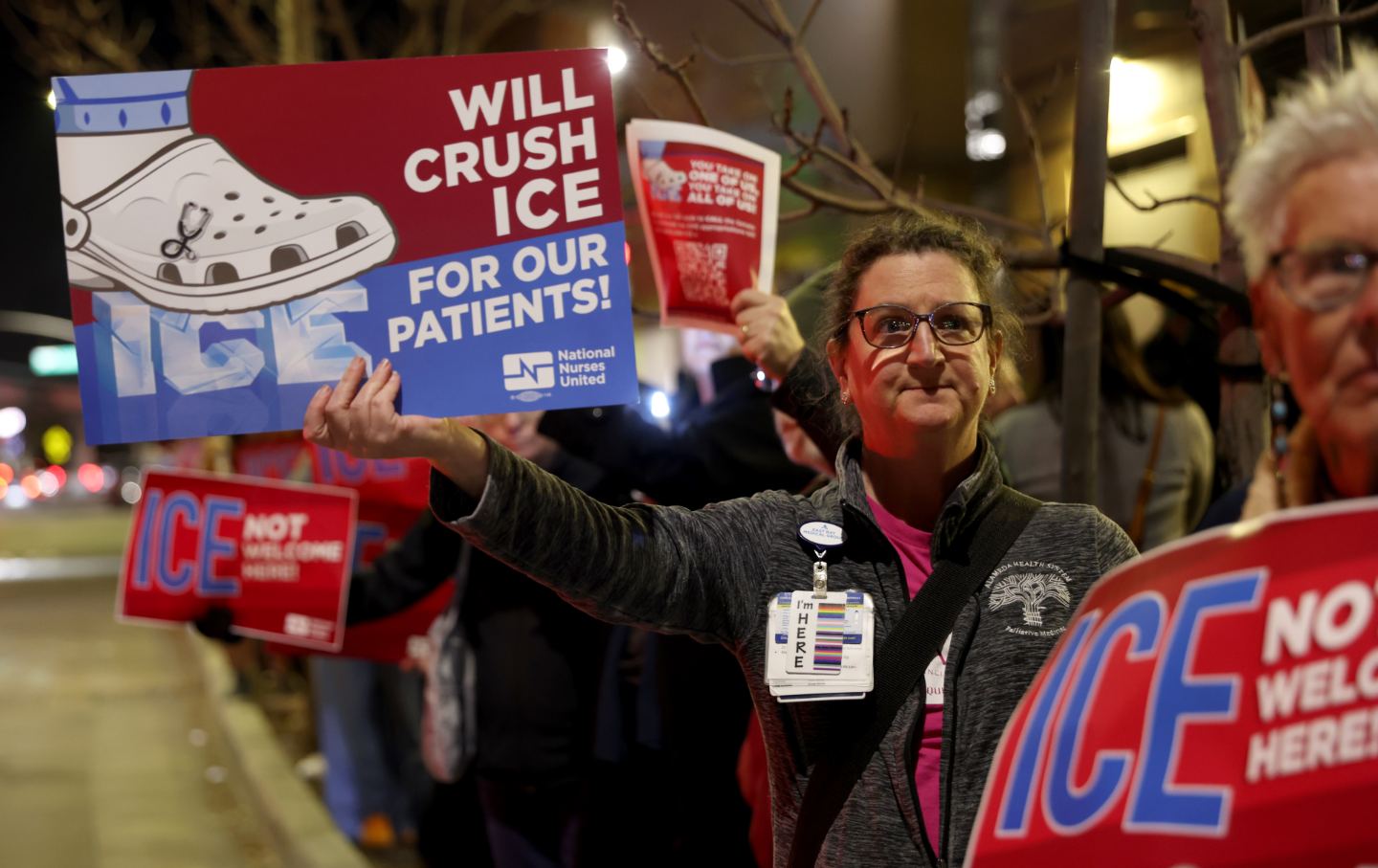
A Motto for All Health Workers: Resist, Resist, Resist A Motto for All Health Workers: Resist, Resist, Resist
Doing our work and keeping our heads down isn’t a victory. We need to fight this regime every day, in every way.

