
How Gaza Broke Big Tech’s Campus Pipeline
Big Tech’s complicity in Israel’s genocide in Gaza has pushed STEM students to organize for a more ethical tech industry.
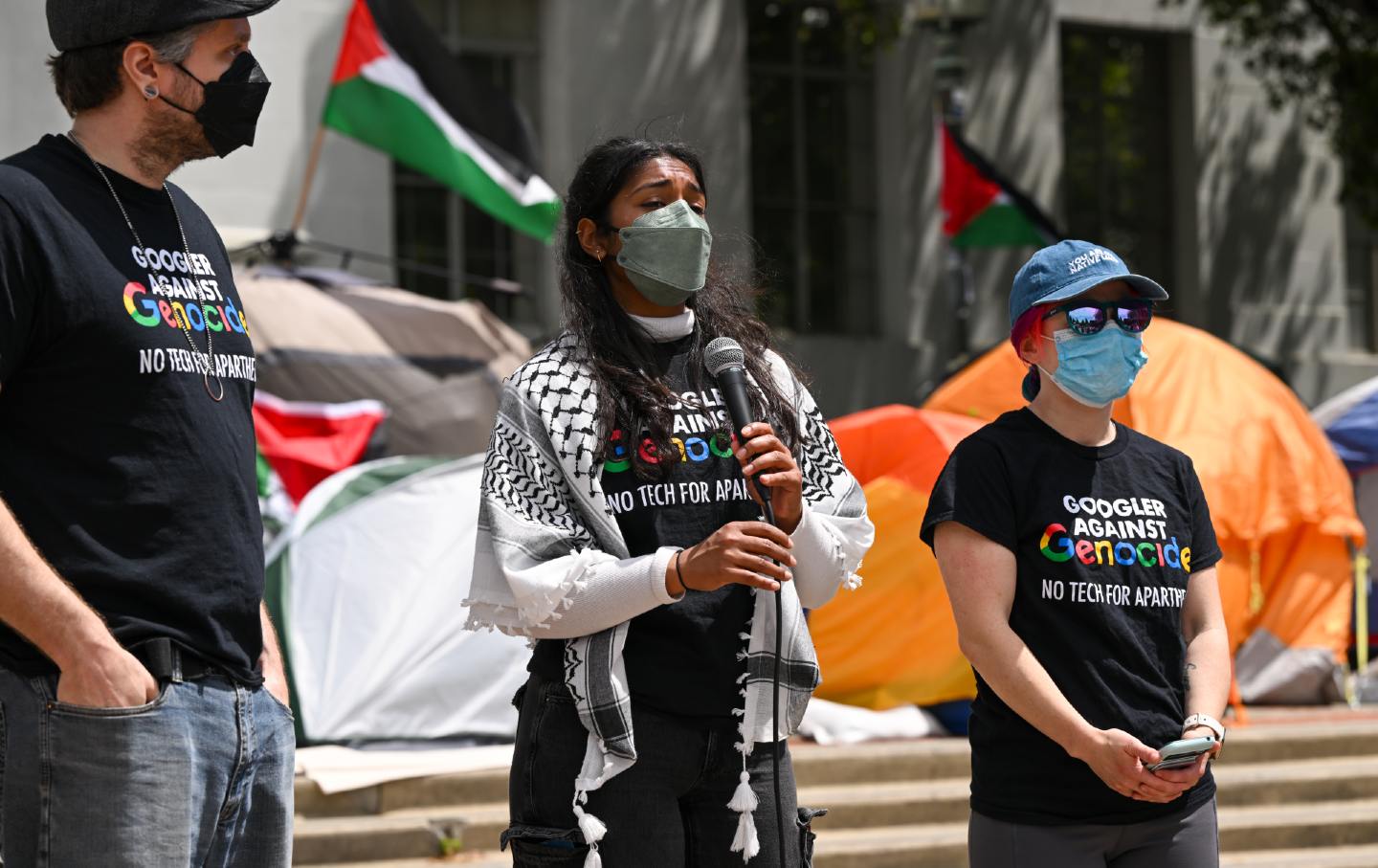
Former Google employees speak out against Big Tech at UC Berkeley’s Pro-Palestinian encampment.
(Tayfun Coskun / Anadolu via Getty Images)STEM graduates once clamored for jobs in Big Tech, but not so readily anymore. Since Israel began its genocide in Gaza, it has relied on AI and surveillance systems developed by once-dream-job companies like Google, Amazon, and Microsoft. Today, many students and workers, uncomfortable with the prospect of fortifying the Israeli war machine, are engaging in a concerted effort to build alternative futures in technology.
At the center of this organizing are UC Berkeley students, who are just miles away from Silicon Valley. On August 27, 2025, Berkeley Department of Electrical Engineering & Computer Sciences lecturer Peyrin Kao launched an open-ended hunger strike to protest the use of technology in Israel’s genocide in Gaza.
The hunger strike, which lasted 38 days, demanded that the university acknowledge its role in Israel’s genocide and occupation of Gaza and the West Bank, pledge to sever material or financial relationships with the US military, and institutionalize ethical standards aligned with international human rights law.
While Kao suspended his hunger strike because of health concerns, his demands highlighted the University of California’s long-standing entanglement with the military industrial complex. In May 2024, the UC system disclosed that they had $32 billion invested in assets that Palestine solidarity protesters called for divestment from. Research across UC campuses has received $5.6 billion from 2005 to 2022 from the Department of Defense, Lockheed Martin, Raytheon, General Atomics, Boeing, and the Israeli Ministry of Defense. From 2017 to 2022, UC campuses received 1,428 total military-funded research grants.
“There are a lot of moral questions behind what we make and whether they are being used for good or for occupation, apartheid, and genocide,” Kao said. “These things are happening with companies that our students aspire to work for, like Google, Amazon, and Microsoft, and with our university investment. When you don’t say something, you’re making a political choice to say that you’re OK with all of this going on.”
During the hunger strike, students and staff across Berkeley joined Kao on day-long solidarity strikes and a collective of students formed STEM for Palestine, a group that has been organizing for their labor to be used for social good, rather than state violence. The group has hosted teach-ins with former tech workers and has organized mutual aid efforts to support Palestinians in Gaza.
A month after Kao’s hunger strike was announced, UC Berkeley released the names of 160 students and staff who allegedly organized for Palestine to the Trump administration. Kao’s name was included on the list.
In an e-mailed statement to The Nation, UC Berkeley spokesperson Dan Mogulof wrote that the university “maintains an unwavering commitment to free speech and diversity of perspective.” However, in December, UC Berkeley administration suspended Kao for the spring 2026 semester without pay, claiming that he “misused the classroom for the purpose of political advocacy.”
Since his suspension, STEM for Palestine has launched an “Open Letter for Peyrin’s Reinstatement,” which has reached nearly 2,000 signatures, mostly from faculty, students, and community members.
“My impression of UC Berkeley as a premier research institution has been greatly altered,” said Leela Mehta-Harwitz, a student and member of STEM for Palestine. Mehta-Harwitz attributes their reappraisal to an “increased realization of how much of that research is directly going into improving bonds, aircraft, and facial recognition systems—everything that allows the Israeli and US governments to directly target Palestinians and undocumented immigrants.”
To promote accountability, STEM for Palestine activists have been compiling research about UC finances on their website, mapping UC investments, listing UC employee wages, and developing a searchable Boycott, Divest, and Sanctions list. Stephen Okita, a UC Berkeley student and member of STEM for Palestine, believes making this research more accessible is critical to keeping divestment alive.
“When the encampments happened, it was the first time that I had hope that we could actually make real change, because we could target the money, which is what you need to target in any movement,” Okita said.
At Berkeley, STEM for Palestine has held teach-ins with former tech workers like Abdo Mohamed to inform students about Big Tech’s complicity in apartheid and hosted alternative career fairs to provide different possibilities in tech. In 2024, Mohamed was fired for organizing a vigil for Palestinians outside Microsoft’s headquarters alongside members of No Azure for Apartheid.
“Every CS student, before they decide where to work, needs to go through and understand the political role of tech, because the only information we receive when we are students is that tech is good,” Mohamed said. “Tech can be good. But we don’t receive the information that tech can be evil. Tech is mostly evil.”
To support ethical alternatives, the Tech for Palestine incubator backs projects and start-ups that either directly or indirectly advocate for Palestine through the form of marketing, mentorship, funding, and networks. Upscrolled, founded by Palestinian-Australian entrepreneur Issam Hijazi, is a social-media platform supported by the incubator. The app, which aims to create a platform free of shadow banning and censorship, has surpassed 2.5 million users globally.
Popular
“swipe left below to view more authors”Swipe →Tech for Palestine also works with former tech workers to provide avenues for workers and students to organize. Hasan Ibraheem, a former Google employee who was fired and arrested during the No Tech for Apartheid sit-in in Google’s New York City office, began building Tech for Liberation, a network to provide students in tech and student organizers resources to connect with former tech workers to build ethical alternatives in the field.
“One of the things that Tech Liberation is trying to do is convince students to keep the mindset that organizing is not something that ends once you graduate,” Ibraheem said. “Hopefully, we can chip away at the culture that these large companies are seen as the place to go and instead see what they really are: companies that are taking contracts regardless of any real concern for human rights.”
Despite active attempts at suppression, students and workers continue to organize. For Peyrin, it is the belief and necessity in a liberated future that continues to be his moral compass.
“The road to an alternative future, as with many other social justice issues right now, leads through Palestine,” Kao said. “Palestine really is a litmus test for these tech companies and these universities in terms of what they’re willing to stand up for. The reason why so many of us are here organizing and putting our careers or our bodies on the line for this issue is because of the continued steadfastness and resilience of the Palestinian people.”
More from The Nation
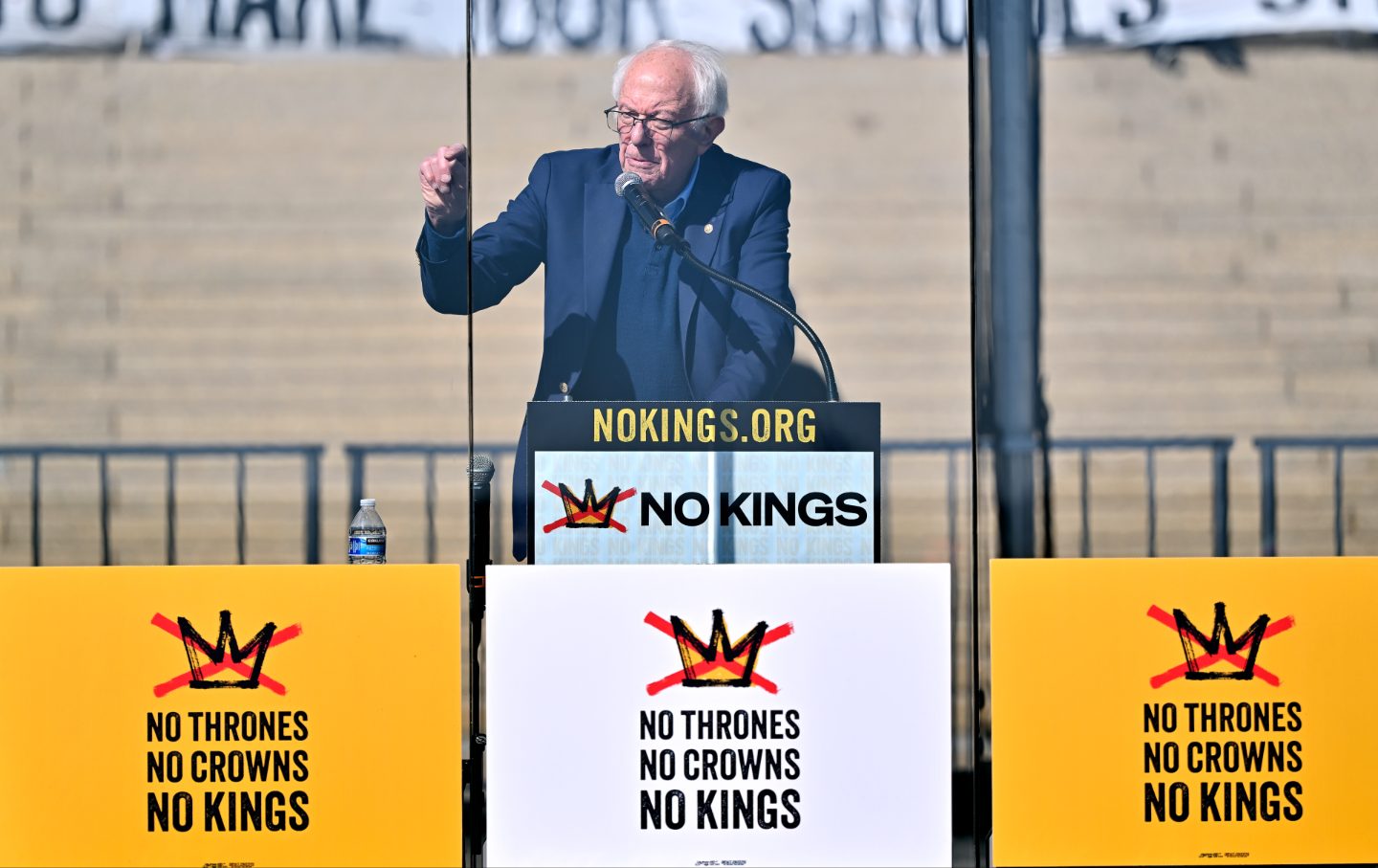
Bernie Sanders: “This War Must End Immediately!” Bernie Sanders: “This War Must End Immediately!”
The senator delivered a powerful message on Iran at the No Kings Rally in Minnesota.
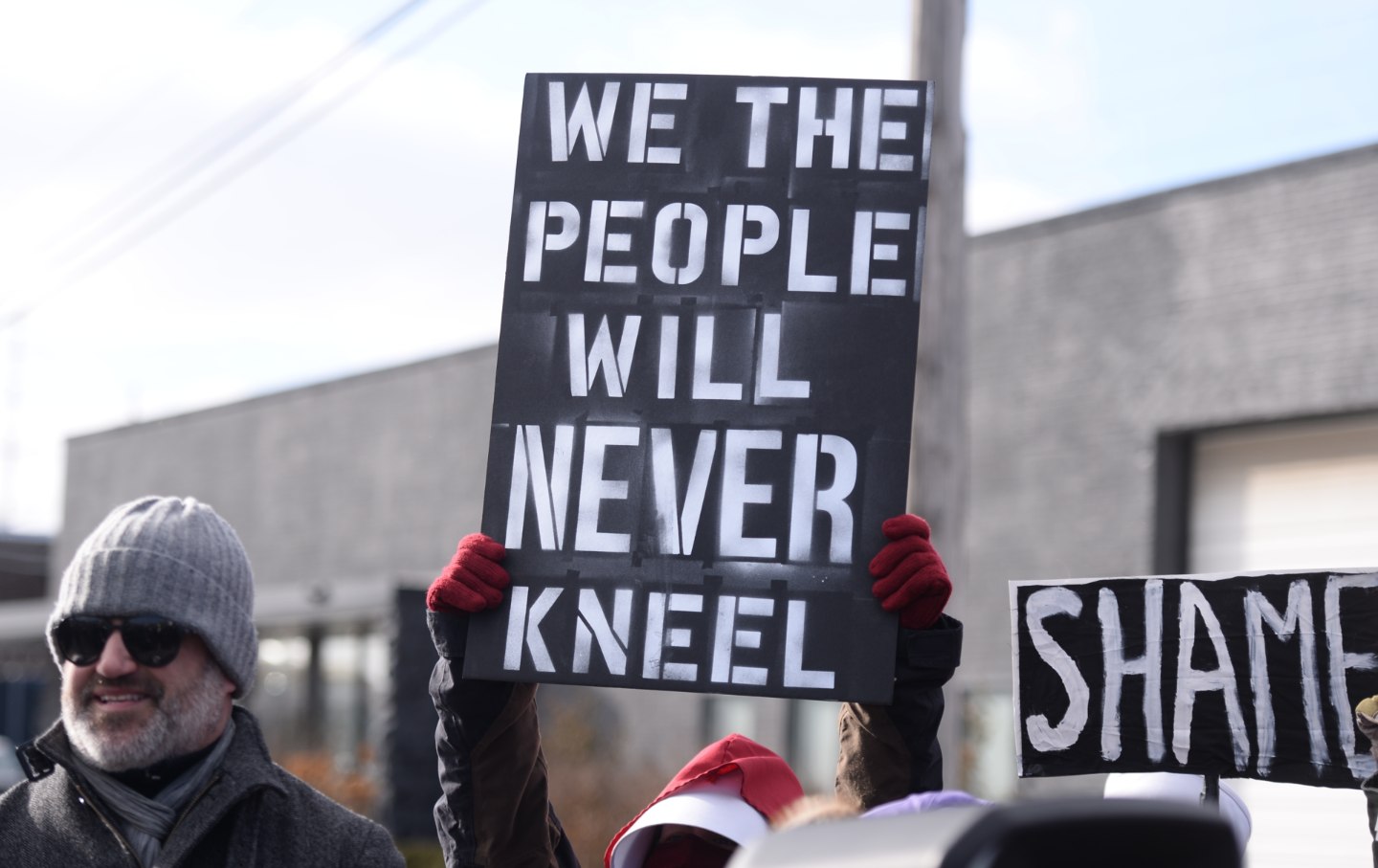
No Kings! No Wars! No Kings! No Wars!
The founders of the United States feared monarchically inclined presidents who could wage wars of whim.
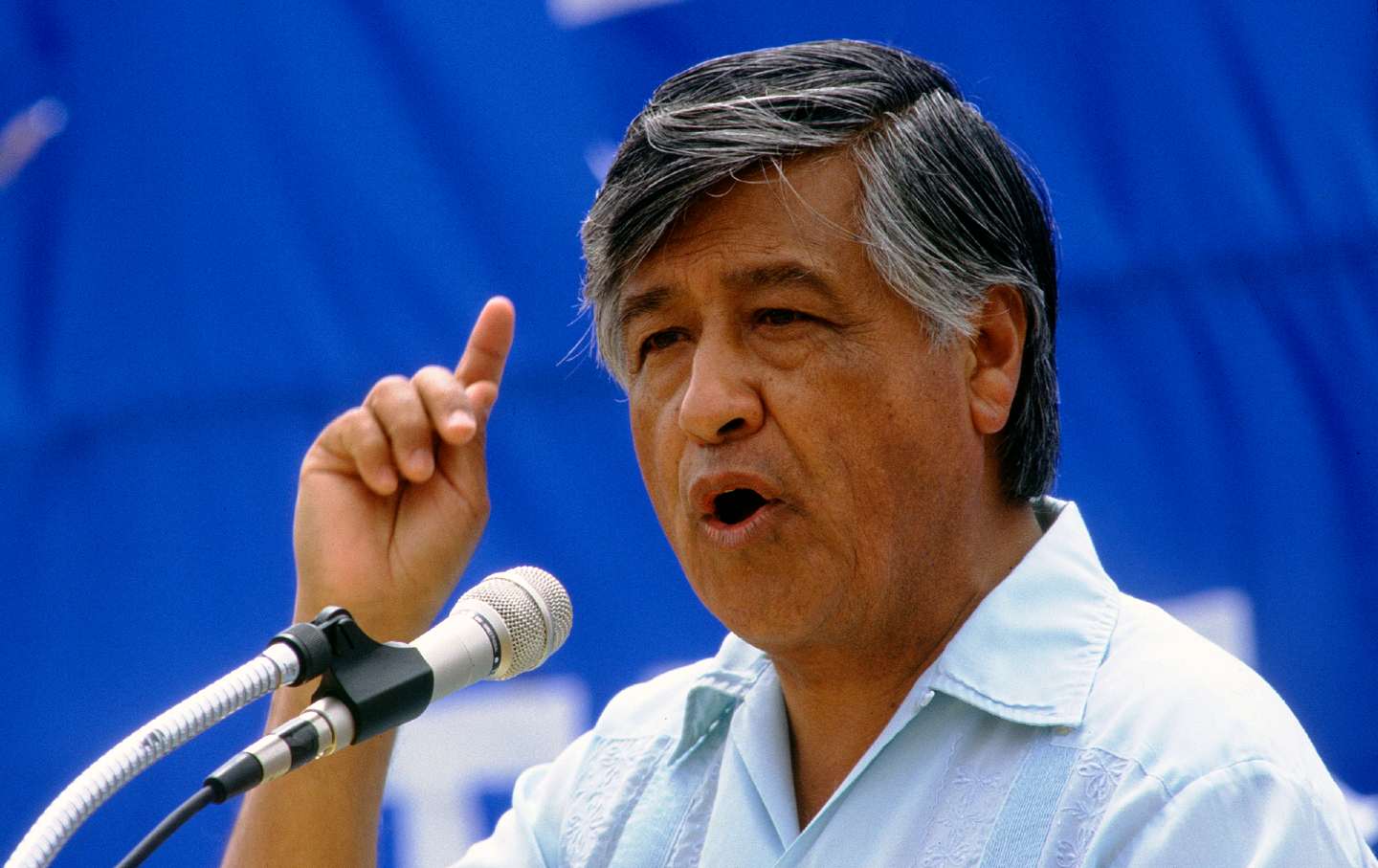
What We Must Learn From the Revelations About Cesar Chavez What We Must Learn From the Revelations About Cesar Chavez
The sexual predations of the late labor leader follow a depressingly familiar pattern in left organizing circles.
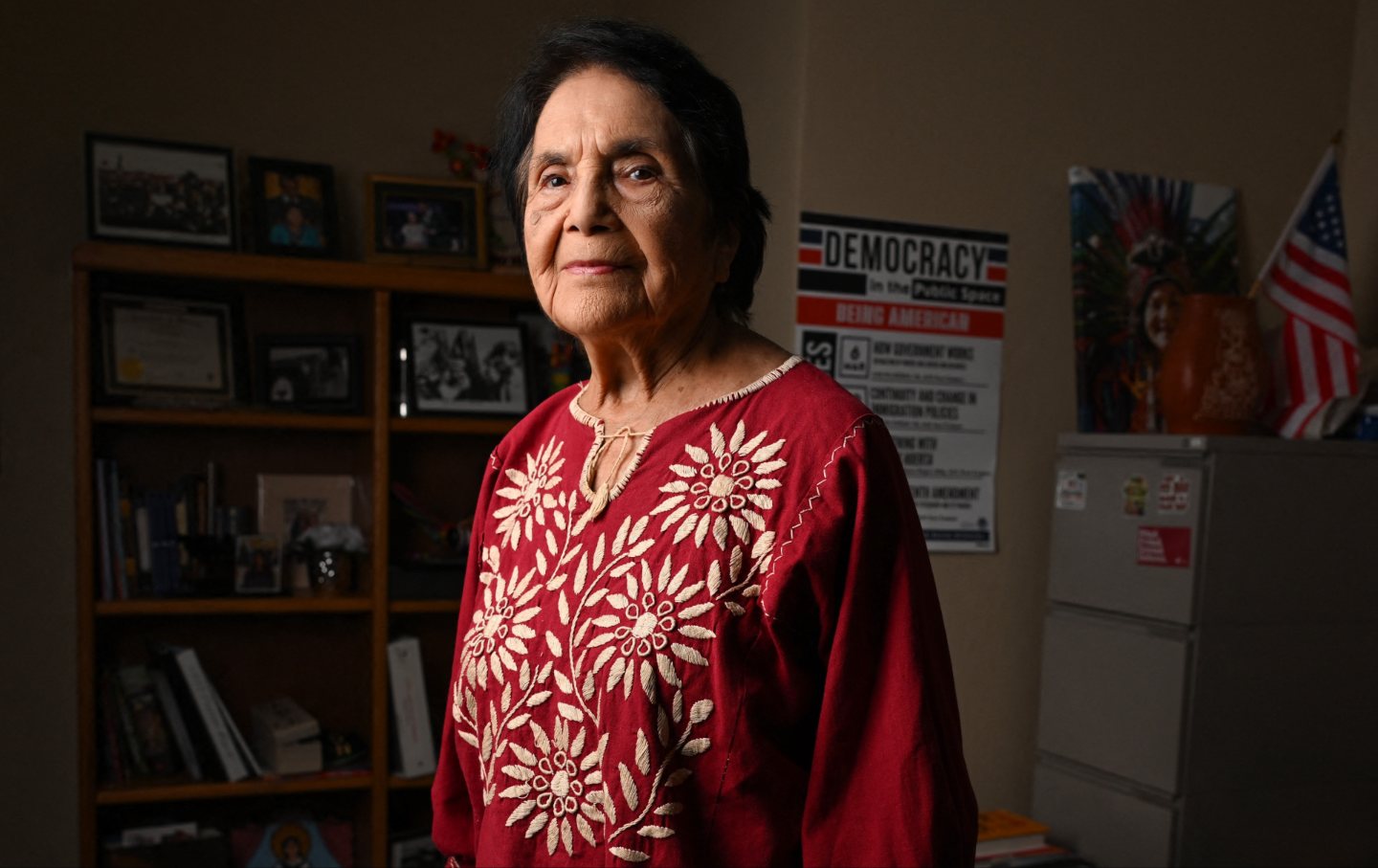
Dolores Huerta: “My Silence Ends Here” Dolores Huerta: “My Silence Ends Here”
The labor movement icon speaks out after revealing that she was sexually assaulted by Cesar Chavez.

Trump Wants to Criminalize Dissent. This Texas Case Could Help Him Do It. Trump Wants to Criminalize Dissent. This Texas Case Could Help Him Do It.
The Prairieland Defendants are on trial in a case that could set a chilling precedent for the right to protest in the United States.

