
Centrist Democrats Are Trying Hard to Lose the Midterms
Wreckers like Haley Stevens are probably the GOP’s last hope of avoiding a wipeout on Tuesday.
Making political predictions is always a fool’s errand—particularly these days, when polls are becoming increasingly unreliable and sometimes even fraudulent. But there are still plenty of signs pointing to a strong Democratic Party victory in Tuesday’s midterms. Democrats appear to be in pole position to recapture the House of Representatives, and have a real chance to gain control of the Senate—something that seemed all but impossible until relatively recently.
We can tell which way the wind is blowing by the fact that Republican super PACs are bailing out of states like North Carolina—which was expected to be a marquee battleground this year but now seems all but lost to the GOP—and moving funds to bolster candidates in even redder states such as Texas and Iowa.
The Trump administration has also noticed how bad things are going, and is flailing accordingly. On Thursday, the White House announced that President Trump was canceling planned rallies in Kansas and Iowa, replacing them with tele-rallies. This news was telling on a number of levels. The very fact that Trump was headed to deep-red states like Kansas and Iowa was a sign of trouble. In more successful years such as 2016 and 2024, he ended his campaigns by going to genuine swing states such as Michigan, Wisconsin, and Pennsylvania, even making daring jaunts into New York.
Then, on Friday morning, the White House suddenly reversed course and said Trump would be holding the rallies after all. Perhaps Trump was stung by the implication of his previous decision to cancel—it sent the message that Republicans didn’t want to be seen with an unpopular president, and that Trump himself wanted to avoid the stink of being part of a losing campaign—or perhaps this was simply yet another sign of the chaotic, strategy-free nature of Trump’s approach. Not surprisingly, pundits such as Nate Silver and David Wallace-Wells are predicting that we may be watching the beginning of the end of the Trump era.
The president is clearly off his game. When he was at the peak of his political power, Trump would focus on issues that had genuine salience: immigration, the economy, and foreign policy. To be sure, he’d often muddle this message with his personal grievances and gloating, but he still had a coherent agenda. But in 2026, as Jonathan Lemire notes in The Atlantic, Trump’s message has become unusually muddled:
This time around, Trump’s primary rationale for why voters should support the GOP, as best I can tell, is that the affordability crisis is a “hoax,” Bill Maher is a “loser,” and Senator Jon Husted of Ohio has a nice physique. That easy-to-mock message has been accompanied by a staggering number of missteps. Just for starters, he’s belittled the impact of his stalled war with Iran, sided with Russia as it continues to pummel Ukrainian cities, defended an attack ad from the GOP candidate for Ohio governor that repulsed other top Republicans, downplayed high energy prices while boasting that U.S. oil and gas companies are “making a freaking fortune,” embraced AI as the nation turns against it, obsessed over White House construction projects, and spent a lot of time talking about handsome men, Husted being just one.
Trump seems to be engaged not in a campaign of persuasion, but a massive public crack-up And he’s not the only one. Prominent GOP candidates like Ohio gubernatorial nominee Vivek Ramaswamy and Texas Senate nominee Ken Paxton are also melting down. Ramaswamy is still dealing with the fallout from his disgraceful ad featuring the estranged mother of his Democratic rival, Amy Acton. The truly sordid nature of the ad became clear when it was revealed that Acton’s mother was homeless and deeply troubled, having lost custody of her children after she sided with a husband accused of abusing them. Ramaswamy first doubled down on the ad—but, on Thursday, he yielded to massive backlash and pulled it from the air. As for Ken Paxton, he’s being plagued by so many personal and ethics scandals that even stalwart Republicans such as political strategist Karl Rove won’t endorse him.
The one glimmer of hope Republicans have is that elite Democrats seem equally addicted to self-sabotage. Indeed, this election has often felt like a competition to see which party can inflict the most damage on itself.
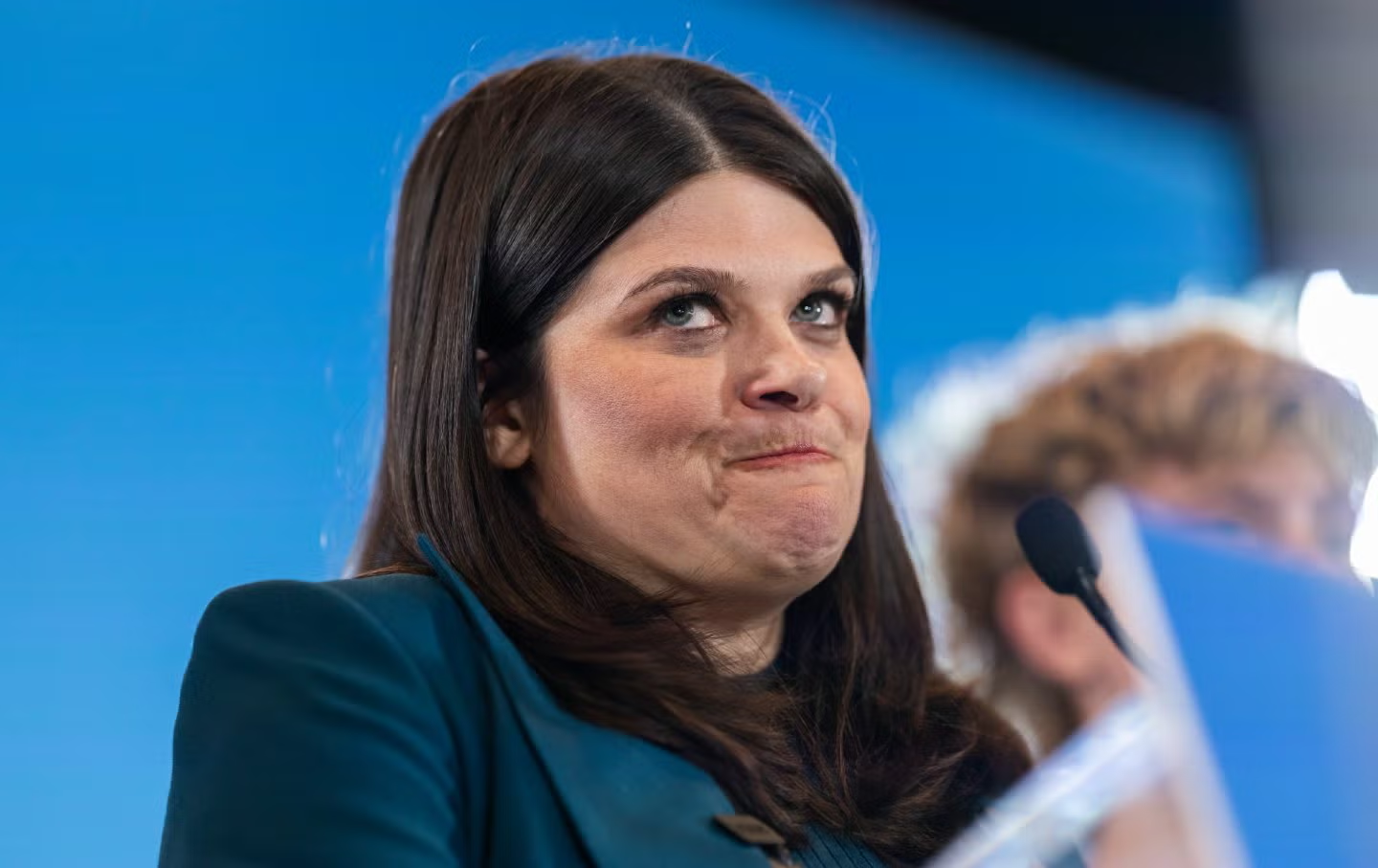
In Michigan, Democratic Senate nominee Abdul El-Sayed has been dogged by the sore-loser behavior of centrist Democrats who can’t abide the fact he won the primary. In particular, his defeated rival Haley Stevens keeps trying to extract political concessions from El-Sayed rather than letting him unite the party against Republican Mike Rogers.
On Wednesday, The New York Times reported,
Representative Haley Stevens of Michigan, who lost to Dr. Abdul El-Sayed in a bitter Democratic primary for Senate in August, has grown increasingly critical of him as the election draws near, injecting unusual intraparty tensions into the final days of a pivotal midterm contest.
While Ms. Stevens reiterated Wednesday night that she plans to vote for Dr. El-Sayed, she did so through seemingly gritted teeth in a televised interview just hours after her fiancé said that he would be voting for former Representative Mike Rogers, Dr. El-Sayed’s Republican rival. She also called on Dr. El-Sayed to denounce an ad from an outside group that she has argued amounts to “fear-mongering about Israel,” and to take down an ad from his campaign featuring Tucker Carlson.
On Thursday, Stevens seemed to partially relent in her undermining of the Democratic nominee by agreeing to campaign with El-Sayed.
Stevens’ actions are rooted in the internal Democratic Party rift over Israel/Gaza. Stevens is strongly pro-Israel, notoriously saying that “Israel comes to me in my dreams.” And she has company when it comes to undermining El-Sayed. On Thursday, former House speaker Nancy Pelosi went on a podcast and said El-Sayed’s comments on Israel were “concerning.” She added, “This new person in Michigan, we’ll see if he gets elected to the Congress.”
What makes Stevens’s antics particularly despicable is the fact that El-Sayed, like other Muslim candidates, has been subjected to vicious Islamophobia by the Republicans. At a rally in Michigan on Sunday, Trump said, “I’m here to keep a jihadist Muslim Brotherhood member from becoming a United States senator. If Abdul and the Democrats win, they will open the floodgates and invite hordes of jihadists to our shores, creating a nightmare of violence and terror until you cannot even have a Christmas.”
Writing in The New Republic, Perry Bacon rightly notes that Stevens’s behavior follows the pattern of centrist Democrats’ “attacking and undermining a compelling Muslim candidate who is also a target of the right.” In 2025, centrist Democrats similarly tried to kneecap Zohran Mamdani, both when he was running for mayor of New York and even after he won the party’s nomination. As Bacon points out, “A Democratic Party that won’t fully accept Muslim candidates isn’t a party that actually practices the principles of democracy, diversity, inclusion, pluralism, and multiculturalism that it preaches.”
Popular
“swipe left below to view more authors”Swipe →Not all Democratic Party self-sabotage is ideological. Some of it is merely motivated by standard dirty tricks, as in the scandal engulfing Alaska Senate candidate Mary Peltola. On Wednesday, The New York Times reported that Peltola’s team worked to recruit a third-party candidate named Dan J. Sullivan so as to create confusion on the ballot with the current Republican governor Dan S. Sullivan. John F. Kennedy’s campaign made the exact same maneuver in 1946 when he ran against a rival named Joseph Russo. The campaign found a ringer with the same name, and Kennedy sailed to victory.
Still, even if a dirty trick has a storied pedigree, it’s a dirty trick. Peltola might still win the election, but she’s surely alienated some voters.
The good news for the Democrats is that it’s hard to beat Donald Trump in a self-destruction competition. Trump ran in 2024 on a platform of avoiding more wars and focusing on fixing the economy. As president, he launched a disastrous war against Iran, which is creating a new affordability crisis. When it comes to shooting yourself in the foot, Trump remains undefeated.
More from The Nation
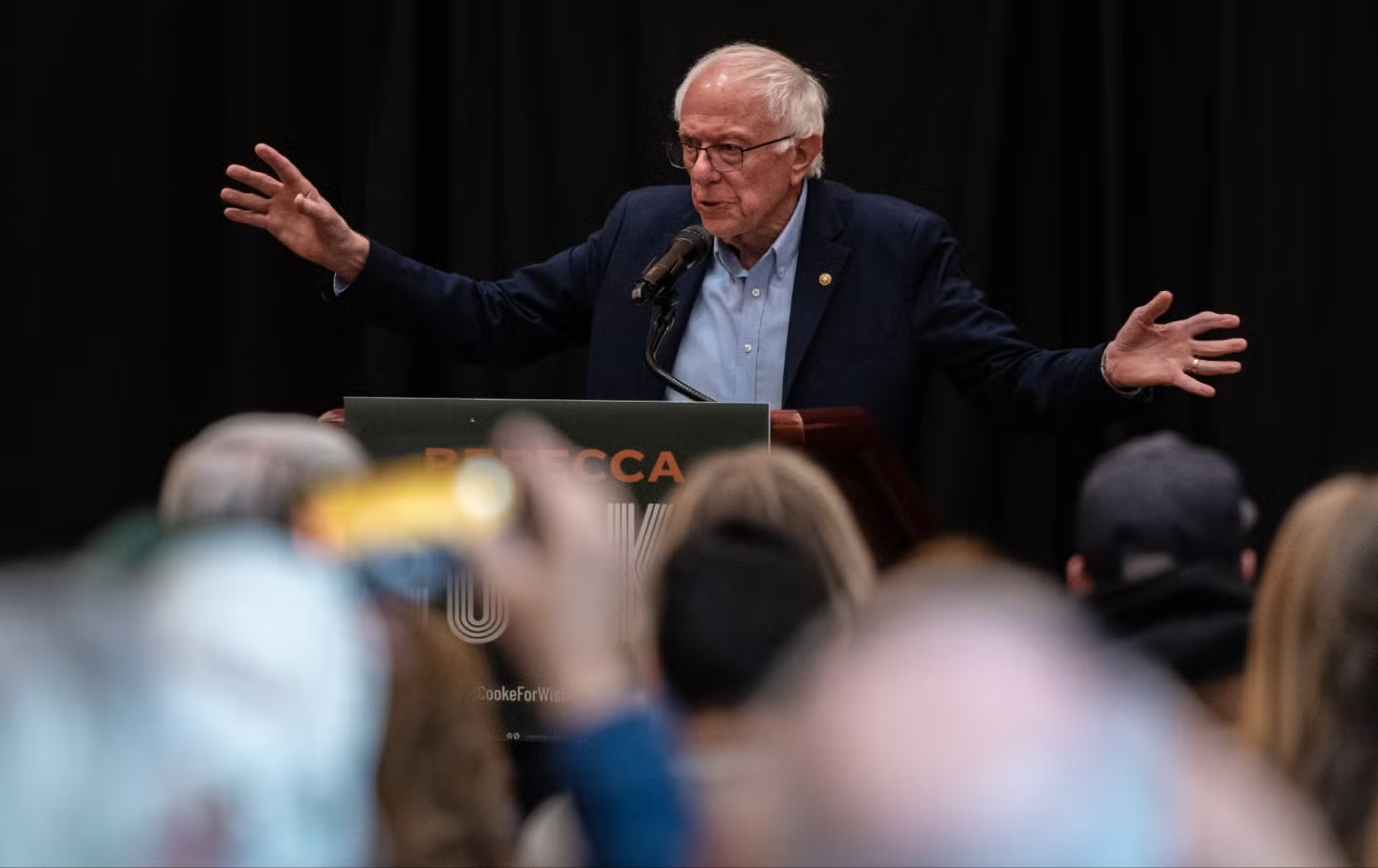
Bernie Sanders Is Leaving It All on the Field in the Final Days of the Midterms Bernie Sanders Is Leaving It All on the Field in the Final Days of the Midterms
The senator is mounting a relentless, urgent campaign to stop Trump, elect progressives, and transform US politics.

New Yorkers Take to the Streets New Yorkers Take to the Streets
No Kings demonstration, Washington Heights, New York City, October 17, 2026.
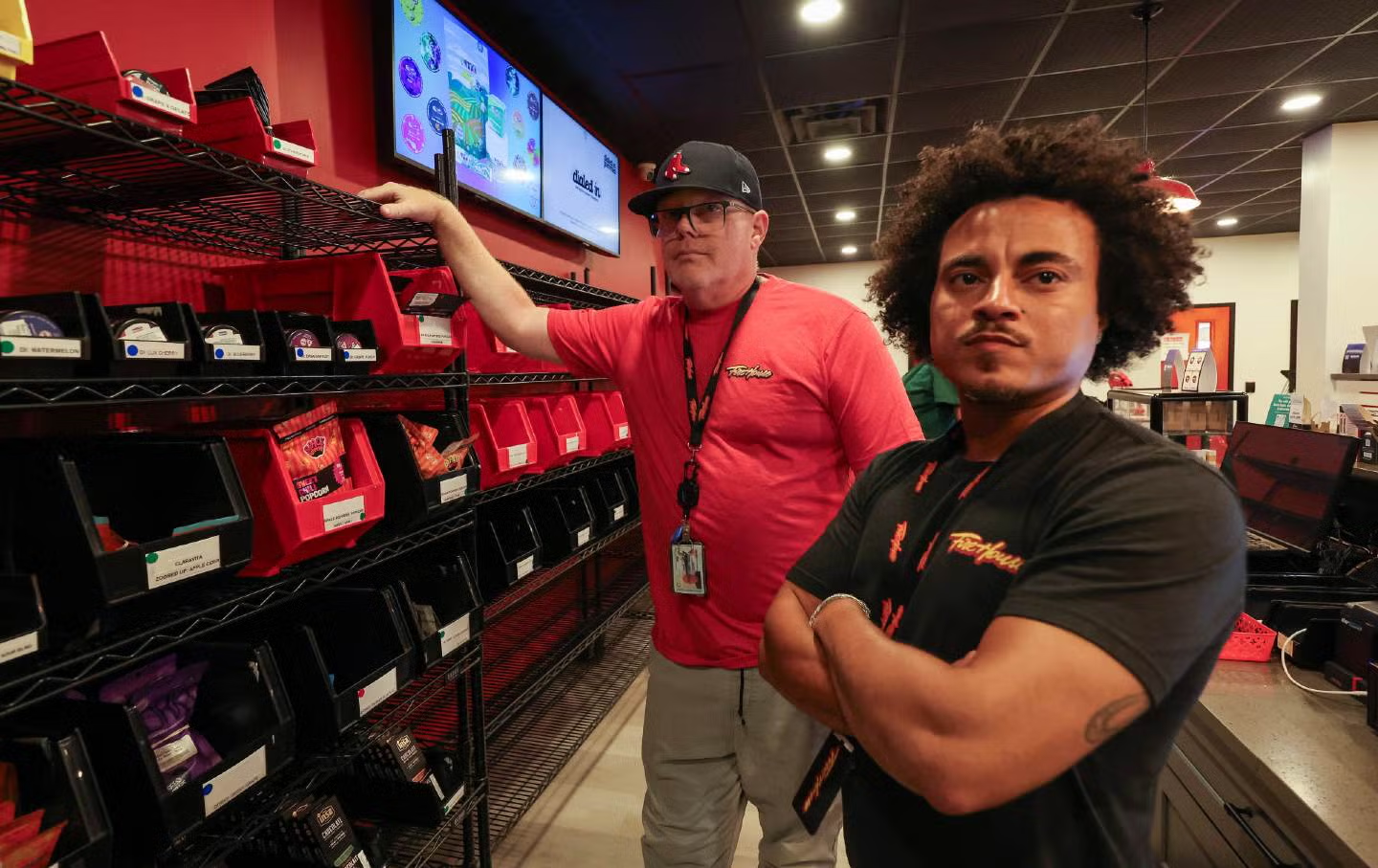
Massachusetts May Be the First State to Repeal Recreational Weed Massachusetts May Be the First State to Repeal Recreational Weed
It’s not only weed at stake. The whole legal apparatus that supports social equity marijuana businesses would disappear if ballot question 8 passes.
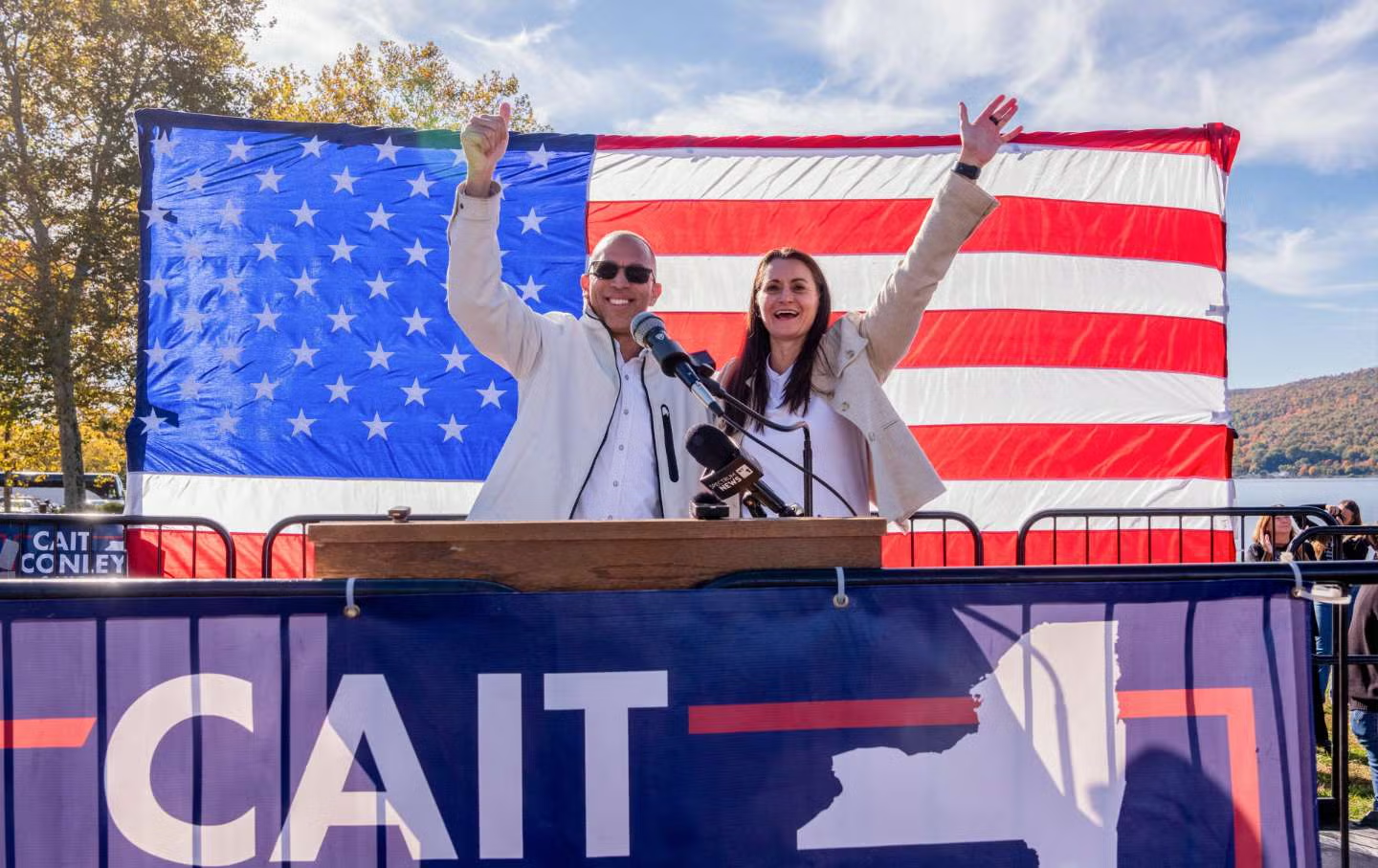
Will the Progressive Insurgency in NY-17 Oust MAGA Loyalist Mike Lawler? Will the Progressive Insurgency in NY-17 Oust MAGA Loyalist Mike Lawler?
Local progressive groups have turned out a huge ground game to support Democratic nominee Cait Conley, despite her centrist leanings.
There Is No Moral Margin for Error on Tuesday There Is No Moral Margin for Error on Tuesday
It is a once-in-a-generation opportunity for voters to turn things around for American democracy.
Vote Like Your Life Depends on It Vote Like Your Life Depends on It
Because it does. The midterm elections are November 3, 2026, with control of the Senate and House at stake. Every vote matters.

