Mamdani Can No Longer Avoid the Issue of the NYPD
The mayor has been able to put difficult questions about policing on the back burner—until now.
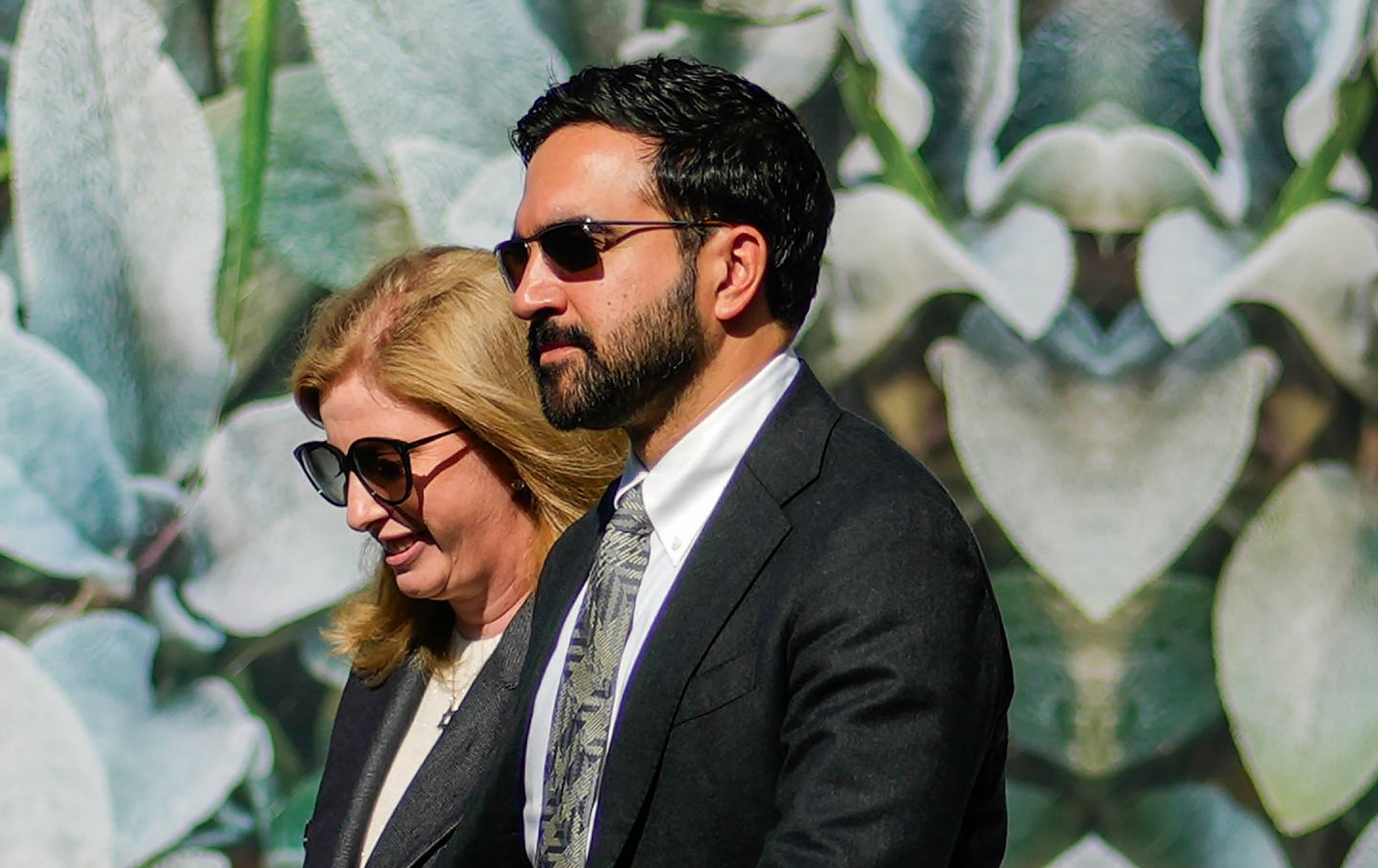
New York City Mayor Zohran Mamdani and NYPD Police Commissioner Jessica Tisch arrive to attend the New York City Police Department Memorial Wall on October 13, 2026.
(KHemaz / GVN via Getty Images)Zohran Mamdani’s first year in Gracie Mansion has—unusually for a New York City mayor—mostly been an unquestionable PR success. Thanks to tangible quality-of-life improvements, some early wins on his agenda, and Mamdani’s world-class communications skills, his constituents actually seem to like him.
But no elected official can avoid rough patches forever. The bill always comes due. And, in New York City, that bill often comes attached to perhaps the single most powerful, divisive entity in the five boroughs: the New York City Police Department.
Mamdani, both during his mayoral campaign and now in office, has tried, and mostly succeeded, in reaching a broad truce with the NYPD without alienating a leftist base restless to rein it in. Movement advocates have so far given him grace on his reticence to deliver on their demands for police reform, which largely predate Mamdani’s time in office. But in recent weeks, events have pushed that uneasy peace to a breaking point, brought the NYPD to the forefront of the political conversation, and underscored the challenges and contradictions inherent in moving from socialist outsider to the executive of the largest city in America.
First, there was the backlash following a protest outside the United Nations against Israeli Prime Minister Benjamin Netanyahu—a man Mamdani thinks should be sent to The Hague. The NYPD arrested dozens of protesters, including some elected officials who, like Mamdani, are members of the Democratic Socialists of America. Some of the police officers were members of the Strategic Response Group, an NYPD unit ostensibly founded as a counterterrorism force but that mostly functions to arrest and brutalize protesters. Mamdani has vowed to abolish the SRG, but has yet to follow through on his promise.
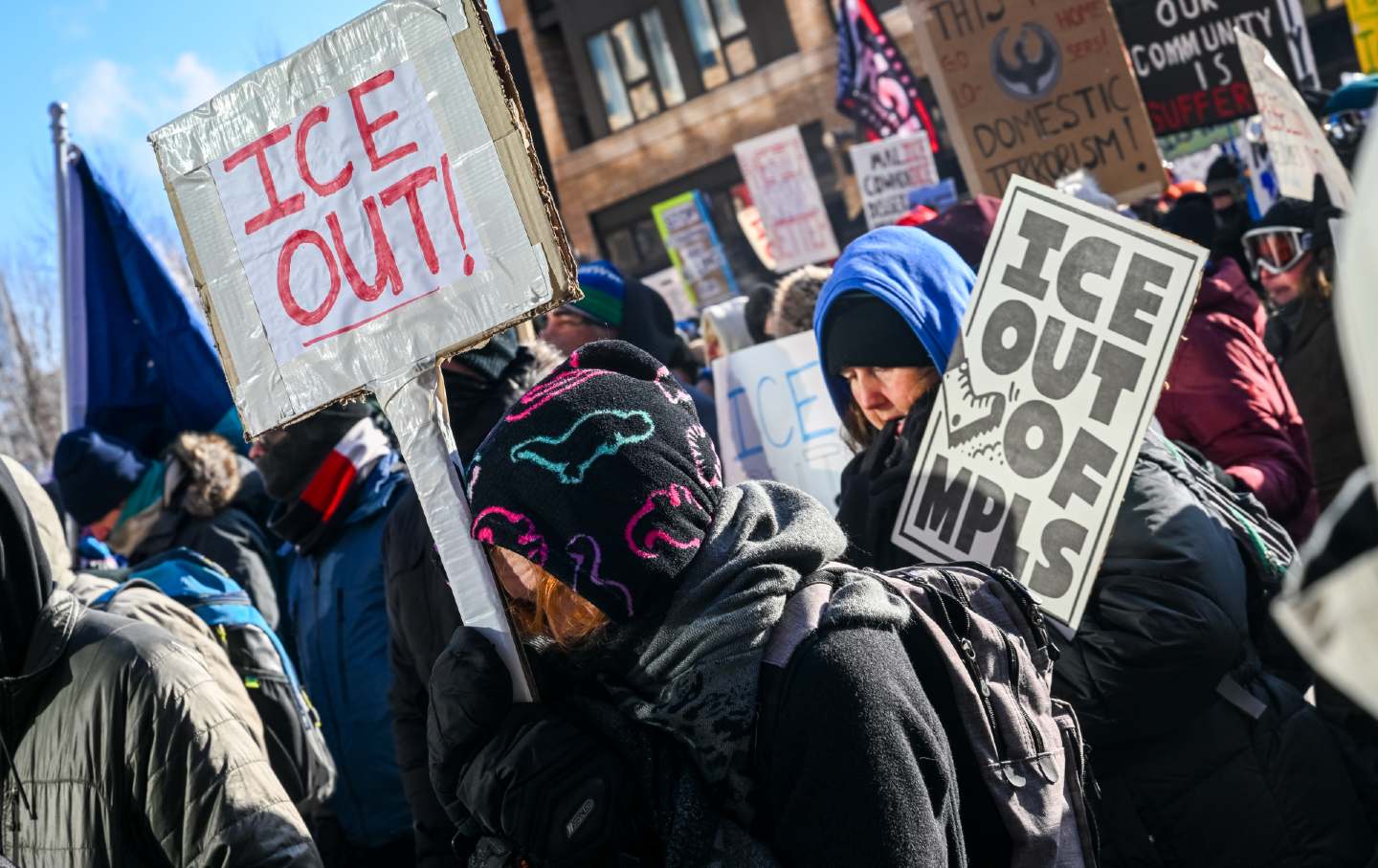
That controversy was followed by an even bigger one over the horrific ICE shooting of 28-year-old Oscar Belgal in the Marble Hill neighborhood last week. The presence of ICE in the city, along with scenes of NYPD officers roughing up protesters who had mobilized in the wake of the shooting—including DSA-affiliated congressional candidate Darializa Avila Chevalier—pushed the dissatisfaction of the left to new heights.
The national leadership of DSA called on Mamdani to abolish both the SRG and the Community Response Team, an anti-crime unit formed under Eric Adams’s tenure that has a pattern of brutalizing New Yorkers. And, most contentiously, DSA demanded that Mamdani fire current NYPD Commissioner Jessica Tisch, the right-wing billionaire heiress first appointed to the position under Adams, and whose approach to policing would be familiar to anyone who lived under Rudy Giuliani’s “broken windows” regime. (The New York City chapter of DSA was more circumspect, saying that Mamdani should fire Tisch if she did not “end NYPD complicity with ICE and ensure that the NYPD is not used as a weapon against New Yorkers exercising their right to free speech, or as a shield for ICE’s unchecked violence.”)
Firing Tisch is not a new demand, nor one restricted to the socialist left; nonprofits like the NYCLU were strongly critical of her tenure long before Mamdani took office. This week, city councillors Julie Won and Carmen De La Rosa—neither who identify as socialists or are affiliated with DSA—called on the mayor to replace Tisch. But the controversy around Tisch’s presence in the role had mostly lain dormant until the past few weeks.
When asked by a reporter at a press conference this week if he would be open to replacing the police commissioner, Mamdani reiterated that he would be keeping Tisch where she was, and went on to praise her record of “uprooting corruption” and “lowering crime across our city.”
So where does this all leave Mamdani, the city’s left, and, most crucially, the prospects for reform of the NYPD?
Mamdani largely shied away from debates on crime and public safety on the campaign trail and was clear that he would not run on defunding the NYPD, but he ran on a public-safety platform that was at the very least interested in curbing the agency’s most egregious excesses and creating more humane civilian alternatives to police in addressing issues like homelessness. He promised to abolish the SRG and get rid of the NYPD’s controversial gang database, which unconstitutionally surveilled tens of thousands of Black and Latino New Yorkers.
Thus far, he has mostly not delivered on those promises, and even walked some of them back; just a few days after his swearing-in, Mamdani stood with Commissioner Tisch at a January 6 press conference as she praised the gang database for helping deliver the safest year in New York’s recorded history. According to testimony from Public Advocate Jumaane Williams in front of the New York City Council Committee on Public Safety, individuals could end up in the database for actions as mundane as “wishing a gang member a happy birthday on social media, being outside late and wearing a certain color, and living in the same public housing complex as accused gang members.” At a press conference in April, Mamdani signaled his intent to reform rather than abolish the database, noting that the NYPD “has also implemented a number of reforms as per the recommendation that came through.”
And he has set up a clear dividing line between his administration and some of his base by rejecting the calls to oust Tisch. That is not necessarily because he fears backlash from within the NYPD. The police unions are hostile to anything they perceive as reform measures, but keeping Tisch should be seen more as a bid at managing elite perception than an effort to keep the NYPD in line. While Tisch has spent much of her public-sector career at the NYPD, she is not exactly a creature of the department. Unusually for a police commissioner, she has never actually served as a police officer, holding a variety of civilian positions in the department, and has since held other executive positions in city government across multiple administrations. Less than two years ago, she was Adams’s sanitation commissioner, and said publicly many times that the position was her “dream job.”
Tisch’s value proposition to Mamdani is that she is well-connected. A daughter of one of the wealthiest families in New York City and a personal friend of Ivanka Trump, she is well-regarded among New York’s elite. Governor Kathy Hochul advocated for keeping Tisch on as police commissioner behind the scenes in 2025, and has gone on the record praising Mamdani for “bringing in real pros.” Both Hochul and House minority leader Hakeem Jeffries cited his keeping Tisch on as a factor in their decision to endorse Mamdani in the general election last year.
Popular
“swipe left below to view more authors”Swipe →So far, Mamdani has shown a willingness to engage with some of the movement’s demands, and this week he indicated future action on the SRG. Whether that means he will abolish the unit or simply reform it remains to be seen. But there is no indication that, even if the SRG were to disappear, other NYPD units would not simply adopt its anti-protest functions—as well as its aggressive and sometimes unconstitutional methods. Abolishing the SRG would also set up a direct clash with Tisch, who supports maintaining the unit.
Tisch’s remaining in her position embodies some of the inherent dissonance of a democratic socialist’s being the chief executive of New York City, overseeing a police force of over 33,000 officers. The mayor comes from activist spaces, but is now at the heart of the political establishment. His campaign appealed to New Yorkers interested in a vision for city government that put them, not the ultra-wealthy, first, but a politician in a city as large and complicated as New York has to navigate the often competing demands of lots of different groups, not just that of his base. He is a supporter of Palestinian liberation whose police commissioner, a self-described “proud Zionist,” apologized to a synagogue hosting an illegal land sale that was the target of pro-Palestine protesters. He has made concrete promises around policing, but is also eager not to become a target of the NYPD’s ire, as confrontation with the police unions or the threat of a police strike could derail his administration.
These contradictions inevitably force someone in Mamdani’s situation to make divisive choices, like the choice he has now made to keep Tisch. There are many who see that as a politically sensible way for the mayor to maintain momentum on the other key parts of his agenda for the benefit of the working class without getting drawn into the NYPD quicksand. But there are others who will see this as a sign that New York’s wealthiest are still calling the shots on public safety—and that fundamental police reform remains as out of reach as ever. It’s too early to see how all of this will play out. But one thing seems certain: The days of Zohran Mamdani’s being able to avoid the NYPD-shaped elephant in the room are over.
More from The Nation

Why Democratic Leaders Keep Waging War on the Young Why Democratic Leaders Keep Waging War on the Young
The party's silver-haired establishment is caught up in an existential culture war.
The White Man Can Always Take What You Have The White Man Can Always Take What You Have
In this week's Elie v. US, our justice correspondent breaks down the real message of the attacks on Ilhan Omar. Plus: the anti-trans case that will come for us all.
Where Is the Outrage Over Trump’s Racist Targeting of Ilhan Omar? Where Is the Outrage Over Trump’s Racist Targeting of Ilhan Omar?
The establishment press and some Democrats are strangely mute over the president’s flagrant abuse of the legal system.
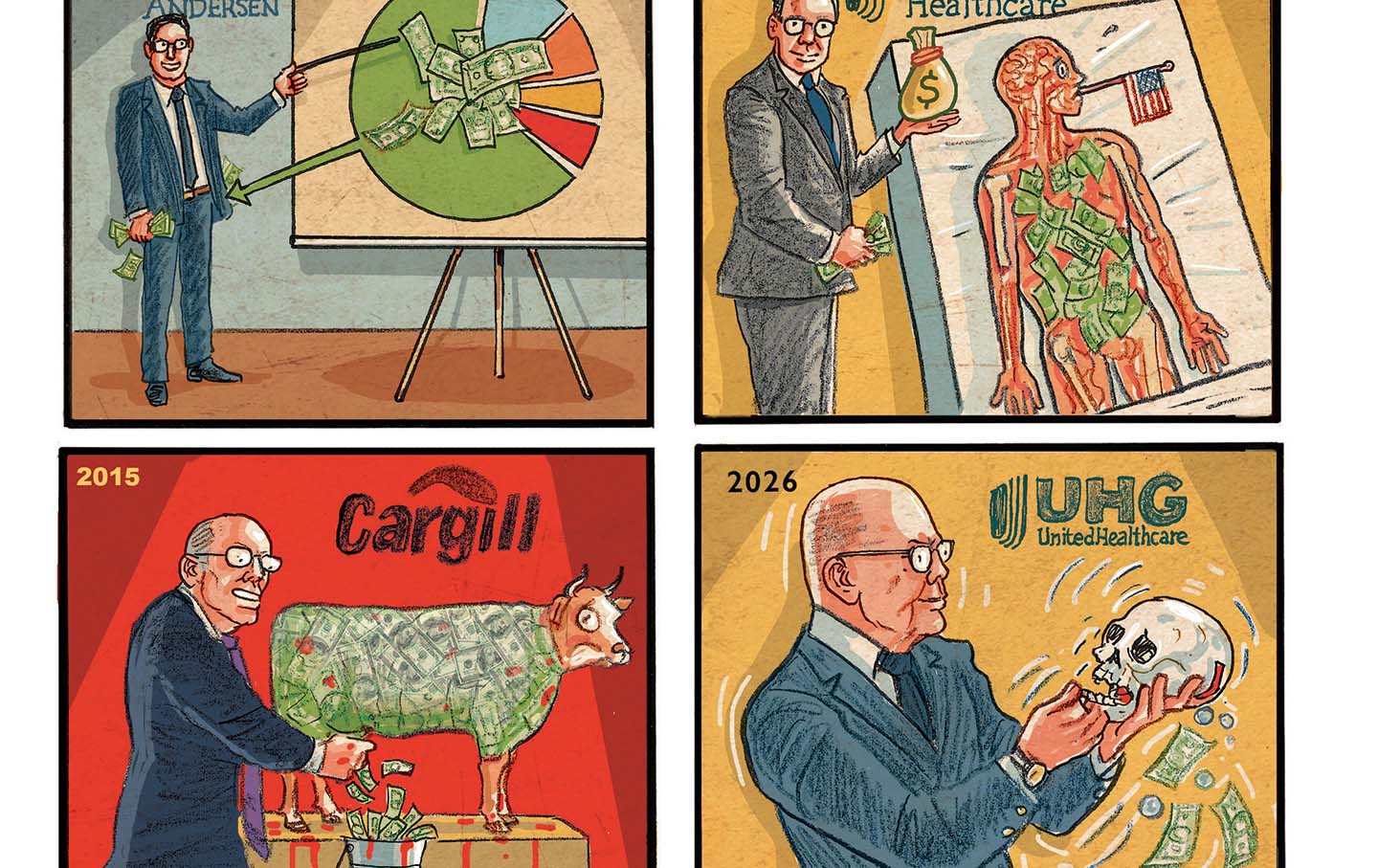
America’s UN-Healthcare Treatment America’s UN-Healthcare Treatment
The UnitedHealth group CEO’s savings plan.