
How the Skydance Merger Will Remake Hollywood and the News Business
The Ellison family’s $110 billion deal to acquire Warner Bros. Discovery means more top-down control, and less room for dissent.
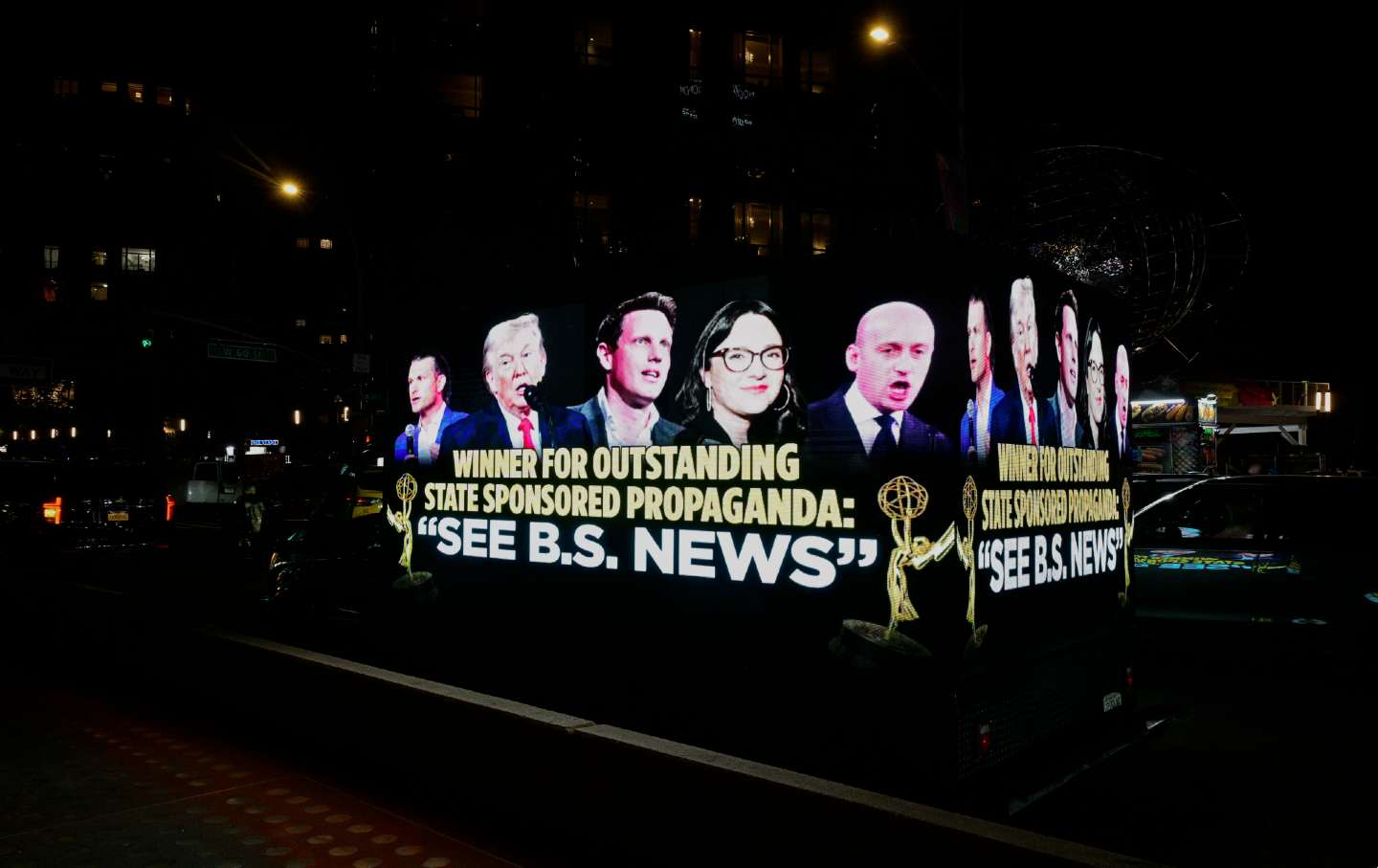
An image protesting the Skydance-Warner Bros. merger projected on Jazz at Lincoln Center during the News and Documentary Emmy Awards last May.
(Eugene Gologursky / Getty Images for Emmys Rapid Response Project)No, Frodo did not throw the ring into Mt. Doom in time. Ethan Hunt did not get to the top of the Eiffel Tower to defuse the bomb. A lone X-Wing Fighter did not blow up the Death Star.
This is all to say that, despite the best efforts of the Writers Guild of America, 12 states attorneys general, Mark Ruffalo, Jane Fonda, and the thousands of people who now get to lie awake at night wondering if they’ll have a job in two months—despite a months-long initiative to stop the Skydance merger of Paramount and Warner Bros. Discovery—that deal closed this Tuesday. The Empire struck back, and the Empire won.
To recap, the Trump-aligned Ellison family now owns Paramount Pictures, Warner Bros., HBO, CBS, Paramount+, CBS News, 60 Minutes, and CNN. To make this deal happen, the Ellisons took on a staggering debt load of $80 billion. How will they repay it? First, they’ll ask a lot of other people to pay it for them—by laying them off. They will begin consolidating duplicated services—they don’t need two marketing departments, or two of anything on the infrastructure side. Disney laid off nearly 4,000 people in 2019 alone to help pay for its buyout of 21st Century Fox to compete with Netflix. With the announcement of a far larger merger, backed by stupendously bigger loans, a staggering wave of job losses is about to hit Los Angeles.
The machinations of billionaires in the entertainment industry, and their round-robin cycles of mergers and acquisitions, mean very little to the audience for Hollywood productions, but here’s one thing that will: It was announced soon after the deal closed that Mike DeLuca and Pam Abdy have been fired. They are the executive team that brought three Warner Bros. movies to the Oscars last year: Sinners, One Battle After Another, and Weapons. They did that rarest of things in today’s Hollywood: Their studio produced movies popular at awards season and with the public. It’s been a joke for years that few people ever see the top movies up for the Oscars—that the stars walking up the red carpet are seen by more people than saw the movies featuring them. That changed last year.
As Deluca and Abdy exited the building, Paramount also announced that the Transformers franchise will be revived via an eighth installment, with Michael Bay returning to direct and Steven Spielberg overseeing as producer. An $80 billion debt load means you have much less latitude to take risks on new ideas. Not that Hollywood’s new Skydance overlords will need them: the newly merged leviathan is home to DC Studios, J.K. Rowling’s Harry Potter universe (and all the anti-trans toxicity she brings to everything she touches), Looney Tunes, The Teenage Mutant Ninja Turtles, The Lord of the Rings, Mission: Impossible, Star Trek, and Top Gun. It’s easy to see the future of movies. As Tom Cruise and Alejandro Innaritu’s bold, uninhibited, and critically panned Digger (2026) struggles at the box office for Warner Bros., Cruise has already announced for Paramount that he will star in a sequel to his 36-year-old NASCAR film, Days of Thunder (1990).
Skydance also plans to merge HBO and Paramount+ into a streaming platform large enough to compete with Netflix. Besides the shedding of large numbers of duplicate jobs, it’s hard to believe that the prices consumers now pay and the commercials we endure for a service we already pay for won’t go up. That, after all, is exactly what has happened at Disney+ when it took on 21st Century Fox to bolster its streaming profile.
The real question, of course, is how the Trump administration, which is closely aligned with the Ellisons, and the broader themes of MAGA politics will shape decision-making at the influential news divisions caught up in the merger—CBS, 60 Minutes, and now CNN. It’s blindingly obvious that Bari Weiss was hired as editor in chief at CBS News to act as a double-digit IQ wrecking ball. Her mission there is to smash and break all the things about journalism that President Trump hates (i.e., everything). It’s often said that she is unqualified for her job, but that claim misapprehends the actual demands of her job: to sell her conservative Free Press at an enormous price ($150 million) during the Paramount-Skydance merger in 2025, and to reassure the president and his FCC Chair Brendan Carr that a right-wing ideologue controls the news. Trump did not demand high ratings, quality journalism, or competence of any kind. He wanted news he liked. He wanted to get even with the smart people who reported things he found unflattering, and she has largely succeeded in giving him what he wants. The fact that the ratings for the network’s flagship newsmagazine, 60 Minutes, indicate that only President Trump likes it is neither here nor there.
The big question for CNN is whether the Ellisons will perform the same sort of MAGA wrecking job there that they did at CBS—or whether they simply made it seem like they would prior to the merger to curry favor with Trump’s FCC. Skydance has already announced that it will retain Mark Thompson—a veteran television journalist with a long track record of success—as CNN’s CEO. Given that CNN is a profit center for Skydance, Ellison seems to be focusing, at least in the short term, on sidestepping any plan to ruin that cash cow by appeasing Trump. Retaining Thompson, as well as CNN’s editorial board of experts that acts as de facto public editors, is meant to signal to potentially jittery investors that the Ellisons are at least prepared to pay lip service to preserving the network’s journalistic integrity after seeing what discarding said integrity did to CBS.
And Trump may no longer be their biggest headache. The Ellisons are no doubt tracking the polling numbers they broadcast on their own news properties: After the midterms, Trump will be an even weaker lame-duck president than he already is. The Ellisons got what they wanted from Trump’s FCC—at enormous cost to their fortune and dignity. But why should they have to fear further interventions from him and administration lackeys any more than their news counterparts at Disney, Amazon, or NBC/Universal do now? The deal is done, and now Trump has to contend with a reasonably intact CNN as a major news provider on multiple platforms.
What won’t change for a long time is that the sovereign wealth funds of Saudi Arabia and several other Middle Eastern regimes now own a 38.5 percent stake in this company and its news divisions. If the Ellisons need the cash, they can increase that percentage to 49.9 percent—and all indications now are that they do stand in desperate need of fresh money infusions. Given how weak Trump will become in the final years of his term and how increasingly dependent the Ellisons will be on Trump’s financial partners in the Middle East, undue foreign influence via the White House may be the real problem.
In its now-extensive studio holdings, Skydance will have to work with a creative community that has largely stood against this deal—and the creative community has to seriously reevaluate its capacity to collaborate with Skydance. The Ellison family’s colossal studio will presumably buy back a certain amount of good will if it follows through on its mission to get those 32 features a year made, which may cushion at least some of the impact of the layoffs ahead.
But the merger also presents significant political frictions with the creative community—as Mark Ruffalo highlighted by publicizing the links between the Ellisons’ parent software company Oracle and the marketing of surveillance tech to the Israeli Defense Forces for use in Gaza. In response to these reports, Skydance called Ruffalo antisemitic—a charge widely and bitterly refuted by the creative community.
Popular
“swipe left below to view more authors”Swipe →Since this merger radically consolidates the film and television industry, shrinking it, and leaving fewer platforms and studios where creatives can work, the film industry’s pro-Palestinian voices will either have to explore new places to work, or compromise with the industry’s new Skydance overlords. Anyone who signed the Film Workers for Palestine pledge will most likely agree that Ruffalo’s campaign revealed a level of blatant complicity with the Israeli war in Gaza that would add Skydance’s Paramount, WB, HBO, Paramount+, and CBS to the FWP’s boycott list. That list already includes a ban on Disney (for hiring Gal Gadot in Snow White) and the Marvel Comics Universe (MCU) for creating an Israeli superhero called Sabra. (Ruffalo still plays the Hulk for the Disney-owned MCU—a role he reprised in the summer blockbuster Spiderman: Brand New Day.)
The Ellison’s large financial reach is a question that FWP signatory, writer-director Boots Riley (Boosters), dealt with after he’d worked with Annapurna, which is owned by Larry Ellison’s daughter Megan Ellison. As Riley told The Guardian last May, “it’s interesting that it’s such an issue when BlackRock and Vanguard—major shareholders in Disney and Netflix, as well as Regal, Cinemark and AMC—also give billions upon billions to Israel. So I get the critique, unless you’re saying: don’t make a movie, don’t show it in theaters, because they get 50 percent of the income. Even if you make an independent movie, you’re still in this business.”
Riley’s right: Not making movies is not an option—but now avoiding some sort of compromise on the issue also looks like a non-option. This is a very different industry than it was on Tuesday morning. Now more than ever, it will be up to workers in the industry to keep it both relevant and accountable.
More from The Nation

“The Best Possible Version of a Tragedy”: Harriet Clark on Her Debut Novel “The Best Possible Version of a Tragedy”: Harriet Clark on Her Debut Novel
A conversation with the author about her new novel, the experience of having a mother in prison, and the artist’s role in documenting atrocities.
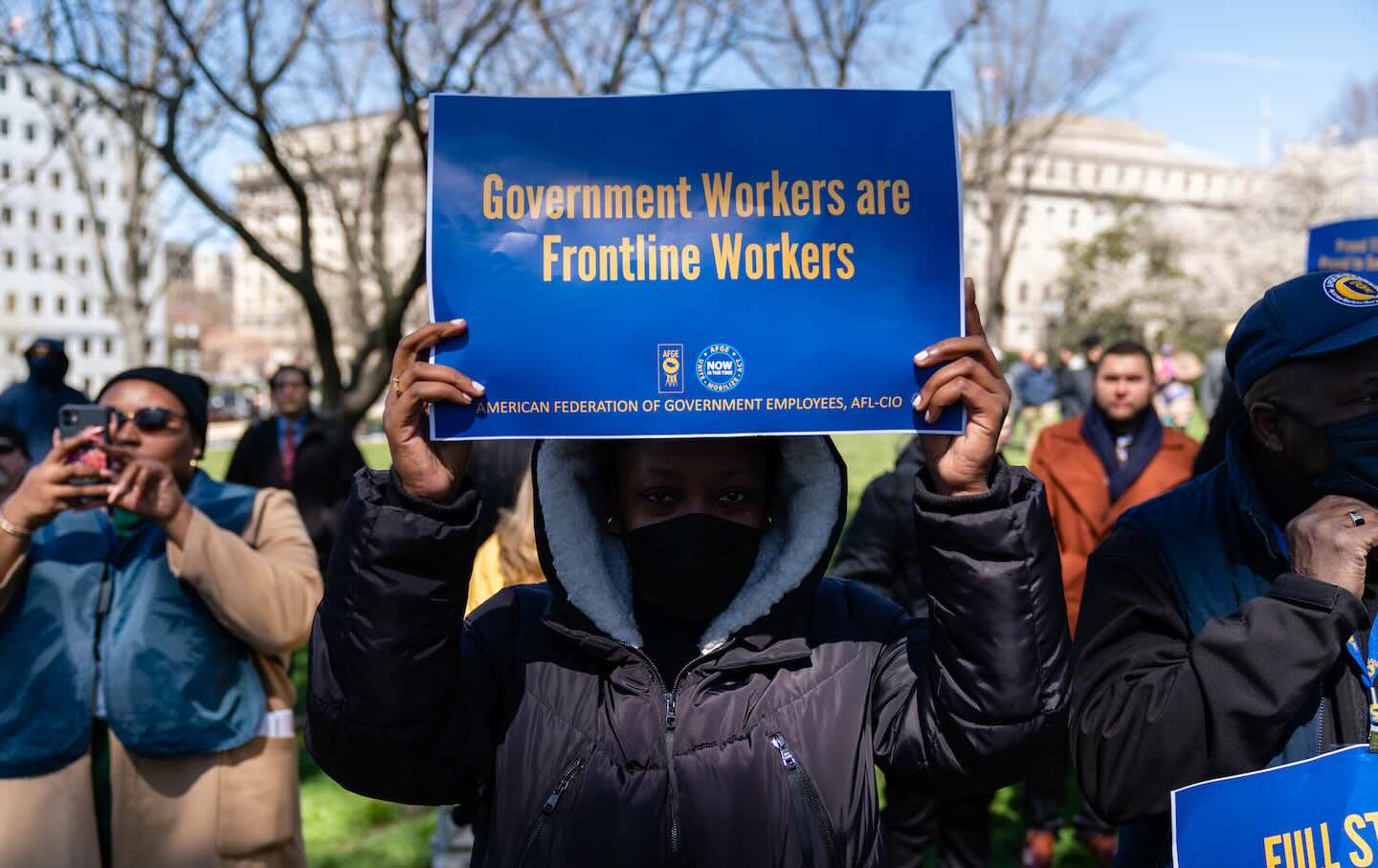
Recovering From a “Gut Punch”: Black Women Fired by Trump and Musk Work to Overcome Shame and Self-Blame Recovering From a “Gut Punch”: Black Women Fired by Trump and Musk Work to Overcome Shame and Self-Blame
Black women working for the federal government did what they were supposed to do. Yet their achievements could not protect them from the political winds.

The Conservative Organization Building a New Young Elite The Conservative Organization Building a New Young Elite
From pro-life summits to Palantir résumé drops, the David Network is discreetly building a pipeline for conservative college students.
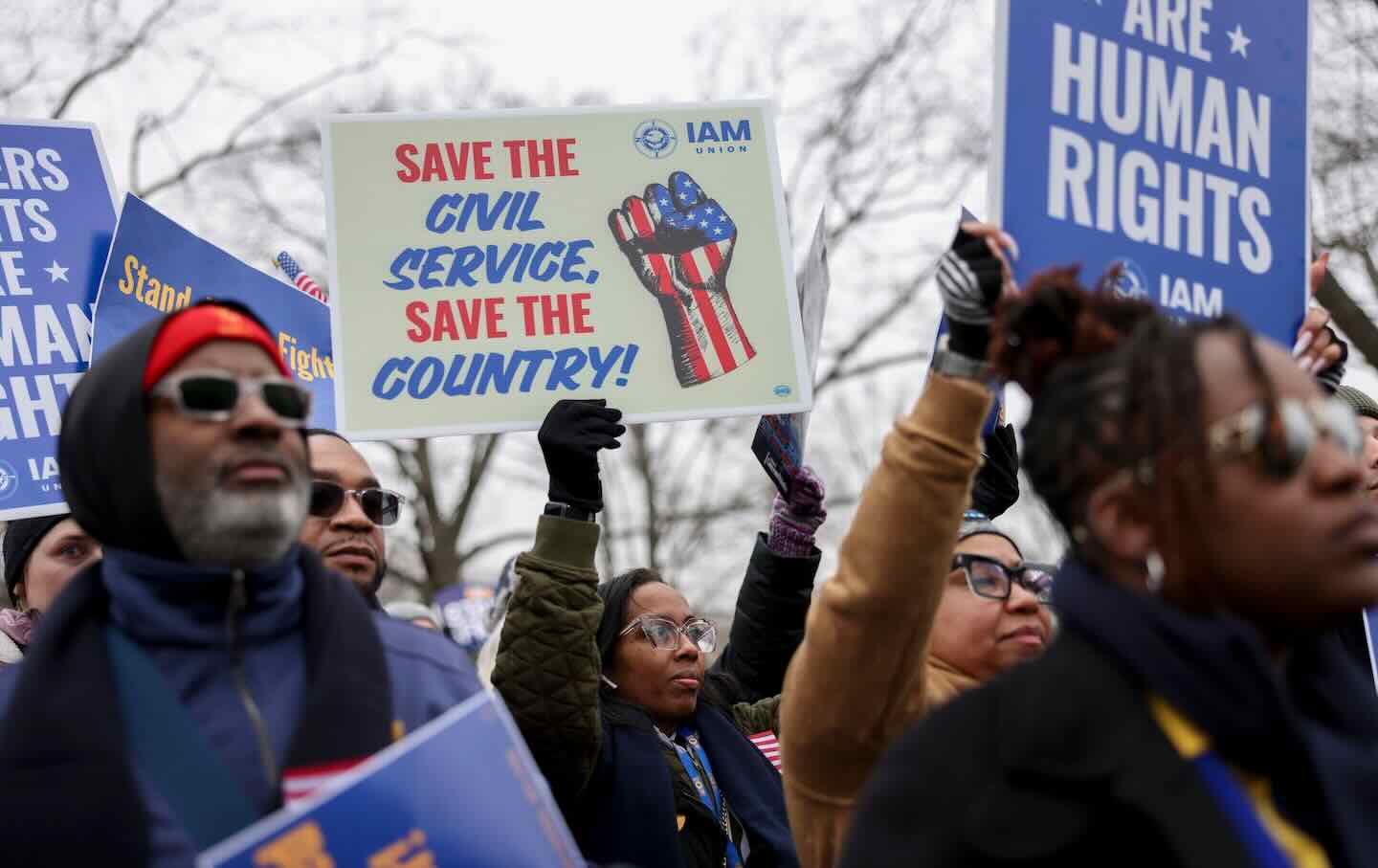
The Unseen Toll: Depression, Anxiety Plague Black Women a Year After Being Fired by DOGE The Unseen Toll: Depression, Anxiety Plague Black Women a Year After Being Fired by DOGE
Trump’s federal workforce cuts dismantled a job pipeline for Washington, DC’s Black community and gutted the well-being of the women who hold up that community.
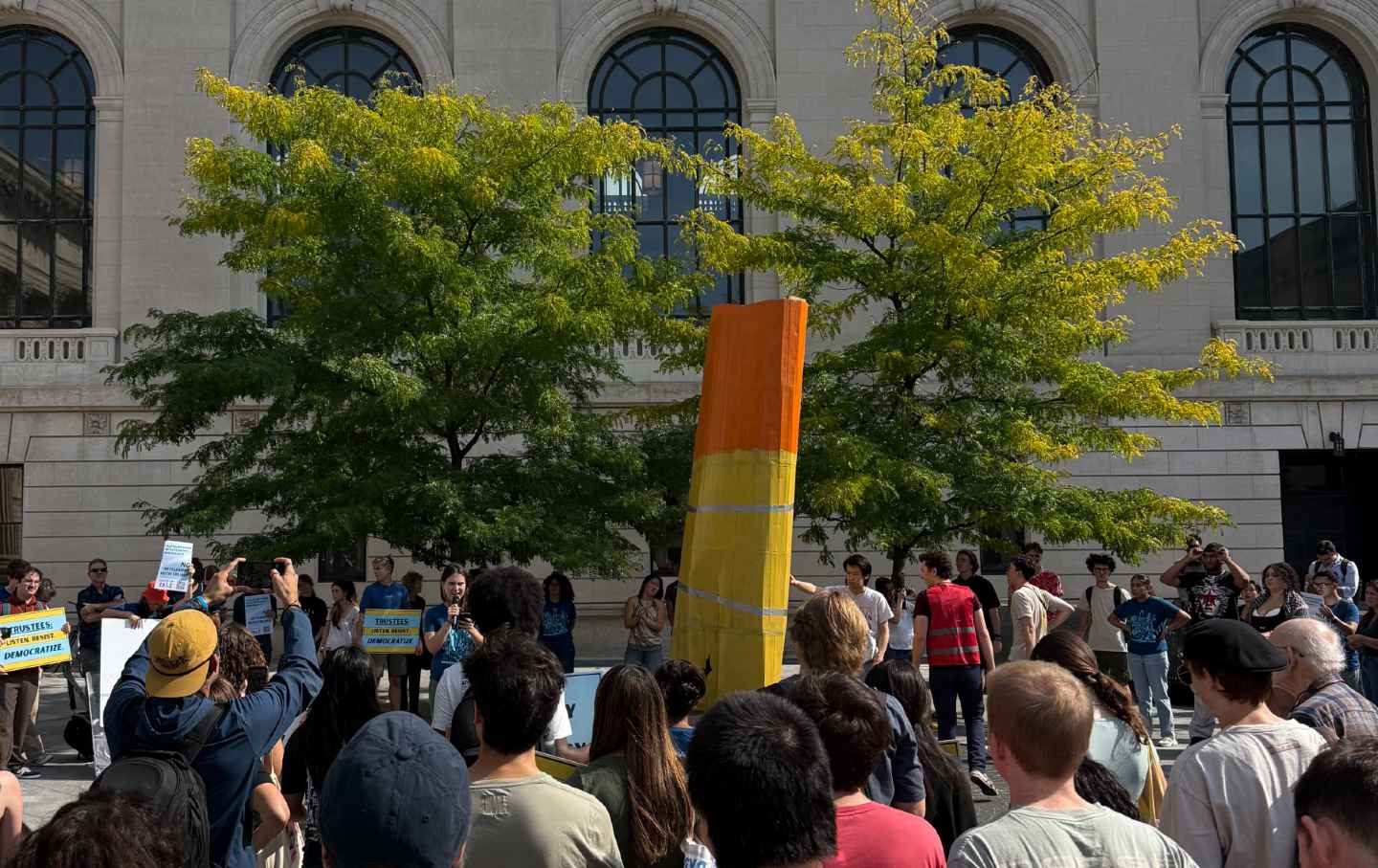
Yale’s Protest Tradition Is Back Yale’s Protest Tradition Is Back
For the first time in more than 50 years, Yale students gathered around an iconic sculpture to protest their university and their government.

Red Vienna Is Still Alive Red Vienna Is Still Alive
The Austrian capital chose not to privatize the commons, and it shows.

