
Dolly Parton Understood That Working 9 to 5 Doesn’t Really Pay the Bills in Today’s America
Social mobility has ground to a halt. Why that’s lousy for American music.
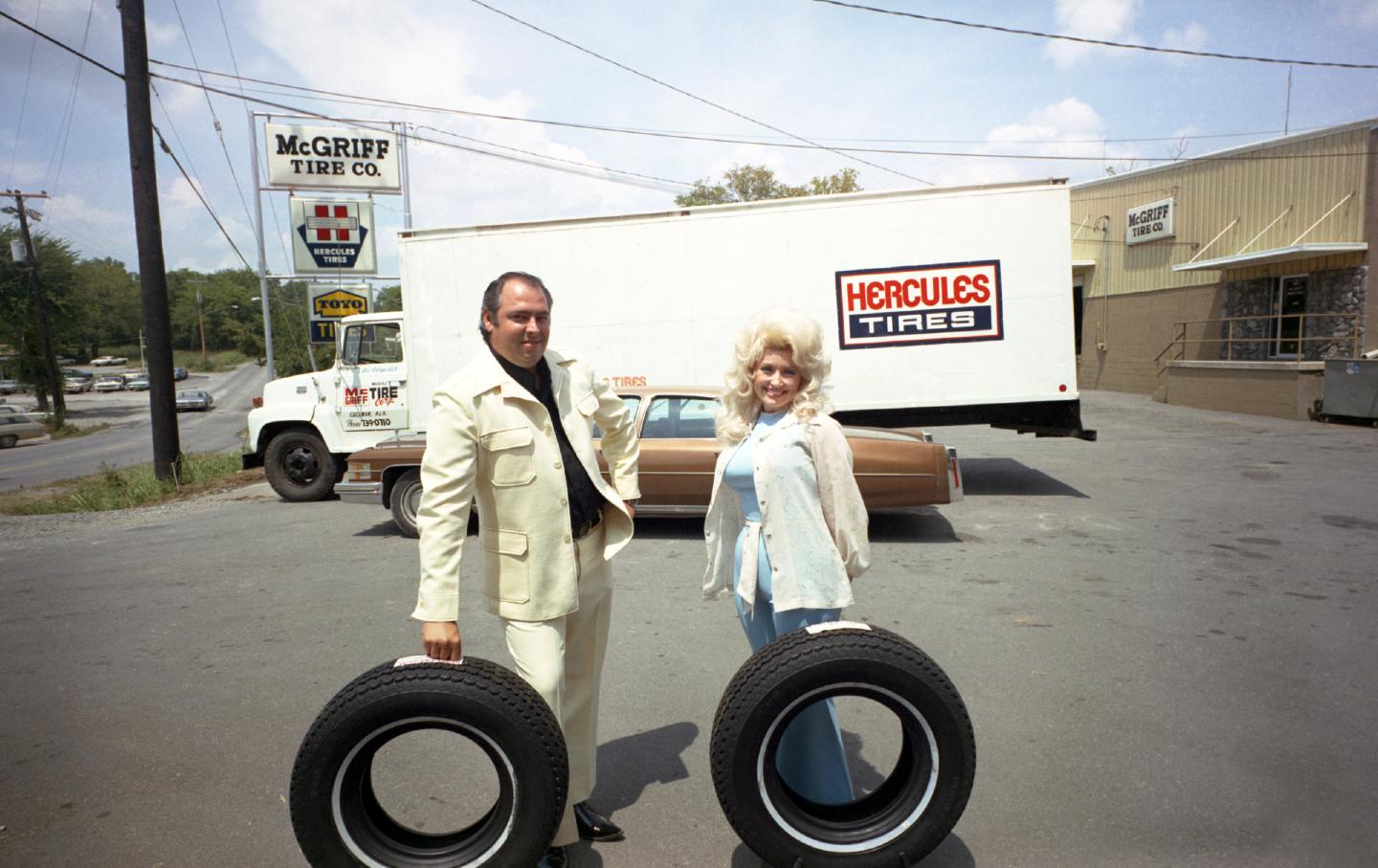
Near the end of her life, Dolly Parton was among America’s wealthiest self-made women—a musician with over 100 million records sold and a savvy entrepreneur helming a large business empire. But throughout her long career, she highlighted her hardscrabble origins in rural Tennessee, as one of 11 children in a sharecropping family that got up “before sunup to get the work done up” to “work in the fields ’til the sun had gone down.”
Along with artists like Johnny Cash, Bruce Springsteen, and Biggie Smalls, Parton was part of an American tradition that’s found musicians earning worldwide acclaim for songs that speak to their working-class roots, from the Arkansas cotton fields to New Jersey’s factory towns and Brooklyn’s disinvested streets.
They’ve been embraced by audiences across generations, in part because their music is rooted in experiences that are all too universal—hard work that doesn’t pay as well as it should; families and communities that are vibrant, yet struggling day-to-day. But as the cost of living rises and with creative fields threatened by AI, it’s becoming more and more difficult for musicians and artists to get by. This is a burden that falls disproportionately on those without means—and it’s imperiling the nation’s proud history of working-class artistry.
Though Parton’s rags-to-riches story may lend itself to a bootstraps narrative—that, with enough elbow grease, anyone can make it on their own—her success came during a period of American class ascendancy and support for the arts.
Born in 1946 in the wake of the New Deal and coming of age in 1964 at the dawn of the Great Society and the War on Poverty, Parton emerged at a moment in history when the federal government was doing more to bolster the working class and ensure affordability than ever before or since. This was also a moment when participation in labor unions was at an all-time high, peaking at over 33 percent in 1954, and Parton was herself a decades-long member of the American Federation of Musicians and SAG-AFTRA. All of this added up to an economic situation in which 90 percent of children born in the 1940s went on to earn more than their parents by age 30. Meanwhile, the inflation-adjusted cost of the average home hovered at around half of current sticker prices from the ’60s until the ’90s.
So while Parton certainly earned her success through hard work and remarkable talent, she also had the good fortune to be born in an America where having nothing but that talent—and a high school diploma—was a way to make a living.
Today, social mobility has ground to a halt, and an 18-year-old who moves to Nashville with big dreams and little else will land in a city where the cost of living is rising but wages aren’t keeping pace, and one where nearly half of tenants are rent-burdened. New York and San Francisco, meanwhile, now find themselves so unaffordable that they’re struggling to sustain the rich (poor!) artistic communities that were once their hallmark.
But our history holds a model of support for the arts amid economic tumult. During the Depression, the Works Progress Administration’s Federal Music Project employed 16,000 people and established 34 symphony orchestras in just three years. It staged concerts with tickets at low or no cost and offered free music classes to the public. The program promoted popular styles, too, hiring musicians and researchers who recorded in some of the genres key to the nation’s cultural heritage, from folk songs to spirituals. Broader WPA arts programs employed tens of thousands of visual artists, writers, and theater makers, who in turn created countless creative works.
Contemporary artists and arts institutions face a patchwork of state funding. And even these often slim subsidies have been brutally slashed by the Trump administration, which has cut funding to a third of the nation’s museums and attempted to eliminate the National Endowment for the Arts altogether.
Still, some communities are trying to ensure that they remain places where the arts can thrive. This summer, New York Mayor Zohran Mamdani’s administration allocated a record-setting $323.8 million to the city’s Department of Cultural Affairs, which supports creative institutions and artists. In remarks delivered at the affordable apartment complex where DJ Kool Herc’s 1970s rec center performances laid the foundations for hip-hop, Mamdani reminded listeners that “when New Yorkers can afford a home, New Yorkers can afford to make great art.”
Meanwhile, Oregon’s David Douglas School District, where over half of students qualify for free or reduced lunch, was recognized as one of the nation’s best communities for music education for the 15th time. Its music program provides affordable instrument rentals, access to cut-price private lessons, and a closet of outfits for performance days. Cultivating the next generation of American artists requires an early investment in their skills and creativity—something the politicians who’ve recently cut funding for Parton’s Imagination Library book program would do well to remember.
President John F. Kennedy called art “the great democrat, calling forth genius from every sector of society, disregarding race or religion or wealth or color.” That genius still exists in each school and every town. But imagine how many of those who possess it are today refreshing delivery apps for their next gig, too focused on making rent to write that song, or that play. In the immortal words of the Queen of Country: It’s enough to drive you crazy if you let it.
More from The Nation
What Are Democrats Prepared to Do if Trump Rigs the Election? What Are Democrats Prepared to Do if Trump Rigs the Election?
In this week’s Elie v. U.S, our justice correspondent challenges Democrats' lack of a plan if Trump steals the midterms. Plus: the most racist, and honest, AI add ever.
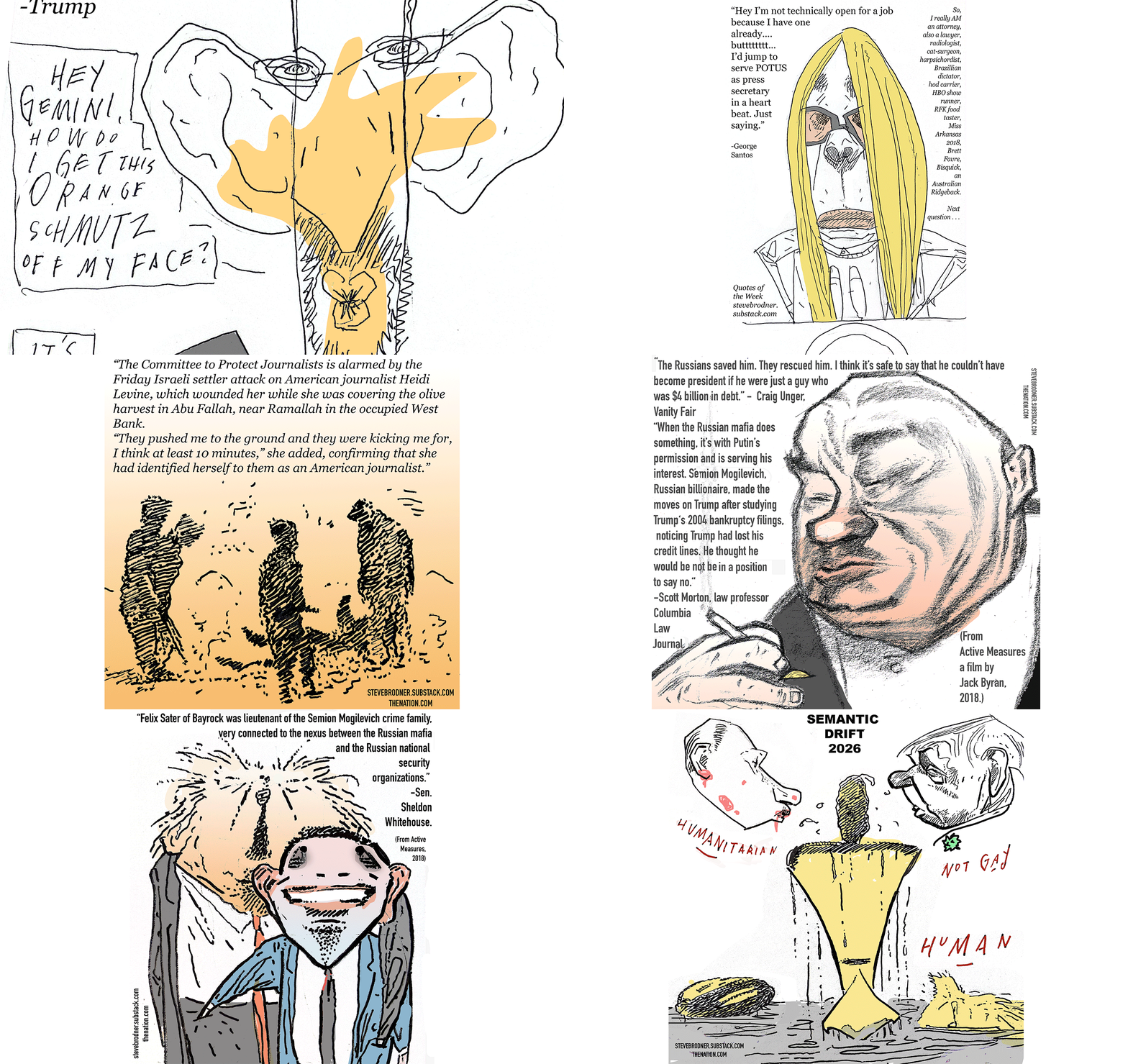
Ramaswamy’s Guide to a Better Vocabulary Ramaswamy’s Guide to a Better Vocabulary
Quotes of the Week.
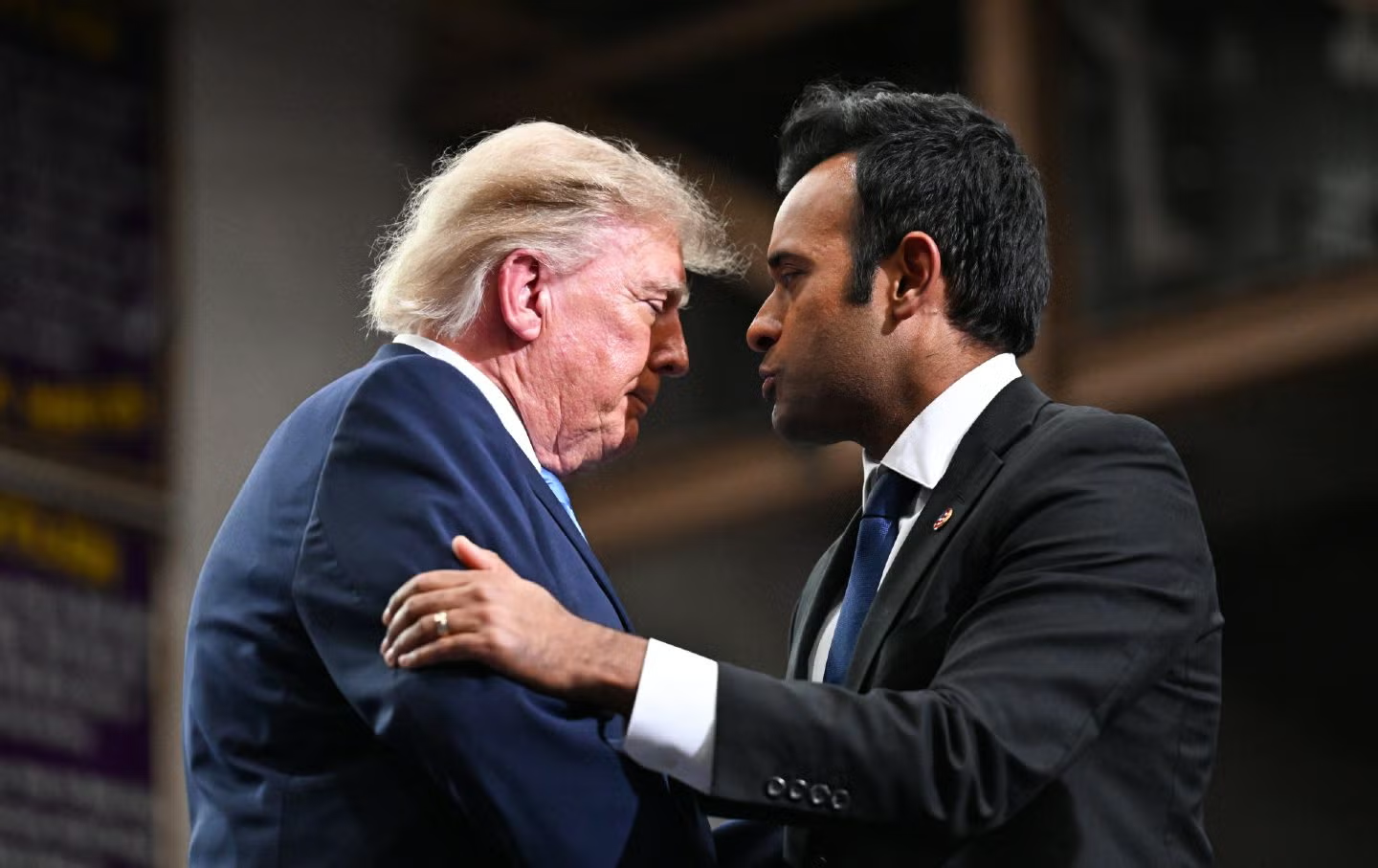
Why Trump Is Embracing Vivek Ramaswamy’s Vile Ad Why Trump Is Embracing Vivek Ramaswamy’s Vile Ad
The president is leaning into the politics of toxic parenting.
The Shadow Knows The Shadow Knows
High-tech weapons, low-tech intelligence.
Tom Hayden’s Legacy and the New American Left Tom Hayden’s Legacy and the New American Left
It’s been 10 years since he passed away.
The Decades-Long Battle Within the Democratic Party Establishment Between the Heirs of Dean Acheson and Franklin Roosevelt The Decades-Long Battle Within the Democratic Party Establishment Between the Heirs of Dean Acheson and Franklin Roosevelt
The calamitous history of America’s wars of choice.

