The Real Reason There’s a Munitions Shortage
More important than fixing production methods is fixing our ill-advised foreign policy.
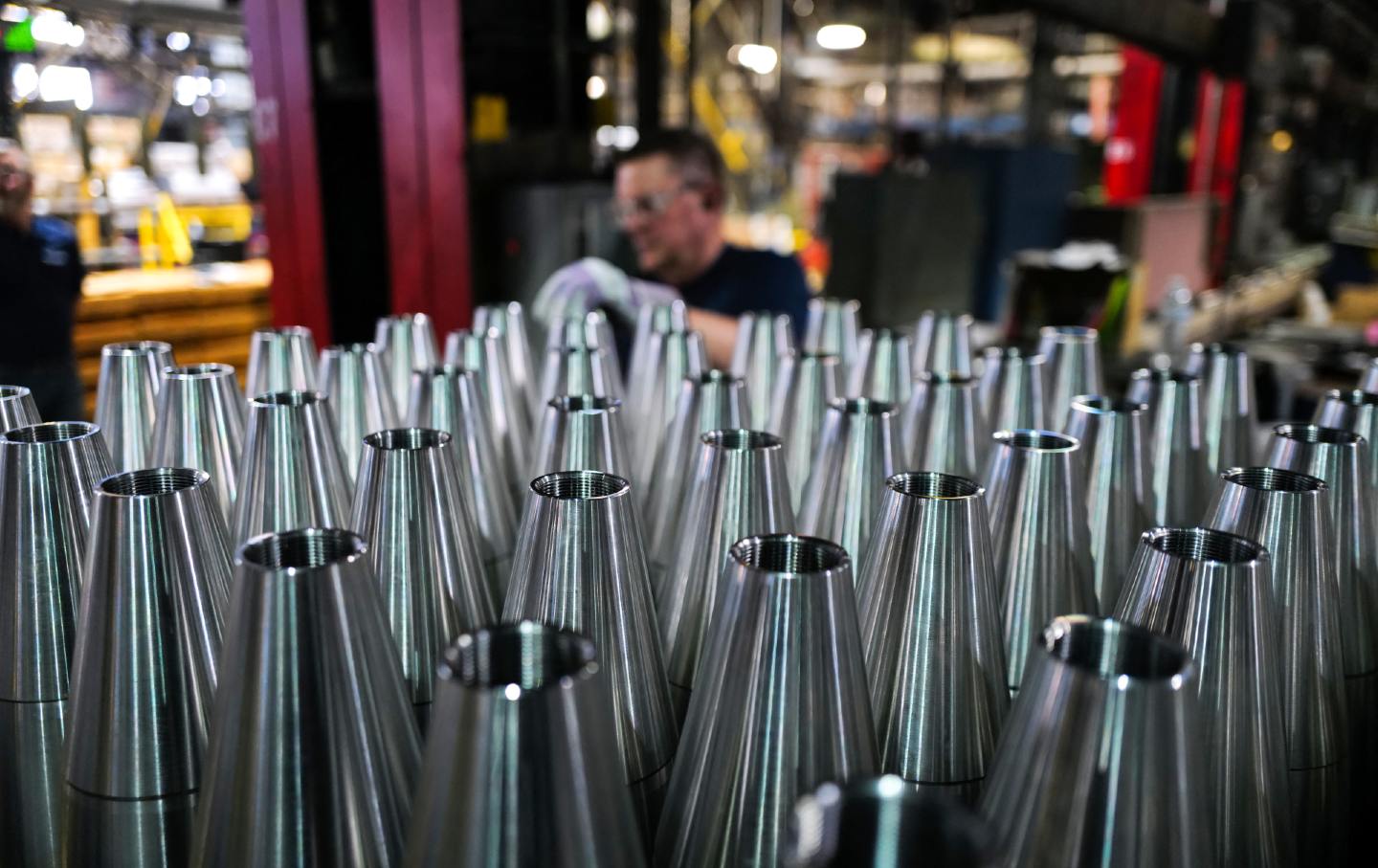
Washington has been seized with the existence and potential implications of a shortage of munitions, from artillery shells up to and including expensive missile interceptors. But contrary to the conventional wisdom, the munitions “crisis” is not due to bad planning or insufficient funding. It is due to a policy of runaway arms sales and reckless military intervention that should be reined in, not perpetuated for the next generation by expanding US capabilities to produce munitions and missiles.
The top priority should be ending America’s addiction to endless wars and runaway arms dealing, not throwing more money at the Pentagon to bulk up on the tools of war.
To be clear, there are other reasons for the so-called munitions shortage that have more to do with domestic politics than foreign policy excesses. For one, munitions have always been a stepchild in the articulation of the Pentagon’s weapons buying priorities. More profitable big-ticket items like aircraft carriers, combat aircraft (like the deeply dysfunctional F-35), intercontinental ballistic missiles, and ballistic missile and attack submarines have always been favored, both because they are more lucrative for contractors and because those systems have developed strong support in Congress by spreading production to a majority of states and congressional districts.
But even allowing for this budgetary bias, the US military would have more than enough munitions if our government weren’t arming Ukraine (the effort to help Kyiv fend off a Russian invasion has cratered under Trump II but thrived under Biden); arming Israeli genocide and aggression with tens of thousands of missiles and bombs; and fighting a war in Iran where Tehran is using relatively inexpensive drones that the United States is attempting to shoot down with missiles worth millions of dollars.
The answer to the munitions crisis in part involves producing simpler, less expensive munitions that can be produced on shorter timelines, in some cases by reviving government arsenals that aren’t distorted in their approach by the quest for maximum profits. The arms lobby will fight this approach tooth and nail, because it would replace the easy money they receive under current arrangements with a more effective, efficient approach that would take them out of the loop.
ProPublica has done a compelling case study of why the usual suspects in the arms industry can’t be trusted to boost munitions production. In a carefully researched, well-documented piece, they tell the story of General Dynamics, which received over half a billion dollars to build a new munitions factory and, two years later, has not produced a single artillery shell thanks to production snafus tied to the purchase of untested equipment.
More important than fixing production methods is fixing our ill-advised foreign policy. We need a more restrained, more realistic approach to military aid, arms transfers, and military intervention that promotes defense narrowly defined, avoids illegal, aggressive wars, and stops arming reckless regimes that engage in brutal, destabilizing wars and oppress the human beings under their territorial control.
The mindless rush to build more capacity to produce bombs, shells, and missiles ignores the central fact that it is US policy that is the problem, not a lack of sufficient implements of destruction.
If they want to undercut alarmist calls for more munitions production, progressive movements and concerned members of the broader public need to push for an America whose foreign policy is about preventing war, not promoting it. Given our other urgent needs, from addressing the climate crisis to reducing poverty to heading off future pandemics, America cannot afford to become a garrison state committed to endless wars and the coddling of repressive regimes. We should be debating a shortage of diplomacy and common sense in US foreign policy, not a shortage of munitions.