
Abdul El-Sayed Knows Just How to Beat Billionaire-Funded Republicans
His ability to hit hard against powerful moneyed interests makes him electable.
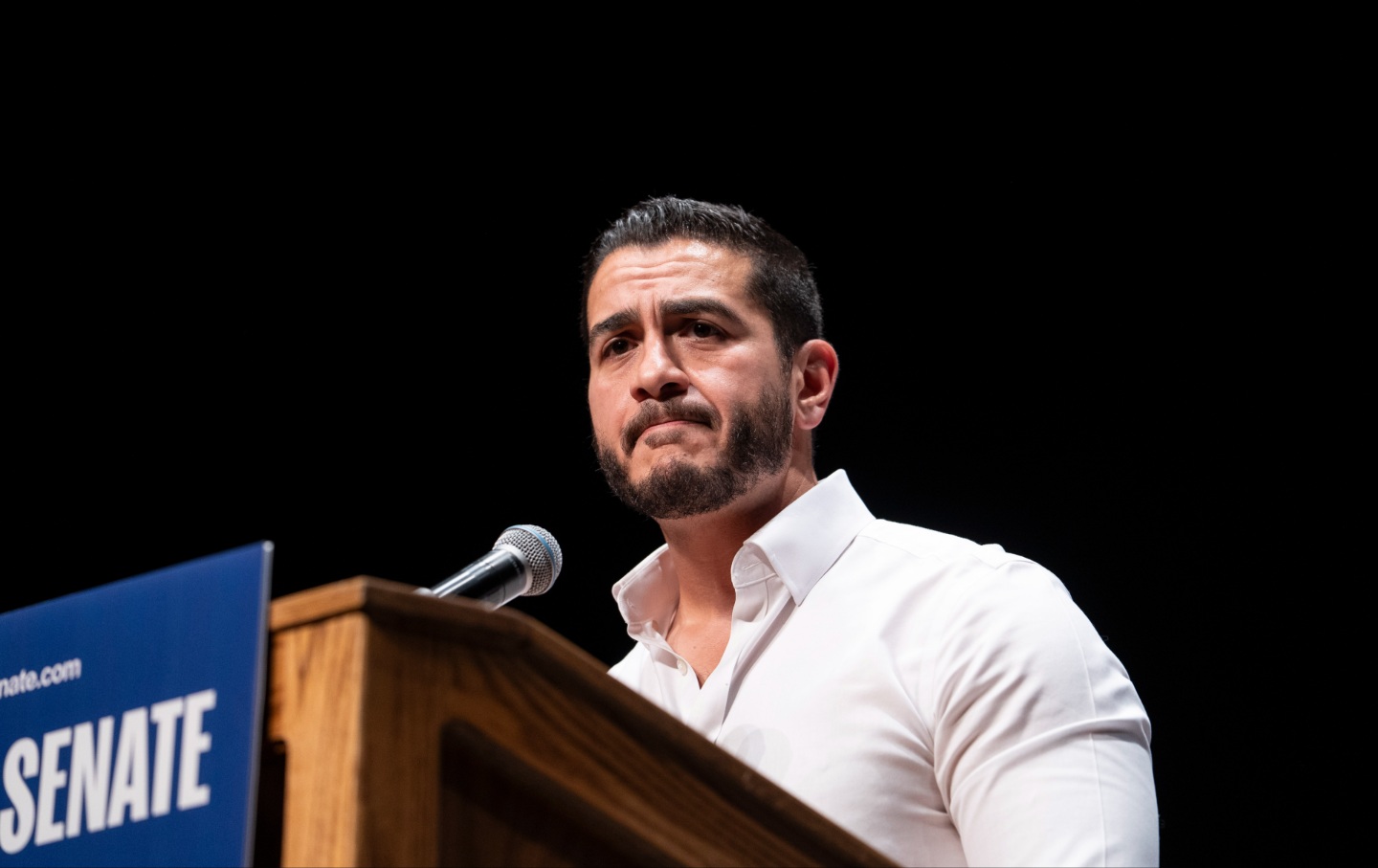
Abdul El-Sayed speaks at The People v. the Powerful rally at the Detroit Opera House on July 18, 2026, in Detroit, Michigan.
(Sarah Rice / Getty Images)When Michigan Democratic US Senate candidates Haley Stevens and Abdul El-Sayed faced each other in their debate this week, the talk was as much about the broad topic of money in politics as it was about the particular issues that separate Stevens, a corporate-aligned centrist, and El-Sayed, an economic populist with a sweeping progressive agenda.
That wasn’t surprising. The money fight frames an electability debate between Stevens, who is relying heavily on support from special-interest groups and wealthy donors, and El-Sayed, whose campaign has placed a heavy emphasis on grassroots fundraising from small donors. Democratic primary voters will decide which of these paths they want to follow when they go to the polls on Tuesday; surveys show El-Sayed with a significant lead over Stevens.
El-Sayed and his backers charge that Stevens has effectively sold out to the monied elites. And they’re blunt about it. In this week’s debate, El-Sayed argued that Stevens had been “bought off” by free-spending special interests, who know she would be “a reliable vote” for their agendas.
Stevens backers counter by charging that El-Sayed’s leftist views will scare off swing voters—and, presumably, big donors—who disagree with the populist’s stark criticisms of corporate monopolies, a healthcare system that’s effectively owned by the insurance companies and Big Pharma, and of the Pentagon, defense contractors, and Israel’s assault on Gaza.
But El-Sayed isn’t blinking. He’s leaning into the money issue in a way that has relevance not just for the primary but for the general election fight against heavily funded Republican Mike Rogers. El-Sayed has been mounting a “Michigan Is Not For Sale” campaign, in which he says, “Maybe ‘electable candidates’ are the ones who don’t need $60 million from corporations and special interests to run and win campaigns. Maybe electable candidates aren’t the ones who have to carpet bomb the airwaves with 30-second glossy ads lying about themselves and about their opponents.”
El-Sayed hit the same theme in the standout moment of this week’s debate. “When you ask $60 million to come into a race for you, and then say that somehow you’re ‘electable,’ I think you don’t quite understand what electability means. If you need a $60 million crutch, you probably can’t be elected on your own terms,” he said of Stevens. Then, addressing Democratic primary voters, he added, “So, I would just say that you should probably, if you really want to beat Mike Rogers, find the candidate who is electable without having to find a $60 million crutch to do it.”
Whichever Democrat is nominated on August 4, the truth is that they’ll almost certainly be outspent by the Republicans and billionaire-funded political action committees. But El-Sayed has a much stronger critique of the corrosive influence of this big money—one that could resonate with voters—than Stevens, who critics complain has long been a prodigious recipient of support from corporate interests.
“Stevens has benefited from overwhelmingly lopsided support by outside groups,” explains Michigan Bridge, a nonpartisan news site, while CBS News reports, “Stevens’ campaign and six super PACs that back her have spent over $61 million on ads during the primary, according to advertisement tracking firm AdImpact. El-Sayed’s campaign and outside groups combined have spent over $15.3 million, according to FEC reports.”
Where’s the Stevens money coming from? “The majority of Stevens’ outside assistance has come from United Democracy Project, an offshoot of the American Israel Public Affairs Committee, or AIPAC. The group has spent nearly $25 million to boost Stevens, including $14.1 million since the start of July,” notes Michigan Bridge. “Another PAC, called A Stronger Michigan, has spent more than $16 million on ads to boost Stevens since its creation in late May. The PAC is funded almost entirely by Center Forward, a dark money group that does not disclose donors and promotes centrist candidates.”
Stevens backers hate it when El-Sayed rips into their candidate’s fundraising—and when his critique is amplified by backers such as US Senator Bernie Sanders (I-VT) and US Representative Alexandria Ocasio-Cortez (D-NY). That’s understandable, because El-Sayed has hit on a way of talking about money in politics that, as his wide polling lead over Stevens suggests, is resonating. It is not hard to see how he could extend the argument to Rogers in a general election.
This matters—a lot—because Michigan is not merely a swing state. It is a state where cash-rich Republicans think that, with enough spending, they could flip a Democratic seat. If they were to do so, that would provide a huge boost to their efforts to retain control of the Senate—even in the face of President Trump’s cratering approval ratings, awful “generic ballot” numbers that give a measure of the turn against the GOP, and strong Democratic candidate recruitment in “red” states such as Alaska and Ohio.
Republicans have a 53–47 Senate majority. But Democrats are currently mounting viable campaigns for Republican-held seats in North Carolina, Maine, Ohio, Iowa, Texas and Alaska. Let’s say the “blue wave” hits and Democrats take four or five of those states—an incredible but not impossible prospect. That would position the opposition party to form a sufficient majority to take charge of the chamber—so long as Pennsylvania Democratic Senator John Fetterman stays in the caucus.
Democrats are also well-positioned to retain the seat US Senator Tina Smith is vacating in Minnesota—so long as an intense primary contest between progressive Lieutenant Governor Peggy Flanagan and centrist US Representative Angie Craig doesn’t go off the rails. They must also mount an effective defense in New Hampshire, where Democratic incumbent Jeanne Shaheen is stepping down, and, of course, in Michigan, where Democratic Senator Gary Peters is standing down.
Popular
“swipe left below to view more authors”Swipe →What makes all of this difficult is the immense Republican money advantage. On Wednesday, MS Now reported that the GOP, through its various fundraising arms and super PACS, had around $500 million more in the bank this year than the Democrats.
Republican Senate majority leader John Thune’s Senate super PAC had $238 million on hand in mid-July. That compares with Democratic Senate minority leader Chuck Schumer’s Senate Majority PAC, which had roughly $126 million on hand at around the same time. And Thune’s operation continues to raise money from billionaires and corporate interests at a far faster clip than Schumer’s.
Republicans and “independent” groups that boost Republicans will use that advantage to try to flip Michigan’s seat.
So the question of “electability” comes down not just to the money that the respective parties might raise, but also to the prospect that a Democrat might effectively denounce the billionaires and their political pawns.
El-Sayed is uniquely prepared to frame the debate around the threat posed by Big Money—because of the way in which it seeks to buy not just election results but the policies that extend from them.
“Here’s the thing about it: None of it actually makes your life better,” he says of the huge amounts of money that are flowing into our politics in 2026. “Think about the $60 million that got spent in this [primary] race. What could $60 million do for a community in Detroit? What could $60 million mean for erasing medical debt?… But they want to spend it to get the congresswoman elected. Why? Because, at the end of the day, they know that they’re going to have a safe seat doing their bidding instead of yours.”
If that messaging works for El-Sayed in the primary election where he is being extremely outspent, then there is every reason to believe it can work in a general election where the spending will be just as extreme.
Become a Sustaining Donor This September
Between the reemergence of right-wing red-baiting and Donald Trump’s use of the chilling National Security Presidential Memorandum–7 to criminalize left political organizing, we’re seeing McCarthyism reborn before our eyes.
This assault on democracy cannot be ignored or wished away. Resisting it requires bravery in the face of threats and repression, a steadfast commitment to the truth, and the unwavering belief that we can—and will—overcome this darkness.
We must have an independent media that sets the record straight, unearths corruption and abuses of power, and advances a politics of justice and dignity for all if we’re to win this fight.
That’s why I’m writing to you today. This September, The Nation needs to add 100 monthly donors to sustain our progressive journalism. Your contribution makes the next investigative report, the next truth-speaking column, and the next pathbreaking essay all possible.
I hope you’ll support our work with a recurring donation today. If you donate $10 or more a month, we’ll send you a brand new “Hands Off the Free Press!” sticker to recognise your commitment to our cause. Please, donate today.
Onward,
Katrina vanden Heuvel
Editor and Publisher, The Nation
More from The Nation
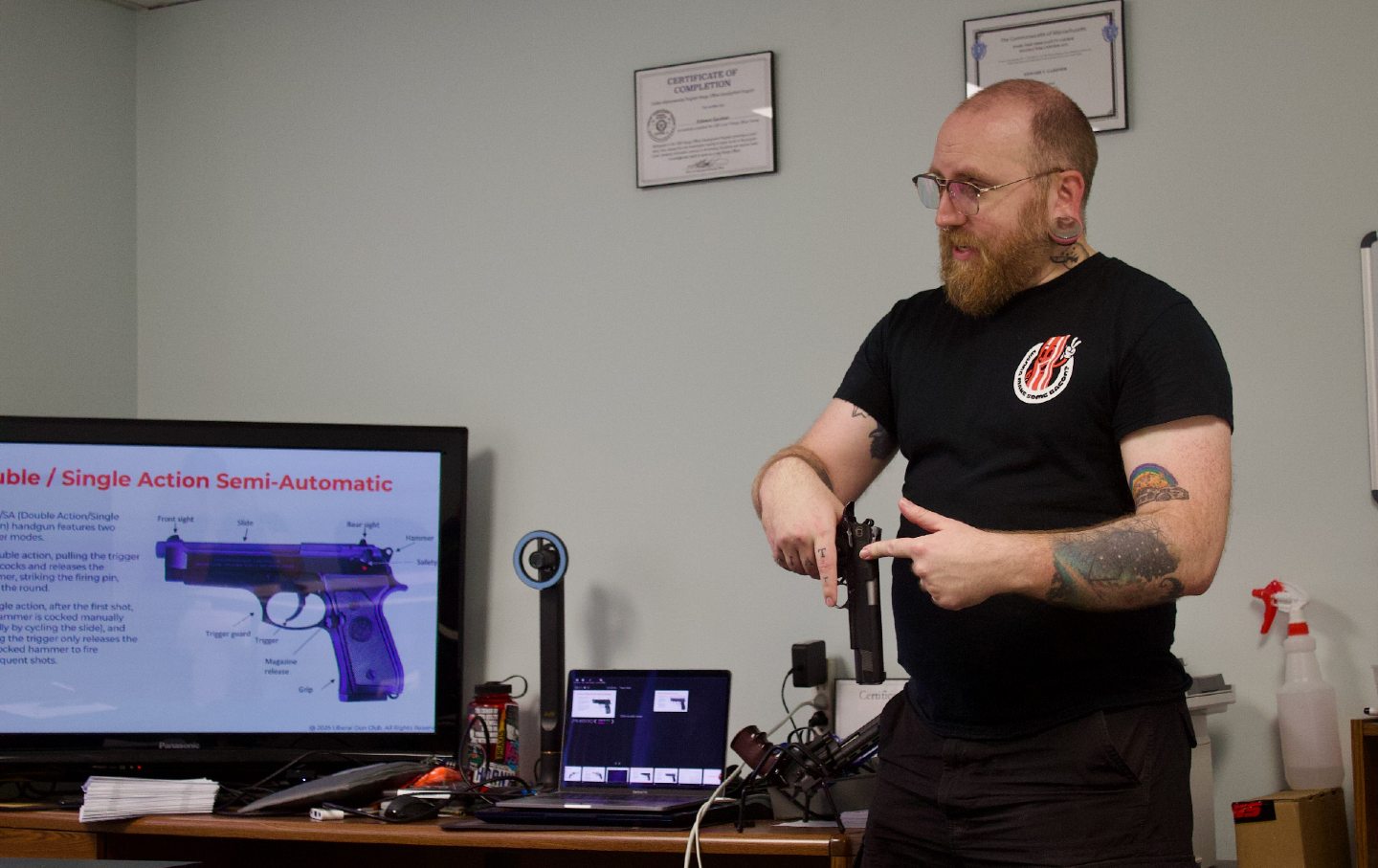
Assault Weapons Are Banned in Massachusetts. These Leftists Want to Change That. Assault Weapons Are Banned in Massachusetts. These Leftists Want to Change That.
The Liberal Gun Club, which has chapters in more than 30 states, reported a spike in interest as ICE raids ratcheted up early this year.

Electric Shocks for Kids and the Push to Militarize Schools Electric Shocks for Kids and the Push to Militarize Schools
Electric-shock gloves used on students in Nebraska are the latest sign of how policing, surveillance, and military technology have entered American schools.
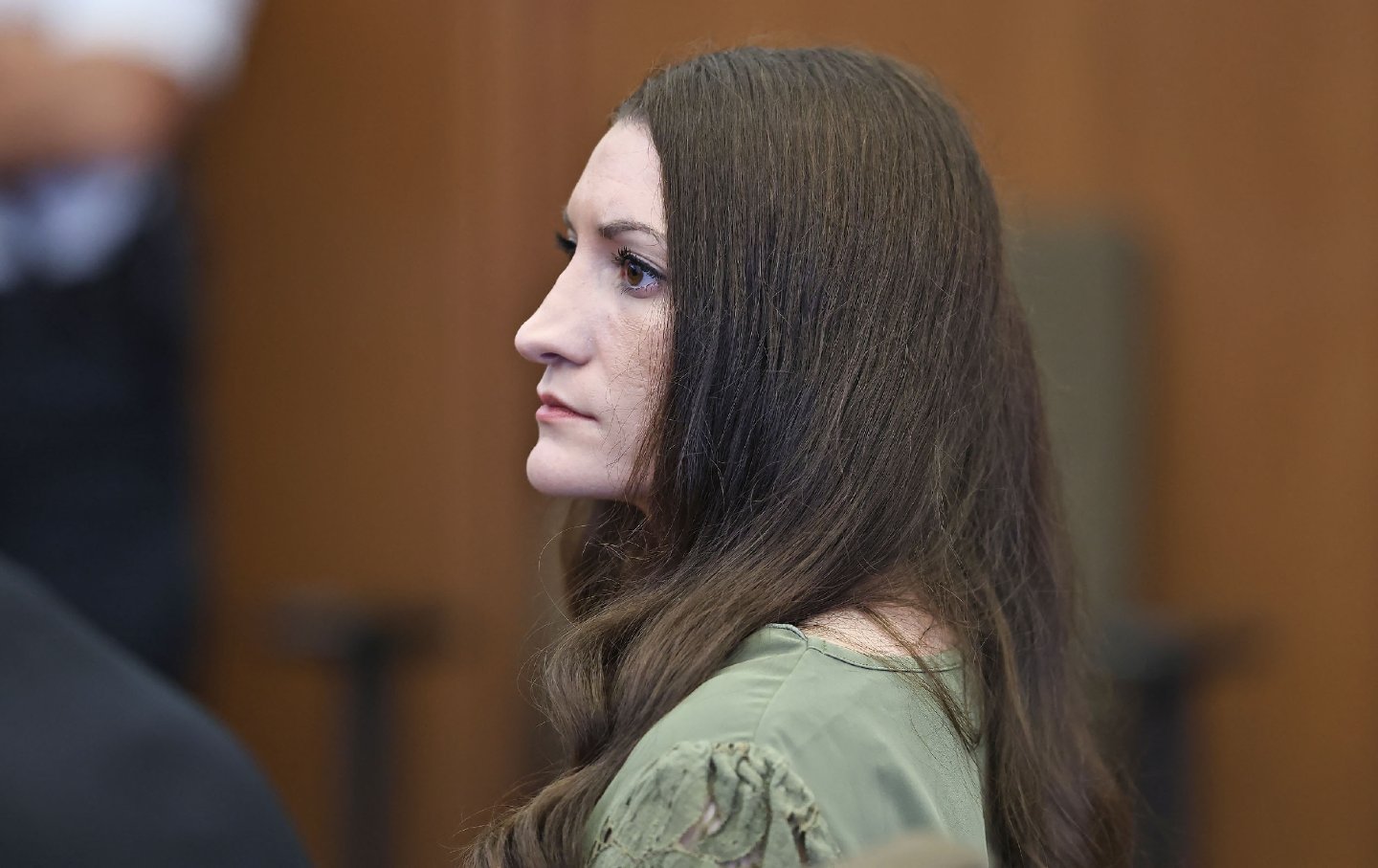
MAGA Is Exploiting the Lindsay Clancy Case to Try to End Voting for Women MAGA Is Exploiting the Lindsay Clancy Case to Try to End Voting for Women
As Trump subverts elections, his most ardent fans want to overturn the 19th Amendment.

Artificial Intelligence: Who Is Giving Birth to the Future? Artificial Intelligence: Who Is Giving Birth to the Future?
What are the dangers of surrendering too much of our humanity to technology?

The US Had a Choice After 9/11. It Chose Wrong. The US Had a Choice After 9/11. It Chose Wrong.
In this week’s Elie v. U.S., our justice correspondent reflects on September 11. Plus: the stupidity of the "Trump Dividend" and the threat of AI.


