Mamdani Wants to Show That Democratic Socialism “Can Flourish Anywhere”
The mayor is using his “100 Days” moment to talk about “the change that democratic socialism can deliver.”
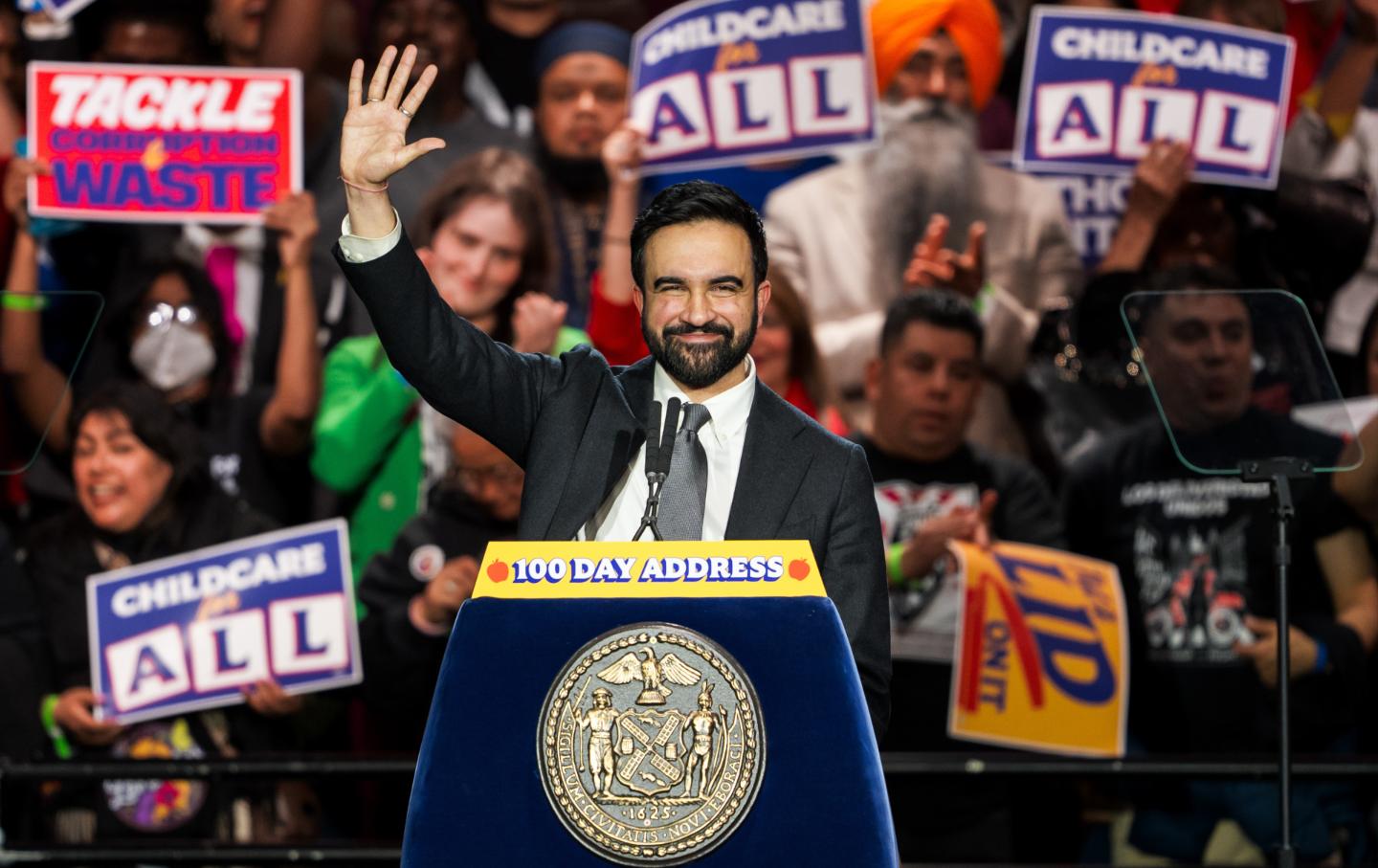
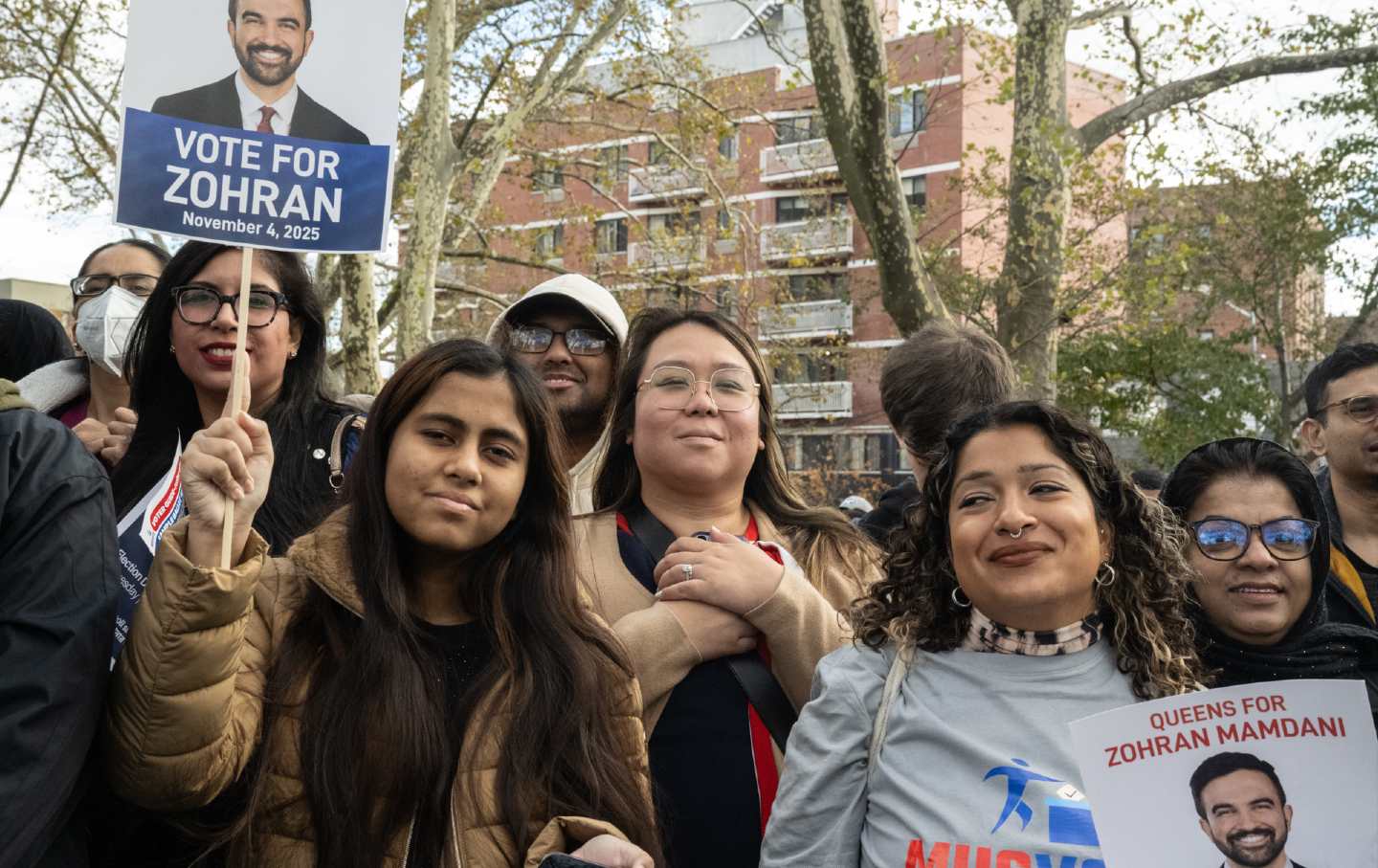
Zohran Mamdani at a rally in Queens, on April 12, 2026.
(Adam Gray / Bloomberg via Getty Images)The mayor of the largest city in the United States appeared on the widely viewed CBS Mornings show Thursday and talked up the national appeal of democratic socialism.
“Before I was the mayor, I was an Assembly member [representing] Astoria and Long Island City. At that time, I was told that you could only be a democratic socialist in northwest Queens. Then I became the mayor. Now, the next question is the state. The next question will be the country. I think that this is a politics that can flourish anywhere because, frankly, there is only one majority in this country—that’s the working class,” announced Zohran Mamdani during an interview in which he touted the successes of his first 100 days as mayor of New York City. “And it’s time we have politics that puts them at the heart of what it is that we’re pursuing, and not as part of the appendix.”
This was the latest iteration of the mayor’s unique response to the attention that’s been coming his way as he’s finished his first 14 weeks in office. Mamdani’s 100-day publicity blitz has featured compelling reflections on his accomplishments—progress on universal childcare and safer streets, cracking down on bad landlords, 102,000 potholes filled—but that’s to be expected. Ever since President Franklin Roosevelt did it in the midst of the Great Depression, newly elected executives have used the arbitrary measure of their first 100 days to reassure voters that the right choice was made in the previous November’s balloting.
But Mamdani is doing something more—he’s framing his still-fresh tenure as not only a measure of his ability to govern but also a sign that the ideology of democratic socialism can work in practice, not just in theory. Indeed, he suggests, his first months in office have begun to illustrate “the change that democratic socialism can deliver.”
“After years of broken promises, no one could be blamed for doubting that government held either the ability or the ambition to upend the status quo. Yet, as I said on that freezing January afternoon to more than 8.5 million New Yorkers: We will make no apology for what we believe. I was elected as a Democratic socialist and I will govern as a Democratic socialist,” declared Mamdani in his address to cheering supporters, who waved “Childcare for All,” “NYC Groceries: Fresh Food, Fair Prices,” and “Pothole Politics” posters during last Sunday’s 100 Days event at a Queens concert venue.
“I know there are many who use ‘socialist’ as a dirty word—something to be ashamed of. They can try all they want, but we will not be ashamed of using government to fight for the many, not simply the few,” continued Mamdani. “We will not be ashamed of adding more heat pumps to New York City Housing Authority buildings in the Rockaways, or building more supportive housing in Harlem or standing steadfast alongside our trans neighbors. We will not be ashamed of investing in youth mental health clinics, or working to close Rikers or fighting for immigrants targeted by ICE. To any New Yorker, whether you’re under attack from the federal government’s cruelty or suffocating under the affordability crisis, we will stand beside you.”
The mayor was joined on stage by Vermont Senator Bernie Sanders, whose 2016 presidential bid renewed interest in democratic socialism nationwide—and whose 2020 bid inspired a young Zohran Mamdani to enter the political fray. On Sunday, the senator noted the ideological focus of Mamdani’s remarks—and the change that Mamdani represents. “I have been on platforms with hundreds and hundreds of mayors and all kinds of public officials,” said Sanders. “This is the first time I was ever introduced by someone who talked proudly about democratic socialism, and it feels great.”
What made Mamdani’s talk about socialism so compelling was his determination to link the history of past successes with current struggles. “Because government is a series of choices,” explained the mayor, “socialism is the choice to fight for every New Yorker—to extend democracy from the ballot box to the rest of our lives. We are hardly the first socialists to embrace good governance. One hundred and ten years ago, the city of Milwaukee elected a mayor named Daniel Webster Hoan. Hoan was considered young for the job—only 35 years old when he took office. I know—crazy, right? More importantly, Hoan made no apologies for being a socialist.”
Recounting the remarkable story of the longest-serving socialist mayor of a large American city—one of a trio of Socialist Party mayors of Wisconsin’s largest city, Hoan was elected in 1916 and served until 1940—Mamdani recalled that “Mayor Hoan knew then what we know now: The worth of an ideology can only be judged by its delivery. As Emil Seidel, the socialist mayor who came before Hoan, once said, their entire governing philosophy was simple: ‘Go after it and get it.’ Under Mayor Hoan, Milwaukee built the greatest public park system in the nation and weathered the Great Depression better than almost any other American city. Under Mayor Hoan, Milwaukee purged corruption and graft, built the first municipally sponsored public housing development in the nation, and transformed the city’s sewage disposal system. He believed, just as we do, that to deliver this great society, we should tax the rich. Today, we know these leaders as the ‘sewer socialists.’ But for years, Milwaukeeans knew them simply as leaders who delivered. It’s time we bring that to New York City.”
And, ultimately, to the rest of a country where, if Zohran Mamdani is right, socialism has the potential to “flourish anywhere.”
Become a Sustaining Donor This September
Between the reemergence of right-wing red-baiting and Donald Trump’s use of the chilling National Security Presidential Memorandum–7 to criminalize left political organizing, we’re seeing McCarthyism reborn before our eyes.
This assault on democracy cannot be ignored or wished away. Resisting it requires bravery in the face of threats and repression, a steadfast commitment to the truth, and the unwavering belief that we can—and will—overcome this darkness.
We must have an independent media that sets the record straight, unearths corruption and abuses of power, and advances a politics of justice and dignity for all if we’re to win this fight.
That’s why I’m writing to you today. This September, The Nation needs to add 100 monthly donors to sustain our progressive journalism. Your contribution makes the next investigative report, the next truth-speaking column, and the next pathbreaking essay all possible.
I hope you’ll support our work with a recurring donation today. If you donate $10 or more a month, we’ll send you a brand new “Hands Off the Free Press!” sticker to recognise your commitment to our cause. Please, donate today.
Onward,
Katrina vanden Heuvel
Editor and Publisher, The Nation