
“We Are All Passengers on the Titanic”
“We Are All Passengers on the Titanic”
An interview with Grigory Yavlinsky.
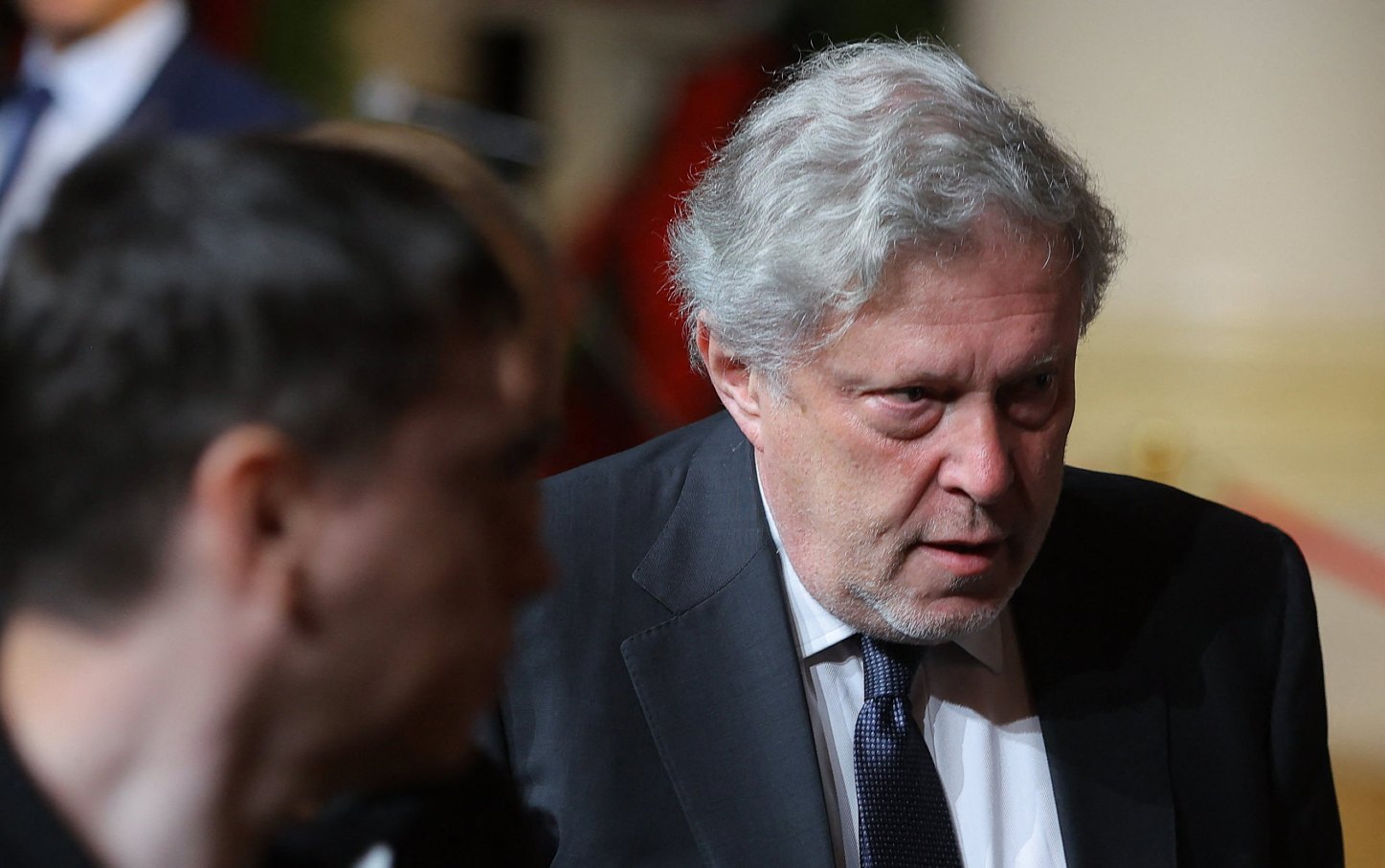
Moscow—On January 26, The Nation’s correspondent Nadezhda Azhgikhina interviewed Grigory Yavlinsky at his Moscow offices. Yavlinsky is the founder and leader of the Yabloko Party and a four-times candidate for the presidency of Russia (1996, 2000, 2012, 2018), in three of which he ran against Vladimir Putin, finishing third in March 2000 when Putin was elected for the first time. He was a member of the Russian State Duma in 1993–2003 and later a member of the St. Petersburg Legislative Assembly. A labor economist by training, Yavlinsky served as Vice Premier in the Russian Federation government in 1990 and Vice Premier in the last Soviet government in 1991. Azhgikhina is an independent journalist and writer and a frequent contributor to The Nation.
Nadezhda Azhgikhina: What do you find memorable about 2025?
Grigory Yavlinsky: Twenty twenty-five continued the winding down of an era that had lasted for 80 years, starting from 1945. We are at the start of a new era—in which human beings, their rights and freedoms, are ceasing to be the defining factors and often are altogether irrelevant. Disorganization, chaos, and cruelty are expanding while human lives are losing their value and worth.
The conflict between Russia and Ukraine goes on, with a huge number of casualties and large-scale wreckage. Thus far, the “summit” in Alaska has not led to any changes. Today’s politicians have no idea how to resolve the situation.
The new “security strategy” of the United States that is taking shape—the Monroe-Donroe Doctrine of sorts—is devoid of human values and humanistic principles. Accordingly, the role of the UN and several other international institutions is being sharply devalued. With his doctrine and strategy, Trump is radically altering the US foreign policy direction of many years and the place of the US in the world. Washington is building relationships only with those it perceives to be strong—that is, with China and Russia. Meanwhile, it has no interest in those who are of average strength or weak—such as Canada, Europe, Venezuela, Cuba, and others. Its message to them is to acclimate to this reality. It effectively rescinds globalization and transnational interests, while proclaiming that might makes right. It is altering the foundations of the post–World War II world that had been the norm and the formative experience for people.
Every ideology that we’ve been accustomed to—liberalism and conservatism, the right and the left—keeps eroding and disintegrating. We are facing political, ideological, technological, and social changes on a grand scale. And given that world leaders have neither a coherent understanding of them nor a consensual vision for the future, the situation might get extremely dangerous.
Europe is perplexed. Global tensions are on the rise: Taiwan, Gaza, the conflict between India and Pakistan. And now we have AI added to this mix—a new variable and an extremely dangerous one. It is developing at a very fast pace, and no one really has a sound idea of where it is headed. It encompasses both smart and useful solutions, but also exceptionally dangerous ones.
NA: What is the path forward?
GY: That is the whole point: The ruling elite apparently has no idea of how to resolve this. Once everybody becomes sick of the chaos, they will demand order and some kind of a Führer.
Another way out of this situation is possible if we get a sense of where to go, which direction to choose, and what to do. In our view, in the 21st century we must once again prioritize human beings—their lives, their freedom, their development, their creativity. Thus, every government, along with AI, should be working in this direction. This is the meaning of the future.
NA: And what about geopolitics?
GY: The human dimension must be a priority, in geopolitics as well as in other fields. As regards structural topics, the issue to be discussed is the project of unification of Europe and Russia—a common European home “from Lisbon to Vladivostok.” This means that Europe and Russia need to be talking to each other.
Does Europe want to keep talking endlessly about Greenland? Today it’s Greenland, tomorrow it will be Canada, the next day it will be Cuba, then Bolivia, Peru, and so on….
Russia is Europe. Peter the Great did not build St. Petersburg for nothing. Our culture, art, and philosophy are European. One must realize that.
And what’s required for this is a candid answer to the question about the causes of the failure of reforms in Russia in the 1990s, the role of the United States and Europe in this failure, and the responsibility of individuals in Russia for ending up where we find ourselves now. The reforms were bungled, and as a result of that we erected an authoritarian, semi-totalitarian, corporate, semi-criminal state.
However, I believe it would be quite feasible to build such a project—that is, a “common European home from Lisbon to Vladivostok,” where all decisions would be centered upon the human dimension—by the year 2050. Granted, this entails a lengthy and complicated journey. It will annoy our competitors—such as the US or China. But it is through dialogue that new approaches will be developed and a vision for the future will be shaped.
This course will enable us to move from chaos and disintegration to the establishment of a qualitatively different and promising structure.
NA: Are there any signals of the realization of this? Do you discern them in Europe? Or in the United States?
GY: Not among politicians, but I do see them among intellectuals and experts. However, they are far removed from decision-making. I think that after the exit of the current leaders political space will be filled by right-wing populists. And only after they leave will the time come for those with a realization of what is feasible to achieve and how it can be done.
There is a sociological concept, the Overton window: An idea initially perceived by everyone as unthinkable, radical, and insane gets to be debated by broad circles of the public from different angles. Through this discussion, the idea gradually moves to being viewed as acceptable, eventually turning into the norm and the law of the land.
Granted, those reading me today will view this as nonsense. But it was just the case with the “500 Days” program [of transition to the market in the Soviet Union developed by Yavlinsky and his colleagues in 1990]; back at the time, I was also viewed as a madcap. Yet later it turned out to be the primary topic of the day. It was just the same with some of my books; by now, there is serious interest in them among experts.
The central issue of our days is the human dimension and Greater Europe. This is the promising answer to several of the key problems of the 21st century.
NA: Does that include Ukraine?
GY: If we spend the rest of our lives divvying up territories and sorting out the questions of sovereignty over this or that village, there will be no end in sight to all this. Take France and Germany as an example: For centuries, they were unable to agree on their respective borders and they kept fighting—up until 1945, after which the issue was dropped from their agendas thanks to their movement toward the establishment of the European Union. This is the same story.
The United States, the Biden administration portrayed the war in Ukraine as a war for human rights, for international law, for a rules-based order. This framework was being developed starting from the spring of 2022. President Joe Biden, Prime Minister Boris Johnson, and the European Union supported it and thus motivated Ukraine to keep waging this war. In the spring of 2022, there was a chance to strike a deal and resolve all the issues through diplomacy; yet at the next stage they came up with the idea of defeating Russia—as if Ukraine would be capable of defeating it.
In the fall of 2022, I wrote a letter to Pope Francis on the urgency of a ceasefire, as this conflict has had no promise of a solution. I estimated that a neutral, yet authoritative, figure could make a difference. And this message got across: Pope Francis engaged with this issue and gained support from a few influential governments in Latin America. On February 4, 2023, Novaya Gazeta published the key points of my letter to the pope in an article titled “Enough!”
Yet the West made a different choice. In November and early December 2022, Ukraine came to be universally perceived solely through the prism of its victimhood. Behind the rhetoric of fighting for democracy, Ukraine was being gradually worn down and flattened. It was now receiving just as much aid as it needed to keep slowly withering in the name of practically unattainable goals, instead of moving forward. And that is where it is stuck at this point. In the meantime, in 2025, notwithstanding all of its rhetoric, the EU was buying Russian gas and paying billions of euros for raw materials. Which means it was funding the continuation of the war.
In 2025, it was also shown once again that the Global South—China, India, Brazil—actually does not support the West in this approach. China has kept actively supporting Russia.
NA: What would you say about Russian-American relations?
GY: The turning point was the decisive rapprochement between the United States and Russia: the summit that was held in August in Alaska—the red carpet, their conversations in the car, Trump’s round of applause for Putin. The entire world was looking forward to the end result of all this. To this day, nothing of substance has been made known to the public, but it is more or less clear that Trump essentially supports Putin’s and Russia’s actions. And yet, it is still unclear where it all leads. The war goes on—and that is the greatest disaster.
Popular
“swipe left below to view more authors”Swipe →NA: But what about the peacekeeping initiatives?
GY: On October 13, 2025, in Egypt the agreement was signed on the ceasefire in Gaza. This is important. But does this agreement have any future? The talks on Ukraine keep going, Russia and Ukraine keep swapping prisoners and the bodies of their dead. All this is good—but the war goes on. The roots of this conflict are very deep. They go back to the 1990s, when Boris Yeltsin partitioned everything overnight in Belovezhskaya along Soviet-era borders. These days we are coping with the consequences of this nightmare.
NA: Tell us about the declassified documents of the US National Security Council from 1991…
GY: There was a program of actions to integrate the economies of the USSR and Russia into the world system, with Western involvement under the terms of mutually beneficial cooperation. It was an analog to the Marshall Plan for post–World War II Europe. In the United States, it was called the Grand Bargain. In 1991, I spent nearly six months working on this program at Harvard with Graham Allison and Stanley Fischer. The program was rated highly by experts. I reported on it to President George H.W. Bush, and on the US side the official public reaction to it was positive.
It was expected that Mikhail Gorbachev would bring this program to the Group of Seven meeting in London scheduled for July 1991. However, on June 3, the US National Security Council held a secret meeting. Its participants deemed my program to be good—but precisely for this reason they decided to do all they could to prevent it from being implemented in Russia and to ensure that the G7 did not offer Gorbachev a new “Marshall Plan.” At this meeting, US Treasury Secretary Nicholas Brady stated that to “turn them into a third-rate [military] power…is what we want.”
As I have realized by now, they persuaded Gorbachev not to utilize my program: He went to London with the program put together by Yevgeny Primakov and Abel Aganbegyan. Then, a month and a half later, there was the failed coup; then Gorbachev was removed from power, and in December 1991, the USSR ceased to exist.
NA: You have warned about the threat of a new war. Do Russian-American talks give hope for new arms controls, including nuclear ones?
GY: There’s nothing like that so far. The most recent nuclear arms reduction treaty—the New START treaty—is about to expire, and neither party is renewing it. Putin did advance such a proposal, but there was no response to it. Meanwhile in Europe, they apparently do not realize that a clash between Russia and NATO would immediately be followed by a full-scale nuclear strike. This is a real danger.
More from The Nation
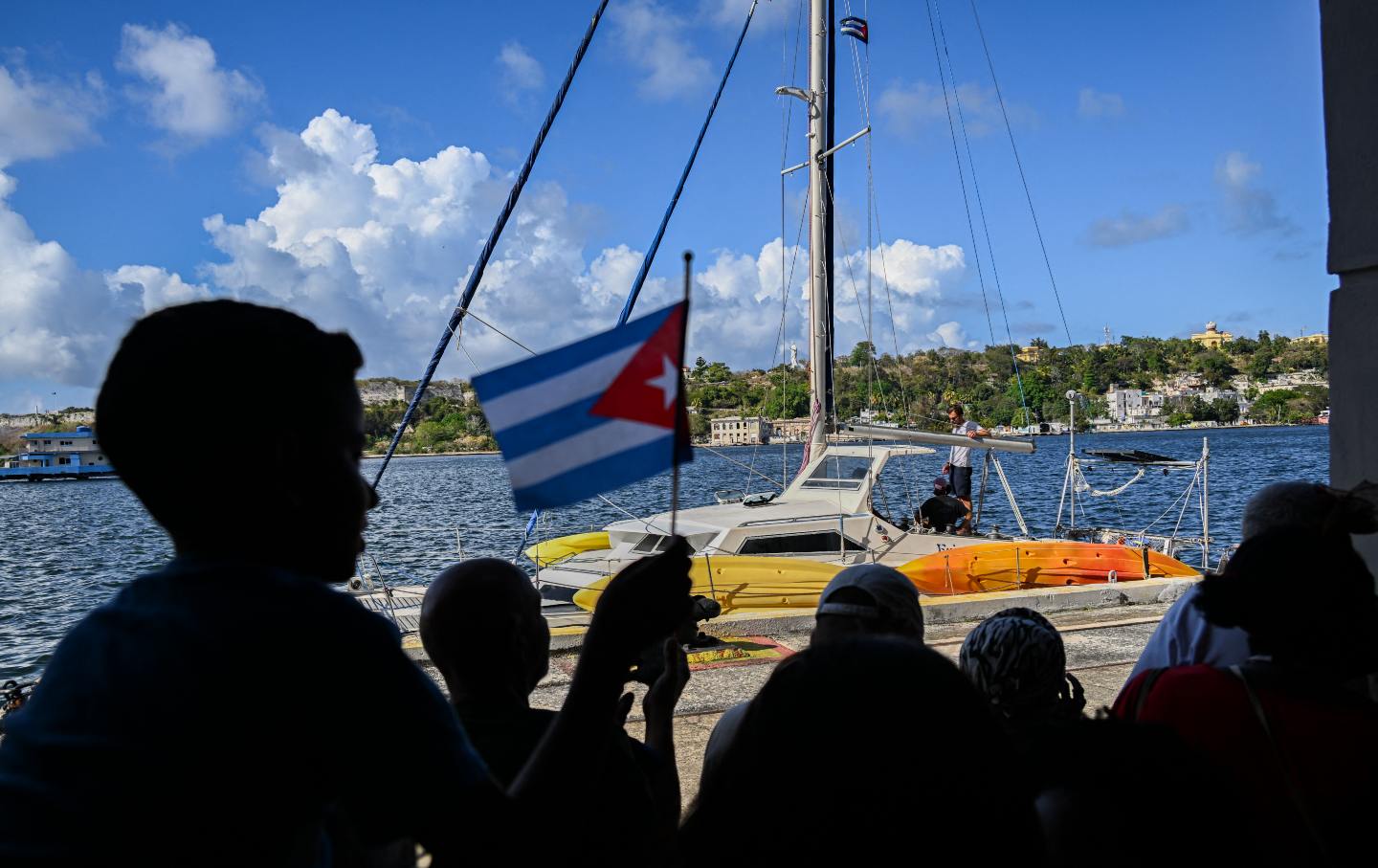
Solidarity Under Siege Solidarity Under Siege
Humanitarian aid convoy members returning from Cuba stopped, searched, and questioned by US Customs and Border Protection officers.
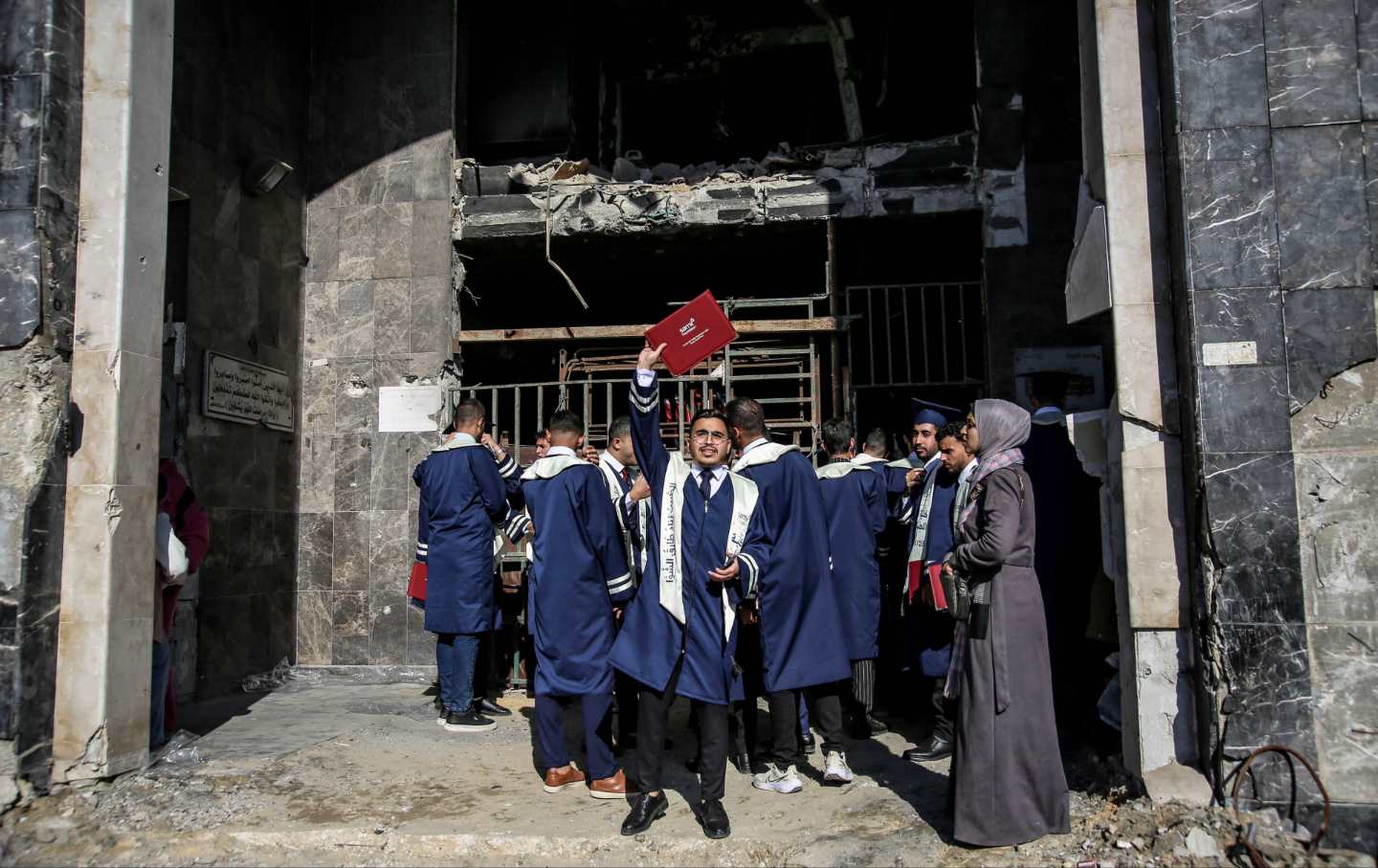
“I Refused to Let the Genocide Steal My Dreams” “I Refused to Let the Genocide Steal My Dreams”
For these medical students in Gaza, completing their studies was an act of defiance.
Donald Trump Is Losing the Iran War Donald Trump Is Losing the Iran War
Despite his constant declarations of victory, the truth about this conflict is clear.
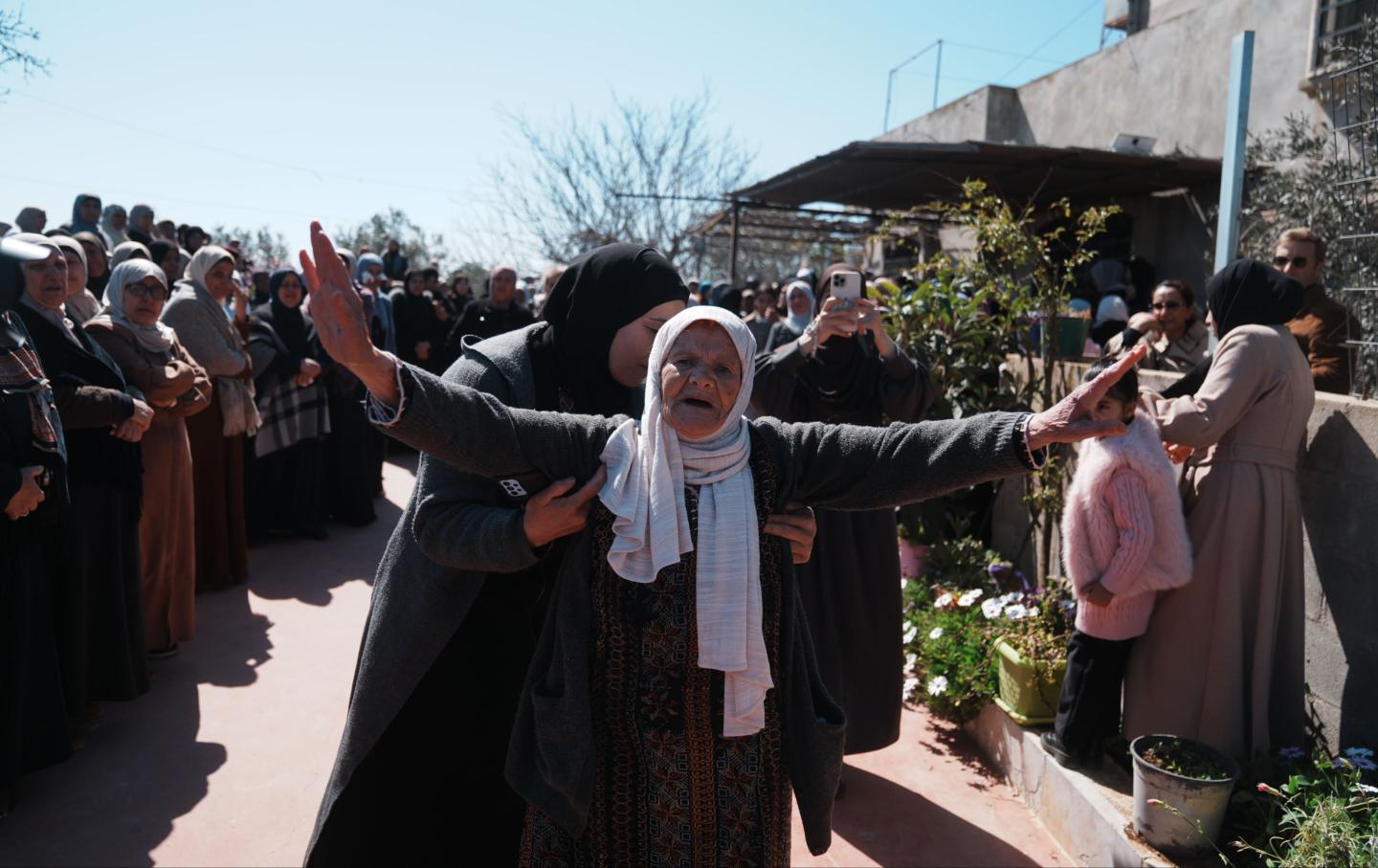
Israel Is Also Committing Genocide In the West Bank Israel Is Also Committing Genocide In the West Bank
It’s not just Gaza—Israel wants to exterminate all Palestinians, everywhere. We are one people being destroyed as one people.
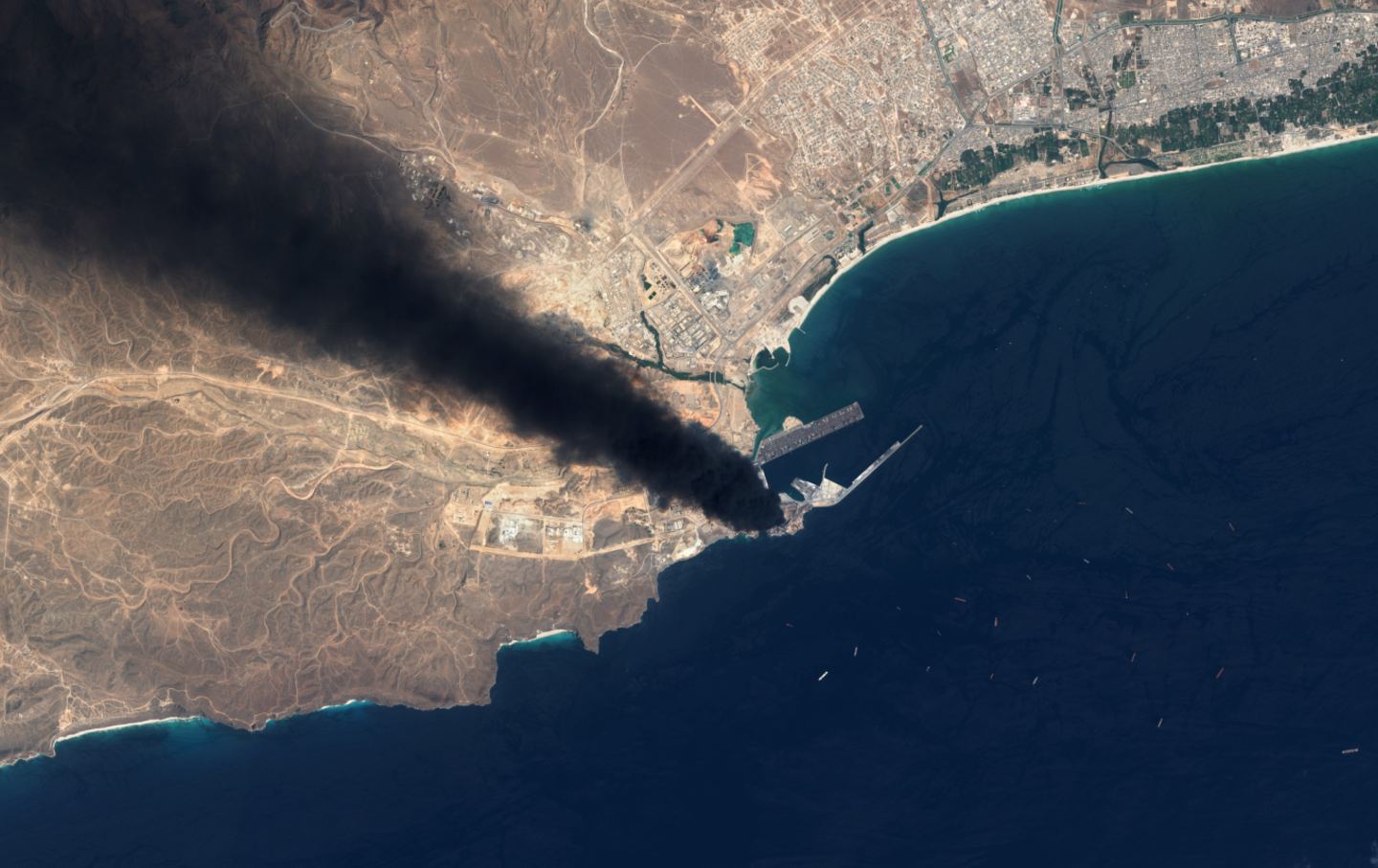
How the War Has Led to the Largest Disruption of Energy Supplies in Decades How the War Has Led to the Largest Disruption of Energy Supplies in Decades
Unless a resolution is found, the impact is likely to grow.
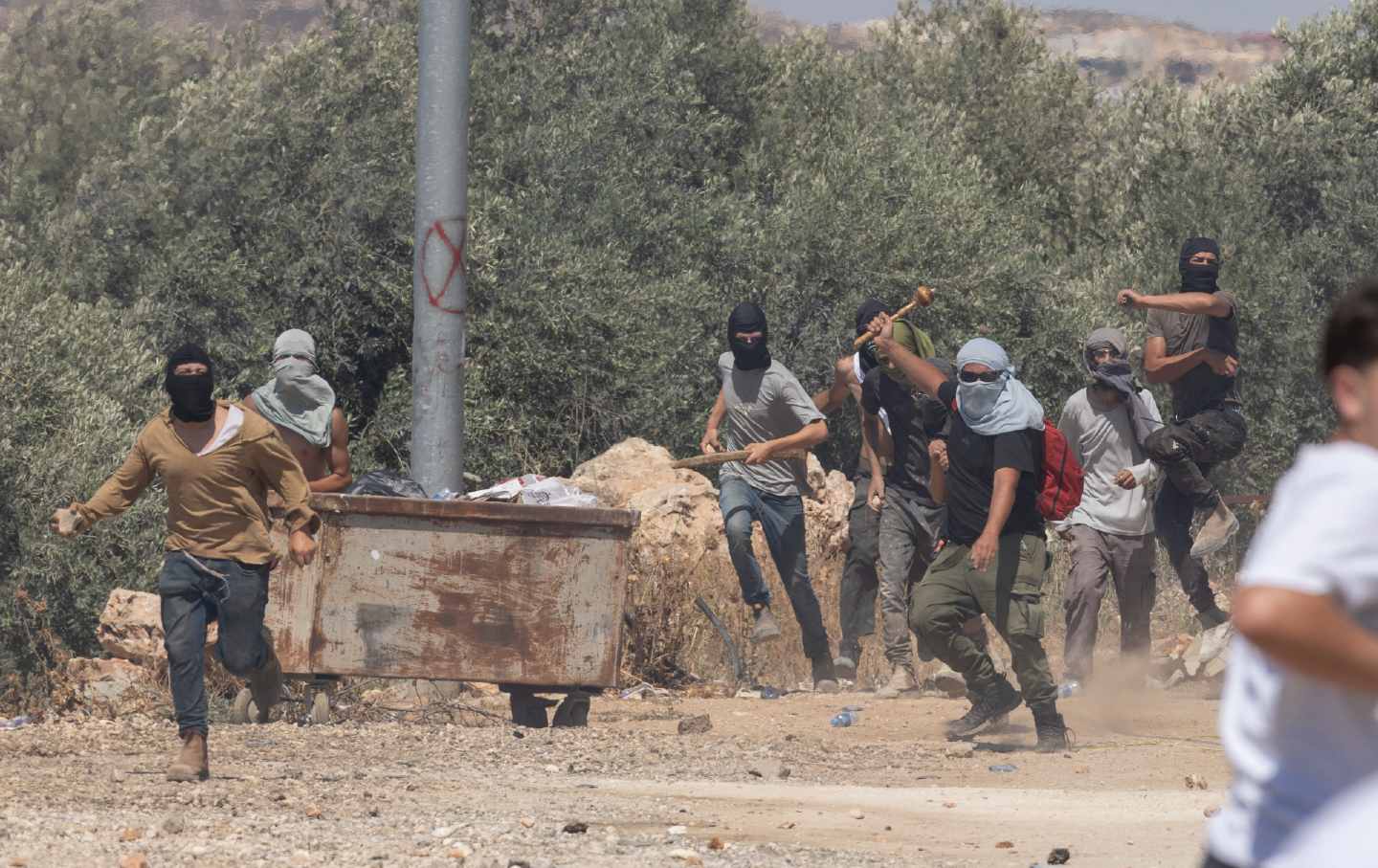
“Erasing the Lines”: How Settlers Are Seizing New Regions of the West Bank “Erasing the Lines”: How Settlers Are Seizing New Regions of the West Bank
After decades consolidating their control over Area C, Israeli settlers are expanding into Areas B and A—nominally under Palestinian Authority jurisdiction—and displacing communit...
Feature / Oren Ziv with Ariel Caine

