As the World Confronts Climate Change, the US Leaves Our Future Behind
While the White House takes a sledgehammer to critical climate policy, the Inter-American Court of Human Rights announced a landmark decision on climate change and human rights.

Protesters gather outside the Texas State Capitol in Austin, Texas, on July 12, 2025.
(Reginald Mathalone / Getty)Last week, the Inter-American Court of Human Rights announced a landmark decision on climate change and human rights. Deemed “a blueprint for rights-based climate action,” the 234-page advisory opinion made abundantly clear that amid an unprecedented emergency that is threatening virtually every human right imaginable, from health and access to water to life itself, national governments have resounding obligations to take action—safeguarding these rights not only in the present but also for future generations. As one of countless youth climate activists who has dedicated my adolescence and young adult life to fighting for climate justice, many of whom played an invaluable role in making this development possible, I experienced a seemingly simple but, in fact, rare and powerful feeling: I felt heard.
While the recognition of the need for serious climate action filled me with hope, I’ve also been left with a profound sense of rage. As I watch the world move forward and take the climate emergency seriously, I’m also watching my country and our future get left behind.
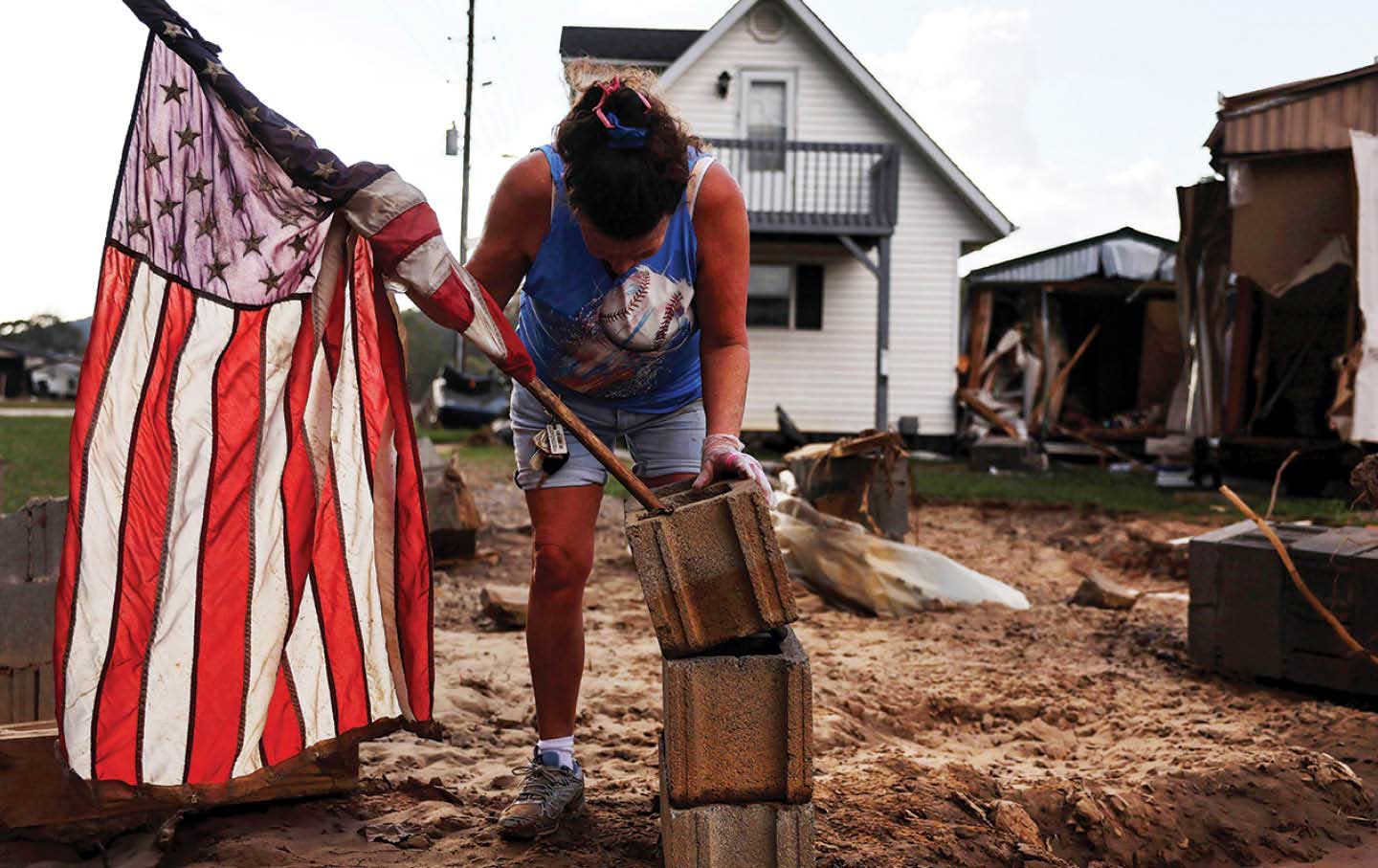
Earlier this month, on July 4, our nation’s anniversary arrived on the heels of yet another record-setting heat wave, amid profound, systematic, and continual rollbacks to landmark environmental legislation. Within the last month, the Trump White House has taken a sledgehammer to critical climate policy. The Environmental Protection Agency announced proposed rollbacks of crucial regulations limiting emissions from fossil fuel–fired power plants, which would have eliminated as many carbon emissions as would be produced by the driving of over 320 million gas-powered cars for a year. In June, Trump announced the “phasing out” not of the fossil fuel economy, but rather, of the Federal Emergency Management Agency, a crucial federal agency for disaster preparedness and response. As dozens of labor, health, and environmental groups have called for, the agency should be at the vanguard of developing systems to protect Americans from the dangers of losing their homes, livelihoods, and lives to climate disaster. The need for a climate-minded FEMA became abundantly clear when huge floods in Texas—fueled by climate change, which makes these extreme weather events more likely—caused a tragedy of immense proportions, killing at least 120 people, with over 170 people still missing. All this comes as the US, the biggest historical contributor to global carbon dioxide emissions, withdraws from the Paris Agreement once again.
For those of us in the United States, the Inter-American Court of Human Rights advisory opinion must serve as a wake-up call: Our ability to fight for and win climate policy is being tested more than ever, and now is the moment to rise to the challenge of building a future where our communities and our planet can thrive. The opinion represents a powerful illustration of what a united front on the need for climate action can achieve, with countless civil society organizations and community activists contributing to the decision. It also provides an essential basis for new climate legal action and advocacy that holds national governments to account and requires regulating corporate behavior that contributes to climate change. While not directly applicable to the United States, the advisory opinion’s effects could extend far beyond the court’s immediate jurisdiction and influence further international legal developments, including the forthcoming International Court of Justice advisory opinion on nations’ climate change obligations. The Inter-American Court’s opinion can further prove instructive for Americans in how we conceive of our government’s responsibilities to address the climate crisis, providing more fodder for surging climate litigation and building on the success of cases like Montana v. United States.
Certainly, the advisory opinion is no panacea, and the legal arena is merely one of many essential frontiers for advancing climate action. As former and current UN special rapporteurs David Boyd and Elisa Morgera have highlighted, the opinion fails to call directly for the broad fossil fuel phaseout that climate science shows is critical for avoiding the worst effects of the climate crisis, despite detailing steps required of national governments that imply this phaseout’s necessity and emphasizing the need to guarantee the right to a healthy environment for present and future generations.
Nonetheless, the opinion’s clarity in calling on national governments to reduce emissions and enable climate change mitigation and adaptation makes it an invaluable tool. This tool can and should be used widely—by activists, journalists, pro-climate politicians, business leaders, and community members alike—to expose just how far the United States remains from meeting its basic obligations on climate change and human rights. It should be used to galvanize the majority of Americans (65 percent, according to the latest report from the Yale Program on Climate Change Communication) worried about global warming at the state and local levels, where governments can make essential strides in accelerating green infrastructure and community protection, and need our support amid federal attacks on efforts to make polluters pay.
Some Americans, especially many of my peers, might be as exhausted from reading such calls to action as I am of writing them. But as I’ve said before and I’ll say again, the only way forward is to continue reminding ourselves that giving up simply isn’t an option.
Whether we call it our commitment to the climate movement or to protecting the environment or to defending human rights, our commitment to each other—to our communities and to all our neighbors, no matter how they voted in the past and no matter their backgrounds—is what matters. Our job is to focus on what we can do. It’s to build the popular majority of voters who will put our collective future first at the ballot box, elect officials and advocates for policies that will support this future, and never stop searching for the moments of love, kindness, and connection that remind us why we do this every day.
Become a Sustaining Donor This September
Between the reemergence of right-wing red-baiting and Donald Trump’s use of the chilling National Security Presidential Memorandum–7 to criminalize left political organizing, we’re seeing McCarthyism reborn before our eyes.
This assault on democracy cannot be ignored or wished away. Resisting it requires bravery in the face of threats and repression, a steadfast commitment to the truth, and the unwavering belief that we can—and will—overcome this darkness.
We must have an independent media that sets the record straight, unearths corruption and abuses of power, and advances a politics of justice and dignity for all if we’re to win this fight.
That’s why I’m writing to you today. This September, The Nation needs to add 100 monthly donors to sustain our progressive journalism. Your contribution makes the next investigative report, the next truth-speaking column, and the next pathbreaking essay all possible.
I hope you’ll support our work with a recurring donation today. If you donate $10 or more a month, we’ll send you a brand new “Hands Off the Free Press!” sticker to recognise your commitment to our cause. Please, donate today.
Onward,
Katrina vanden Heuvel
Editor and Publisher, The Nation