
How the Truman Scholarship Became the Right’s Latest Battleground
As Republican pressure on education mounts, the fight over the scholarship reveals a broader effort to turn public service into a test of political loyalty.
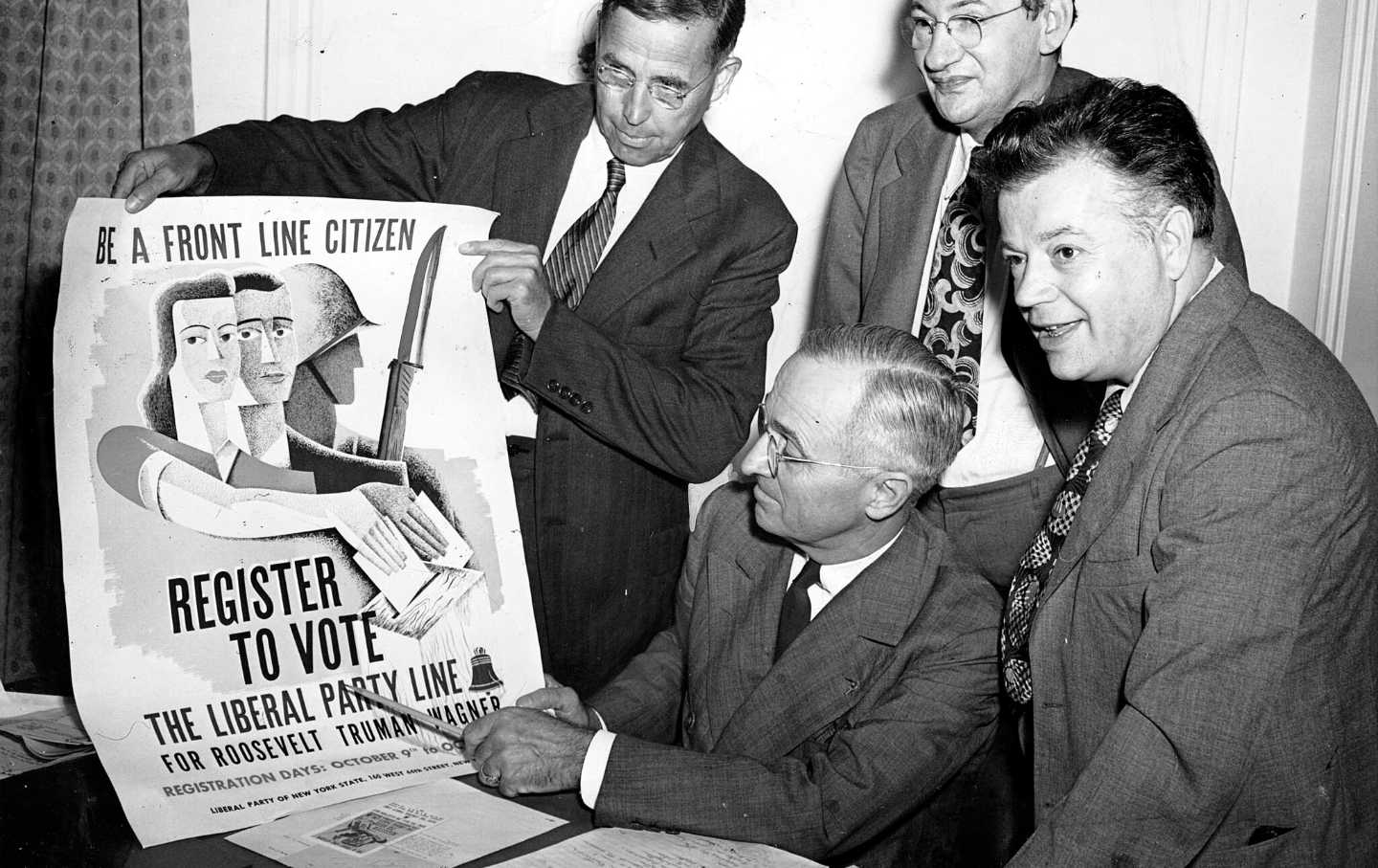
Harry S. Truman looks over a campaign poster urging people to register to vote.
(Wikimedia Commons)
“Shouldn’t the administration intervene when Jewish students are unsafe on campus?” Then came the follow-up: “What if it were Black students being lynched on campus—should the administration intervene then?”
These were questions I was asked during my interview for the Harry S. Truman Scholarship, a national award for college juniors committed to careers in public service. Established by Congress in 1975, the taxpayer-funded scholarship was designed to honor President Truman’s belief that democracy requires principled, well-prepared leaders. Each year, around one student per state is selected to receive funding for graduate school and support in pursuing work in government or the nonprofit sector. Applicants must be nominated by their schools, submit a series of essays, and, if selected as a finalist, sit for a 20-minute interview in their home state—a rapid-fire session meant to test their ability to think on their feet.
But instead of diving into policy, my interview veered sharply toward politics. I was asked about the Trump administration’s targeting of institutions—including my college campus, Columbia University. I later learned I wasn’t alone. Other finalists, particularly from elite schools with visible student protests, were similarly questioned on their views on Israel and Palestine, a topic far removed from what they had written in their applications.
Of course, scholarship panels should ask tough questions. But when candidates are singled out because of their campus affiliations or moral convictions, interviews risk turning into political litmus tests rather than evaluations of character and vision—from expanding healthcare access to defending voting rights—that define their pursuit of public service. I don’t believe I was denied selection for my views, but when service is overshadowed by ideological scrutiny, the process itself becomes weaponized for a partisan agenda.
In May 2024, Representative Virginia Foxx, chair of the House Education and the Workforce Committee, joined other Republican congressional leaders in accusing the Truman Foundation of political bias. In a letter to the Foundation, the lawmakers demanded an explanation for what they cited as a disproportionate “10:1 ratio” between progressive and conservative Truman scholars. The message was clear: Bring the program in line with their definition of fairness—or risk its future.
“Nonpartisan public service” has long been held up as the ideal that our government workers should rise above politics to serve the common good. But when the facts themselves are politicized, does it become partisan to defend voting rights as one party seeks to overturn a presidential election—or to advocate for environmental regulations when the very existence of climate change is denied?
The truth is, public service has never been apolitical. Every policy decision reflects a set of values. These are the values at the root of our social contract; we grant power to the government, and in return, it serves us. But when one party abandons the core principles of our democracy—the pursuit of truth, free speech, the rule of law—the divide is no longer left versus right. It’s whether you believe in the bedrock ideals that sustain our democracy.
Mounting criticism from Republican lawmakers has turned the nonpartisan scholarship into a political battleground. This spring, Speaker of the House Mike Johnson appointed Representative Elise Stefanik—whose viral hearing on campus protests last year led to the resignation of three Ivy League presidents—to the Truman Foundation’s Board of Trustees. The board is composed of 13 members, including eight presidential appointees and four members of Congress from both parties.
For the first time in recent memory, when the 2025 Truman Scholars were announced in April, their bios were absent from the Foundation’s website—presumably out of concern of political backlash. But soon after, Representative Stefanik publicly demanded a review of “troubling and well-documented” left-wing bias at the Foundation, citing dozens of past winners “explicitly committed to left-wing causes” including climate change, LGBTQ+ issues, and immigrant rights. In the letter to the Truman Board of Trustees, she also called for a scholar’s award to be rescinded—labeling the student “Pro-Hamas” based solely on their leadership in a campus organization advocating for Palestinian human rights.
Like universities and private law firms targeted by funding cuts and executive orders, the Truman Foundation faces a wave of existential threats from both outside and within as figures like Stefanik gain influence over its governing board. They claim to be correcting liberal bias, but the real goal is to redefine public service itself, to build a state where working in government requires full allegiance to the ruling party—or immediate removal.
Across the federal government, President Trump is already redefining “merit” as loyalty to his administration and its policies. Federal job applicants must now write about their favorite executive order. Fulbright Program candidates are rejected for mentioning the word “climate change,” and last month, the entire 12-member board resigned, citing White House interference.
This is not just a fight over which students receive prestigious opportunities. It’s a battle over whom our government serves—and how we define service itself. When federal fellowships become political prizes, we return to the spoils system of the 19th century. A government where loyalty is rewarded, and expertise is discarded. It’s a path straight to authoritarianism, and a betrayal of the values at the heart of these taxpayer-funded programs and of our democracy.
Unlike private institutions like Harvard and law firms that have pushed back, the Truman Foundation operates under congressional oversight. But knowing this playbook only raises the stakes—and makes institutional courage more urgent. For young people hoping to pursue a career in public service, the question is clear: Will we have the freedom to serve all Americans, or will loyalty to the ruling party become the price of entry? When loyalty becomes the cost of public service, we betray a core American value: that our government must work for the people, not for any one person or party. If we fail to resist now, we won’t just lose a generation of public servants but the very ideals they were called to serve.
Become a Sustaining Donor This September
Between the reemergence of right-wing red-baiting and Donald Trump’s use of the chilling National Security Presidential Memorandum–7 to criminalize left political organizing, we’re seeing McCarthyism reborn before our eyes.
This assault on democracy cannot be ignored or wished away. Resisting it requires bravery in the face of threats and repression, a steadfast commitment to the truth, and the unwavering belief that we can—and will—overcome this darkness.
We must have an independent media that sets the record straight, unearths corruption and abuses of power, and advances a politics of justice and dignity for all if we’re to win this fight.
That’s why I’m writing to you today. This September, The Nation needs to add 100 monthly donors to sustain our progressive journalism. Your contribution makes the next investigative report, the next truth-speaking column, and the next pathbreaking essay all possible.
I hope you’ll support our work with a recurring donation today. If you donate $10 or more a month, we’ll send you a brand new “Hands Off the Free Press!” sticker to recognise your commitment to our cause. Please, donate today.
Onward,
Katrina vanden Heuvel
Editor and Publisher, The Nation
More from The Nation
Zohran Mamdani Hosts the World Zohran Mamdani Hosts the World
In a meeting with mayors from around the globe, Mamdani argued that the left must fix everyday problems—or the right will find someone to scapegoat for them.

Is There Any Good News Left? Is There Any Good News Left?
Despite what our algorithms suggest, there’s still news worth celebrating.
CEOs Are Losing Control of AI CEOs Are Losing Control of AI
With no slowdown from Trump’s administration.
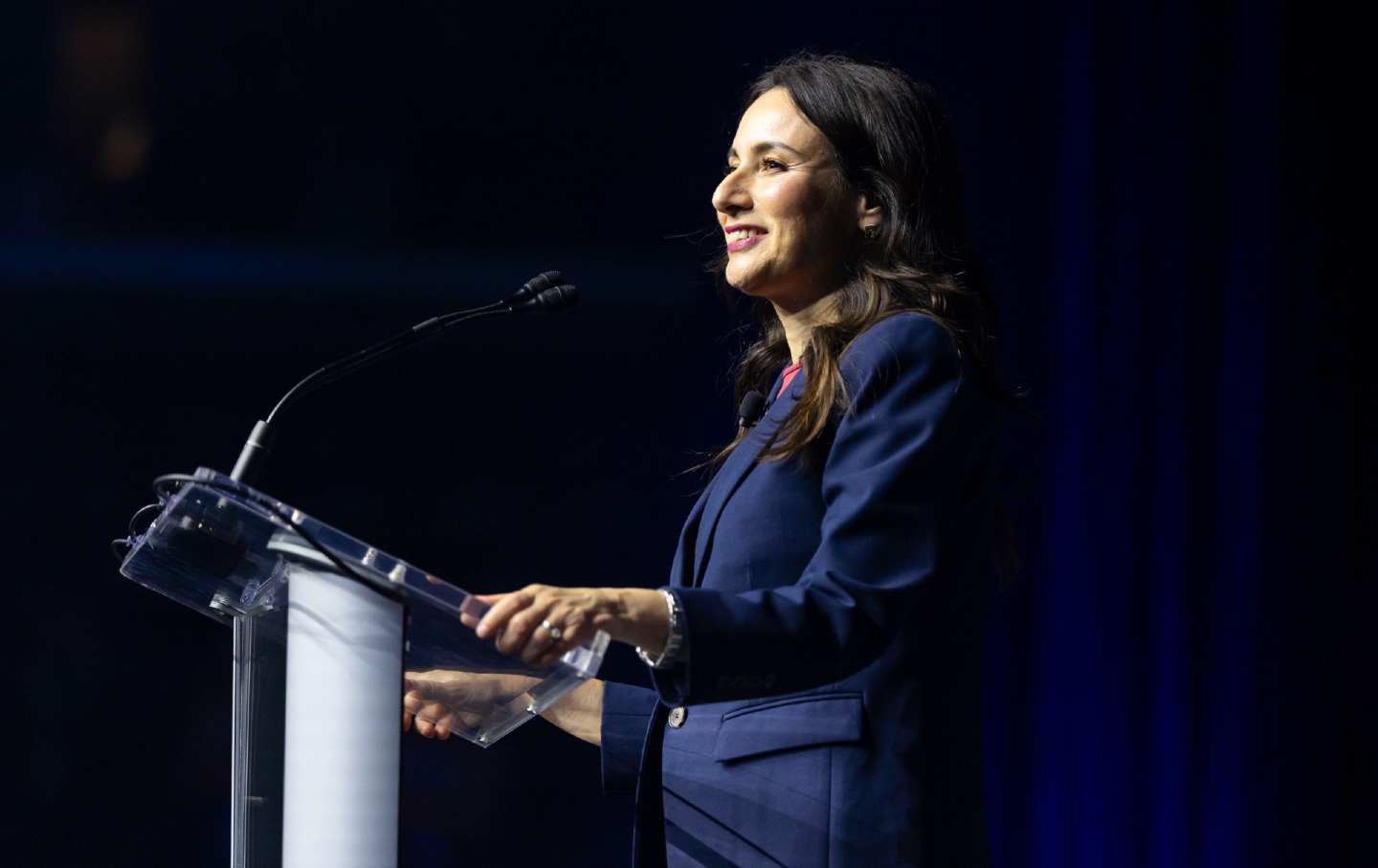
Gina Hinojosa: “We Flip Texas, and It’s Over” Gina Hinojosa: “We Flip Texas, and It’s Over”
Talking to Texas gubernatorial candidate Gina Hinojosa about what redistricting could mean and how a new generation of Democrats is speaking more directly to voters.
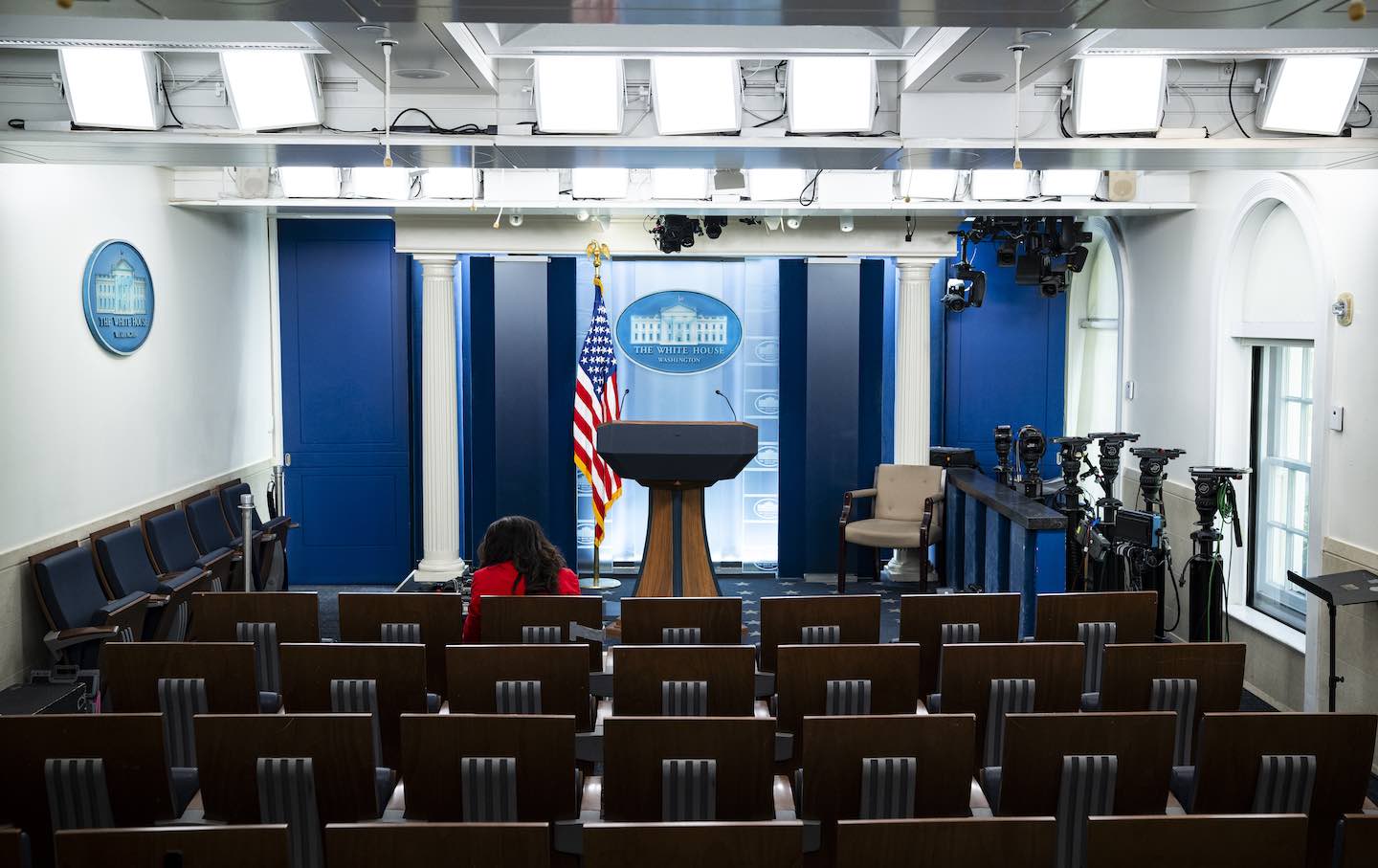
Trump Wants to Keep Journalists Out of the White House. He Should Get His Wish. Trump Wants to Keep Journalists Out of the White House. He Should Get His Wish.
The president has banned MS NOW, CNN, and Politico from attending press briefings. The rest of the media should respond with a boycott.

