
At Least We Are Many: Resisting the Drums of War
Israel’s assaults on Iran are attacks from an actively genocidal nuclear state on an already oppressed people. We must oppose US involvement and calls for craven acquiescence.
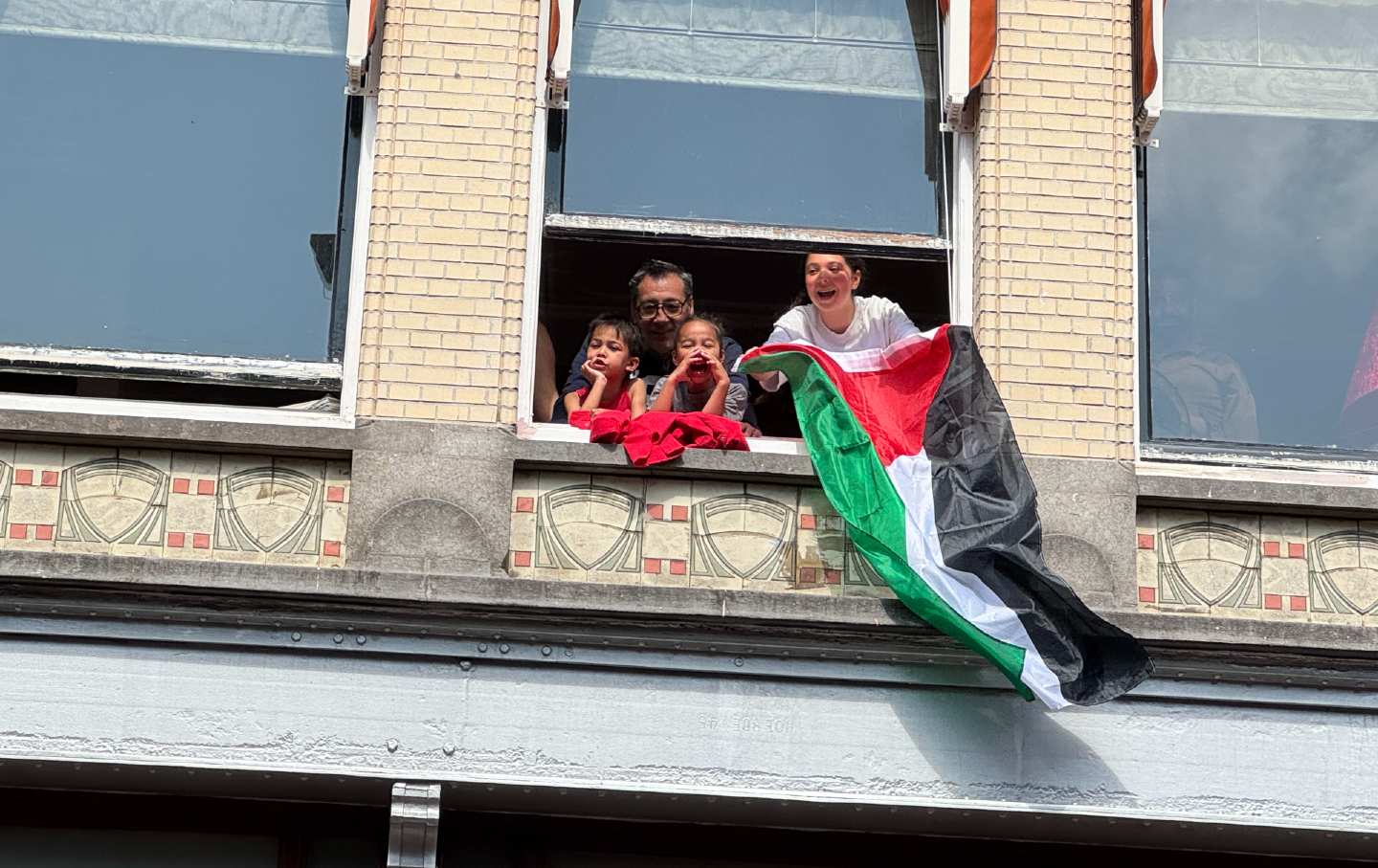
Tens of thousands of demonstrators gathered in The Hague to protest Israel’s war on Palestinians.
(Kaveh Akbar)The Hague—On June 15, I marched with 150,000 other people in The Hague against Israel’s war in Gaza. Toddlers in open windows waved Palestinian flags. We waved back. In the four hours I was out there, I saw maybe a dozen cops—and zero assault rifles. At one point, I started weeping, and an old man who had been holding a sign that said “Imagine… Today is FATHER’S DAY!”—with glued-on pictures of Palestinian fathers and children—nodded and smiled gently toward me, affirming what was happening in a way I can feel in my fingertips as I type.
A couple days ago, I learned about Israel’s attacks on Iran. I was dining with my creative heroes—the kind of Actual Literary Titans around whom I forever feel like I’m using the wrong fork—at a sun-swept Tuscan estate. While everyone was eating the elegant culinary sculptures, I was compulsively checking my phone for news updates, for proof-of-life texts from beloveds in Iran. I have an aunt with Stage 4 cancer on chemo in Tehran, a cousin who has never lived apart from her. I checked Telegram and WhatsApp channels full of cell-phone footage: smoke gushing out of apartment complexes, pictures of bloodied men, children covered in ash.
When I did speak at the table, I spoke wildly, manically, fingering canapes, and hysterically eating a whole dinner plate full of cherries. I felt like a Poe villain, hiding out in a lavish manor while my people burned. I kept saying so. During the long lunch, I bummed and smoked two cigarettes; I hadn’t had a cigarette in 11 years.
This to say, I barely know where I am. I want to be home in Iowa with my spouse and pets, I want to be a puddle in which they all might gladly splash. I write because during these molten, critical hours of policymaking and opinion shaping, I’ve encountered vanishingly few Iranian perspectives in major media, even fewer who are calling the assaults what they plainly are: violent attacks from an actively genocidal nuclear state on an already oppressed people.
To be very clear: The Khamenei regime in Iran is a necrotheocracy (to the god of patriarchy, to whom they have sacrificed the lives of untold thousands of Iranians including members of my family) masquerading as an Islamic Republic; the Trump regime in America is a necrotheocracy (to the god of money, to whom they would gladly sacrifice my life and yours) masquerading as a secular republic; the Netanyahu regime in Israel is a necrotheocracy (to the god of power, to whom they have sacrificed at least 55,104 Palestinian lives in the last 20 months) masquerading as a Jewish republic. I have only contempt for all of them.
Yet I will write this, and people will call me an Iranian regime apologist because I do not believe in a genocidaire’s gleeful slaughter of civilian targets who look like my uncles and cousins and nieces. I am old enough to remember President George W. Bush’s manufactured consent for wars in Iraq and Afghanistan that promised US forces they would be welcomed as liberators. That rhetoric resulted in an Afghanistan where, in 2025, 44.6 percent of children under 5 years old are stunted because of chronic hunger—in a still-collapsed Iraqi infrastructure with few hospitals to support the chronically injured and undernourished, as two generations of Iraqi doctors were murdered or forced to leave. What has a colonial empire ever destroyed and built back better? Who has an Israeli bomb ever made more free?
In an Instagram post, the novelist Sahar Delijani wrote, “I was born in an Iranian prison.… Nothing you can tell me about the crimes of the Iranian regime that I haven’t lived in blood and bone. That doesn’t mean I want my people bombed, maimed, killed, their homes in ruins. If your vision of liberation comes only through the destruction of innocent lives, then it’s not freedom you’re after.”
To say it probably too baldly, I feel some excruciating sense of, “OK, now they are attacking Iran, it is my turn to perform my agony, to audition for your empathy.” The carousel of whom Israel is bombing at any moment (in the past week: Gaza, Syria, Lebanon, Iran) is a vertiginous whoosh. I don’t blame anyone for not being able to keep up.
Now Israel is bombing Iran. And the gap between my terrified family members’ mortal grief, and my own from-a-safe-distance fury, deepens my primal thalamus need to do something, to say something, to leverage what I have. So I marched, and now I write.
The rhetoric of Netanyahu and his enablers would have you believe they are bombing Iran because of Iranian’s nuclear enrichment programs (he has been verifiably lying about this for over 30 years), that his bombs are in solidarity with the Iranian people oppressed by the Khamenei regime (if you believe Netanyahu gives a shit about the Iranian people, I ask that you revisit this essay sober). The reason Netanyahu is bombing Iran is because the International Criminal Court here in The Hague has issued an arrest warrant for him, because millions march regularly against his ongoing genocide in Gaza. Iran is a convenient bogeyman, a desperate heave to curb the encroaching tides of public opinion. He advances years-old unrelated videos of “Iranians cheering the Israeli strikes,” which even Musk’s X flagged as fake. He was tried in his own country for election fraud and bribery. Netanyahu knows already how he will be judged by the dead. He’s trying to win over the not-dead-yet. Don’t fall for it.
Recently I got to see Caravaggio’s Sacrifice of Isaac in the week of Eid al Adha, when Muslims around the world celebrate Abraham’s faith. Standing in front of the 400-year-old canvas, I felt I suddenly understood for the first time the story of Abraham’s seemingly reprehensible near-sacrifice of his child as a parable about belief that goes beyond mere morality, faith that insists upon more than à la carte adherence to a set of ethical principles that align neatly with your own. Abraham can’t have understood why God was asking him to sacrifice his son any more than poor Isaac himself, whose face of uncomprehending dismay Caravaggio renders in sublime chiaroscuro. And yet, though neither understands why, Abraham turns the knife against his own son. He doesn’t need Isaac to forgive him. He doesn’t yet know or suspect God will save Isaac and replace him with a ram. Abraham’s is a belief beyond what he can see or imagine. He has surrendered utterly to faith.
Maintaining such a faith means believing past your own horror, believing past even the limits of your own imagining. Such is the disposition of the dauntless abolitionists who fight for a non-carceral society that has never existed in the history of our species. Such is the disposition of those of us who fight for a free Palestine no one in our lifetimes has seen, for an equal Iran that neither we nor our grandparents have seen, for a United States fully divested from martial and ecological extractive capitalisms, which has never existed since the nation was conceived in the blood of Indigenous genocide and chattel slavery.
Popular
“swipe left below to view more authors”Swipe →At the fancy and genuinely beautiful party on the day of Israel’s attacks on Iran, I was visibly out of it, manic, inchoate. At one point, someone introduced me as an “Iranian poet,” and the older woman standing next to me, a stranger, quietly took my hand and whispered, “I’m from Sudan. As my father used to say, ‘At least we are many.’”
I have never been the beneficiary of a burning bush or an angel’s clarion trumpet. And I don’t really believe in hope, or at least I don’t trust hope. Hope creates burnouts and cynics, and I don’t need it to earnestly seek the right thing to do in any given moment. But I do have faith in some kind of higher power who speaks through the grace of human beings (the existence of Caravaggio, of art in general, seems pretty definitive proof). “AT LEAST WE ARE MANY.” It was a gift of amongness from a stranger and her father. Crystalline, irreducible.
In these harrowing days of calculated overwhelm, our job is to resist consent manufacturing and calls to craven acquiescence. To think critically about language, hold media coverage accountable. To protest. To ask our families, our colleagues, our Republican neighbors to oppose further US involvement. The past is whatever we cannot change. This isn’t that. There is still time to move us away from a future that insists upon annihilating humanity to accommodate the annihilation of humans.
About the dark matter holding together the universe, poet and astrophysicist Rebecca Elson writes, “It’s as if all there were, were fireflies / and from them you could infer the meadow.” I saw so many fireflies today; I marched and chanted and wept with 150,000 of them. In my head: At least we are many, at least we are many, at least we are many. We are making a light that proves the existence of a meadow you can’t yet see. It’s a green bright place where children everywhere are allowed to grow old. You can join us there if you like.
Become a Sustaining Donor This September
Between the reemergence of right-wing red-baiting and Donald Trump’s use of the chilling National Security Presidential Memorandum–7 to criminalize left political organizing, we’re seeing McCarthyism reborn before our eyes.
This assault on democracy cannot be ignored or wished away. Resisting it requires bravery in the face of threats and repression, a steadfast commitment to the truth, and the unwavering belief that we can—and will—overcome this darkness.
We must have an independent media that sets the record straight, unearths corruption and abuses of power, and advances a politics of justice and dignity for all if we’re to win this fight.
That’s why I’m writing to you today. This September, The Nation needs to add 100 monthly donors to sustain our progressive journalism. Your contribution makes the next investigative report, the next truth-speaking column, and the next pathbreaking essay all possible.
I hope you’ll support our work with a recurring donation today. If you donate $10 or more a month, we’ll send you a brand new “Hands Off the Free Press!” sticker to recognise your commitment to our cause. Please, donate today.
Onward,
Katrina vanden Heuvel
Editor and Publisher, The Nation
More from The Nation
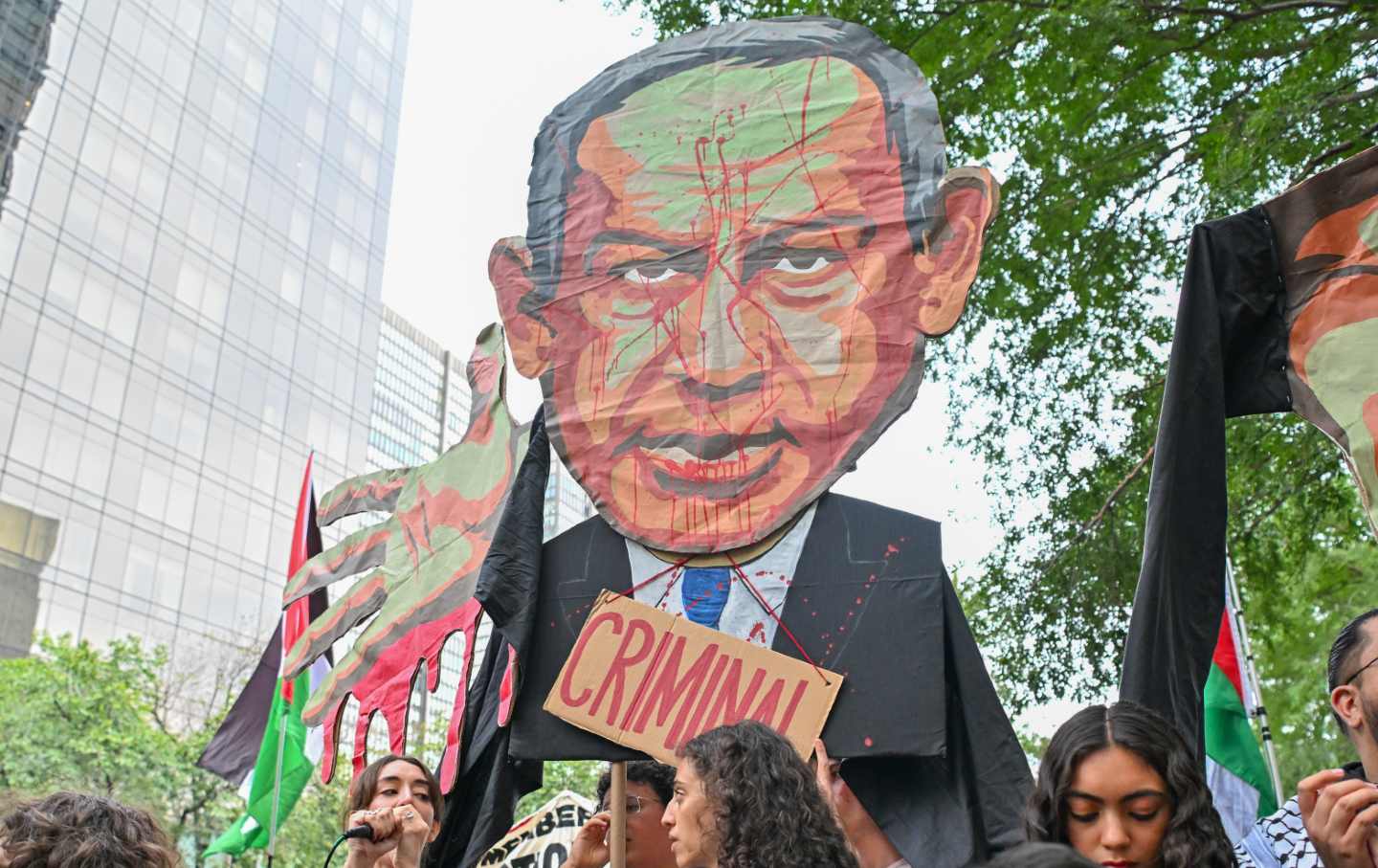
Netanyahu Came to New York. New Yorkers Were Ready for Him. Netanyahu Came to New York. New Yorkers Were Ready for Him.
Scenes from the defiant protest against the genocidal leader’s UN speech.
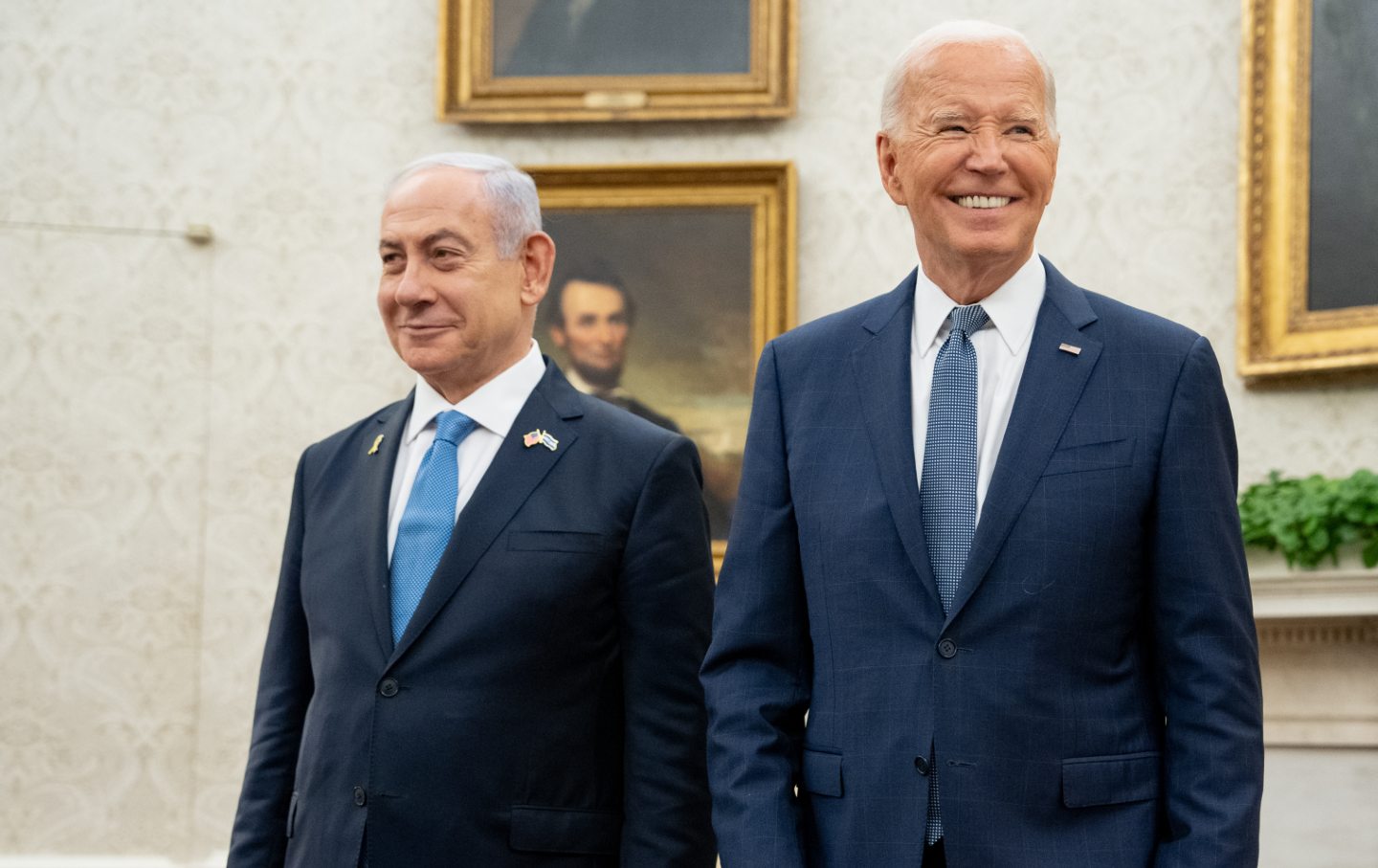
How Joe Biden Helped Cause a Genocide in Gaza How Joe Biden Helped Cause a Genocide in Gaza
An interview with reporter Akbar Shahid Ahmed about his new book, “Crossing the Red Line.”
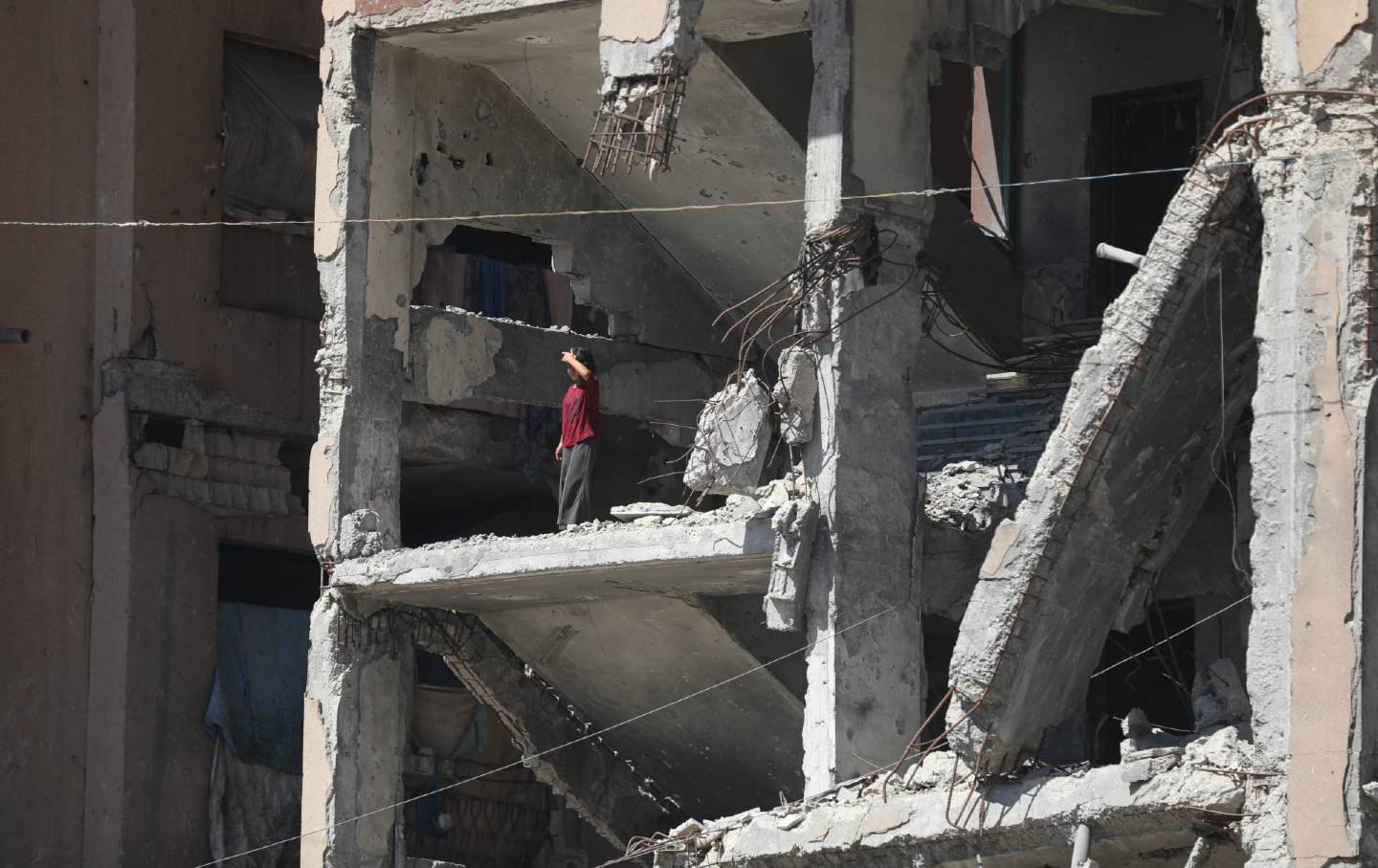
Israel’s Election Can’t Fix What Netanyahu Broke Israel’s Election Can’t Fix What Netanyahu Broke
The fundamental problem is not the name of the prime minister, but rather the actions of the Israeli government and the urgent issues that need to be addressed.
Cities as Climate Labs: Inside the U20 Summit Cities as Climate Labs: Inside the U20 Summit
Mayors at the Urban 20 Summit worked across borders to confront the climate crisis at the local level.
How to Arrest Benjamin Netanyahu How to Arrest Benjamin Netanyahu
Make no mistake: The United States can seize Netanyahu for crimes under US law and prosecute him in US courts when he is in New York City this week.

The Ed Sheeran Controversy The Ed Sheeran Controversy
In a society that claims to promote free speech, what crosses the line from controversial to unacceptable? Who gets to define where the line begins and ends?

