Trump’s Immigration Façade
On this episode of The Nation Podcast, Ray Suarez says that Trump’s bark masks a more cynical, and contradictory, bite.

The Nation Podcasts
Here's where to find podcasts from The Nation. Political talk without the boring parts, featuring the writers, activists and artists who shape the news, from a progressive perspective.
Mutiny of the College-Educated Worker w/ Noam Scheiber / American Prestige
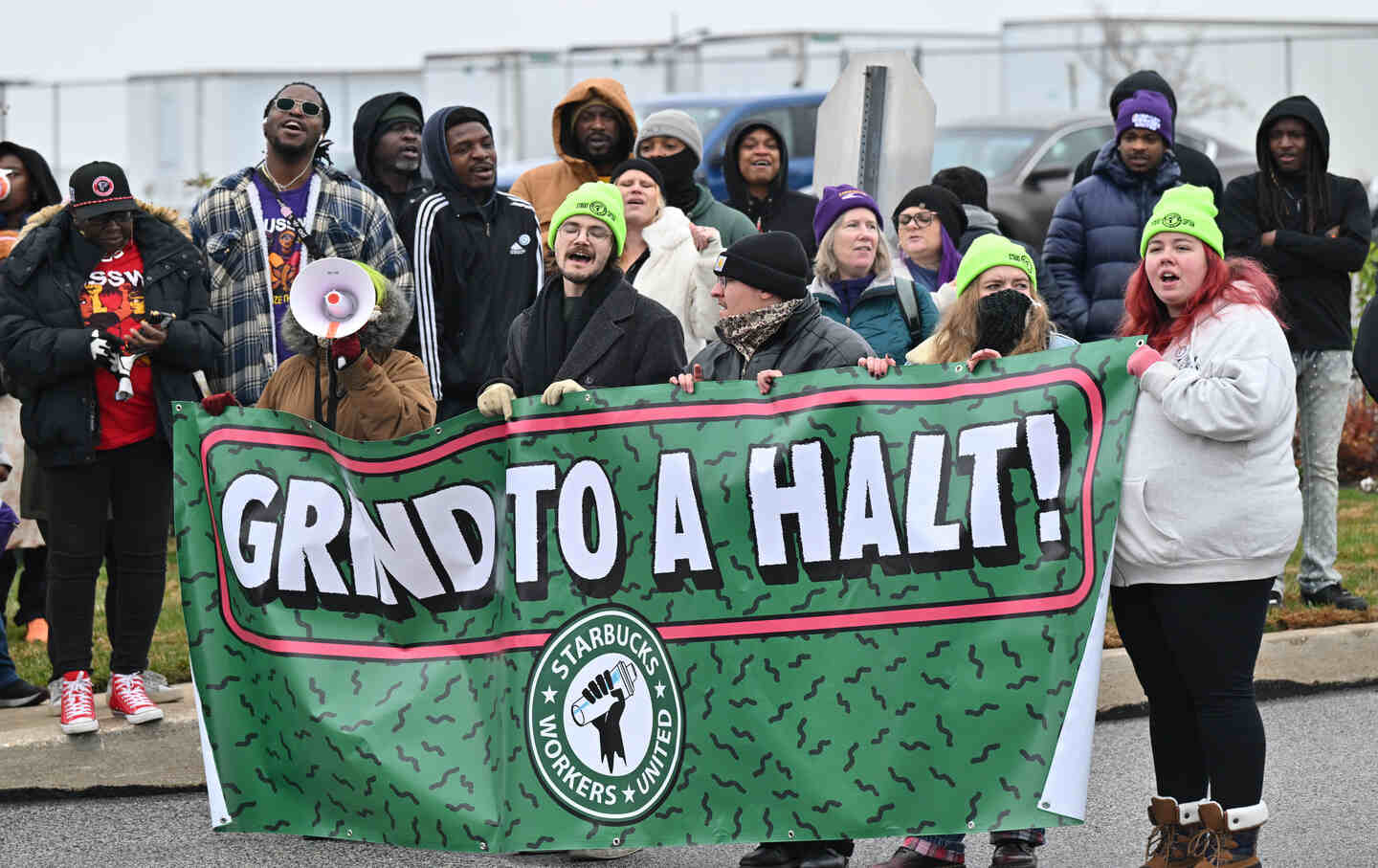
Danny and Derek talk with Noam Scheiber, New York Times reporter and author, about the radicalization of American college graduates. They discuss a Starbucks union campaign, underemployment among recent grads, the Taylorization of white-collar jobs, AI, corporate fixation on labor costs, the “con” of college for millennials, and the collapse of meritocracy.
Buy your copy of Noam’s book on the subject, Mutiny: The Rise and Revolt of the College-Educated Working Class.
Advertising Inquiries: https://redcircle.com/brands
Privacy & Opt-Out: https://redcircle.com/privacy
Search Results placeholder
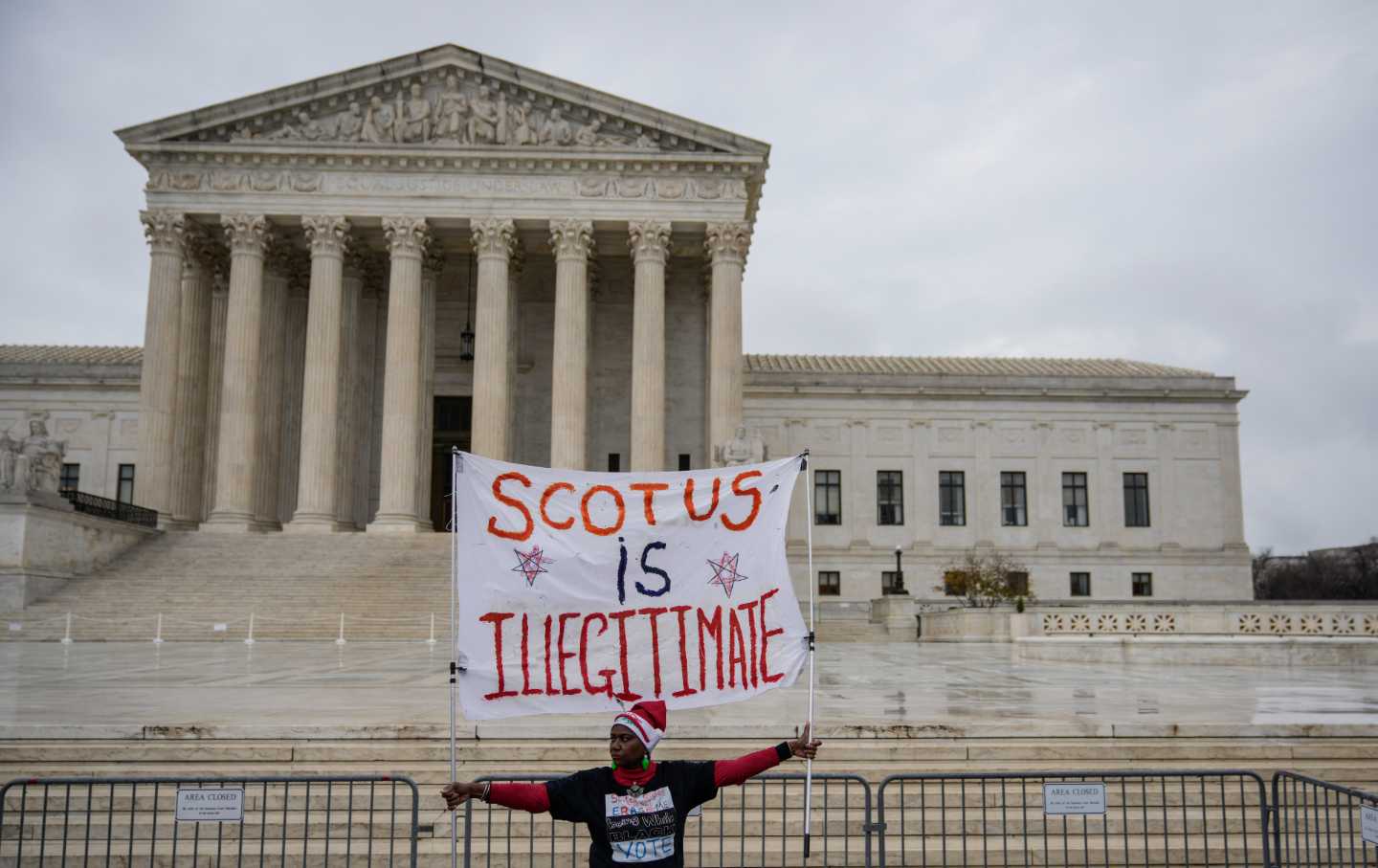
Protesters are arrested and put into a police van after refusing to leave the intersection while walking through the streets to demonstrate against U.S. President Donald Trump’s first 100 days in office on April 30, 2025 in Washington, DC. Multiple groups throughout D.C. blocked off intersections around the Capitol during morning rush hour traffic while chanting, “No Trump, no deportation, no more fascist occupation.”
(Kayla Bartkowski / Getty Images)On this episode of The Nation Podcast, editor D.D. Guttenplan talks to veteran journalist and broadcaster Ray Suarez about the gap between Donald Trump’s maximalist immigration rhetoric and his actual enforcement policy. Ray’s article appears in our June issue.
Subscribe to The Nation to support all of our podcasts: thenation.com/podcastsubscribe.
The Nation Podcasts
Here's where to find podcasts from The Nation. Political talk without the boring parts, featuring the writers, activists and artists who shape the news, from a progressive perspective.
The Transformation of the New York Waterfront w/ Karrie Jacobs | The Nation Podcast
In its heyday, the Bush Terminal industrial complex spanned several city blocks along Brooklyn’s waterfront and employed more than 35,000 people. Built by Irving Bush in the late nineteenth century, it was an "early intermodal shipping hub." Goods arrived by water and left by rail. Bananas, coffee, and cotton came in through doors on one side of the warehouses and were loaded onto trains on the other.
But after World War II, as trucks replaced rail and shipping patterns changed, the Terminal’s purpose faded and the vast complex slipped into disuse.
Today, Bush Terminal is again at the center of New York’s vision for urban reinvention— and a debate around development, displacement, and the future of work in the city.
Joining us on a deep dive into Bush Terminal is veteran architecture critic and writer Karrie Jacobs. Her essay, “On the Waterfront,” appears in our December issue of the Nation.
Advertising Inquiries: https://redcircle.com/brands
Privacy & Opt-Out: https://redcircle.com/privacy
Search Results placeholder
Subscribe to The Nation to Support all of our podcasts
Become a Sustaining Donor This September
Between the reemergence of right-wing red-baiting and Donald Trump’s use of the chilling National Security Presidential Memorandum–7 to criminalize left political organizing, we’re seeing McCarthyism reborn before our eyes.
This assault on democracy cannot be ignored or wished away. Resisting it requires bravery in the face of threats and repression, a steadfast commitment to the truth, and the unwavering belief that we can—and will—overcome this darkness.
We must have an independent media that sets the record straight, unearths corruption and abuses of power, and advances a politics of justice and dignity for all if we’re to win this fight.
That’s why I’m writing to you today. This September, The Nation needs to add 100 monthly donors to sustain our progressive journalism. Your contribution makes the next investigative report, the next truth-speaking column, and the next pathbreaking essay all possible.
I hope you’ll support our work with a recurring donation today. If you donate $10 or more a month, we’ll send you a brand new “Hands Off the Free Press!” sticker to recognise your commitment to our cause. Please, donate today.
Onward,
Katrina vanden Heuvel
Editor and Publisher, The Nation