Trump Will Regret Messing With Wisconsin Governor Tony Evers
The president’s bully politics are blowing up on him internationally, and threats to arrest a Midwestern governor will produce domestic blowback.
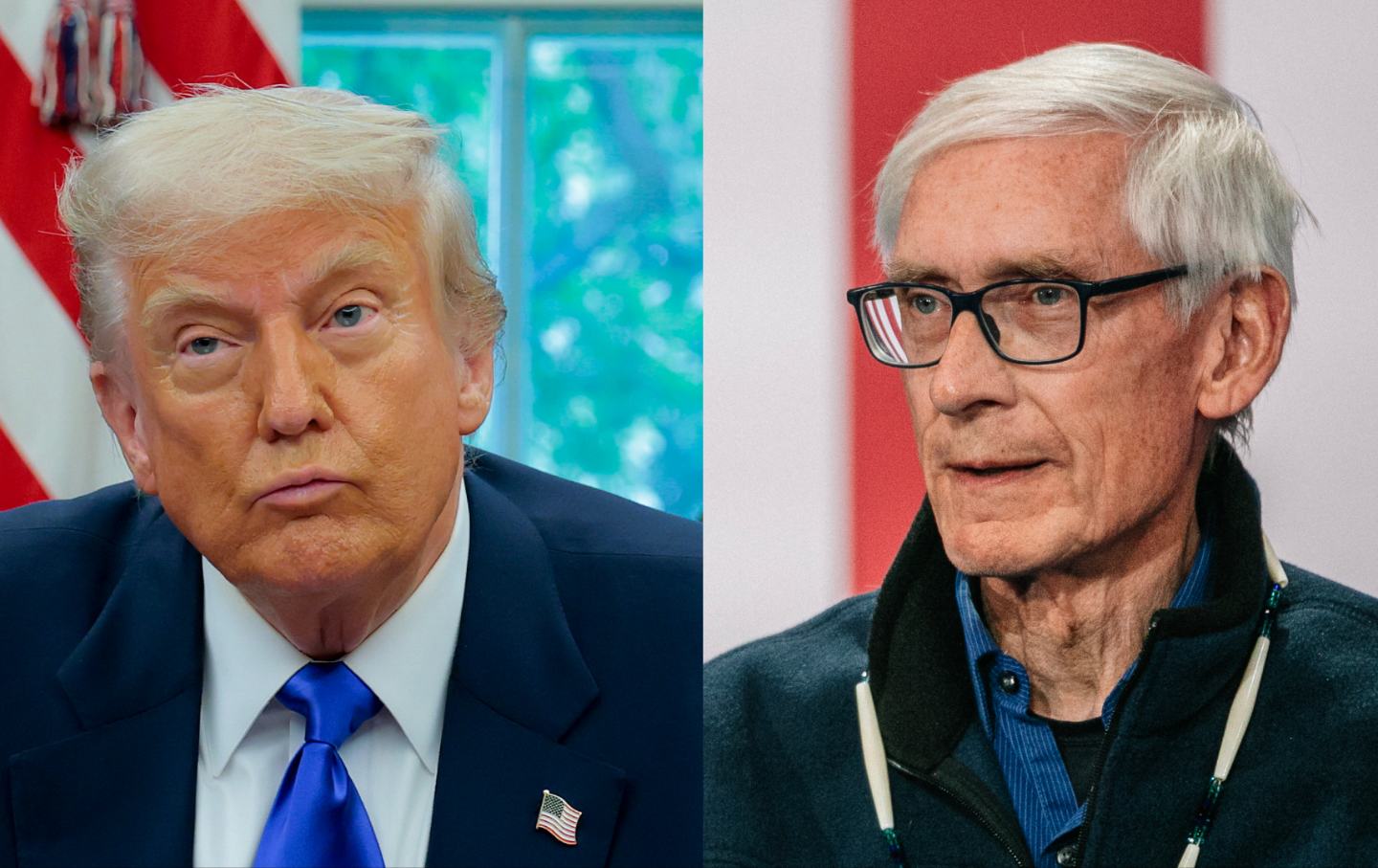
Donald Trump and Tony Evers
(Anna Moneymaker / Getty Images; Jim Vondruska / Getty Images)Donald Trump announced last week that he had just finished “the most successful first 100 days of any administration in the history of our country, and that’s according to many, many people.” That’s predictable spin from a president who, despite the collapse of his approval ratings in recent polls, still imagines that he can convince Americans that he’s always winning.
In fact, Trump’s second-term track record has been distinguished by a penchant for picking fights that he and his allies are destined to lose.
Consider the president’s attempt to bully Canada into submission—either as a deferential trading partner or, more bizarrely, as America’s 51st state. Even as he was talking up his “most successful first 100 days,” the president’s Canada strategy has produced a colossal failure—as voters in that country delivered a stark rebuke to Trump and Trumpism.
Late last year, with then–Prime Minister Justin Trudeau’s popularity having tanked, it seemed likely that Canadian voters would decisively end a decade of Liberal Party leadership and replace it with a new right-wing government, led by Conservative Party stalwart Pierre Poilievre. A veteran member of Parliament who was, in many senses, amenable to Trump and to the American’s move-fast-and-break-things approach to governing, Poilievre was the odds-on favorite to become Canada’s next prime minister—with a huge parliamentary majority. That would have made things easier for the new American administration. But Trump could not let things go his way.
Instead of letting Canadians decide their own future, the American president noisily and repeatedly intervened by picking fights that highlighted the threats he posed to Canadian sovereignty.
Those threats upended the Canadian political calculus, as voters, incensed by Trump and recoiling at anything that reminded them of his politics, overwhelmingly rejected Poilievre’s conservatives and gave the Liberals a chance to continue governing under the leadership of Prime Minister Mark Carney. The Conservative wipeout was so profound that Poilievre lost his own seat.
Trump’s Canadian crack-up was not an outlier.
When Australians voted later in the same week, they delivered an even more resounding rebuke to Trumpian politics. Worried by the threat of tariffs, and the US administration’s increasingly erratic behavior, Australians opted to keep the country’s center-left Labor Party in power. More than that—they handed Labor one of the biggest victories in Australian political history. The Trump-echoing leader of the nation’s right-wing coalition, Peter Dutton, who just a few months ago had been seen as a prime minister in waiting, was sent into the political wilderness after losing his own parliamentary seat.
Those results, combined with other political developments from around the world, offer a clear indication that Trump’s bully-boy tactics are making him politically toxic on the international stage.
And they are doing the same thing at home.
Last week, the president’s bumptious “border czar,” Tom Homan, delivered remarks that sounded like a threat to have Wisconsin Governor Tony Evers arrested for encouraging state employees who might be confronted by federal immigration officials to consult with their superiors and lawyers before turning over documents with details about the interactions of Wisconsinites and state agencies. “Wait and see what’s coming” was the ominous warning from Homan, who responded to a question about Evers’s memo with a rant that concluded “that’s a felony and we’re treating it as such.”
Homan’s statement was a wildly over-the-top response to a gubernatorial memorandum that simply gave Wisconsin government workers guidance on how to deal with Trump administration representatives or agents who might make confusing, ill-considered, legally dubious, or flat-out lawless requests.
Evers instructed state employees to remain calm and consult with lawyers who could help them to act in accordance with state statutes, federal regulations, and constitutional mandates. In other words, the governor did what any responsible leader would do in such a circumstance.
The administration’s response was to float the prospect of arresting and prosecuting a generally uncontroversial governor with a reputation as a stickler for following the rules.
Evers took the arrest threat in stride. Displaying firm resolve and appropriate confidence, he declared, “I’m not afraid. I’ve never once been discouraged from doing the right thing and I will not start today.”
Dozens of elected officials and organizations immediately rallied to Evers’s defense. “I stand with Governor Evers,” asserted US Representative Mark Pocan, the popular Democratic congressman from south-central Wisconsin. Chris Larson, a senior member of the state Senate, said, “These threats by the Trump administration are grossly un-American.” And a letter issued by the groups ranging from the Wisconsin ACLU to the Wisconsin Council of Churches and the African American Roundtable, argued, “The insinuation by a federal official that a sitting governor could face arrest for issuing such guidance is not only baseless but represents a dangerous escalation in the politicization of law enforcement.”
Just as Trump’s Canada strategy went horribly awry for the president, administration threats against Evers are likely to turn into a headache for Republicans in Wisconsin and nationally.
Popular
“swipe left below to view more authors”Swipe →Were the Trump administration to actually try to arrest Evers, the case would be tossed out by the courts faster than you can quote James Madison’s wise counsel that the goal of those who drafted the US Constitution was to “give to the general [federal] government every power requisite for general purposes, and leave to the states every power which might be most beneficially administered by them.”
That separation of powers can be complicated. But the basic premises are well understood by Evers, whose many years as a teacher, principal, school administrator and state superintendent of public instruction—and now as governor—have amply prepared him to defend Wisconsin’s position within a federal system.
Unfortunately for President Trump and the Republicans, however, Homan’s threats betray a misunderstanding of the rules that are supposed to define relations between Washington and the states.
That’s put the Trump administration in a tough legal position. And in an even more difficult political position.
Evers knows the people of Wisconsin very well. He has won five statewide elections in a row—three for superintendent of public instruction and two for governor—by positioning himself as a calm, cool, and collected public servant. He is not a firebrand. In fact, his approach has inspired considerable dialogue about the prospect that the Wisconsinite could be the most measured governor in the United States.
Evers does not take chances. He does not fly off the handle. The native of the cheesemaking town of Plymouth (population 8,932) governs along classic Wisconsin lines—combining commonsense policies and progressive values to make decisions that are right for the state and its residents, even when he’s required to stand up to career politicians and right-wing billionaires.
Wisconsinites like Evers’s style, which is why, in his last two gubernatorial contests, the Democrat has beaten not just disgraced former governor Scott Walker but self-funding millionaire Tim Michels too.
If Trump and his allies think they will get away with bullying Evers, they are sorely mistaken. He won’t back down. And that’s likely to make the governor even more popular with the voters of Wisconsin, who in April rejected a Trump-backed state Supreme Court candidate by a 55–45 margin.
Evers has not announced whether he will seek a third term in 2026. But if he does, he will campaign as a governor who has shown the courage, and the common sense, to stand up to ill-advised authoritarians in Washington, and their oligarchical allies in the billionaire class. That will make him precisely the sort of political leader that Wisconsin voters have, since the days of former Governor and Senator Robert M. “Fighting Bob” La Follette, given enthusiastic support.
Become a Sustaining Donor This September
Between the reemergence of right-wing red-baiting and Donald Trump’s use of the chilling National Security Presidential Memorandum–7 to criminalize left political organizing, we’re seeing McCarthyism reborn before our eyes.
This assault on democracy cannot be ignored or wished away. Resisting it requires bravery in the face of threats and repression, a steadfast commitment to the truth, and the unwavering belief that we can—and will—overcome this darkness.
We must have an independent media that sets the record straight, unearths corruption and abuses of power, and advances a politics of justice and dignity for all if we’re to win this fight.
That’s why I’m writing to you today. This September, The Nation needs to add 100 monthly donors to sustain our progressive journalism. Your contribution makes the next investigative report, the next truth-speaking column, and the next pathbreaking essay all possible.
I hope you’ll support our work with a recurring donation today. If you donate $10 or more a month, we’ll send you a brand new “Hands Off the Free Press!” sticker to recognise your commitment to our cause. Please, donate today.
Onward,
Katrina vanden Heuvel
Editor and Publisher, The Nation
More from The Nation
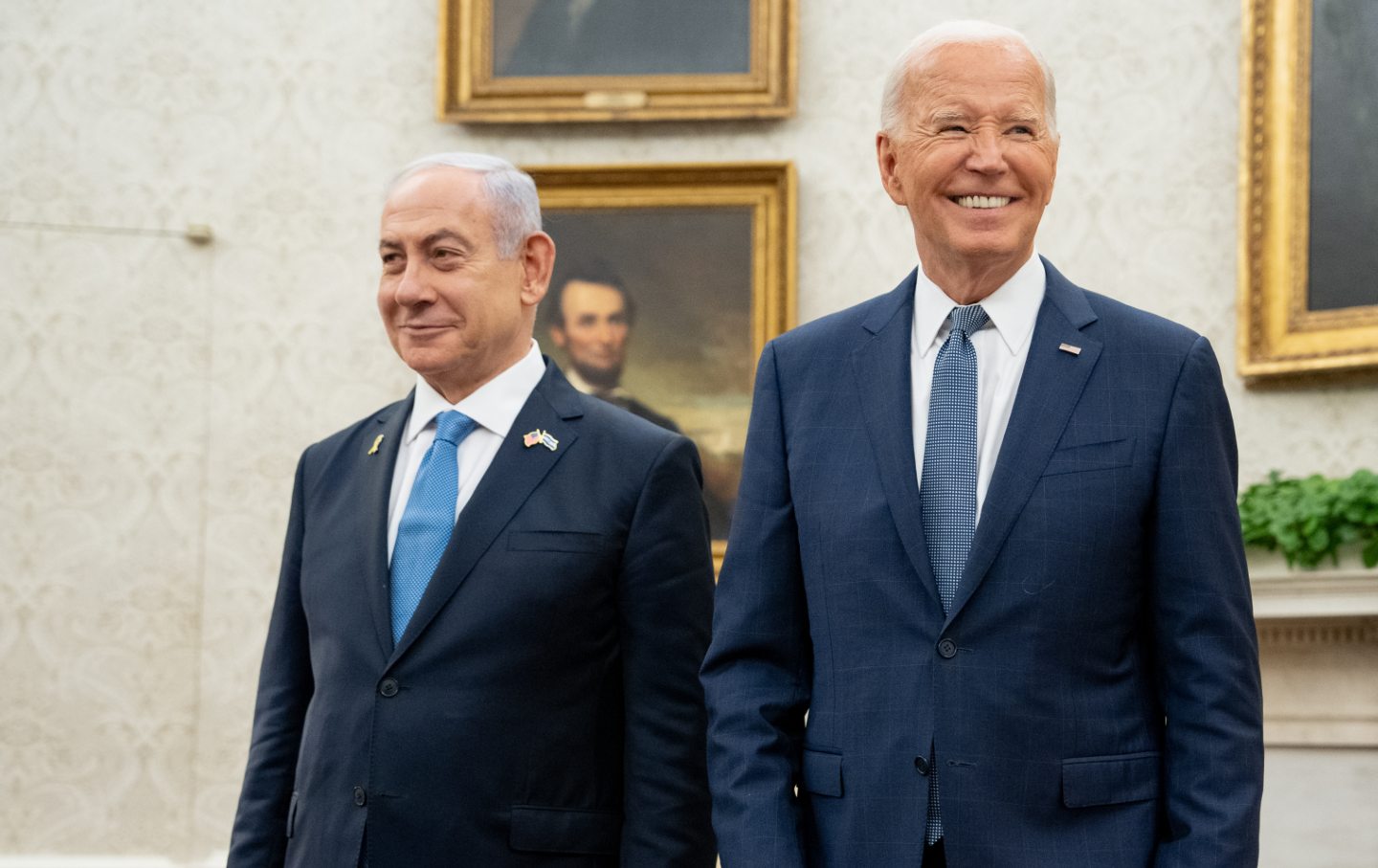
How Joe Biden Helped Cause a Genocide in Gaza How Joe Biden Helped Cause a Genocide in Gaza
An interview with reporter Akbar Shahid Ahmed about his new book, “Crossing the Red Line.”

Transphobia Isn’t Winning Votes. But It Is Making Our Lives Much Worse. Transphobia Isn’t Winning Votes. But It Is Making Our Lives Much Worse.
Trans people must now live out another election cycle knowing our friends, family, coworkers, and neighbors are being flooded with agitprop designed to dehumanize us.
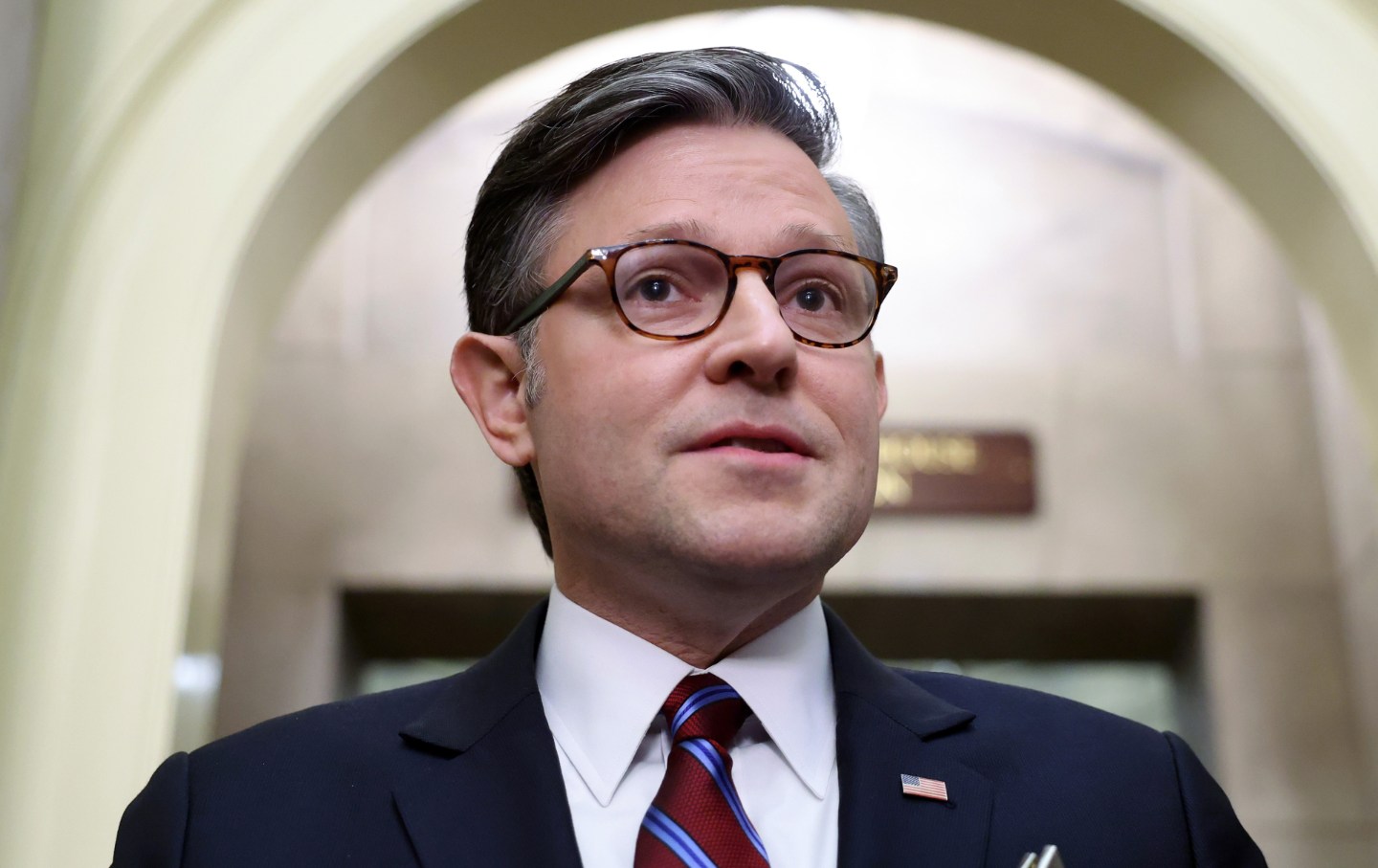
A Premature Farewell to the Ignominious Speaker Mike Johnson A Premature Farewell to the Ignominious Speaker Mike Johnson
If Democrats win the House in the midterms, as expected, Mike Johnson won’t hold the gavel in any meaningful way again.
Zohran Mamdani Hosts the World Zohran Mamdani Hosts the World
In a meeting with mayors from around the globe, Mamdani argued that the left must fix everyday problems—or the right will find someone to scapegoat for them.