DOGE’s Private-Equity Playbook
Elon Musk’s rampage through the government is a classic PE takeover, replete with bogus numbers and sociopathic executives.
The nation’s capital is teeming with people who serve the interests of sadists who have converted seemingly every crevice of our economy into a Sopranos plotline. But unlike tens of millions of Americans in every state of the union, virtually none of these people has ever personally known the peculiar hell of having had their employer annexed by a private-equity firm.
That changed quite dramatically a few days after Donald Trump’s second inauguration, when the DOGE raid on the administrative state began. Scammy-looking generic e-mails began appearing in the inboxes of federal employees, and very young men in hoodies began showing up in federal buildings and demanding access to computer systems. Most of the first batch of e-mails claimed to be just “tests,” though a dozen or so informed the recipients that they had been fired. Phyllis Fong, who’d just celebrated her 22nd anniversary as inspector general of the US Department of Agriculture, thought the two-sentence message with the subject line “White House Notification,” which purported to terminate her “due to changing priorities,” seemed so dubious that she showed up to work on Monday anyway, only to have her phone, computer, and IT systems access revoked that afternoon.
Then the checks stopped showing up. Ten emergency clinics in Syria and anti-HIV efforts in Malawi had their funding shut off; community health centers in Oregon, Maine, Nebraska, and Virginia and preschools in 23 states swiftly met the same fate, as did state programs to clean up toxic waste dumps abandoned by private-equity-owned mine operators and frackers.
It soon emerged that DOGE had detailed a doughy Florida software CEO named Tom Krause to the Treasury Department to ensure “that the Treasury DOGE Team was leveraging its unique technological expertise to help operationalize the president’s policy priorities.” Stiffing creditors and alienating staffers were something of a specialty for Krause, who’d been hired in 2022 by Vista Equity Partners to clean up a massive leveraged-buyout fiasco in which another private-equity firm and a hedge fund had floated $15.5 billion in high-interest debt to buy out four software companies with combined profits of $1 billion. The numbers made no sense; interest rates surged three percentage points while the bonds were being “sold,” and the company ran out of cash before it could make a single interest payment. In a less stupid era, everyone involved would be in prison right now.
But Krause knew what to do: force customers into predatory subscription agreements to maintain basic systems; lay off thousands of employees and outsource as much as possible to India; and cut off funds to anyone not on the payroll or expecting an interest payment. Before Krause left the firm in January, he’d axed hundreds of workers and demanded that the remaining ones justify their value in an e-mail. Now he’s cutting off churches that contracted with the government to help resettle Afghan refugees and farmers who invested tens of thousands of dollars in cost-sharing contracts with the USDA, while instructing 2 million federal employees to reply with a list of their accomplishments or face termination.
As with any Wall Street looting, everything is a lie, especially when numbers are involved. In one representative case, a debt-burdened company accumulates a more than $1,000 balance at the local pizza shop to improve its short-term cash flow while it secretly pays its CEO and the deputy defense secretary’s private-equity fund a combined half-billion dollars. Thousands of IRS officials are axed to close a budget deficit that widens by $100 million for every $115,000 auditor you fire. Line cooks and Social Security Administration workers are eliminated, while bloated outsourcing contracts are doled out to insiders.
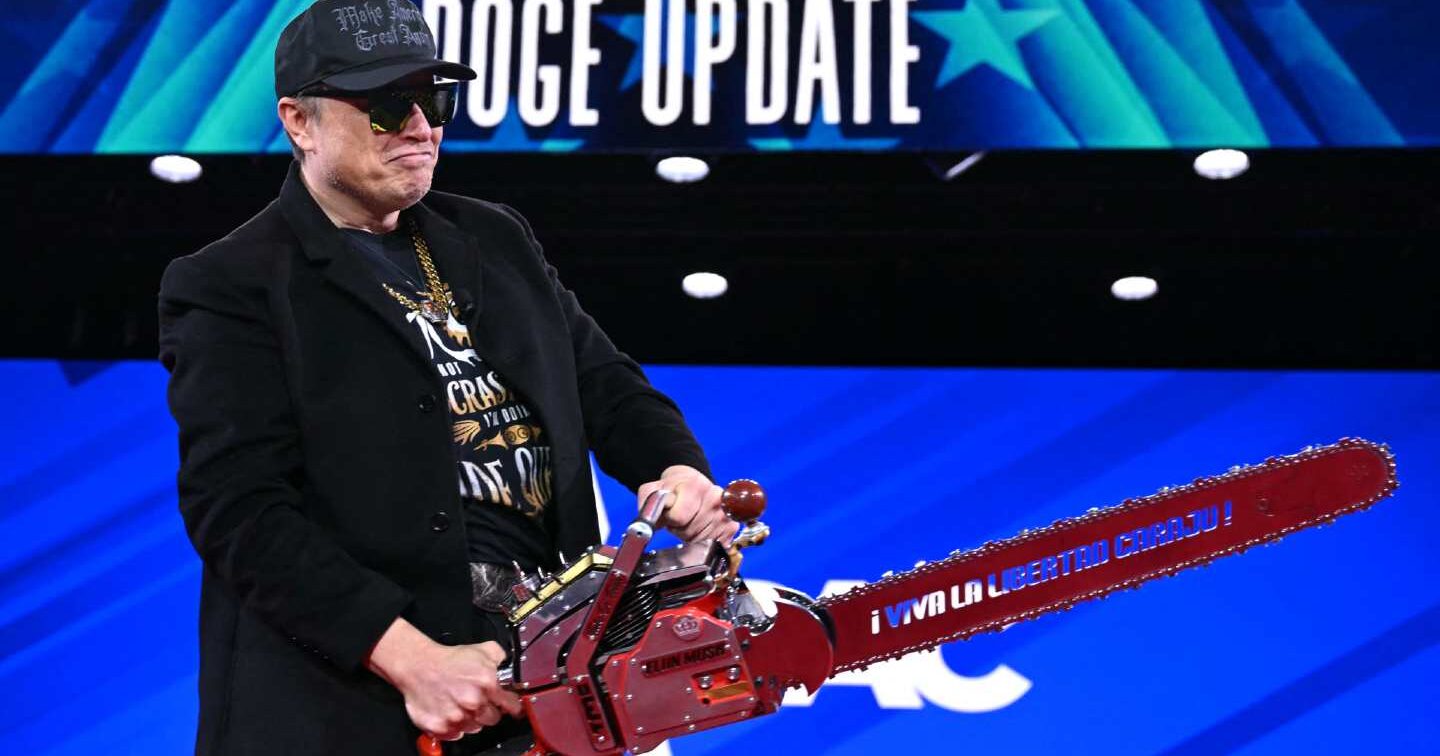
Still, DOGE’s shakedown operation is different from standard private-equity raids in one respect: Most PE mercenaries speak in bland business-school pabulum; they don’t brandish chain saws at public gatherings to menace displaced workers or talk about the need to inflict “trauma” on subject workforces.
Most of the hundreds of traumatized private-sector workers I have interviewed over the past few years voted for Trump, I assume mostly because, while neither party threatened to exact revenge on their predators, Trump had at least acknowledged the destruction these workers had endured. But none of them wish the hell they suffered on other people; if anything, their experience as casualties of private equity had highlighted the appeal of rules and regulations and institutions capable of enforcing them. What’s more, when you’ve worked a job where resources are so stretched that every workday feels like going to war and things only ever get worse, the sophomoric nihilism of Team DOGE begins to look like what it is: a wasteful, fraudulent, and abusive indulgence no one can afford right now.
Become a Sustaining Donor This September
Between the reemergence of right-wing red-baiting and Donald Trump’s use of the chilling National Security Presidential Memorandum–7 to criminalize left political organizing, we’re seeing McCarthyism reborn before our eyes.
This assault on democracy cannot be ignored or wished away. Resisting it requires bravery in the face of threats and repression, a steadfast commitment to the truth, and the unwavering belief that we can—and will—overcome this darkness.
We must have an independent media that sets the record straight, unearths corruption and abuses of power, and advances a politics of justice and dignity for all if we’re to win this fight.
That’s why I’m writing to you today. This September, The Nation needs to add 100 monthly donors to sustain our progressive journalism. Your contribution makes the next investigative report, the next truth-speaking column, and the next pathbreaking essay all possible.
I hope you’ll support our work with a recurring donation today. If you donate $10 or more a month, we’ll send you a brand new “Hands Off the Free Press!” sticker to recognise your commitment to our cause. Please, donate today.
Onward,
Katrina vanden Heuvel
Editor and Publisher, The Nation