Resistance 2.0 Is Already a Systems Failure
With Trump back in the White House, the Democrats are floundering instead of fighting.
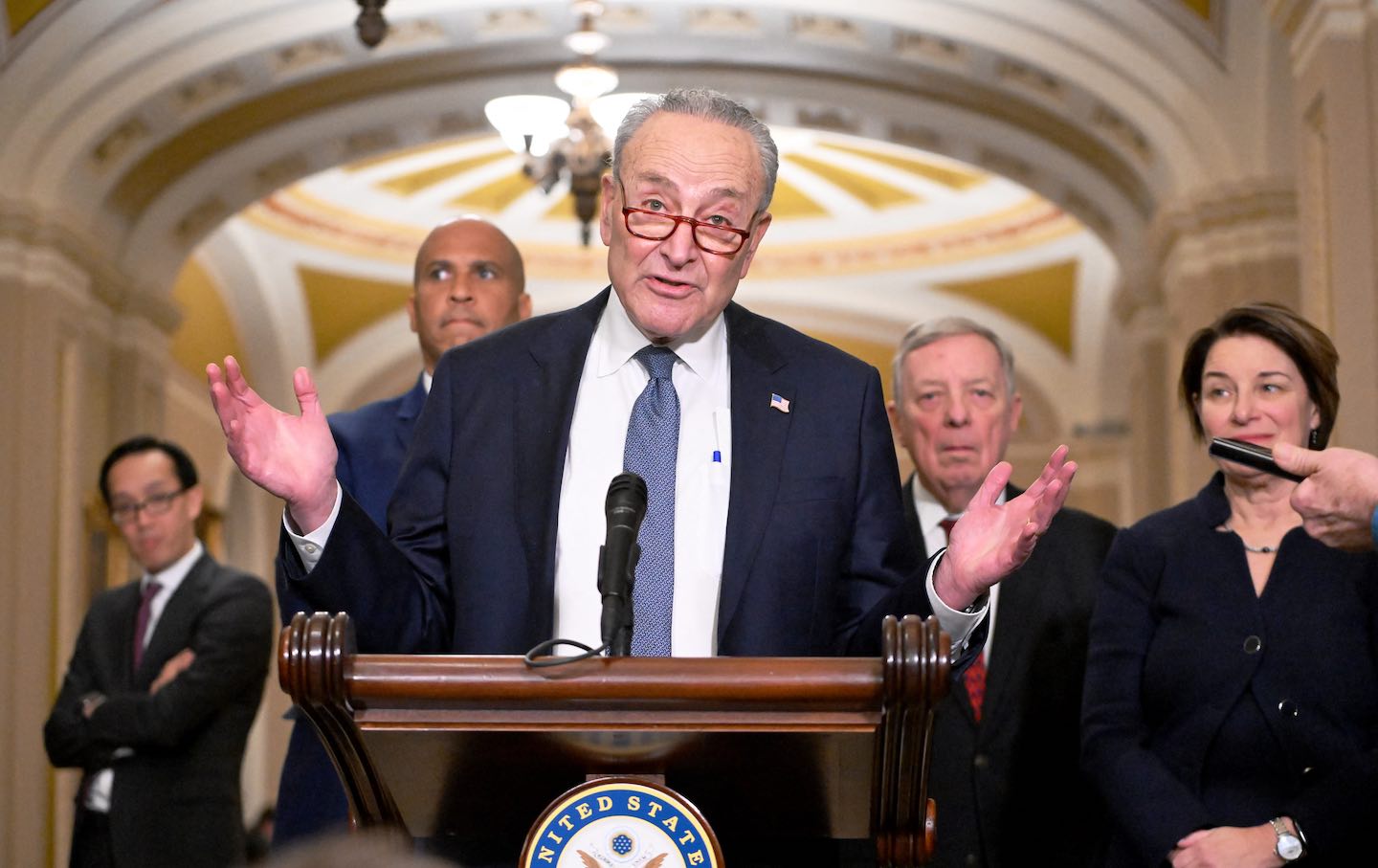
As Donald Trump resumed the presidency and spent his first day authorizing 26 new executive orders and rescinding 78 more from the Biden administration, Senate minority leader Chuck Schumer weighed in with this forceful declaration on social media: “It is time to look to the future. The challenges that face America are many and great. The Senate must respond with resolve, bipartisanship, and fidelity to the working and middle class of this country.” As the tin-pot edicts piled up throughout Trump’s first week, rescinding infrastructure outlays and prescription-drug price controls while upending antidiscrimination protections in federal offices and seeking to abolish birthright citizenship, Schumer’s House counterpart, Hakeem Jeffries, rallied to the crisis with this grammatically challenged lurch into milksop spirituality: “Presidents come and go. Through it all. God is still on the throne.”
Welcome to the Resistance 2.0, which has Democratic Party leaders claiming to savvily choose their battles with an emboldened second Trump administration as they fecklessly revert to a defensive crouch. The inauguration-week performance of congressional leaders was emblematic, but it was far from the most damning indictment of the Democratic status quo. In both the House and the Senate, the party caved without a whimper before the GOP’s draconian Laken Riley Act, which authorizes deportation proceedings against undocumented immigrants who are merely accused of nonviolent offenses. The law’s provisions are a clear violation of the Constitution’s equal-protection guarantees, yet jittery Democrats couldn’t be roused to make a robust case against the shameful legislation. The first version of the bill yielded 48 Democratic “yes” votes in the House and 12 in the Senate; the final version saw just two Democratic defections.
This dismaying launch of the new Trump agenda stands in especially stark contrast to the mass protests that greeted the Muslim ban on travel to the United States at the outset of Trump’s first administration. Democratic lawmakers joined a demonstration outside the Supreme Court to demand the repeal of Trump’s bigoted order—and the 2017 version of Chuck Schumer didn’t extol the flabby virtues of cooperation across the partisan aisle. “We will not let this evil order make us less American,” he said then. “We will fight it with everything we have and we will win this fight.”
The question at the beginning of a far more disciplined, ideologically rigid, and revenge-driven second Trump term is what happened to the opposition party’s backbone. The short answer, of course, is the 2024 election, which delivered a governing trifecta to the GOP. The same was true in 2016, but Trump lacked the mandate of a popular-vote victory—one that, this time, he is able to claim, albeit on the flimsy margin of 1.62 percent.
That very slight edge has been enough to render Democratic leaders acutely gun-shy—even though it’s no great improvement over the GOP’s results in 2016. If anything, Trump’s 2024 margin of victory imposes a greater, not lesser, burden on the Democrats to assemble an opposition strategy out of more than hoary Beltway shibboleths and half-assed memes. The real story of Trump’s victory, after all, is the 19 million 2020 Biden voters who sat out this election—a result that amounted to “a vote of no confidence in the Democrats, not an embrace of Trump or MAGA,” in the words of the former AFL-CIO political director Michael Podhorzer. That’s a first-order challenge to Democrats to reinvent the party from the ground up, starting with a full repudiation of its neoliberal corporate capture and the immoral and toxic legacy of the Biden-Harris administration’s support for the Gaza genocide. The sobering truth is that the party is not only losing support among key demographics such as Black and Latino voters; it’s on the cusp of losing the next generation of young voters.
Instead of meeting that challenge head-on, party satraps continue to run on institutional autopilot. For establishment Democrats, it’s never time to rethink their assumptions in the face of a drastically altered political landscape; the first order of business is to stay the course and dismiss calls for reform as unrealistic, non-savvy, and/or utopian. And since everything’s basically OK, all they have to do is adopt new messaging, and maybe try a new media gimmick or two.
So after Senate Democrats floundered their way through the Laken Riley vote, they convened for a session led by New Jersey’s Cory Booker to walk the party’s aging caucus through some social media basics. The confab yielded this stirring note of consensus, as CNN reporters Sarah Ferris and Lauren Fox wrote: “One of the bright spots Democrats highlighted…was a viral video from the pandemic of [Virginia Senator Mark] Warner making a tuna melt in his kitchen that led to the lawmaker being cheered and jeered by people who questioned his culinary leanings.” So fear not, shell-shocked citizens: In the ongoing barrage of deportations, civil service purges, reproductive rights crackdowns, civil rights rollbacks, and vengeance tours led by Donald Trump and his handpicked cabinet of Inspector Javerts, the Democrats will rally together with bland endorsements of the status quo and lunch pointers. In other words: Let them eat tuna melts.