
BREAKING: Matt Gaetz Quits, and Journalism Still Matters—a Lot
Forty-five minutes after CNN contacted Trump’s attorney general nominee about additional allegations of sexual misconduct, he was done.
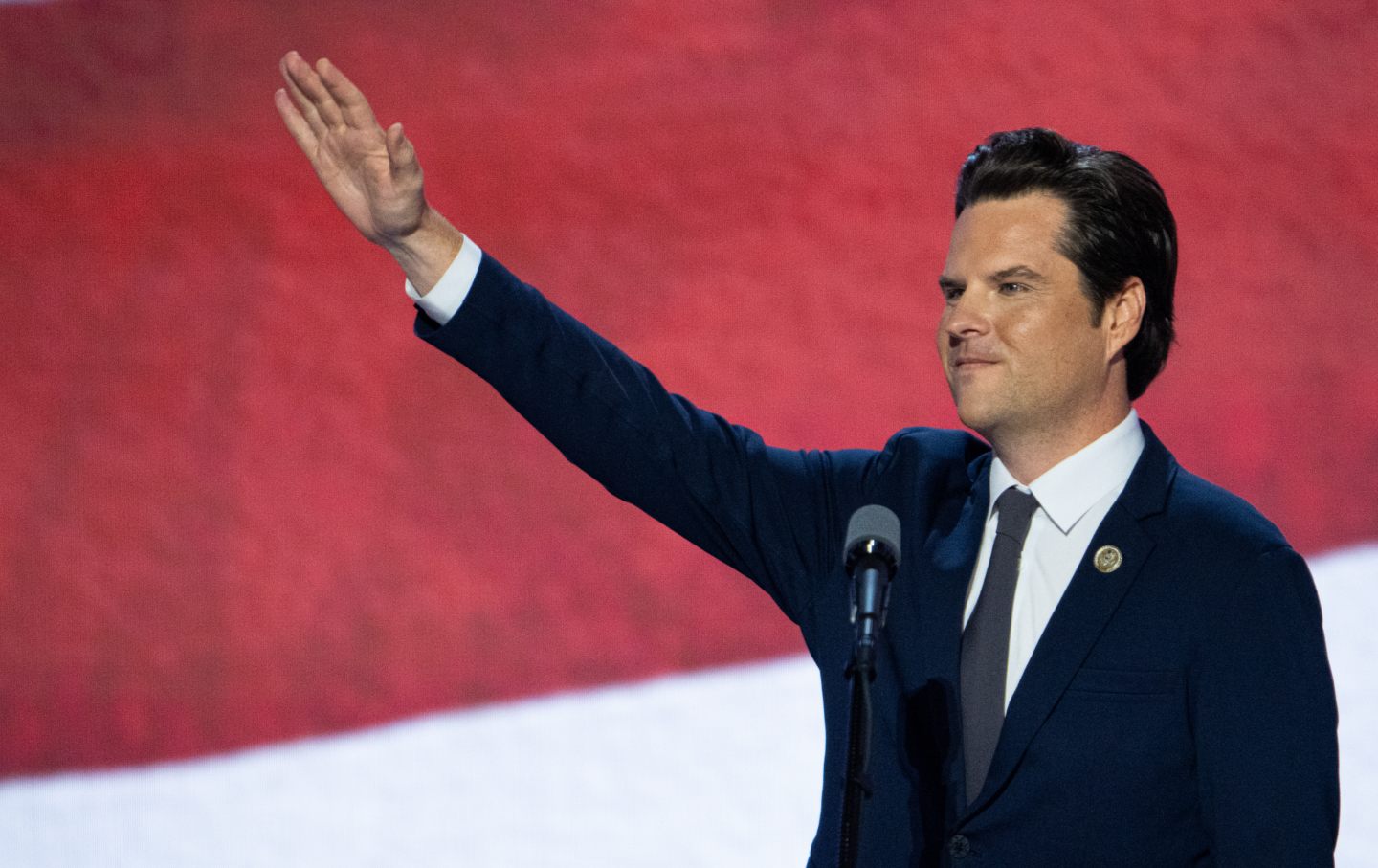
Matt Gaetz speaks at the Republican National Convention in Milwaukee on Wednesday, July 17, 2024.
(Bill Clark / CQ-Roll Call, Inc via Getty Images)Matt Gaetz, President-elect Donald Trump’s embattled nominee for attorney general of the United States, today withdrew his name from consideration to lead the new administration’s Department of Justice. The decision came just 45 minutes after Gaetz, a former Florida congressman whose nomination sparked widespread objections relating to reports of sexual misconduct, was told by CNN that additional shocking allegations were forthcoming.
The decision by Gaetz, the most scandal-plagued of Trump’s many scandal-plagued nominees, to stand down throws the president-elect’s efforts to form a cabinet into even more chaos. Trump’s nominees for secretary of defense, secretary of health and human services, national intelligence director, and other posts are at the center of rapidly evolving controversies about their personal lives, ties to foreign governments, and political stances.
If Gaetz, a Trump favorite, is out, then will other nominees also be forced to quit?
That question will be answered in the weeks and months to come. But any air of invincibility associated with the new administration was pierced by the scuttling of the nominee for attorney general.
In the withdrawal statement, which was posted on X on Thursday morning, Gaetz said:
I had excellent meetings with Senators yesterday. I appreciate their thoughtful feedback – and the incredible support of so many. While the momentum was strong, it is clear that my confirmation was unfairly becoming a distraction to the critical work of the Trump/Vance Transition. There is no time to waste on a needlessly protracted Washington scuffle, thus I’ll be withdrawing my name from consideration to serve as Attorney General. Trump’s DOJ must be in place and ready on Day 1. I remain fully committed to see that Donald J. Trump is the most successful President in history. I will forever be honored that President Trump nominated me to lead the Department of Justice and I’m certain he will Save America.
Moments after the news broke, Paula Reid, CNN’s chief legal correspondent, revealed that the announcement from Gaetz had come less than an hour after CNN reached out to Gaetz’s team about a report that there was new, previously unknown evidence in the House Ethics Committee’s ongoing inquiry into alleged sexual misconduct by Gaetz involving a 17-year-old minor. While Gaetz denied the allegations, the scandal had already emerged as a huge challenge for his nomination. The CNN report, which concerned allegations of a “second sexual encounter” between Gaetz and the minor, only made things worse. Senators from both parties had already been suggesting that the Senate Judiciary Committee needed to have access to the full Ethics Committee report. If Gaetz had not withdrawn, the pressure to release the ethics report—a move opposed by House Speaker Mike Johnson (R-LA) and Republican committee members—would have become overwhelming.
The news about an additional allegation, CNN’s Reid, said, was “incredibly significant” because it provided “an example of the kind of information that the Ethics Committee has, but the public does not.” Andrew McCabe, a former deputy director of the Federal Bureau of Investigation, said, the new allegation of wrongdoing “changes the game and shakes people regarding the seriousness of what [Gaetz] engaged in.”
There will now be widespread speculation about who Trump will nominate in Gaetz’s place. There will also be intensified attention to new reports regarding an alleged 2017 sexual assault by Pete Hegseth, the president-elect’s nominee for secretary of defense. And about allegations of personal wrongdoing, financial scandals, troublesome foreign ties, and other concerns involving a number of Trump’s nominees.
This maelstrom also raises the broader question of whether Trump’s second term, which some had speculated would be marked by a new level of discipline, will in fact turn out to be every bit as chaotic as his first.
Whatever happens, Gaetz’s downfall shows that journalism is going to play a huge role in the weeks and months to come.
Gaetz’s allies will suggest that there was more to the nominee’s decision to withdraw than just a news report. That may be the case. But the timeline makes it hard to argue that CNN’s revelation did not play a definitional role in scuttling the president-elect’s highest-profile cabinet pick.
This gives us a clearer picture of how the system of checks and balances actually works.
The formation of any new administration takes place quickly. Members of the Senate, who must provide advice and consent on cabinet picks, rely on information from many sources when determining whether to approve or disapprove nominees. Trump has signaled that he wants to upend the process by forgoing traditional background checks and by pressuring the Senate to allow him to make so-called “recess appointments” of nominees who are not approved by the Senate. In such a circumstance, investigative reporting, along with steady reporting by beat reporters who cover cabinet agencies and the Congress, becomes all the more significant.
Unfortunately, the American media is experiencing its own share of upheavals, as television networks and newspapers face financial challenges and struggle to be heard amid a social media cacophony. Yet today we see clear evidence that old-school reporting, and a willingness to speak truth to the power of a new administration, matters more than ever.
That won’t make the president-elect happy.
Trump has sent many troubling signals regarding freedom of the press. While he recently claimed that he feels “an obligation to the American public, and to our country itself, to be open and available to the press,” Trump also threatened that, “If (he is) not treated fairly, however, that will end.” This statement led the Poynter Institute’s senior media writer, Tom Jones, to observe, “So, in other words, Trump is a fan of a free and open press as long as he agrees with the coverage. Which, of course, really isn’t a free and open press.”
What’s even more concerning is Trump’s new crusade to have the Senate block the Protect Reporters From Exploitative State Spying (PRESS) Act, a proposal to protect journalists from pressure to reveal their sources—and from threats to seize their data—that has already been unanimously approved by the US House. This week, Trump took to Truth Social to object to the PRESS Act and declare, “REPUBLICANS MUST KILL THIS BILL!”
Popular
“swipe left below to view more authors”Swipe →“It’s really important that we have that federal shield law to protect journalists at the federal level,” says Jodie Ginsberg, the CEO of the Committee to Protect Journalists. “We know that Trump is interested in going after whistleblowers, people who leak. And it’s absolutely essential that they are protected…and that journalists are allowed to do their job.”
More from The Nation
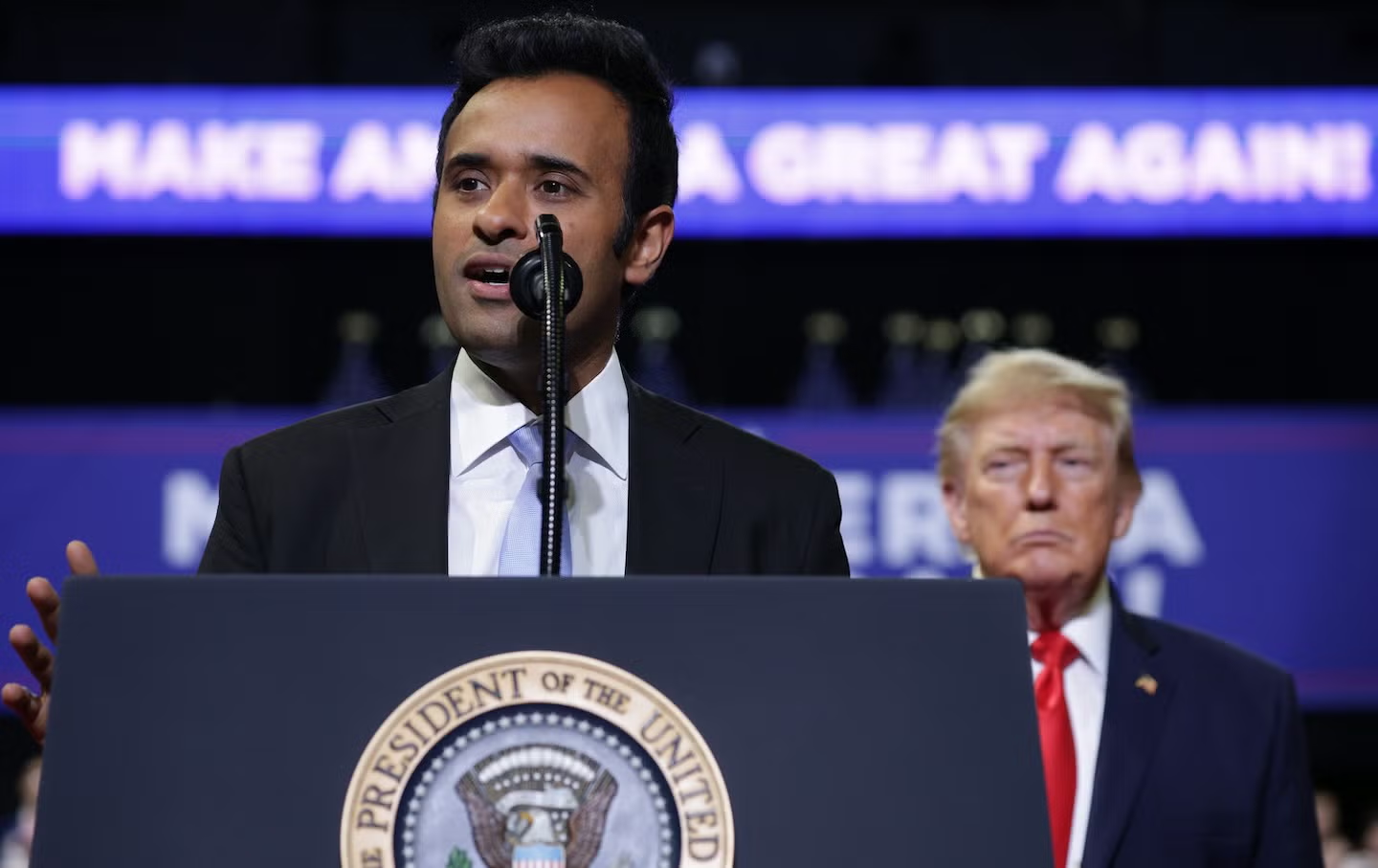
Vivek Ramaswamy’s New Attack Ad Should Be a National Scandal Vivek Ramaswamy’s New Attack Ad Should Be a National Scandal
The Ohio GOP gubernatorial candidate has accused his Democratic opponent, Amy Acton, of lying about being raped when she was 12 years old.
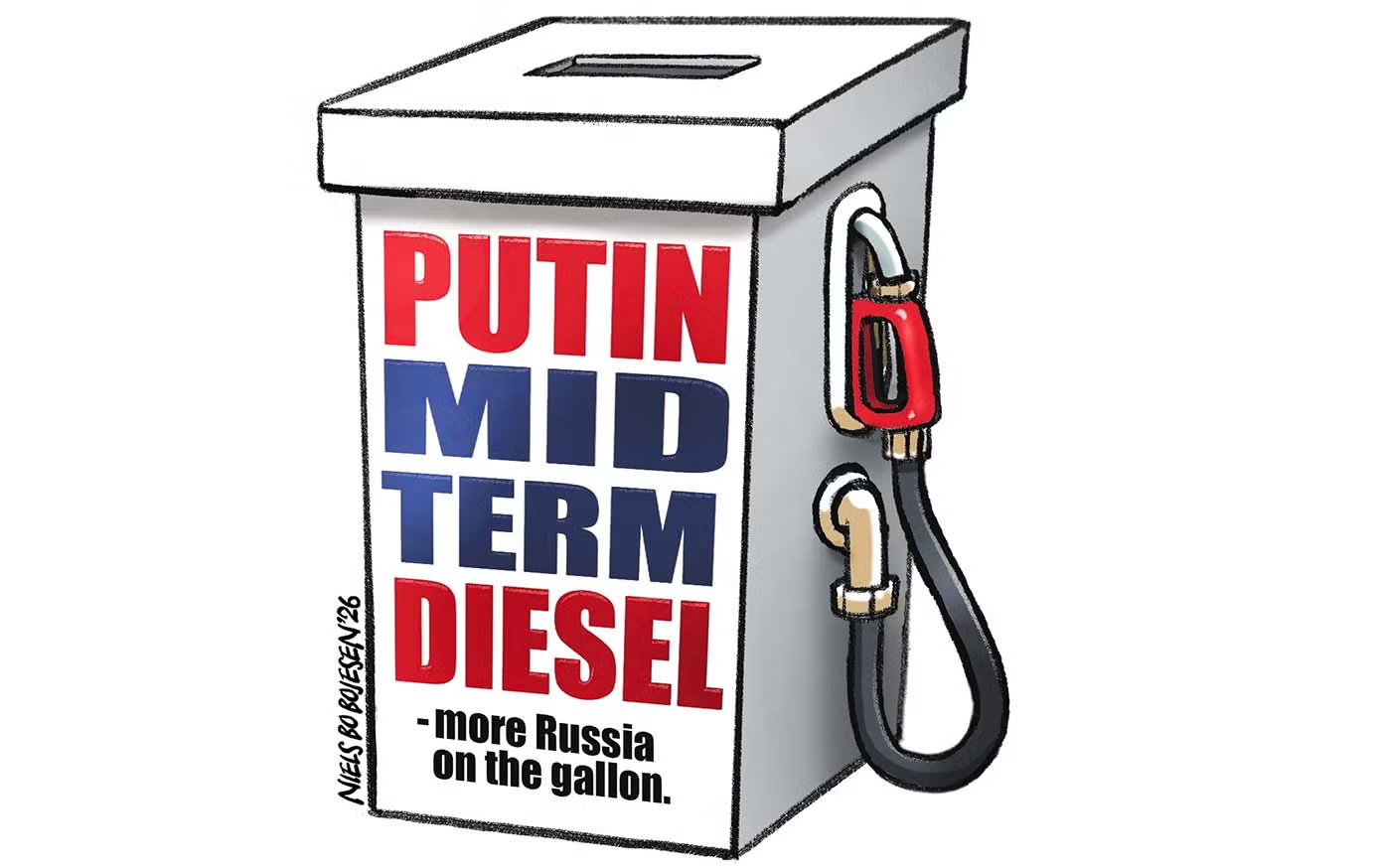
Dirty Business Dirty Business
Trump turns to Russian oil to lower fuel prices in the United States ahead of the midterm elections, throwing Ukraine under the bus.
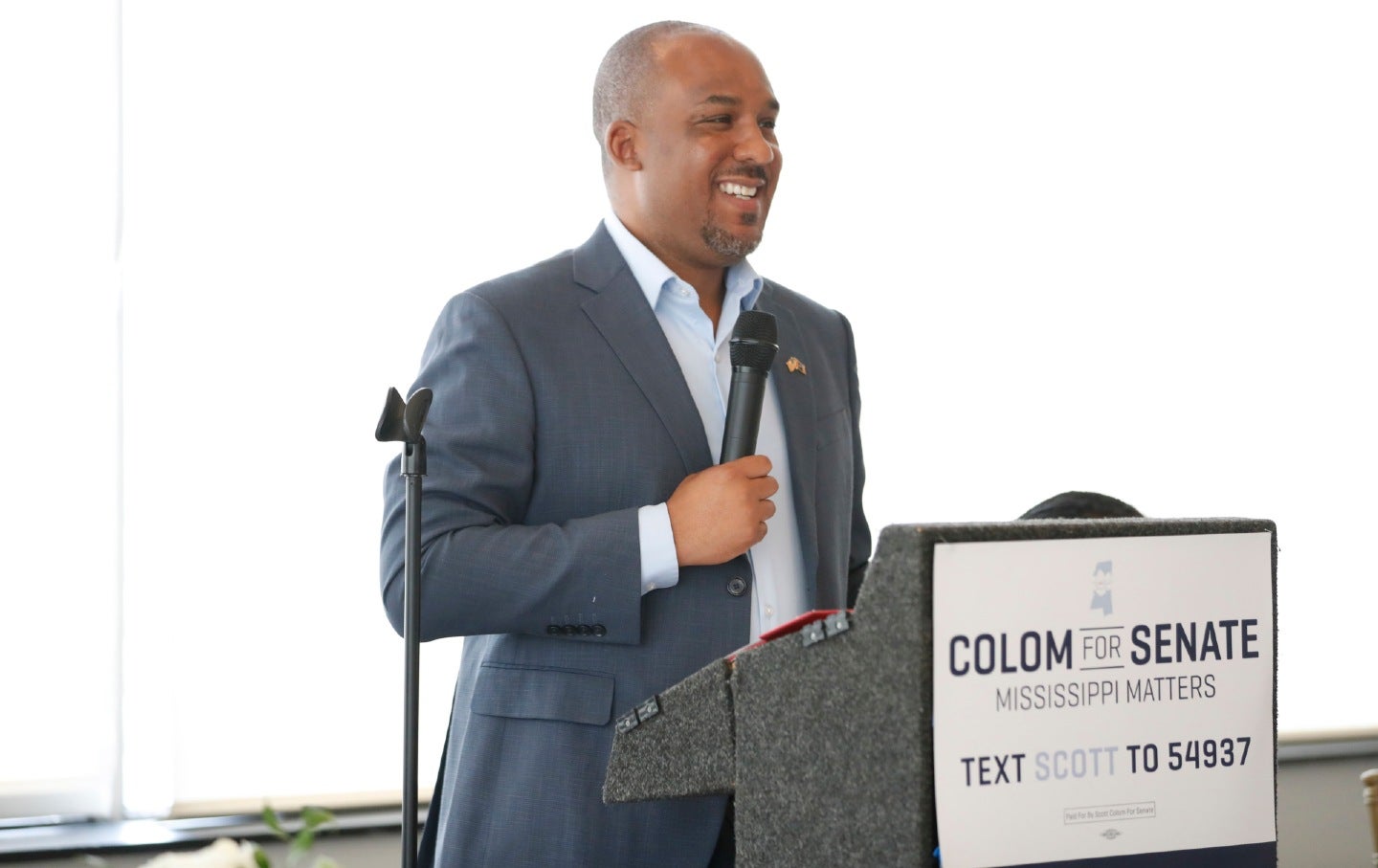
Could Mississippi Really Send a Democrat to the Senate? Could Mississippi Really Send a Democrat to the Senate?
The answer, amazingly, is yes.
Can James Carville Please Just Be Quietly Wrong Somewhere Else? Can James Carville Please Just Be Quietly Wrong Somewhere Else?
The omnipresent consultant-cum-tantrum-thrower has long outlived whatever relevance he once had, but cable producers, podcast hosts, and Democratic campaigns haven’t got the memo....

