This Earth Day, It’s Time to Make Polluters Pay
The costs of climate change are falling on those least responsible. This year, we must ask our elected officials for more than just flimsy commitments to sustainability.
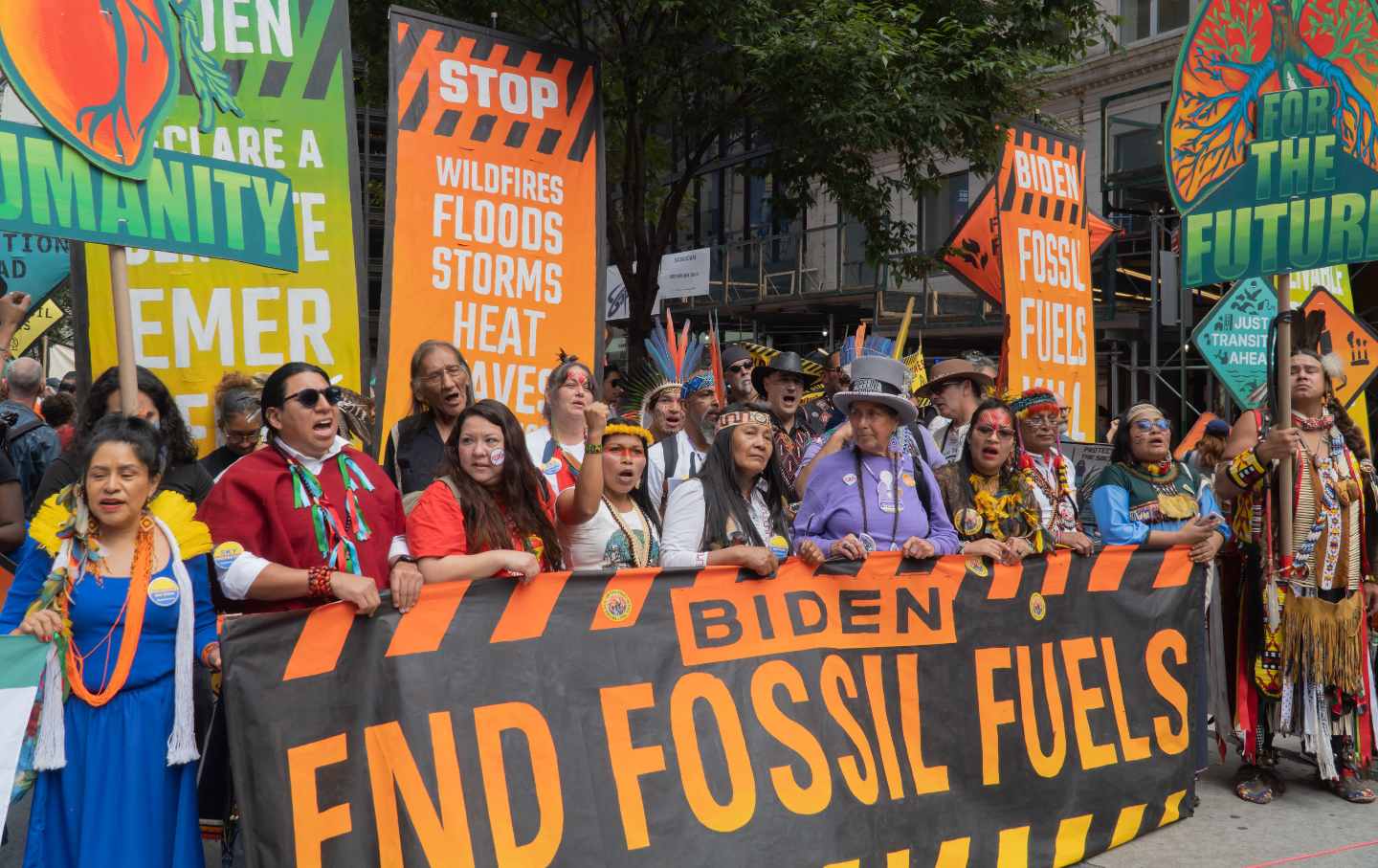
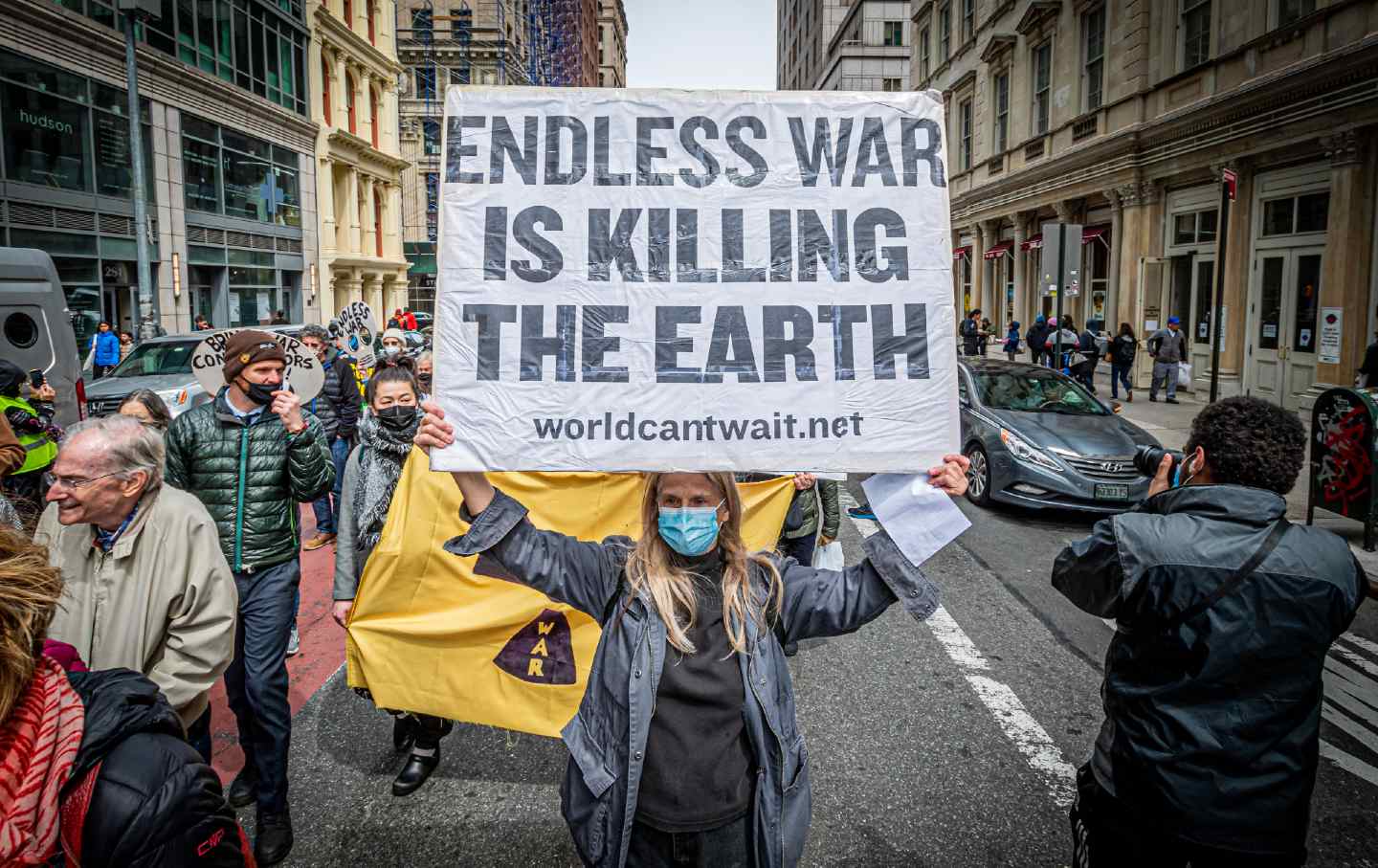
Protesters during the March to End Fossil Fuels in New York.
(John B Senter III / Getty)The effects of climate change have been inescapable in 2024: smoldering heat and blazing wildfires in Latin America, massive flooding in Central Asia, and an unusually warm winter in New York. With only a decade left until the world careens past dangerous levels of warming, we know that the clock is ticking for our governments to take significant climate action.
Yet the ultra-wealthy and a handful of corporations continue to block the pathway to an urgently needed energy transition. According to a report from Oxfam International, the investments of 125 billionaires are as carbon-intensive on an annual basis as the entire country of France. Since the 2016 Paris Agreement, just 57 companies are directly linked to 80 percent of global greenhouse gas emissions, according to the Carbon Majors Database. These companies include fossil fuel giants like Chevron, Shell, and BP, who raked in record profits in the last quarter of 2023.
Meanwhile, the costs of climate damages continue to mount. Within the first few months of 2024 alone, the United States has seen two weather or climate disasters, with losses exceeding $1 billion, according to the National Centers for Environmental Information, adding to the over $2.9 trillion of major weather and climate disasters suffered in the US since 1980.
The costs of climate change—both human and financial—are falling on all of us, but especially on young people and the marginalized communities least responsible for the climate crisis. To remedy this profound injustice and advance a just and sustainable future, Earth Day 2024 must involve more than superficial commitments to sustainability from our elected leaders. This is the moment to make big polluters pay.
Earlier this month, I spoke at an action organized by Oxfam outside of the EU Parliament, where international climate activists called on policymakers to adequately tax the rich. The protest emphasized how a progressive wealth tax on Europe’s richest individuals could fund more than half the annual costs of climate adaptation and mitigation in low and middle-income countries.
The wealth derived from an extractive economy should be redirected to repair its harms and build a new way forward. During the last major international climate talks, at COP28 in Dubai, protesters successfully pushed for rich countries to commit funds to addressing loss and damage in the poor countries most impacted by climate change.
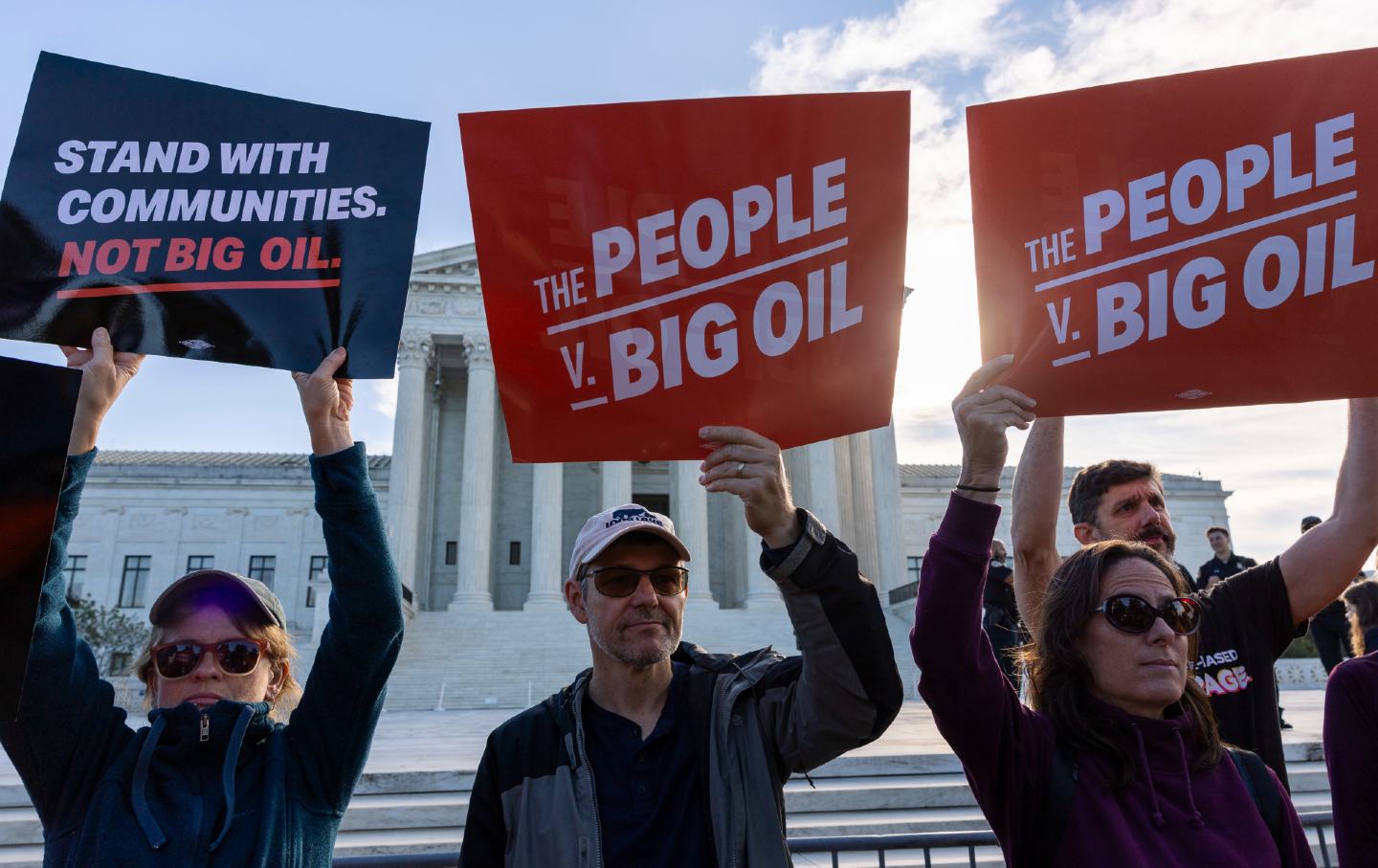
And across the United States, fossil fuel companies are facing legal actions aimed at making these companies pay, both for driving the climate crisis and for deliberately seeking to cover up their role in it. The city of Chicago, for example, launched a lawsuit in February against six oil majors and the American Petroleum Institute. As with divestment, these legal actions are not only directly seeking to hold the world’s top polluters accountable but also working to weaken these polluters’ political influence.
Big polluters fear this public momentum, which is why they’re working double-time to greenwash their image and deflect responsibility onto consumers. Two decades after BP popularized the idea of the “carbon footprint” to shift perception of fault for the climate crisis, Exxon Mobil is explicitly blaming the public for it. “The people who are generating those emissions need to be aware of and pay the price for generating those emissions,” said CEO Darren Woods.
Though he had the wrong “people” in mind, Woods actually described the situation perfectly: The problem is that the fossil fuel tycoons causing climate devastation don’t want to bear its costs. With fossil fuel majors making half-hearted net-zero pledges and illusory promises of climate action, it’s clear that having these companies take financial responsibility will be a hard-fought battle and one requiring government intervention.
From the European Parliament elections in June to the US elections in November, voters have the chance to advocate for these policies at the ballot box and in the streets, pushing elected officials to support progressive climate finance policies.
If big polluters don’t pay up, we all will, and an uninhabitable planet is a bill we simply can’t afford.