
Fighting Book Bans in Kentucky Schools—and Beyond
The Boyle County School District quietly quietly banned more than 100 books, citing anti-trans bill SB 150. But a local campaign by students and their peers successfully pushed back.
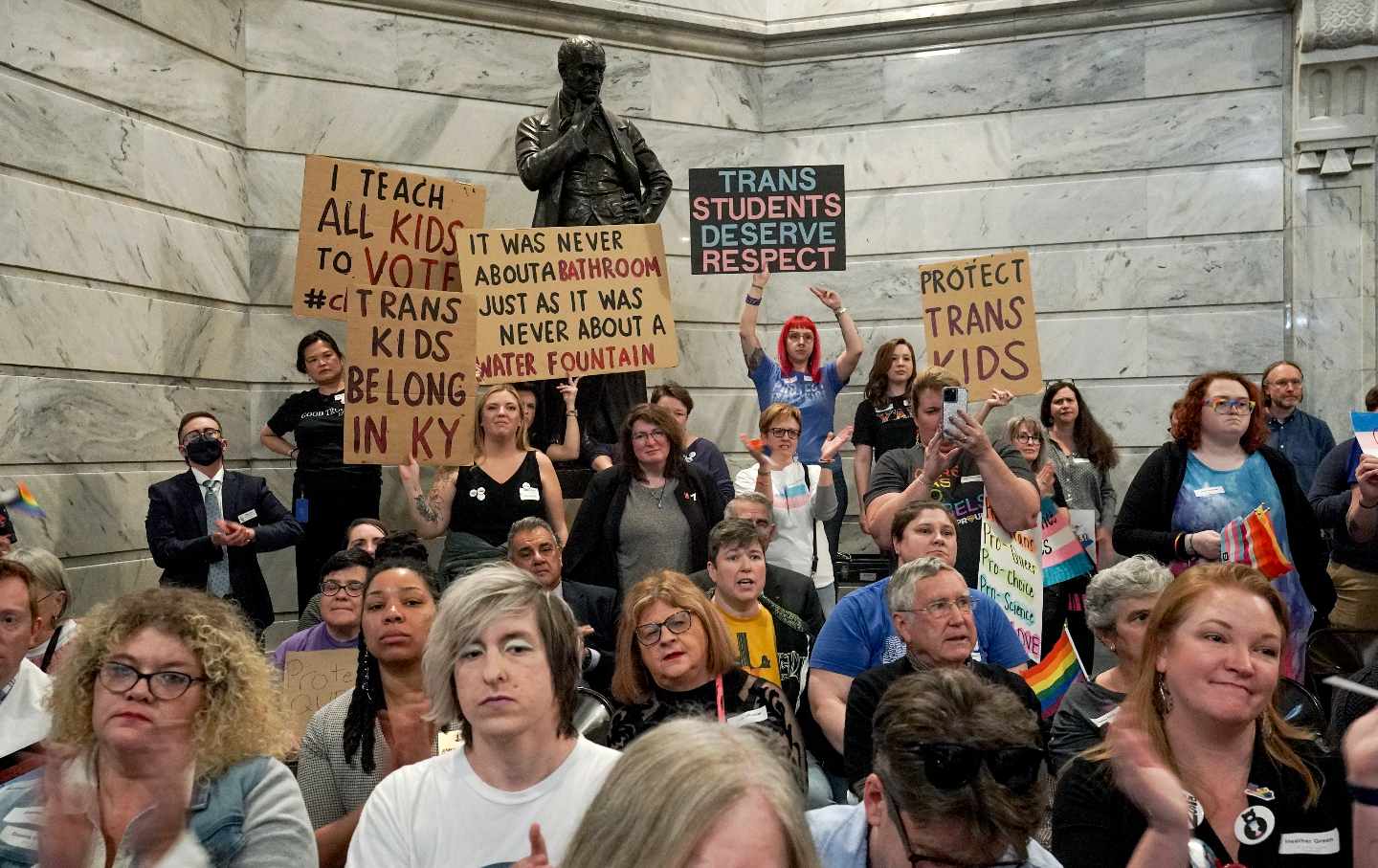
Activists in the Kentucky State Capitol protesting SB 150, which was cited by the Boyle County School District to ban more than 100 books.
(Bonnie Jo Mount / Getty)For this series, five young journalists responded to our calls for articles detailing critical issues that impacted young people this year. The group of high school and young college writers pitched and reported on urgent topics like lack of access to mental health support for homeschooled students, student voices being silenced in schools, book bans, attacks on LGBTQ+ students, and school shootings. Of course, these are just a fraction of the issues that shape the lives, conditions, and experiences of young people—not to mention how these issues intersect with each other. We received more important pitches than we could publish this round. As we close out the year, this package centers the work of young journalists reporting on what affected their schools, communities, and peers in 2023.
—Rainesford Stauffer
When Luisa Sanchez, a sophomore at the Boyle County school district in Kentucky, found out that her high school had quietly banned more than 100 books, she was shocked. Her district cited SB 150, an anti-trans bill signed into law in March 2023, partly designed to limit curriculum around gender and sexuality—the first district in the state to do so. Despite reporting extensively on the importance of banned books, she didn’t find out about the ban until her local paper broke the news. Sanchez, who knew about SB150’s implications, stated that she still “never thought it would be used as a way to weaponize literature.”
Fellow Boyle County High School student Callie Roessler, a junior, was one of the first students to be aware of the ban, having attended school board meetings with her mother. Concerned by the lack of student and community awareness of the book ban in her rural community, Roessler and a peer created the Instagram account @Boyle_Banned, to draw attention to the books being removed—all of which were related to or referenced sexuality, consent, and/or the LGBTQ+ identity. “I think the main thing was that they were hiding it—from the students and a lot of the parents.”
The sweeping Boyle County book ban is just one of the increasing instances of censorship in schools across the United States. Early data from the American Library Association (ALA) reports that the first eight months of 2023 saw a 20 percent uptick in challenged titles compared to the same reporting period in 2022.
Sabrina Baeta, a researcher with a Freedom to Read team at PEN America, says that organizations including her own, the ALA, and others like the National Coalition Against Censorship (NCAC), have come to the same conclusion: “that book bans are increasing, growing in scope, and targeting more areas in the country.”
Cameron Samuels, an executive director of Students Engaged in Advancing Texas (SEAT) and a student who got their start organizing against censorship in their school district of Katy Independent, says that while the issue of censorship often looks different in each community, “this extremism is a concerted effort to uphold an unjust status quo.”
Though book bans are more prevalent in the the South, they are still an issue coast-to-coast, “coordinated on a national level, but implemented on a grassroots, local level,” by a “vocal minority,” said Baeta. Resistance to these bans is also national, and many Southern students—who have experienced the brunt of some of the earliest impacts of the culture war—are at the forefront, sparking discussions around the deeper motives of the bans and the “nuance of censorship.”
Da’Taevyeon Daniels, a 17-year-old student from Fort Worth and 2023’s youth honorary chair for Banned Books Week, serves as partnerships director at SEAT, and has studied censorship with the NCAC. He argues that school book bans should not be decontextualized from a larger attack on public education. He points out that, in Texas, the politicians defending book bans are the same ones pushing forward-voucher bills, which are shown to effectively drain public school funding.
“Here in Texas and nationwide, the connection is so vivid and policy makers with these very radical ideas aren’t even trying to be discreet…it’s just a straight-up attack on public education in totality,” Daniels said. He also noted that individuals pursuing bans often use the guise of “parental rights,” but in reality, “they’re taking the voices of a small group of people and saying these voices matter more than anyone else’s.”
Daniels and Samuels point out that bans are often backed by PACs and national organizations prioritizing single-issue targeted attacks over broad-based community interests, while students are forging grassroots resistance to censorship among community stakeholders.
Anti-education and anti-LGBTQ bills like SB 150 in Kentucky have been effective at giving convenient cover for bans like the one in Boyle County. According to Baeta, amid the increasingly evident unpopularity of the bans, “vague legislation” such as SB 150 “offers no guidelines as to how it should be implemented…[and is] not transparent, but hints at what’s not allowed” and thus “primes a community for censorship.”
Roessler and her peers’ local campaign is a testament to this success: @Boyle_Banned gained hundreds of followers and sparked student and community awareness. The ban caught statewide attention, and according to Louisville Public Media reporting, a spokesperson from the Kentucky Department of Education stated that “the law doesn’t provide for books to be removed from a school library.” And on November 4, Boyle County announced a complete reversal of its ban.
Heightened awareness within the American public of targeted book ban efforts is what Baeta highlights as the most encouraging change she has witnessed over recent years. She continues to advocate for building that awareness from the ground up. “It’s such a national problem that people want to kind of attack the entire big monster,” she said. “There are very simple, very community oriented ways to help, and honestly, those have been the most successful.”
More from The Nation
An Effective Movement for Palestine Needs Allies Like Zohran Mamdani An Effective Movement for Palestine Needs Allies Like Zohran Mamdani
In order to build a broad-based coalition, we need to work together—not practice purity politics.
The First Amendment Applies to Concert Stages Too The First Amendment Applies to Concert Stages Too
Protests like that of Macklemore on Palestine should never be silenced by billionaire owners.
France’s Students Won’t Back Down France’s Students Won’t Back Down
Without full-time teachers, temperature-regulated classrooms, or school nurses, French students are turning their grievances into a national movement.
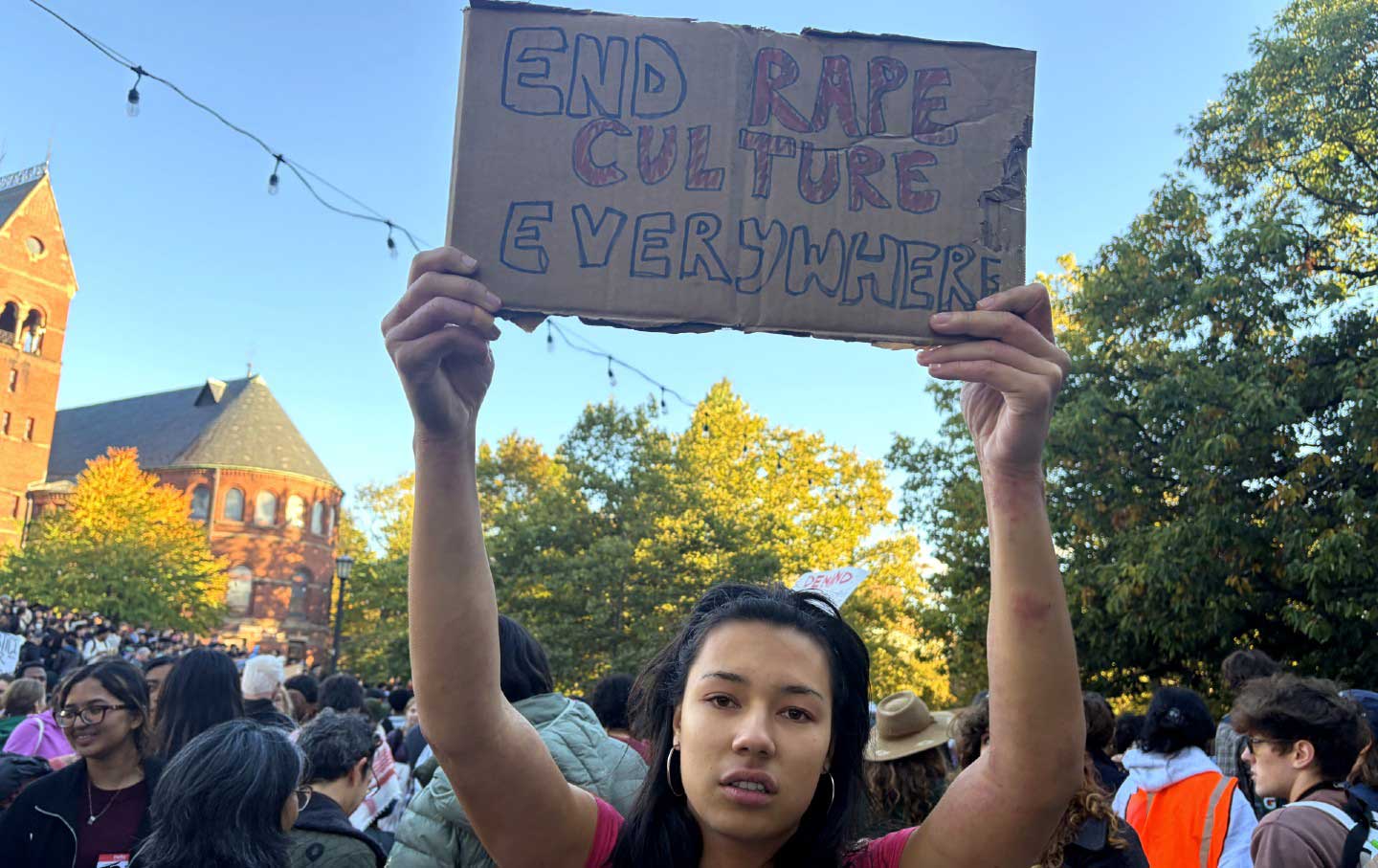
Inside Cornell’s Week of Protest Inside Cornell’s Week of Protest
“We won’t be silenced anymore. Our university needs to start protecting us, like they should’ve with Jane Doe and all other survivors on campus.”
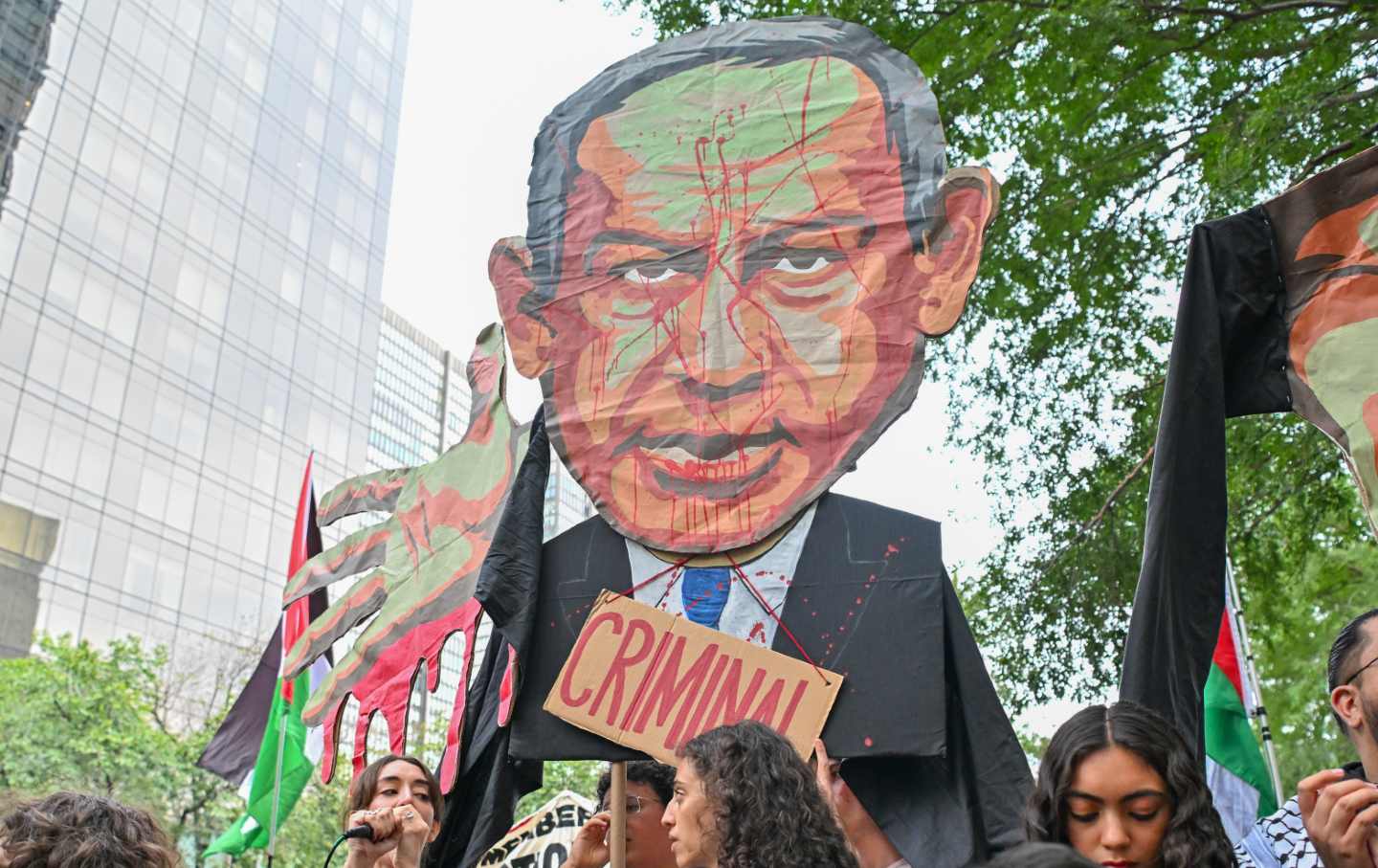
Netanyahu Came to New York. New Yorkers Were Ready for Him. Netanyahu Came to New York. New Yorkers Were Ready for Him.
Scenes from the defiant protest against the genocidal leader’s UN speech.
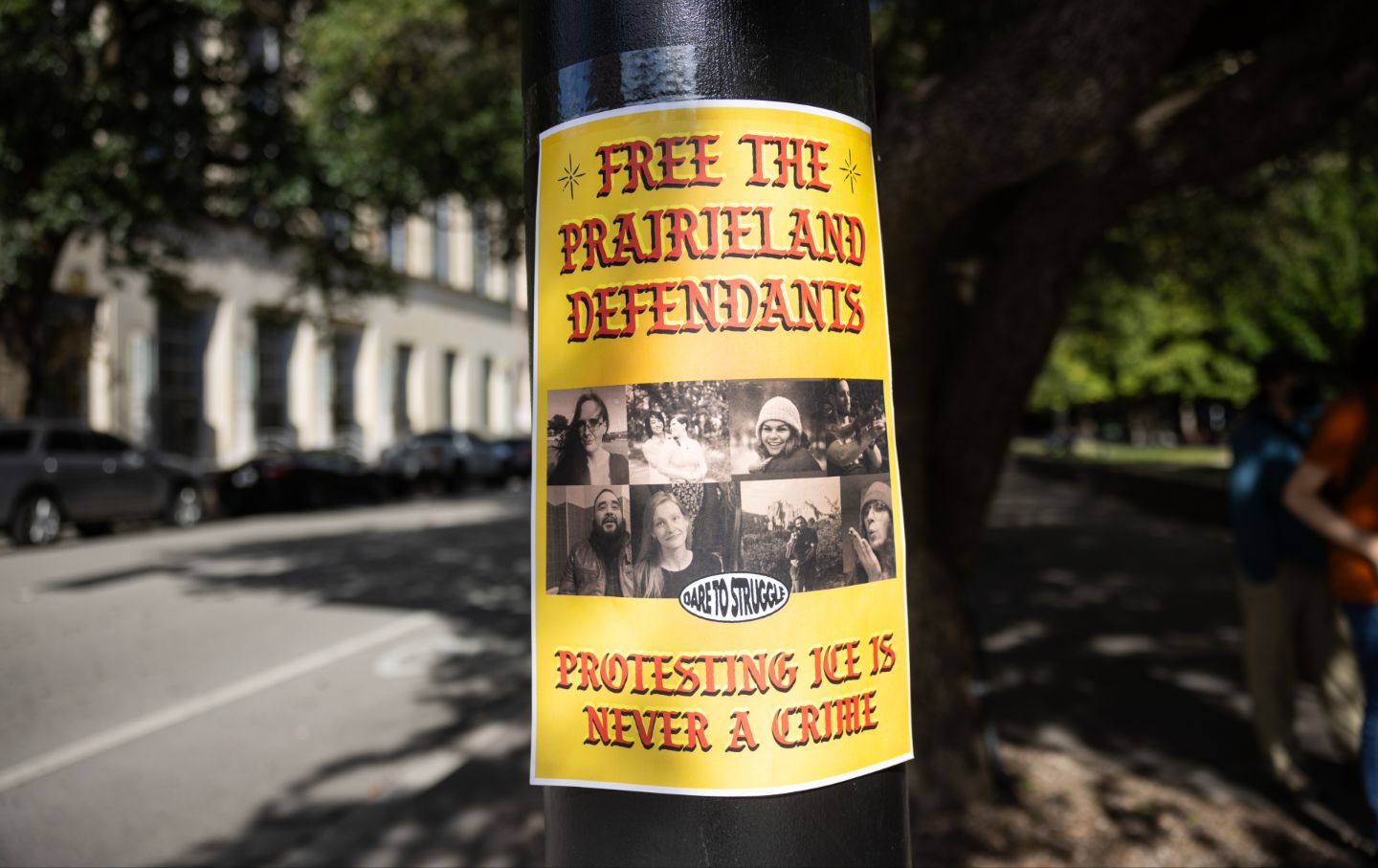
A Message From Prairieland Prisoner Autumn Hill: “Don’t Be Afraid” A Message From Prairieland Prisoner Autumn Hill: “Don’t Be Afraid”
I talked to the political prisoner about the politics of love, her case, surviving as a trans woman in a men’s prison, and how she makes it through the day.

