Michael Bennett: “We Cannot in Good Conscience Fund the Bombing of Palestinian Civilians”
The NFL champion calls upon Joe Biden to demand a cease-fire in Gaza
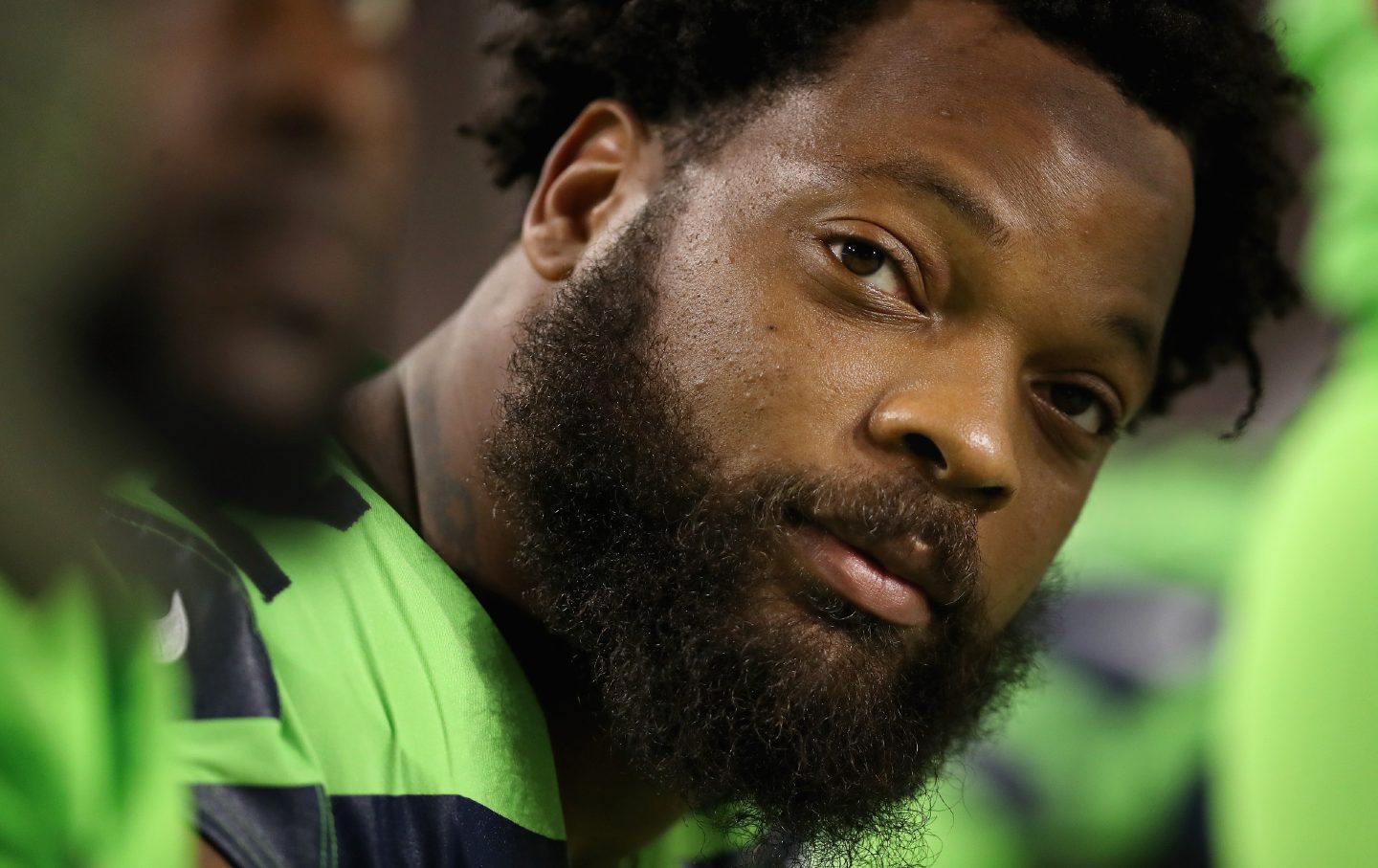
Defensive end Michael Bennett of the Seattle Seahawks at the University of Phoenix Stadium on November 9, 2017, in Glendale, Ariz.
(Christian Petersen / Getty Images)Michael Bennett played in the National Football League for 11 seasons, was a pro bowler three times, and a Super Bowl champion with the Seattle Seahawks. He is also known for taking up a variety of social causes from malnutrition in impoverished communities to expanding STEM in underserved schools to police violence. He also made serious waves in 2017 when publicly turning down an NFL-sponsored trip to Israel in solidarity with Palestinians living under a state of occupation. Here he returns to that subject and makes clear why he supports a cease-fire now.—Dave Zirin, sports editor
The ongoing conflict in Israel and Palestine is a deeply introspective challenge, one that forces us to grapple with profound philosophical and spiritual questions. As I bear witness to the tragic loss of innocent lives—both Israeli and Palestinian—it weighs heavily on my heart and soul, compelling me to stand in solidarity with those who suffer daily. In this conflict, I don’t just see Palestinians or Israelis; I see humans, and for that reason it’s crucial for the United States to demand a cease-fire for Israel and prevent the further loss of innocent children.
We cannot in good conscience fund the bombing of Palestinian civilians, including children, for they are all people, all humans. When we watch the news and see children suffering, we should feel the anguish of a father, the sorrow of a mother, the pain of a brother, a sister, an uncle losing a niece. We must find empathy for the suffering of those who have lost their lives and livelihoods. Because I don’t want to see any more loss of life, I call upon President Joe Biden to demand a cease-fire and ensure that American tax dollars are not used for weapons, or the ongoing occupation of Palestine—especially since there are urgent needs at home, like properly funding Black schools and infrastructure.
I stand with people across the globe who demand that we acknowledge the rights of the Palestinian people to exist on their land and live their lives in peace. This is not about taking sides; it’s about upholding morality, civility, and humanity. I have always stood against antisemitism and this statement is not antisemitic; it’s anti-death, and it speaks to a moral issue that we must address. Innocence should never be sacrificed. A policy that leads to bombing hospitals will not create safety in the world; we must choose humanity.
In the face of this ongoing conflict, we must ask ourselves, what is the definition of humanity? My condolences go out to the families who have lost their loved ones, and I believe that we must seek a path that ensures the dignity and rights of all, regardless of their background. This is not about taking sides; it’s about choosing a path that respects the sanctity of life.