
Editors’ Note: On June 23 The Nation published a story–based on a five-month investigation by Babak Sarfaraz and the Investigative Fund of The Nation Institute–that presented powerful evidence that three US hikers (Shane Bauer, Josh Fattal and Sarah Shourd) were seized by Iranian forces in Iraqi territory. We located two Kurdish eyewitnesses to the arrest who saw uniformed guards from NAJA, Iran’s national police force, walk into Iraqi territory, where they lack jurisdiction, and apprehend the hikers.
Now, a US military report released by WikiLeaks corroborates our story. The initial military field report, made just hours after the hikers were detained, is labeled "(Criminal Event) Kidnapping," and reports the "kidnapping of 3 Americans who were being taken to the Iranian border." The military report says that the Americans "were hiking near the Iranian border when taken," and includes a grid of possible locations where the hikers were seized–all of which are in Iraq. The report identifies Bauer, Fattal and Shourd as "Tourists/Reporters."
While initial military assessments are sometimes incorrect and later amended, the New York Times contacted a US government official who served in Iraq who told the Times that the field report was "generally consistent with what he had been told by Iraqi officials–namely, that the hikers were close to the border but on the Iraqi side."
The release of this document by WikiLeaks raises as many questions as it answers. Why did the US military not make this information public in the days immediately after the hikers’ arrest, when such information could have pressured the Iranian government to release the hikers? Was this report conveyed to the US State Department—and if so, when? When The Nation contacted the US State Department in June, a spokesman told us that our article was the first time State had been presented with the claim that the hikers were seized by Iranian forces in Iraqi territory.
The military report concludes with an "S2 [military intelligence] assessment that "The lack of coordination on the part of these hikers, particularly after being forewarned, indicates an intent to agitate and create publicity regarding international policies on Iran." This conclusion is at odds with what family, friends and colleagues of the hikers–including this magazine where Bauer worked as a freelance journalist–have said about the hikers, namely that they were there as tourists who had no intent to report on Iran, much less "agitate and create publicity." Did this perhaps faulty intelligence assessment play a role in determining how the US military and later the US State Department dealt with the case?
Sarah Shourd was released on September 14, 2010. Shane Bauer and Josh Fattal are still in Iranian custody and face a trial on November 6 for illegal entry and espionage.
Popular
"swipe left below to view more authors"Swipe →
Our June 23 article appears in full below. –Richard Kim
US Hikers Were Seized in Iraq
Kurdistan province, Iran 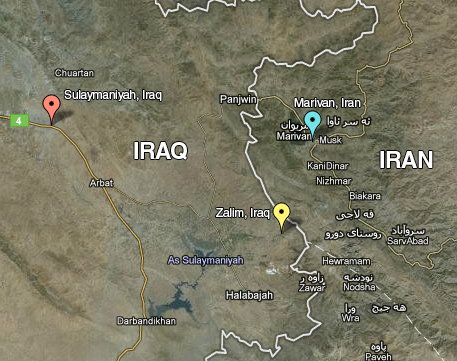
Since their arrest last July by Iranian forces near the Iraq border, three Americans—Shane Bauer, Josh Fattal and Sarah Shourd—have been at the center of a high-stakes diplomatic struggle between Tehran and Washington. Iranian authorities have repeatedly accused the three of entering Iran to conduct espionage.
Meanwhile, friends and family of the three, along with the State Department, the Committee to Protect Journalists and this magazine [Bauer has written for The Nation; see "Iraq’s New Death Squad," June 22, 2009], have rejected the spying charge and suggested that the Americans accidentally crossed the border while on a recreational hike. Despite a well-publicized visit by the detainees’ mothers in May, Iran has released little information about the circumstances of their arrest or the status of their case.
Now a five-month investigation by The Nation and the Investigative Fund at The Nation Institute has located two witnesses to the arrest who claim that Bauer, Fattal and Shourd were on Iraqi territory when they were arrested—not in Iran, as Iranian officials have asserted. Two additional sources report that the Revolutionary Guards officer who likely ordered their detention has since been arrested on charges of smuggling, kidnapping and murder.
The witnesses are residents of a Kurdish village in Iraq called Zalem, which lies a few miles from the Iran border; they declined to be identified, fearing retaliation from Iranian forces, who have been known to conduct missions across the border. The witnesses separately reported noticing the three Americans as they hiked up a mountain in the scenic Khormal region, which straddles the border. Part of the mountain lies in Iraq and part in Iran, but except for a few watchtowers and occasional signposts, the border here is largely unmarked, although local residents are familiar with its boundaries.
The witnesses, who followed the Western-looking hikers out of curiosity, say that around 2 pm on July 31, as the hikers descended the mountain, uniformed guards from NAJA, Iran’s national police force, waved the hikers toward the Iranian side using "threatening" and "menacing" gestures. When their calls were ignored, one officer fired a round into the air. As the hikers continued to hesitate, the guards walked a few yards into Iraqi territory, where they lack jurisdiction, and apprehended them.
These witness accounts corroborate a statement Bauer made on May 20 during a televised reunion at a Tehran hotel between the hikers and their mothers. As the New York Times reported, Bauer "denied that they had walked into Iran, as they were accused of doing, before stopping himself and saying, ‘We can’t really talk about that.’"
Farhad Lohoni, a local tribal leader, had previously claimed that the American hikers had been snatched from Iraq in a cross-border raid by Iranian agents, as reported in the Daily Telegraph in August 2009. Lohoni said that his relatives had seen a group of men cross the border into Iraq, and he told the Telegraph that the hikers "were targeted and captured by a group that came over from Iran, ignoring Iraq’s sovereignty. We know this and it means that Iran must have wanted to take Americans hostage at this sensitive time."
A State Department spokesman said that he had been unaware of evidence that the three were arrested in Iraqi territory but would not comment further.
Once captured, Bauer, Fattal and Shourd were sped by car to the local headquarters of the Iranian Revolutionary Guards in Marivan, a town close to the border in the province of Kurdistan. When they arrived, according to two sources, the Americans were remanded into the custody of Lt. Col. Heyva Taab, then head of the Revolutionary Guards’ intelligence unit in the region. According to these sources—a former member of the Revolutionary Guards and an official who serves in the provincial government at Sanandaj—only Taab would have had the authority to order the Americans’ detention and eventual transfer to Tehran. A branch of the Iranian military with at least 125,000 personnel, the Revolutionary Guards are responsible for maintaining national security throughout the Islamic Republic.
"When I heard the news that they had arrested American hikers, I immediately thought, This is the work of the intelligence arm of the Revolutionary Guards, because they have people in this region," says Idris Ahmedi, an Iranian Kurdish exile and a regional expert who is a visiting scholar at Georgetown University. "I thought they were most likely lured into Iranian Kurdistan, where they could arrest them. It is consistent with Iran’s past actions."
Less than a month later, in late August 2009, Taab himself was arrested and charged with the July 6 murder of the son of Mostafa Shirzadi, the Imam Joma (Friday prayer leader) of Marivan, an influential cleric in the region. Shirzadi’s nephew was also allegedly killed by Taab. Since his arrest Taab has been implicated in a vast criminal enterprise encompassing a profitable smuggling operation and dozens of murders, rapes and kidnappings. According to the Sanandaj official, numerous lawsuits, perhaps hundreds, have been filed against Taab in Kurdistan, alleging libel, theft, rape, kidnapping and murder. Taab’s case has twice been before a judge, and he awaits execution in a Tehran prison.
Although the state-run Iranian press has not reported on Taab’s crimes, they were made public in a series of articles in January and February by a Kurdish news site, Kurdistan Va Kurdnews, run by the Kurdistan Democratic Party. A February 17 article describes Taab as the head of a "criminal band" and reports that Taab and seven accomplices were under arrest by the Revolutionary Guards for their role in a vast number of illegal killings.
Several sources describe Taab as the central power in Kurdistan province. According to locals and experts, control of the border lies in the hands of the Revolutionary Guards, in particular their intelligence unit, Etelaat Sepah, whose local division had been commanded by Taab for about five years. "At this point it’s really the Sepah, the Revolutionary Guards, that are in charge, especially in the western provinces, especially because the Americans are on the other side, in Iraq," says Kaveh Ehsani, an assistant professor of international studies at DePaul University and an Iran expert who serves as a contributing editor to the journal Middle East Report. "On the surface the security force [NAJA] is in charge, but it really is the Revolutionary Guards that control the borders."
It is a region where, according to several Iran experts, smuggling and cross-border traffic are routine. The Iraq-Iran border is "relatively porous because it’s mountainous," says Faraz Sanei, an Iran researcher at Human Rights Watch, which issued a report last year on political freedom in Iranian Kurdistan. Sanei describes the border as a common escape route for dissidents—journalists, human rights advocates and Iranian Kurds—as well as a commonly used trade route for goods. "Smuggling is something that has taken place and continues to take place there, whether it be of goods or of humans across the border. It’s something that happens quite often."
Soon after Taab took charge of the Sepah in the northwestern quadrant of Kurdistan, he began to enrich himself off the black-market border economy. According to the Sanandaj official and the former Revolutionary Guards officer, who had firsthand knowledge of Taab’s activities, Taab’s first scheme involved selling merchandise confiscated from petty smugglers, known as koolbars, who traffic consumer goods across the border (a trade depicted in the Iranian film A Time for Drunken Horses, which won the Caméra d’Or at Cannes in 2000).
The region is also home to a variety of Kurdish nationalist groups that have been demanding autonomy from the central Tehran government. One of these, the Party for Free Life in Kurdistan (PJAK), is affiliated with the Kurdistan Workers’ Party, a Kurdish separatist organization that engages in armed conflict within Turkey and has been labeled a terrorist organization by the United States and other governments. Since 2005 PJAK, based in the mountains in Kurdish Iraq, has been in open conflict with Tehran and has claimed responsibility for killing dozens of Revolutionary Guards soldiers in cross-border raids on Iranian military bases, as well as for the February 2007 downing of an Iranian military helicopter by a shoulder-launched missile in Khoy, in Western Azerbaijan province, which killed thirteen Iranian soldiers.
It has been speculated that some of these Kurdish militants enjoy US support. In April 2006, Representative Dennis Kucinich wrote a letter to President Bush questioning whether the US government was "fomenting opposition and supporting military operations in Iran among insurgent groups and Iranian ethnic minority groups, some of whom are operating from Iraq." Kucinich named two groups, including PJAK. In November of that year, Seymour Hersh reported in The New Yorker that "Israel and the United States have also been working together in support of a Kurdish resistance group known as the Party for Free Life in Kurdistan," and that a government consultant told him that the Israeli government had provided "equipment and training" to PJAK.
The United States and Israel have denied any involvement with PJAK. Still, these allegations of support have gained substantial traction inside Iran and may have undergirded Taab’s decision to detain Bauer, Fattal and Shourd as well as the repeated public charges of espionage against the three. In early April, for instance, Iranian Intelligence Minister Heydar Moslehi told Iran’s Press TV that "it is quite obvious to us that the three Americans arrested in Iran last year had links with Western and Israeli intelligence services."
The Iranian government has retaliated against rising Kurdish militancy by launching a counteroffensive on PJAK, inside Iran and across the border in Iraq. In August 2007, for example, Iranian soldiers crossed into Iraq and attacked several villages, McClatchy reported. Most recently, on June 4, officials in Iraq’s semiautonomous Kurdish region alleged that "a small unit of Iranian soldiers," including a tank and several other vehicles, had penetrated more than a mile into Iraqi Kurdistan’s Arbil province in search of Kurdish rebels.
Until his arrest, Taab was a key player in Iran’s counteroffensive. The former Revolutionary Guards officer says that several current members of the Guards told him that Taab’s stated goal was to "completely wipe out PJAK" in his jurisdiction. According to Ahmedi, the scholar at Georgetown, Taab was involved in recent cross-border assassinations of Iranian Kurds in Iraqi Kurdistan. The Kurdish weekly Awena reported that Taab and his unit assassinated two Kurds on December 15, 2008.
According to the former officer and the Sanandaj official, Taab’s criminal enterprise grew beyond smuggling in 2007, when he made his first forays into murder. Koolbars, the petty border smugglers, are often killed by land mines or fatally shot by border police. So Taab concocted a scheme to kidnap koolbars as well as ordinary unemployed Iranian Kurdish civilians, dress them in the uniforms of PJAK insurgents and then kill them—claiming they’d died in a military clash—in order to collect a bounty, as high as $40,000 a head, from his superiors in the Revolutionary Guards. He was assisted in this plot by at least nine others, seven of whom have been apprehended. The article in Kurdistan Va Kurdnews named all seven, including Haji Majid Muqimiyan of Kermansha, identified as a ringleader.
PJAK has officially denied involvement in these border clashes, including in a May 3, 2009, post to the Iranian website Tabnak, which is published by Mohsen Rezai, a former head of the Revolutionary Guards. Many of the PJAK clashes may, in fact, have been "bogus," said the Sanandaj official. "More or less no clashes with PJAK have been reported in the area since Heyva Taab and his gang were busted."
A mother of one koolbar tearfully described her son’s disappearance. She said he went missing the same day in early 2009 that the government later claimed a clash with PJAK had taken place. The woman, a resident of a border town in Iranian Kurdistan, is a plaintiff in one of the lawsuits against Taab; she asked that her name and location not be mentioned, for fear that it would harm her case in court.
Taab’s scheme was wildly successful, according to the Sanandaj official, who said one bank account under Taab’s name has had nearly $6 million deposited in it since 2008. This macabre scheme ended only in the spring of 2009, when Taab killed a local official’s brother who was seeking work in the area and, more decisively, last July when he killed the cleric’s son.
On June 11 Mohammad Javad Larijani, secretary general of Iran’s High Council for Human Rights, said that the government’s investigation was nearly complete and a trial for Bauer, Fattal and Shourd "should not be very far from now." In a statement issued on June 17, the mothers of the hikers called on Iran either to prosecute or release their children. "Iran has no legitimate reason at this stage not to release them or move forward with a fair trial in which our children can openly answer any allegations against them."
"These new revelations, if indeed true, show the hikers have been victims of political machinations and manipulation," said Hadi Ghaemi, executive director of the International Campaign for Human Rights in Iran. "The fact that they have been held for so long without prosecution strongly supports this trend. Under Iranian laws, they have committed no crime and should be released immediately. Their Iranian lawyer, who has studied the judicial files against them, has consistently maintained the only charge against them is illegal entry, which is subject to a fine and not arbitrary detention for so long. With this new information, even that charge appears fabricated, and there is no basis for holding them."
As of the press date, Shane Bauer, Josh Fattal and Sarah Shourd have been detained by Iran for ten months and twenty-three days.

