

1915–1925: Radicals in a Time of Hysteria 1915–1925: Radicals in a Time of Hysteria
Looking forward to a social order without any external restraints upon the individual.
Mar 23, 2015 / Feature / The Nation

When Respectability Was No Longer Respectable, and Virtue Required Acting Out, Not Leaning In When Respectability Was No Longer Respectable, and Virtue Required Acting Out, Not Leaning In
Spelman College girls are still “nice,” but not enough to keep them from walking up and down, carrying picket signs, in front of supermarkets in the heart of Atlanta.
Mar 23, 2015 / Feature / Howard Zinn and Paula J. Giddings

There Cannot Be Peace and Security Until the Cause of Palestinian Suffering Is Addressed There Cannot Be Peace and Security Until the Cause of Palestinian Suffering Is Addressed
There is a racist premise underpinning the “peace process” that Arab lives aren’t worth as much as Jewish lives.
Mar 23, 2015 / Books & the Arts / Edward W. Said
The Plain Sense of Things The Plain Sense of Things
December 6, 1952 After the leaves have fallen, we return To a plain sense of things. It is as if We had come to an end of the imagination, Inanimate in an inert savoir. It is difficult even to choose the adjective For this blank cold, this sadness without cause. The great structure has become a minor house. No turban walks across the lessened floors. The greenhouse never so badly needed paint. The chimney is fifty years old and slants to one side. A fantastic effort has failed, a repetition In a repetitiousness of men and flies. Yet the absence of the imagination had Itself to be imagined. The great pond, The plain sense of it, without reflections, leaves, Mud, water like dirty glass, expressing silence Of a sort, silence of a rat come out to see, The great pond and its waste of the lilies, all this Had to be imagined as an inevitable knowledge, Required, as a necessity requires. This article is part of The Nation’s 150th Anniversary Special Issue. Download a free PDF of the issue, with articles by James Baldwin, Barbara Ehrenreich, Toni Morrison, Howard Zinn and many more, here. Wallace Stevens (1879–1955) published ten poems in The Nation between 1936 and 1952.
Mar 23, 2015 / Books & the Arts / Wallace Stevens
The Mind Is an Enchanting Thing The Mind Is an Enchanting Thing
December 18, 1943 is an enchanted thing like the glaze on a katydid-wing subdivided by sun till the nettings are legion. Like Gieseking playing Scarlatti; like the apteryx-awl as a beak, or the kiwi’s rain-shawl of haired feathers, the mind feeling its way as though blind, walks along with its eyes on the ground. It has memory’s ear that can hear without having to hear. Like the gyroscope’s fall, truly unequivocal because trued by regnant certainty, it is a power of strong enchantment. It is like the dove- neck animated by sun; it is memory’s eye; it’s conscientious inconsistency. It tears off the veil, tears the temptation, the mist the heart wears, from its eyes—if the heart has a face; it takes apart dejection. It’s fire in the dove-neck’s iridescence; in the inconsistencies of Scarlatti. Unconfusion submits its confusion to proof; it’s not a Herod’s oath that cannot change. This article is part of The Nation’s 150th Anniversary Special Issue. Download a free PDF of the issue, with articles by James Baldwin, Barbara Ehrenreich, Toni Morrison, Howard Zinn and many more, here. Marianne Moore (1887–1972) wrote eleven essays and seven poems for The Nation between 1936 and 1952. Moore’s biographer, Linda Leavell, indicates that she stopped contributing out of solidarity with her friend, ousted literary editor Margaret Marshall, but also because she disliked The Nation’s criticism of Eisenhower’s “honest, auspicious, genuinely devoted speeches.”
Mar 23, 2015 / Books & the Arts / Marianne Moore

150 Years of Telling the Truth 150 Years of Telling the Truth
Independence—one of the keys to The Nation’s longevity—has become ever more important in an age that urgently needs dissident and rebellious voices.
Mar 23, 2015 / Katrina vanden Heuvel

March 21, 1980: Carter Announces US Boycott of the Moscow Olympics March 21, 1980: Carter Announces US Boycott of the Moscow Olympics
The Nation supported the boycott, but not for Carter’s reasons.
Mar 21, 2015 / Richard Kreitner and The Almanac
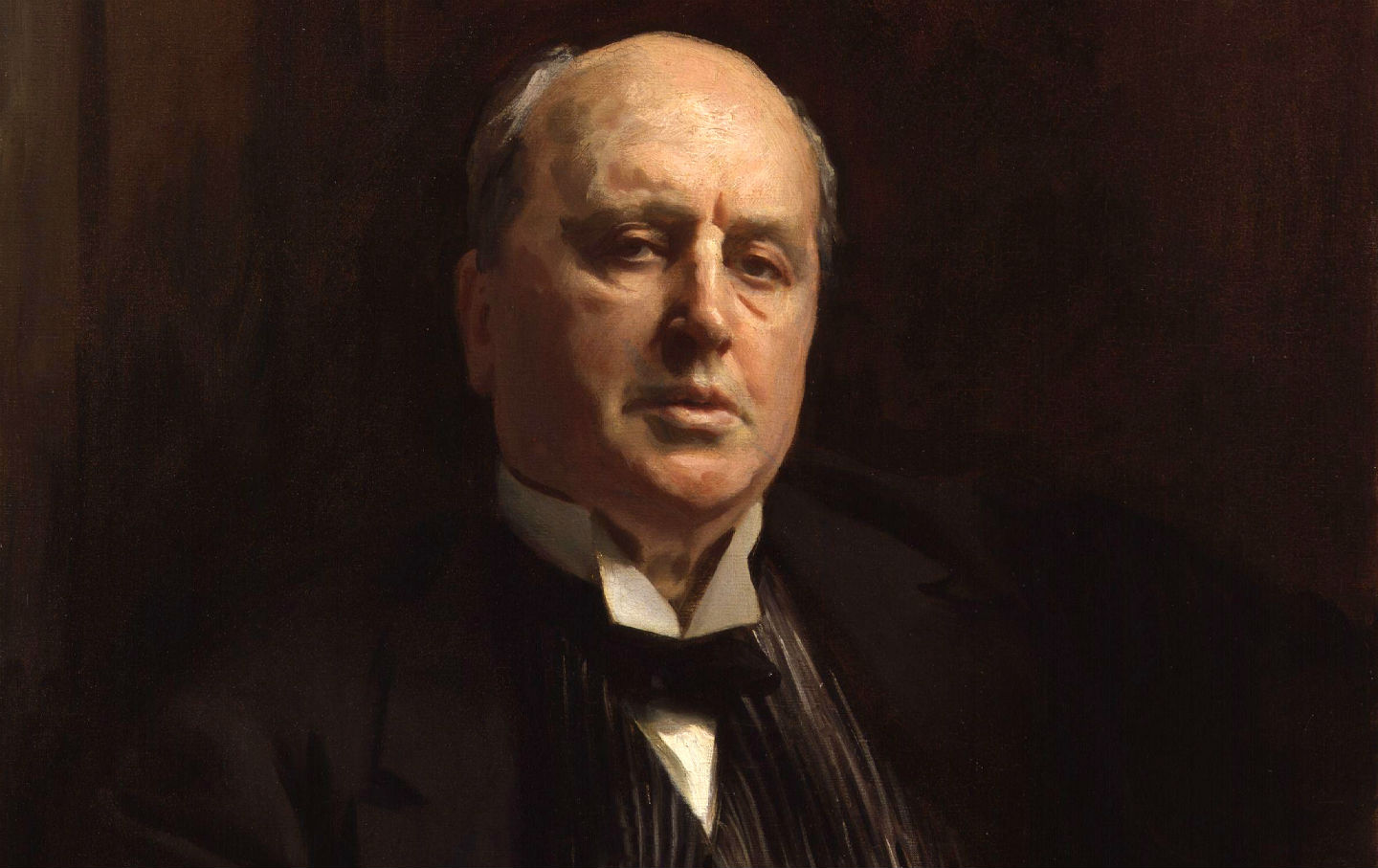
Or to Put It Another Way: 100 Years Ago, We Were Already 50 Years Old Or to Put It Another Way: 100 Years Ago, We Were Already 50 Years Old
The Nation’s archives, Henry James wrote in our fiftieth anniversary issue, “compose the record of the general life of civilization.”
Mar 18, 2015 / Richard Kreitner and Back Issues

1975–1985: Standing in Solidarity Against Jackbooted Oppressors 1975–1985: Standing in Solidarity Against Jackbooted Oppressors
It is nonsensical that those who support free-market economic policy should pretend to reject the system of terror it requires to succeed.
Feb 23, 2015 / Books & the Arts / The Nation

February 20, 2005: Hunter S. Thompson Dies February 20, 2005: Hunter S. Thompson Dies
The Nation gave Thompson his first big break in journalism in 1965.
Feb 20, 2015 / Richard Kreitner