
Tight Rope Tight Rope
July 13, 1963 We live in fragments like speech. Like the fits of wind, shivering against the window. Pieces of meaning, pierced and strung together. The bright bead of the poem, the bright bead of your woman’s laughter. This article is part of The Nation’s 150th Anniversary Special Issue. Download a free PDF of the issue, with articles by James Baldwin, Barbara Ehrenreich, Toni Morrison, Howard Zinn and many more, here. The Nation was one of the first major publications to print LeRoi Jones’s work, including his 1964 essay on the fight between Cassius Clay and Sonny Liston. Jones (1934–2014) later changed his name to Amiri Baraka.
Mar 23, 2015 / Books & the Arts / LeRoi Jones
Parting Parting
December 7, 1963 White morning flows into the mirror. Her eye, still old with sleep, meets itself like a sister. How they slept last night, the dream that caged them back to back, was nothing new. Last words, tears, most often come wrapped as the everyday familiar failure. Now, pulling the comb slowly through her loosened hair, she tries to find the parting; it must come out after all: hidden in all that tangle there is a way. This article is part of The Nation’s 150th Anniversary Special Issue. Download a free PDF of the issue, with articles by James Baldwin, Barbara Ehrenreich, Toni Morrison, Howard Zinn and many more, here. Over a half-century, Adrienne Rich (1929–2012) wrote twenty-two poems for The Nation and several reviews and essays, including a 2002 piece exploring the meaning of “antiwar.”
Mar 23, 2015 / Books & the Arts / Adrienne Rich
The Starry Night The Starry Night
September 2, 1961 “That does not keep me from having a terrible need of—shall I say the word—religion. Then I go out at night to paint the stars.” —Vincent Van Gogh, in a letter to his brother The town does not exist except where one black haired tree slips up like a drowned woman into the hot sky. The town is silent. The night boils with eleven stars. Oh starry starry night! This is how I want to die. It moves. They are all alive. Even the moon bulges in its orange irons to push children, like a god, from its eye. The old unseen serpent swallows up the stars. Oh starry starry night! This is how I want to die: into the rushing beast of the night, sucked up by that great dragon, to split from my life with no flag, no belly, no cry. This article is part of The Nation’s 150th Anniversary Special Issue. Download a free PDF of the issue, with articles by James Baldwin, Barbara Ehrenreich, Toni Morrison, Howard Zinn and many more, here. Anne Sexton (1928–1974) won the Pulitzer Prize for poetry in 1967 for Live or Die.
Mar 23, 2015 / Books & the Arts / Anne Sexton
The Plain Sense of Things The Plain Sense of Things
December 6, 1952 After the leaves have fallen, we return To a plain sense of things. It is as if We had come to an end of the imagination, Inanimate in an inert savoir. It is difficult even to choose the adjective For this blank cold, this sadness without cause. The great structure has become a minor house. No turban walks across the lessened floors. The greenhouse never so badly needed paint. The chimney is fifty years old and slants to one side. A fantastic effort has failed, a repetition In a repetitiousness of men and flies. Yet the absence of the imagination had Itself to be imagined. The great pond, The plain sense of it, without reflections, leaves, Mud, water like dirty glass, expressing silence Of a sort, silence of a rat come out to see, The great pond and its waste of the lilies, all this Had to be imagined as an inevitable knowledge, Required, as a necessity requires. This article is part of The Nation’s 150th Anniversary Special Issue. Download a free PDF of the issue, with articles by James Baldwin, Barbara Ehrenreich, Toni Morrison, Howard Zinn and many more, here. Wallace Stevens (1879–1955) published ten poems in The Nation between 1936 and 1952.
Mar 23, 2015 / Books & the Arts / Wallace Stevens

No Place for Self-Pity, No Room for Fear No Place for Self-Pity, No Room for Fear
In times of dread, artists must never choose to remain silent.
Mar 23, 2015 / Feature / Toni Morrison
Present Present
December 28, 1964 The stranded gulch below Grand Central the gentle purr of cab tires in snow and hidden stars tears on the windshield torn inexorably away in whining motion and the dark thoughts which surround neon in Union Square I see you for a moment red green yellow searchlights cutting through falling flakes, head bent to the wind wet and frowning, melancholy, trying I know perfectly well where you walk to and that we’ll meet in even greater darkness later and will be warm so our cross of paths will not be just muddy footprints in the morning not like celestial bodies’ yearly passes, nothing pushes us away from each other even now I can lean forward across the square and see your surprised grey look become greener as I wipe the city’s moisture from your face and you shake the snow off onto my shoulder, light as a breath where the quarrels and vices of estranged companions weighed so bitterly and accidentally before, I saw you on the floor of my life walking slowly that time in summer rain stranger and nearer to become a way of feeling that is not painful casual or diffuse and seems to explore some peculiar insight of the heavens for its favorite bodies in the mixed-up air This article is part of The Nation’s 150th Anniversary Special Issue. Download a free PDF of the issue, with articles by James Baldwin, Barbara Ehrenreich, Toni Morrison, Howard Zinn and many more, here. This poem by Frank O’Hara (1926–1966) was published the same year his collection Lunch Poems brought him to fame.
Mar 23, 2015 / Books & the Arts / Frank O’Hara

The Great Chastening The Great Chastening
For Francis Fukuyama and John Dunn, our democratic crisis is the result of an intellectual failure.
Mar 4, 2015 / Books & the Arts / Thomas Meaney
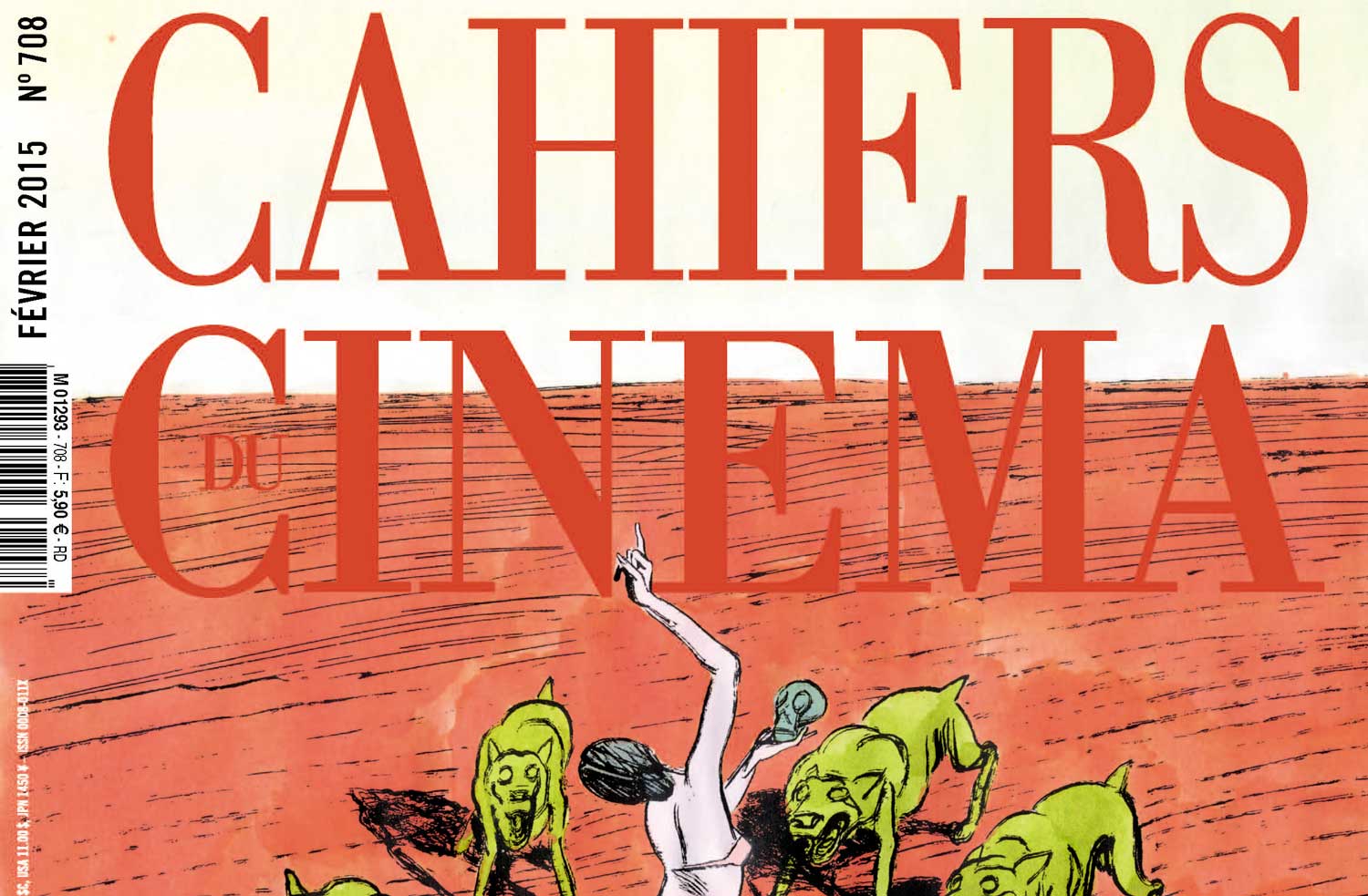
‘Insoumission’ ‘Insoumission’
The categorical imperative “Do Not Draw the Prophet” clashes with the thousand nuances of art.
Mar 4, 2015 / Books & the Arts / Stéphane Delorme
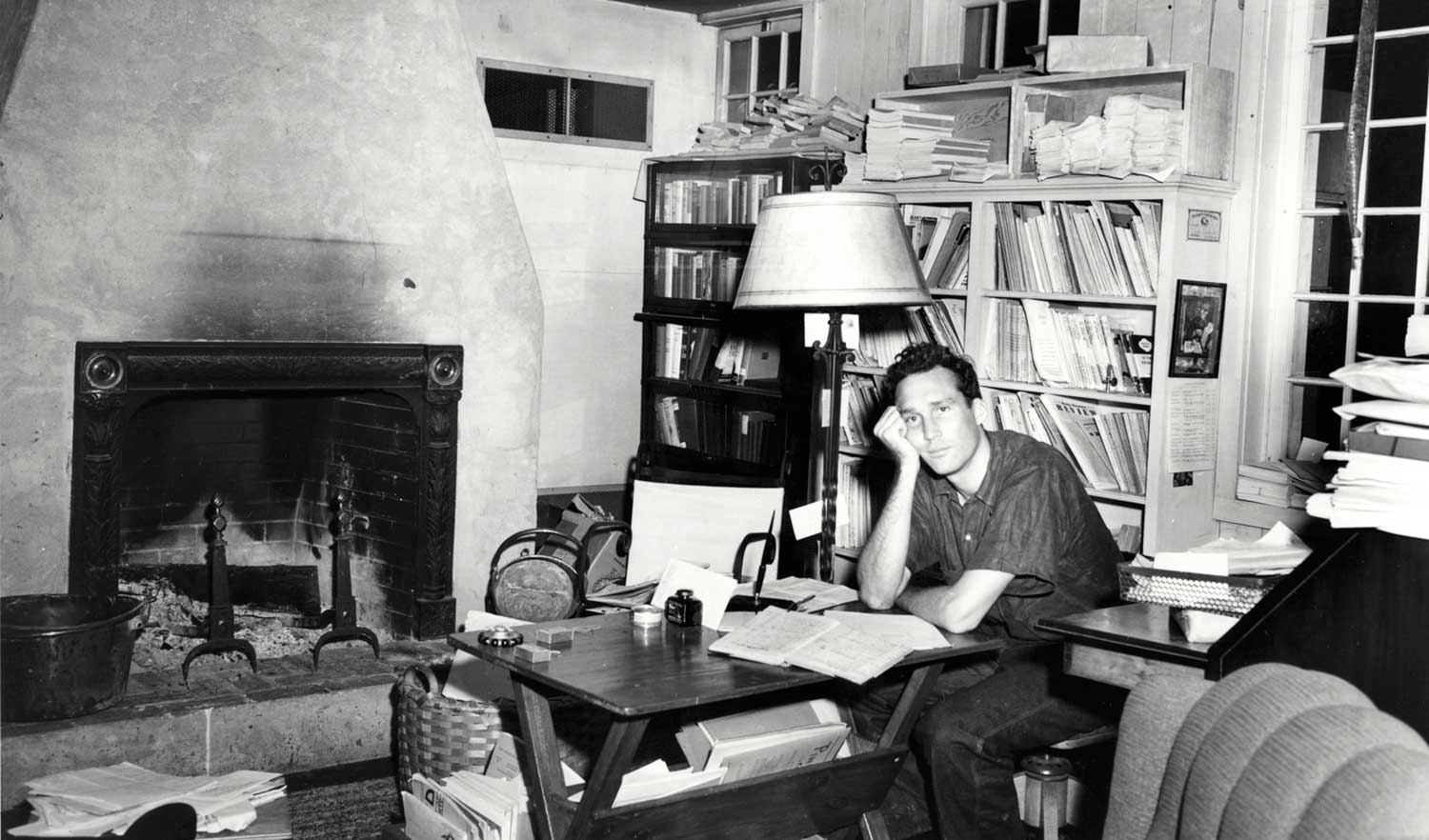
Impossible Standards Impossible Standards
The poems and a new biography of James Laughlin tells of his public success as a publisher and his private disappointments.
Mar 4, 2015 / Books & the Arts / Adam Plunkett
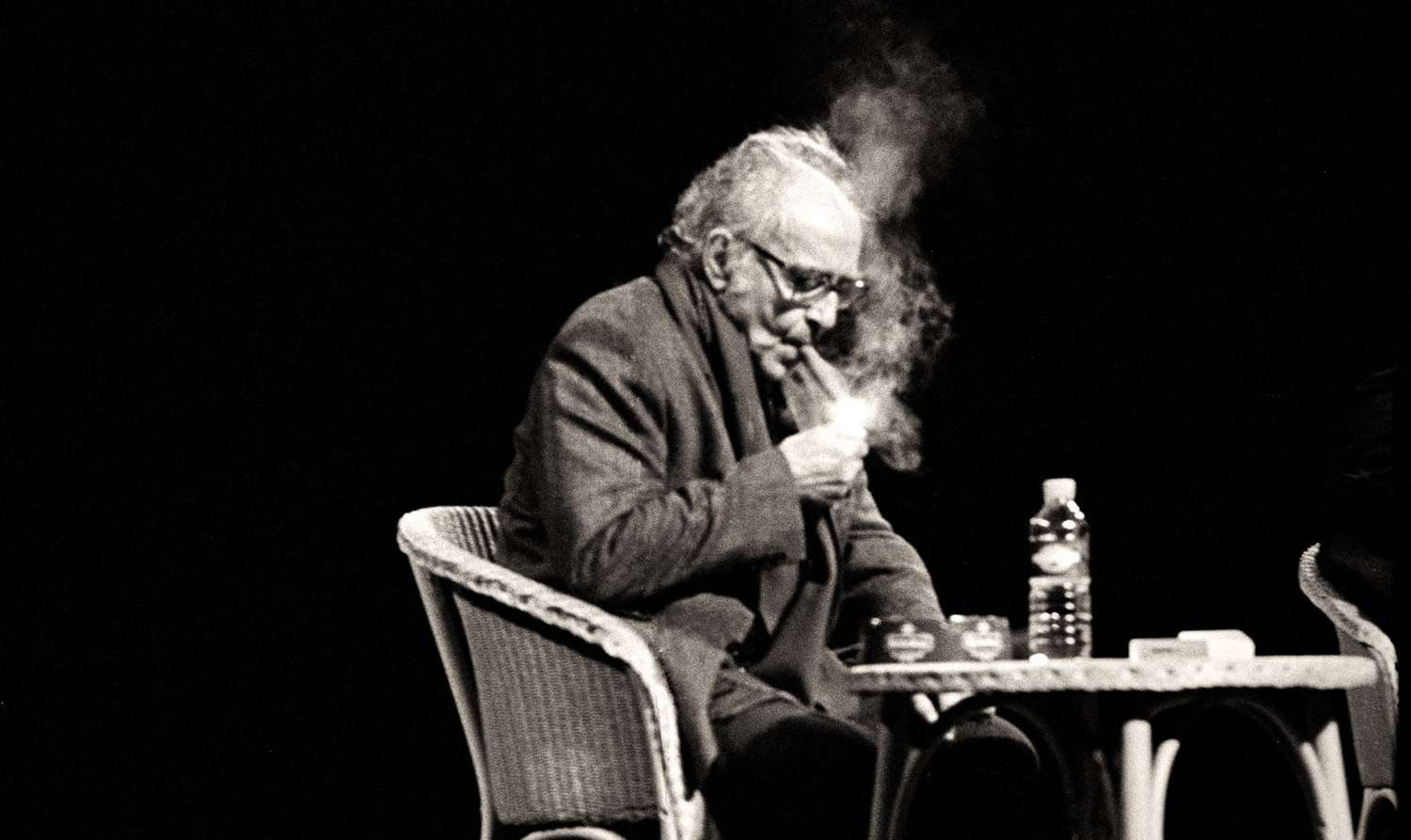
Jean-Luc Godard and the End of Cinema Jean-Luc Godard and the End of Cinema
The French director is still grappling with the collapsing culture of cinema while imagining its future incarnation.
Feb 25, 2015 / Books & the Arts / J. Hoberman