A Real Sharing Economy A Real Sharing Economy
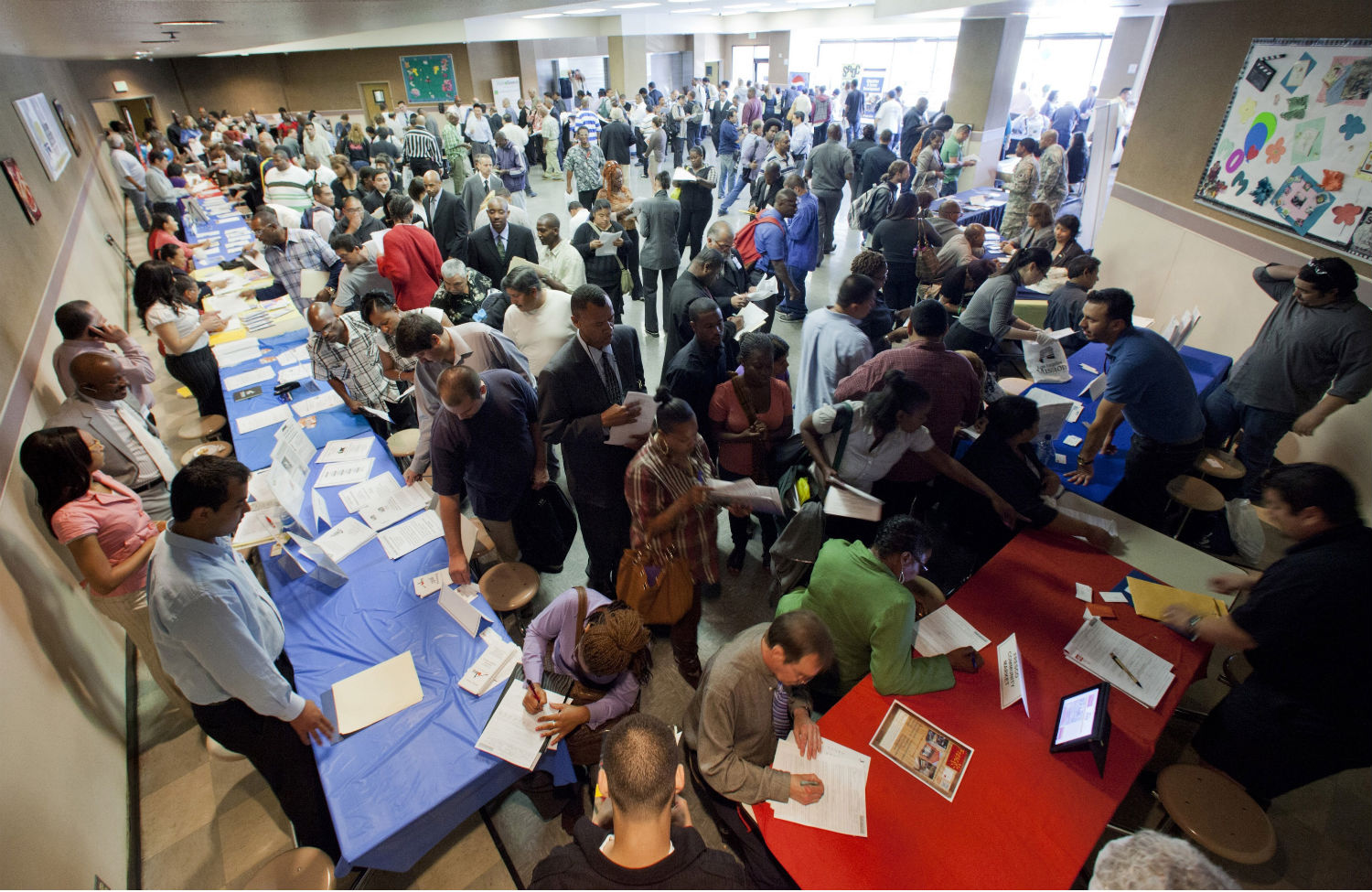
One of the overlooked problems driving our country’s jobs crisis isn’t unemployment—it’s just not having enough work. The shadow figure that lurks behind the unemployment rate is underemployment: people who want—and need—full-time work but are only able to find part-time hours, or who have gotten “discouraged” from job-seeking. Including those people, the broad measure of underemployment hovers around 12 percent. These days, people struggle full-time to juggle multiple part-time jobs, even as they suffer from the loss of healthcare and other social protections. They are overworked and underemployed. But it’s not that the underemployed simply want to work more; they also want to earn more. One way to square the lack of work with the need for income is work-sharing, which allows companies to distribute hours so that people work less, while ensuring that there’s still enough work to go around to prevent layoffs. For example, as explained in a new study by the National Employment Law Project, if a factory wants to cut its workforce by the equivalent of five employees, “Under work-sharing, the employer could instead reduce the hours of 25 employees by 20 percent, and those workers would receive a pro-rated [unemployment insurance] payment for their one day per week of unemployment, while maintaining any existing health and retirement benefits.” Cutting back hours typically harms workers, but what makes work-share less painful is that the government subsidizes the balance. About half of the fifty states have implemented some form of work-sharing, but now state lawmakers are approaching a year-end federal deadline to apply for funds. A bill to renew the legislation, the Layoff Prevention Act, is pending. Please support our journalism. Get a digital subscription for just $9.50! The central premise of work-sharing is that the state has a responsibility to support the restructuring of labor to protect workers. This is not a new idea: work-sharing is more widespread in European countries, particularly Belgium, Germany and Italy—and California introduced a statewide work-sharing program in the late 1970s. In the wake of the Great Recession, Washington passed legislation allowing states to use federally approved work-share programs to cope with epidemic levels of long-term joblessness. Politicians try to spin the economic crisis by talking about the need for “shared sacrifice”—code for coddling big business at the expense of workers. Now that Washington is offering a small way to redistribute workers’ time without sacrificing all their income, states have a chance to really put their money where their mouth is. Read Next: Peter Van Buren on the new minimum-wage economy
Oct 22, 2014 / Michelle Chen

Kailash Satyarthi’s Heroism Kailash Satyarthi’s Heroism
The Indian Nobel Peace Prize winner has repeatedly risked his life fighting child labor and sweatshop abuses.
Oct 22, 2014 / Robin Broad and John Cavanagh
On the Reappearance of Kim Jong-un On the Reappearance of Kim Jong-un
At last there was a glimpse of Kim. And he looked fit, though still not slim. For some, the sight of Kim was grim: They’d hoped they’d seen the back of him.
Oct 22, 2014 / Column / Calvin Trillin

Can Student Credit Unions Solve the College Affordability Problem? Can Student Credit Unions Solve the College Affordability Problem?
A lesson in how to provide banking centered on people's needs and not on profit for its investors, the Columbia credit union might well ripple well beyond the Morningside campu...
Oct 22, 2014 / StudentNation / Hélène Barthélemy

They Need Him, So Why Was Michael Sam Cut From the Dallas Cowboys? They Need Him, So Why Was Michael Sam Cut From the Dallas Cowboys?
Michael Sam’s efforts to become the first openly gay player in NFL history took a massive hit on Tuesday, with news that he was being cut from the Dallas Cowboys.
Oct 22, 2014 / Dave Zirin

Exclusive Excerpt: How Pro-Choicers Can Take Back the Moral High Ground Exclusive Excerpt: How Pro-Choicers Can Take Back the Moral High Ground
It’s time to claim abortion rights as a social good.
Oct 21, 2014 / Feature / Katha Pollitt

How Mitch McConnell Is Bending Every Last Campaign Finance Rule How Mitch McConnell Is Bending Every Last Campaign Finance Rule
Post–Citizens United, candidates aren’t supposed to coordinate with “outside” spending groups—but even that minimal restriction isn’t being enforced.
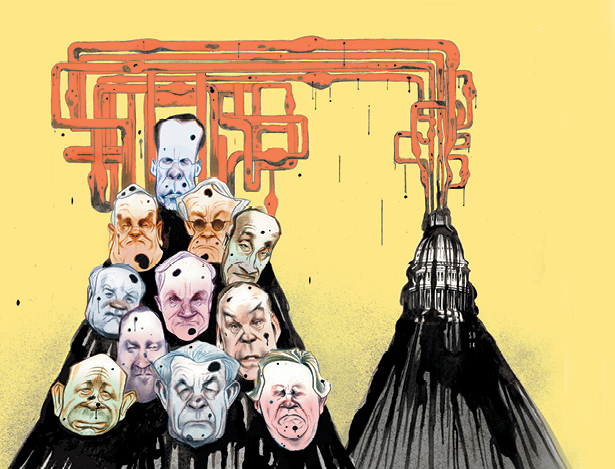
The Tar Sands Pipeline of Politics The Tar Sands Pipeline of Politics
Corporations have directed a gusher of money to climate-change deniers in Congress.
Oct 21, 2014 / Feature / Steve Brodner

Will Catalonia Secede From Spain? Will Catalonia Secede From Spain?
Catalans are fed up with Madrid’s austerity and corruption—making November’s referendum nonbinding has only postponed the confrontation.
Oct 21, 2014 / Feature / Andy Robinson

Comix Nation Comix Nation
Oct 21, 2014 / Jen Sorensen