

Our Vanished Civil Liberties Our Vanished Civil Liberties
The Obama administration may not employ lawyers advocating for extreme abrogations of constitutional protections, but it frequently ends up acquiescing to the political right.
Aug 30, 2011 / Feature / David K. Shipler

Epitaph for Another September 11 Epitaph for Another September 11
Chile and the United States offer contrasting models of how to react to a collective trauma.
Aug 30, 2011 / Books & the Arts / Ariel Dorfman
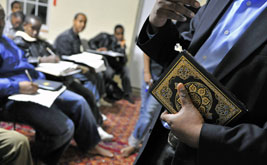
The FBI’s ‘Good’ Muslims The FBI’s ‘Good’ Muslims
Community partnerships are seen as a softer counterterrorism. But who are the partners?
Aug 30, 2011 / Feature / Arun Kundnani
Teaching Peace Teaching Peace
If peacemaking is teachable, why are school so reluctant to offer classes in peace studies?
Aug 30, 2011 / Books & the Arts / Colman McCarthy
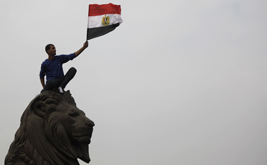
The Arab Awakening The Arab Awakening
Throughout the Arab world, we are witnessing nothing less than the awakening of several phenomena that are critical for stable statehood.
Aug 24, 2011 / Feature / Rami G. Khouri

Syria’s Assad on the Ropes? Syria’s Assad on the Ropes?
If the Syrian dictator falls, there could be a bloody sectarian settling of accounts.
Aug 24, 2011 / Feature / Patrick Seale
Democracy 101 for Egypt Democracy 101 for Egypt
Can Egyptians turn the fervor of Tahrir into lasting political engagement?
Aug 24, 2011 / Feature / Alia Malek

Fault Lines in Egypt’s Muslim Brotherhood Fault Lines in Egypt’s Muslim Brotherhood
Seemingly within reach of unprecedented power in a post-Mubarak Egypt, the group faces the prospect of implosion.
Aug 24, 2011 / Feature / Stephen Glain
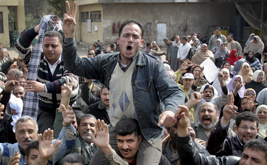
The Middle East’s Working-Class Revolutions? The Middle East’s Working-Class Revolutions?
The success of the insurgent movements throughout the region correlates well with the strength of organized labor.
Aug 24, 2011 / Feature / Joel Beinin
The Moroccan ‘Exception’ The Moroccan ‘Exception’
The king says his realm is a beacon of liberalism, but the people demand bread, and roses too.
Aug 24, 2011 / Feature / Laila Lalami