Beirut Gets a Reprieve—but for How Long?
If history is any guide, the latest Lebanese ceasefire may well have broken down by the time you read this.
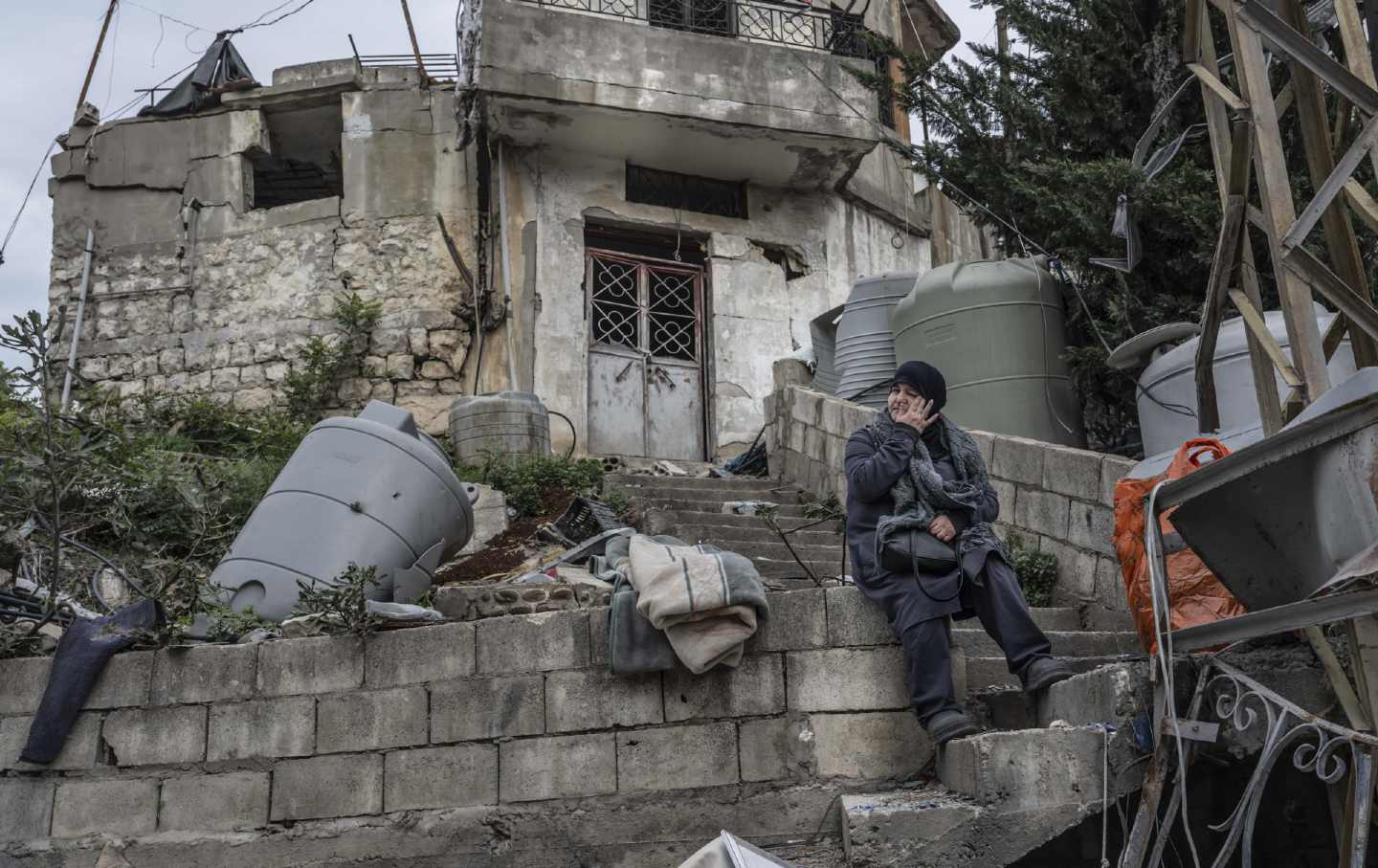
Whenever I hear the word “ceasefire” about Lebanon, I reach for my stopwatch. During the first phase of the civil war there, in 1975–76, we would give numbers to each successive ceasefire. Our tally ran out of steam after 100.
Each time, something—a Christian boy dating a Muslim boy’s sister, a car theft, a drug deal gone wrong, flying a party flag in the wrong neighborhood—would kick-start a fresh wave of violence. One of Beirut’s early front lines was a street between Christian and Muslim neighborhoods. Western journalists—of whom I, as a young stringer for various publications and radio networks, was barely one—left the St. George Hotel bar long enough to observe exchanges of fire, pick up a few quotes, gather some color, and file in time for dinner. Then we would wait for the next ceasefire.
The fighting escalated with the introduction of artillery and snipers, whose favored targets seemed to be women and children. There was a period when the violence paused at the end of each month. It took us a while to realize why: It was payday for the militiamen, who held their fire long enough for the banks to reopen. Checks cashed, they started firing again. I am not making this up.
Lebanon’s war has taken many forms since then: Israel against the Palestine Liberation Organization; Maronites against other Maronites; Maronites versus Druze; a faction of the Lebanese Army against the Syrian Army; the Shiite Amal militia against the Palestinians; Israel versus Syria; and the recurring conflict between Israel and Hezbollah. The one constant is the ceasefire: a false promise of peace that gives the belligerents a chance to regroup and rearm.
This history of broken truces provides the backdrop for the latest cessation of hostilities. Israeli and Lebanese officers signed their first ceasefire on March 23, 1949, at the seaside border village of Ras Naqoura. Lebanon had played a desultory part in the 1948 war, while Syria, Transjordan, and Egypt had fought more seriously. The United Nations’ General Armistice Agreement stipulated that Israel and Lebanon could position no more than 1,500 soldiers within 10 miles of their respective borders. That armistice held until 1967, when Israel conquered the West Bank from Jordan, the Golan Heights from Syria, and Gaza and the Sinai from Egypt. Those conquests nullified the 1949 armistice lines between Israel and the three belligerents. Israel abrogated its armistice with Lebanon as well, even though Lebanon had not taken part in the war. That left the border in legal limbo.
Next came Lebanon’s 1969 Cairo Agreement, which ceded control of the south to the Palestine Liberation Organization. PLO commandos were left free to pursue their “armed struggle” with the goal of returning refugees to the homes from which Israel had expelled them in 1948. Palestinian militants—who fled from Jordan after their Black September 1970 defeat at the hands of King Hussein’s army—made their headquarters in Lebanon. Israel invaded Lebanon in 1978, 1982, 2006, and 2024. Each invasion ended with a ceasefire—usually combined with toothless UN resolutions. In 1978, UN Security Council Resolutions 425 and 426 established the UN Interim Force in Lebanon (UNIFIL) “to confirm the withdrawal of Israeli forces from Lebanon, restore international peace and security, and assist the Lebanese Government to restore its effective authority in the area.” The Palestinians and Israelis, however, continued fighting, despite the presence of an average of 10,000 UN troops from as many as 48 countries.
Israel put an end to that, and to the PLO presence in Lebanon, with its 1982 invasion, imposing a fresh ceasefire with the May 17, 1983, agreement, which called for Israel’s withdrawal from Beirut and for cordial relations—practically a peace treaty. Syria and its Lebanese allies fought to reverse the accord, forcing Lebanon to revoke it. Israel remained in southern Lebanon, where it faced armed resistance from the newly formed Hezbollah and other Lebanese militias until 2000, when Israel withdrew and Hezbollah assumed effective control. Israel invaded again in 2006, which led to another ceasefire—and another unenforced UN resolution: 1701. War continued, culminating in Israel’s decimation of Hezbollah in late 2024, another invasion, and yes, another ceasefire.
The latest ceasefire calls for an end to “offensive” military operations and the deployment of 10,000 Lebanese Armed Forces troops in the south. The LAF has only 60,000 infantry troops—far fewer than Hezbollah or Israel. For 10,000 of these to attempt to confiscate Hezbollah’s weapons is fraught with danger. As a prominent Lebanese analyst explained, “Disarmament efforts, whether negotiated or forced, risk igniting sectarian conflict and undermining Lebanon’s fragile stability.” “Sectarian conflict” is code for civil war.
The LAF also has to protect against jihadi infiltration from Syria. Israel’s strikes against Syria in 2024 weakened Iran and the government forces in Syria sufficiently for the Islamists of Hay’at Tahrir al-Sham to conquer Aleppo and Damascus. In the meantime, Israel continues to bomb Lebanon, and Hezbollah has shelled northern Israel.
Brace yourself for the next ceasefire.