
Labour’s Historic Victory Belies Deep Fault Lines in British Politics
Keir Starmer has won a huge parliamentary majority—despite a fall in the Labour vote.
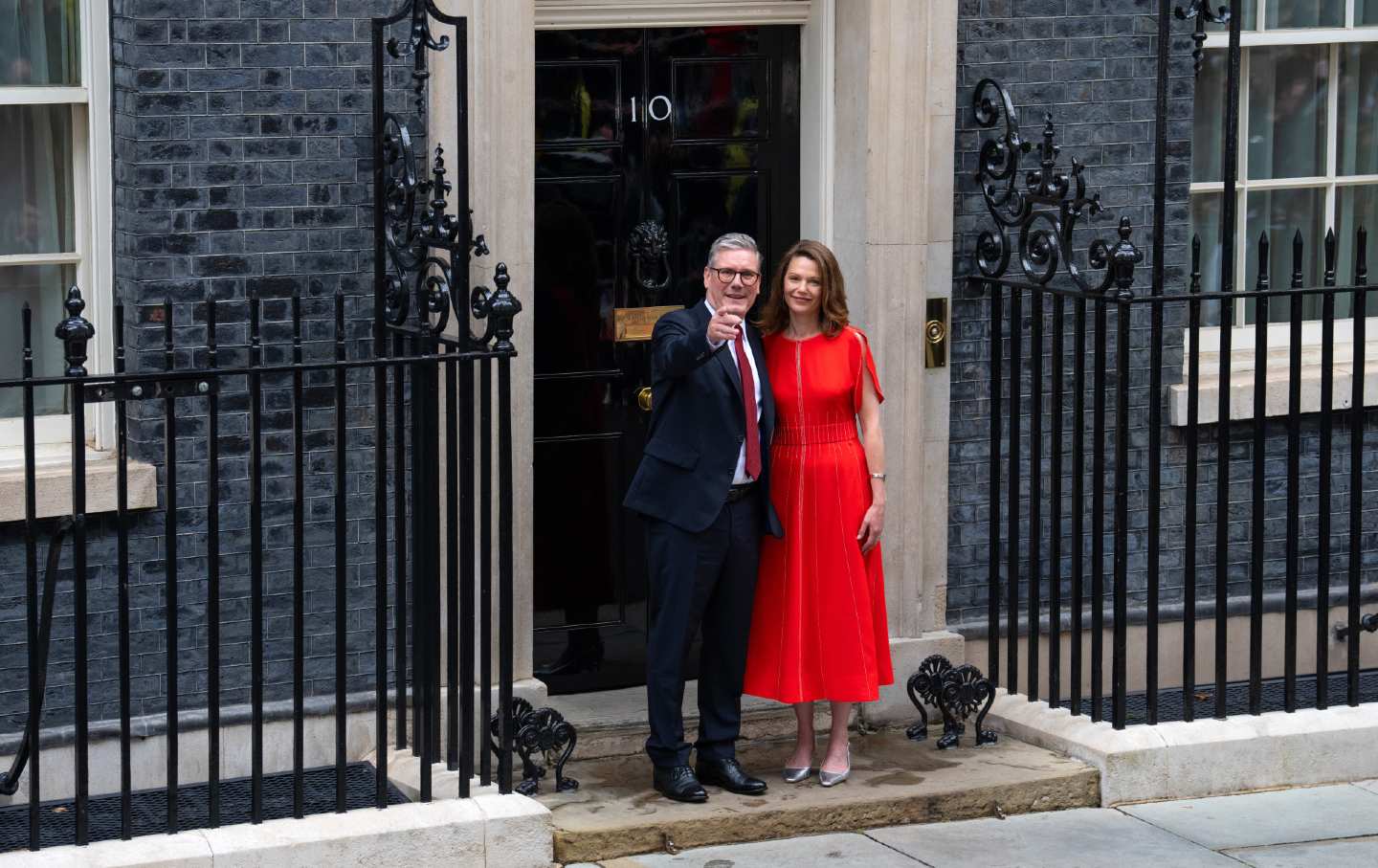
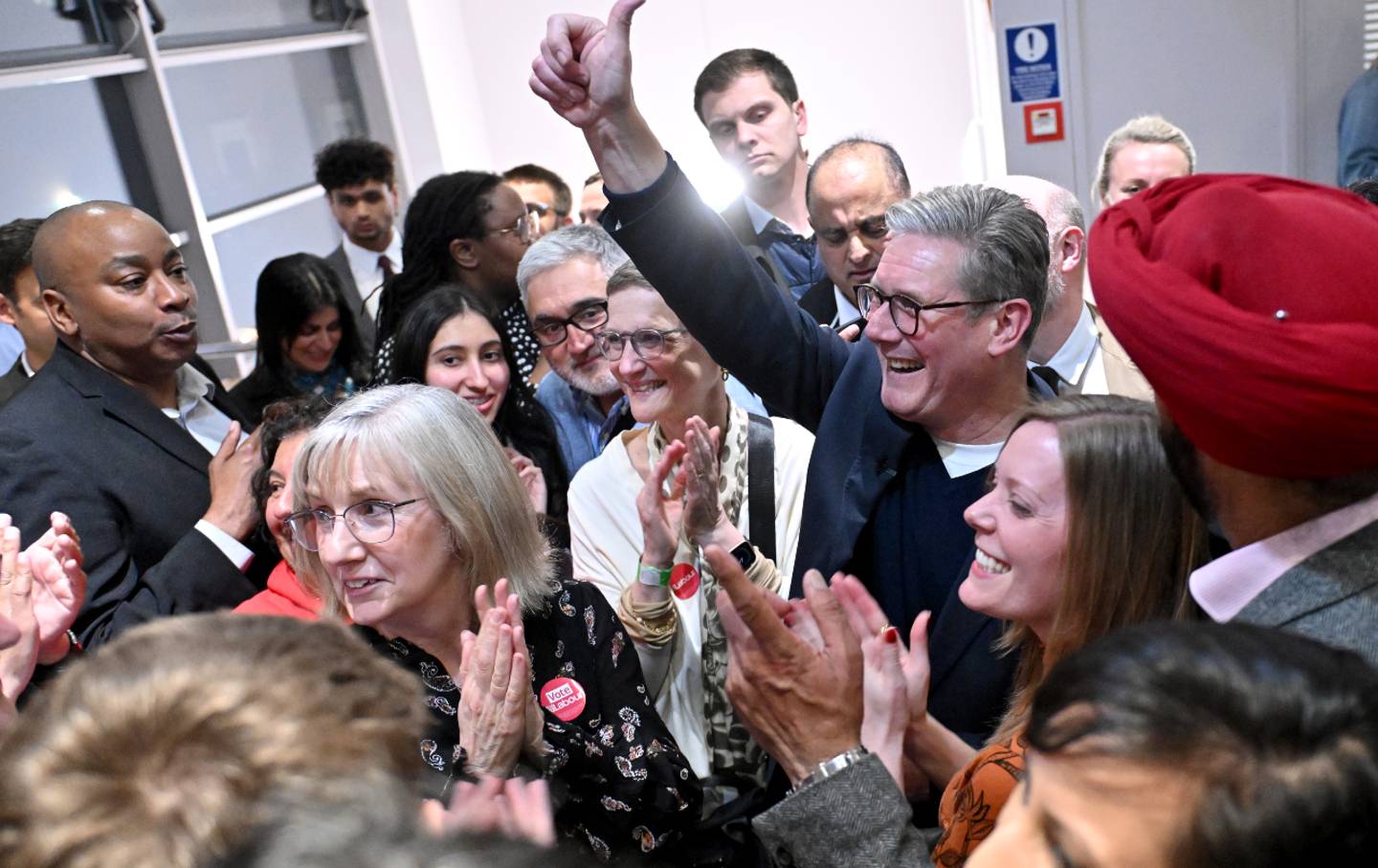
Britain’s general election saw the Labour Party achieve its biggest majority since 1997, yet it did so with less popular support (9.69 million votes) than in the last election in 2019 (10.27 million) when it suffered its worst defeat—in terms of seats in Parliament—since 1935. Even allowing for the usual vagaries of the first-past-the-post system in Westminster elections, this mismatch between votes and seats is extraordinary.
So, what happened? The electoral arithmetic is that Labour made huge gains primarily because Nigel Farage’s Reform UK party split the right-wing vote in Conservative-held seats. According to BBC pollster John Curtice, the Conservatives would have retained two-thirds of the seats they lost to Labour if their supporters had not defected to Reform.
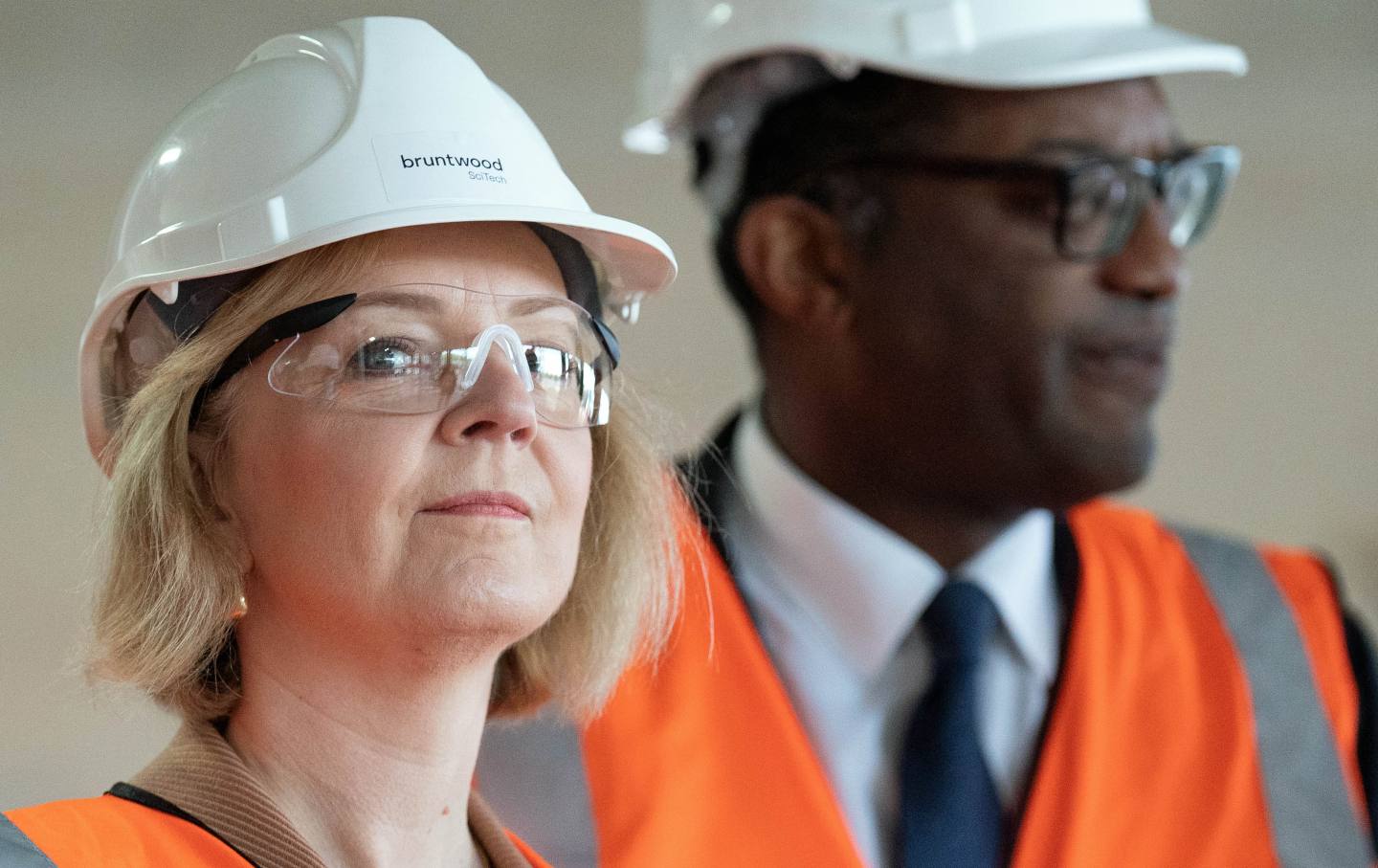
The conditions for this were created, however, well before election day. The credibility of the Conservatives had already plummeted thanks, mainly, to the antics of its previous leaders Boris Johnson, who broke Covid lockdown rules and then lied about it, and Liz Truss, who had to resign after only 45 days in office because her sweeping, unfunded tax cuts had triggered a financial crisis. Their successor as prime minister, Rishi Sunak, then made his own contribution to his party’s demise early in the election campaign by leaving the 80th anniversary of D Day celebrations in France early and being forced to apologize for insulting the frail veterans who had made the journey and stayed through the celebration.
These self-inflicted wounds—combined with Reform UK offering a right-wing alternative—meant that, while Labour’s vote share edged up only slightly from 32.1 percent in 2019 to 33.7 percent, the Conservative share sunk from 43.6 percent to 23.7 percent. Reform UK came third with 14.3 percent, followed by the Liberal Democrats with 12.2 percent and the Greens with 6.8 percent.
The disproportion between these vote shares and seats was stark: Labour now has 412 MPs, while the Conservatives have been reduced to 121. The Liberal Democrats lifted their seat tally from eight to 70, thanks to the relative geographical concentration of their support. Meanwhile, Reform UK—which mutated from the Brexit Party after the last election and did not have any sitting MPs—won only four seats, with one of those elected being Farage himself.
Even as Labour was picking up seats courtesy of the split in the right-wing vote, it was losing some in its heartland to candidates from the left. The Greens increased their representation from one to four MPs after winning nearly 2 million votes—more than double their 2019 tally—and an unprecedented five independents mustered enough support to beat the Labour party machine. The latter included Jeremy Corbyn, who was blocked from being a candidate by the party he previously led—but then stood anyway and retained his Islington North seat by a large majority. The other four successful independents stood specifically to protest Starmer’s stance on Palestine, which has shifted only marginally since last October when he defended Israel’s cutting off water and power to Gaza in a radio interview—though later claimed it was a reference only to Israel having a right to defend itself.
In an electoral system where independents so rarely win—the last was a single seat in 2006—having five beat Labour is truly remarkable. And it could very easily have been more, because pro-Gaza candidates were runners-up in nine other seats, including in Starmer’s own constituency of Holborn & St Pancras, where former South African MP Andrew Feinstein mounted a strong challenge that more than halved the Labour leader’s majority, and in Ilford North, where British-Palestinian Leanne Mohamad fell just 1 point short of beating a key Starmer ally, Wes Streeting. That close shave came alongside the blow to Starmer of seeing two other members of his top team lose out: Thangam Debbonaire to the Greens in Bristol Central and John Ashworth to a pro-Gaza independent in Leicester South.
This high level of support for independents should have come as no surprise to Starmer. A recent poll found that 74 percent of 2019 Labour voters were in favour of the UK suspending arms sales to Israel, with only 7 percent opposed. In areas with large Muslim communities, this translated into an 11-point drop in the Labour vote. As the results were coming in, John McTernan, a former adviser to Tony Blair, compared the situation with the party’s losses in Brexit-supporting seats in 2019, saying, “Labour need to take the votes lost over Gaza as seriously as we took the loss of Red Wall.”
However, with Starmer buoyed by his huge majority, there does not seem much prospect of his changing his stance on Palestine without mass pressure from outside Parliament. Only a week before the election, The Times reported that—despite promising to recognize the state of Palestine—Starmer would delay doing so “because of fears it could undermine Britain’s special relationship with the United States.” His “allies” were said to be arguing that he could “afford to ignore pro-Palestinian voices on the left given that Labour is on course to win the election with a large majority.”
But Starmer’s alienation of progressive and Muslim voters goes beyond Gaza. A week before polling day, he intensified their anger and alienation with rhetoric on refugees that played to the right-wing gallery. Referring to the Tory policy of sending refugees to detention centers in Rwanda while their applications are processed, he said he would make sure “we’ve got planes going off…to the countries people came from,” and that “at the moment people coming from Bangladesh are not being removed because they’re not being processed.”
This inflammatory language, which was not even accurate because very few asylum seekers are from Bangladesh, prompted an outcry so intense that the high commissioner for Bangladesh intervened to say that “a good number of eminent leaders” of the country’s diaspora in Britain had been “saddened” and “raised concerns.” Using a less diplomatic tone, Labour MP Apsana Begum, whose parents were migrants from Bangladesh, added that it was “totally unacceptable for any party to use dog whistle racism against Bangladeshis.”
In his acceptance speech after being elected an MP, Farage said, “We’re coming for Labour, be in no doubt about that.” The question is: How will Starmer respond to this? His approach to date has been to move Labour rightward onto the political turf of his opponents, whether by stressing his fiscal conservatism or by talking tough on “border control.” In this election, he got lucky and won by a landslide because the opposition was divided. If there is a realignment on the right, with Farage rampant, continuing to pander to their agenda will only drive more people into Farage’s arms. If Starmer doubts this, he need only take a look across the Channel to France, where Emmanuel Macron’s austerity and concessions to bigotry have proved electorally fatal.
Support independent journalism that does not fall in line
Even before February 28, the reasons for Donald Trump’s imploding approval rating were abundantly clear: untrammeled corruption and personal enrichment to the tune of billions of dollars during an affordability crisis, a foreign policy guided only by his own derelict sense of morality, and the deployment of a murderous campaign of occupation, detention, and deportation on American streets.
Now an undeclared, unauthorized, unpopular, and unconstitutional war of aggression against Iran has spread like wildfire through the region and into Europe. A new “forever war”—with an ever-increasing likelihood of American troops on the ground—may very well be upon us.
As we’ve seen over and over, this administration uses lies, misdirection, and attempts to flood the zone to justify its abuses of power at home and abroad. Just as Trump, Marco Rubio, and Pete Hegseth offer erratic and contradictory rationales for the attacks on Iran, the administration is also spreading the lie that the upcoming midterm elections are under threat from noncitizens on voter rolls. When these lies go unchecked, they become the basis for further authoritarian encroachment and war.
In these dark times, independent journalism is uniquely able to uncover the falsehoods that threaten our republic—and civilians around the world—and shine a bright light on the truth.
The Nation’s experienced team of writers, editors, and fact-checkers understands the scale of what we’re up against and the urgency with which we have to act. That’s why we’re publishing critical reporting and analysis of the war on Iran, ICE violence at home, new forms of voter suppression emerging in the courts, and much more.
But this journalism is possible only with your support.
This March, The Nation needs to raise $50,000 to ensure that we have the resources for reporting and analysis that sets the record straight and empowers people of conscience to organize. Will you donate today?
More from Steve Howell
Rubio, Rodeo, and Tall Tales of Empire Rubio, Rodeo, and Tall Tales of Empire
The secretary of state has provoked the ire of Britain’s first black woman lawmaker and put the spotlight once again on how the US has historically treated people of his own herit...
A Half Century of Failure to Reform the FBI Has Gifted Patel With Alarming Power A Half Century of Failure to Reform the FBI Has Gifted Patel With Alarming Power
Fifty years ago, lawmakers started lifting the lid on the shocking abuses of the new Bureau chief’s most famous predecessor. The trouble is, very little changed.
Britain’s Labour Leader Seems Oblivious to the Political Signals From Europe Britain’s Labour Leader Seems Oblivious to the Political Signals From Europe
Keir Starmer looks certain to be Britain’s next prime minister—but he’s using the same centrist playbook that has opened the door to the far right in France and Germany.

Britain’s Early General Election Will Be Far From Plain Sailing for Labour Britain’s Early General Election Will Be Far From Plain Sailing for Labour
“Stability is change” was the Labour Party’s anodyne slogan after Prime Minister Rishi Sunak called an election for July 4 last week, but voices for real change won’t go quietly.
Local Elections in Britain Put the Labour Party’s Stance on Gaza Under the Spotlight Local Elections in Britain Put the Labour Party’s Stance on Gaza Under the Spotlight
Labour leader Keir Starmer is favored to win the UK’s general election later this year, but—as with Joe Biden—there is one word that could derail his campaign: Gaza.
British Prime Minister Liz Truss Is No Margaret Thatcher British Prime Minister Liz Truss Is No Margaret Thatcher
The Tory leader's pledge to deliver neoliberal “shock therapy” brought her own party conference to the brink of open revolt.

