
Will the New Pope Ever Forgive JD Vance?
Leo XIV’s commitment to migrants and the poor will put him at odds with MAGA.
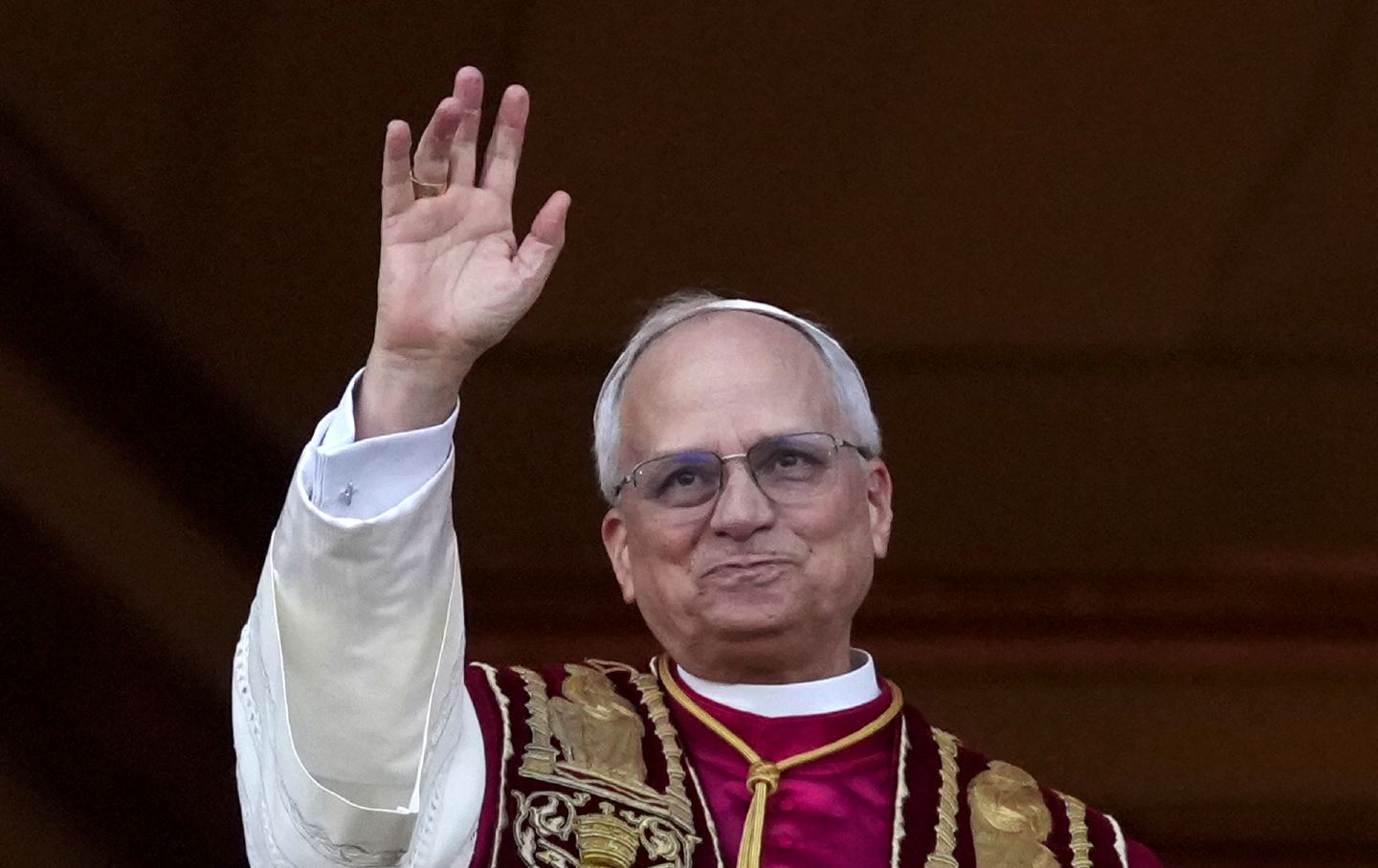
Robert Prevost, elected on Thursday to be pope and now taking the name Leo XIV, was close to his predecessor Pope Francis, and among their shared traits was a strong ideological aversion to Vice President JD Vance. While both Leo XIV and Francis were cradle Catholics, Vance is a newbie in the church. A descendant of “hillbilly” Scot-Irish Protestants, historically among the most anti-papist people on earth, Vance converted to Catholicism in 2019 as part of an intellectual journey toward his current politics of right-wing anti-modernism. Reading the philosopher Rene Girard helped nudge Vance toward the church.
Despite his Catholicism’s being only as old as a child starting grade school, Vance made a provocative theological intervention earlier this year by citing the concept of “ordo amoris” (as developed by St. Augustine) to defend his opposition to immigration. According to Vance, “There is a Christian concept that you love your family and then you love your neighbor, and then you love your community, and then you love your fellow citizens, and then after that, prioritize the rest of the world.”
Vance’s claim, which goes against the universalism that undergirds Christianity and many other religions, earned a rebuke from Francis, who addressed the issue in a February letter to American bishops. Although not naming Vance, Francis clearly had the vice president in mind when he wrote, “Christian love is not a concentric expansion of interests that little by little extend to other persons and groups. In other words: the human person is not a mere individual, relatively expansive, with some philanthropic feelings!” Ironically, Vance, who made a trip to the Vatican over the Easter weekend, was one of the last people to see Francis alive.
Robert Prevost, then a cardinal, seems to have shared Francis’s anger at Vance’s use of theology as a defense of selfishness. On February 3, a Twitter account under the name Robert Prevost posted, “JD Vance is wrong: Jesus doesn’t ask us to rank our love for others.” The tweet contained a link to an article critical of Vance. (The Vatican hasn’t confirmed that this Twitter account belongs to Leo XIV, but Rocco Palmo, a very well-regarded journalist on church affairs, has written that this is indeed Leo XIV’s account.)
Given this tweet and other progressive views on the new pope’s Twitter feed, far-right provocateur Laura Loomer posted that Leo IV is “anti-Trump, anti-MAGA, pro-open Borders, and a total Marxist like Pope Francis.” More succinctly, Loomer also lamented that we have a “WOKE MARXIST POPE.”
It’s tempting to respond to Loomer’s characterization by shouting out, “Praise the Lord!” But both Loomer and many other commentators, including many progressives, make a mistake to see the church’s politics in the narrow modern spectrum of left/right (or the even more constricted categories of “liberal” and “conservative”).
The Catholic Church is nearly 2,000 years old, while the left/right spectrum only dates to the French Revolution, a little over 200 years ago. The accretion of church teaching over the centuries—not to mention the historically remote context of such ancient texts as the Hebrew Bible, the Gospels, and the writings of the early church—make the church simultaneously very conservative and very radical. Both Francis and Leo XIV, simply by being mainstream Catholic clerics, have views that are well outside the norms of American public opinion on a host of issues that don’t easily map on to the left/right spectrum: Francis, although often loosely described as a “progressive” pope, opposed reproductive freedom and gay rights (even as he called for respect for gay persons). But Francis also called for a level of economic fairness, openness to migrants, and environmental concern that would make him far more radical than almost any elected official in America or many other nations.
The Catholic Church, for better or worse, stands outside of modernity and offers a stark rebuke to the political shibboleths of any conventional politics.
Leo XIV gives every indication of continuing on the path of Francis, which means both a strong commitment to social justice but also minimal shifts on social issues. Reporters are currently going to Robert Prevost’s Twitter account and other records to tease out the politics of Leo XIV. From the Twitter account, it does seem that Leo XIV, like Francis, gives a high priority to care for migrants and the poor. Leo XIV also supported the Black Lives Matter movement and has been friendly to gun control. But he’ll also likely continue to hold fast to traditionalist gender norms and the natural law doctrine that makes the church hostile to LGBTQ rights. Further, Leo XIV has a passion for canon law, which makes him unlikely to reform or modernize church doctrine. There are also, as with many other church figures, long-standing controversies about his handling of clerical child abuse cases.
What’s politically significant is that right-wingers such as Vance have tried to co-opt the church along partisan lines. This attempt to create a right-wing church itself makes Leo XIV a natural opposition figure for Vance and other ideologues. Leo XIV might lend moral support to the political right on social issues, but he will also be a foe on matters of the economy, migration, and war. The choice by the College of Cardinals of the first American pope as someone with a record of opposing xenophobia might in fact have a conscious political dimension: It’s a rebuff of the attempt by figures like Vance to pretend that they alone own the church—an institution that has a global reach and a diverse membership.
The Catholic Church has long been nettlesome to ideologues of all sorts, but the political right used to be more honest about their disagreements with Vatican teaching. In 1961, Pope John XXIII issued the encyclical Mater et Magistra, a strong rebuke to the degradation of unchecked capitalism and an affirmation of the church’s support for the poor and oppressed. The conservative pundit William F. Buckley Jr.—a devout Catholic but also an equally ardent supporter of unfettered capitalism—responded to the encyclical with an editorial describing it as a ”venture in triviality.“ Buckley’s magazine National Review later quipped, “Mater si, magistra no” (in other words, the church is our mother, not our teacher).
Buckley’s dismissal of Catholic social teaching was too glib, but he was accurate in thinking that lay people have a right to criticize and challenge those teachings. This was a point made with great force by Buckley’s protégé Garry Wills in the book Politics and Catholic Freedom (1964) The only problem with Buckley’s position is that National Review conservatives rarely wanted to listen to Catholics who challenged the church on abortion, patriarchy, and homophobia.
A better path forward would be to acknowledge that few Catholics adhere to the church’s teaching on all issues. Those who pick and choose doctrine are sometimes dismissed as “cafeteria Catholic.” But in reality almost all lay Catholics (and perhaps more than a few clerical Catholics) are “cafeteria Catholics.” Revising Buckley, one could argue that for believers the church is both a mother and a teacher—but that no one ever fully listens to either their mother or their teacher. As for JD Vance, as a Catholic for only the last six years, he should realize that it is more appropriate for him to take the role of student rather than teacher. Before Vance gets into another fight with the pope, he should definitely spend more time learning about the true depth and complexity of Catholic social thought.
More from
Jeet Heer 

Even Republicans Are Waking Up to Trump’s Corruption Even Republicans Are Waking Up to Trump’s Corruption
And, somewhat shockingly, so are Democratic elites.
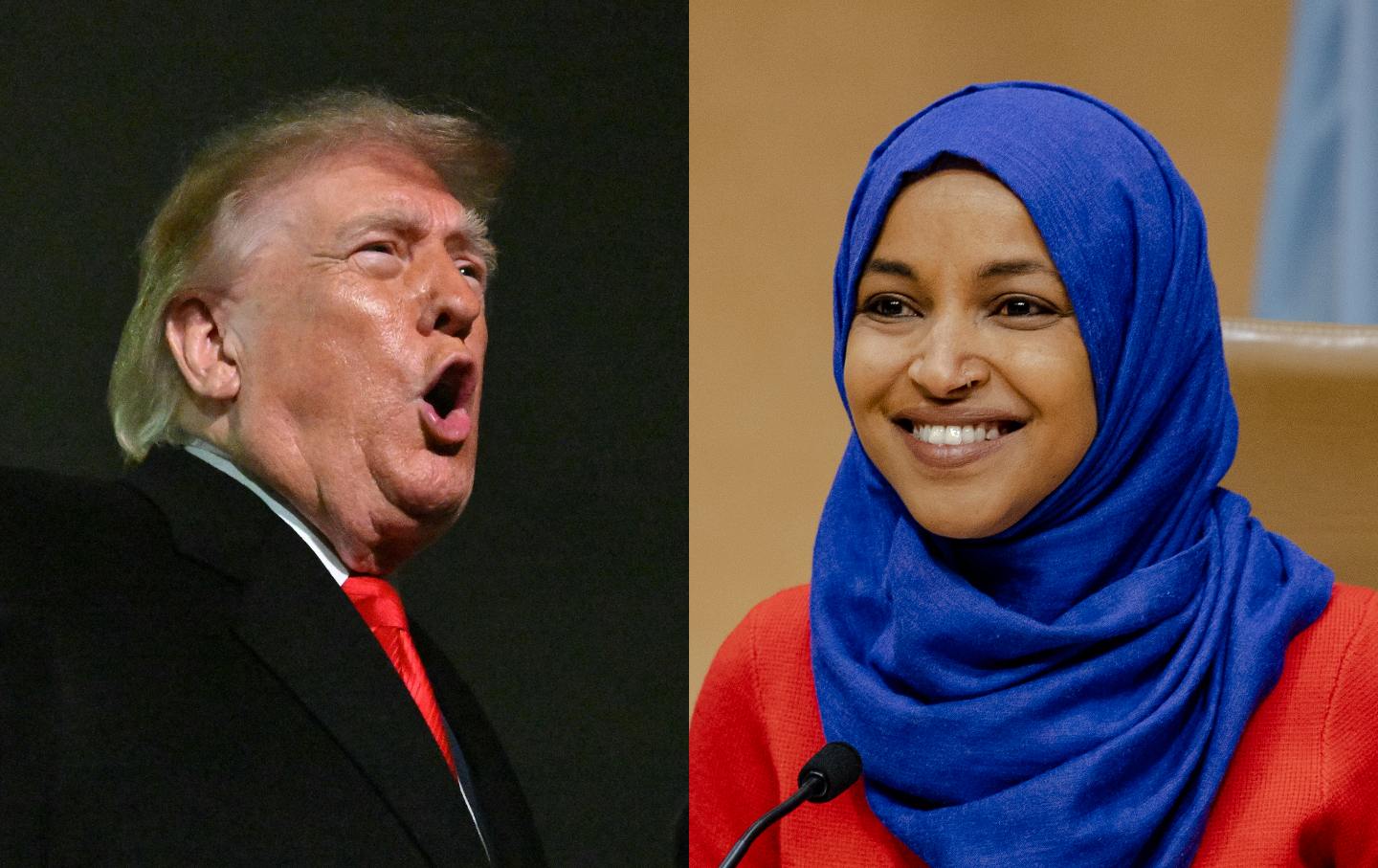
Where Is the Outrage Over Trump’s Racist Targeting of Ilhan Omar? Where Is the Outrage Over Trump’s Racist Targeting of Ilhan Omar?
The establishment press and some Democrats are strangely mute over the president’s flagrant abuse of the legal system.

The Real AI Threat Is Already Here The Real AI Threat Is Already Here
Never mind some future apocalypse—AI is being used right now to cause enormous suffering.
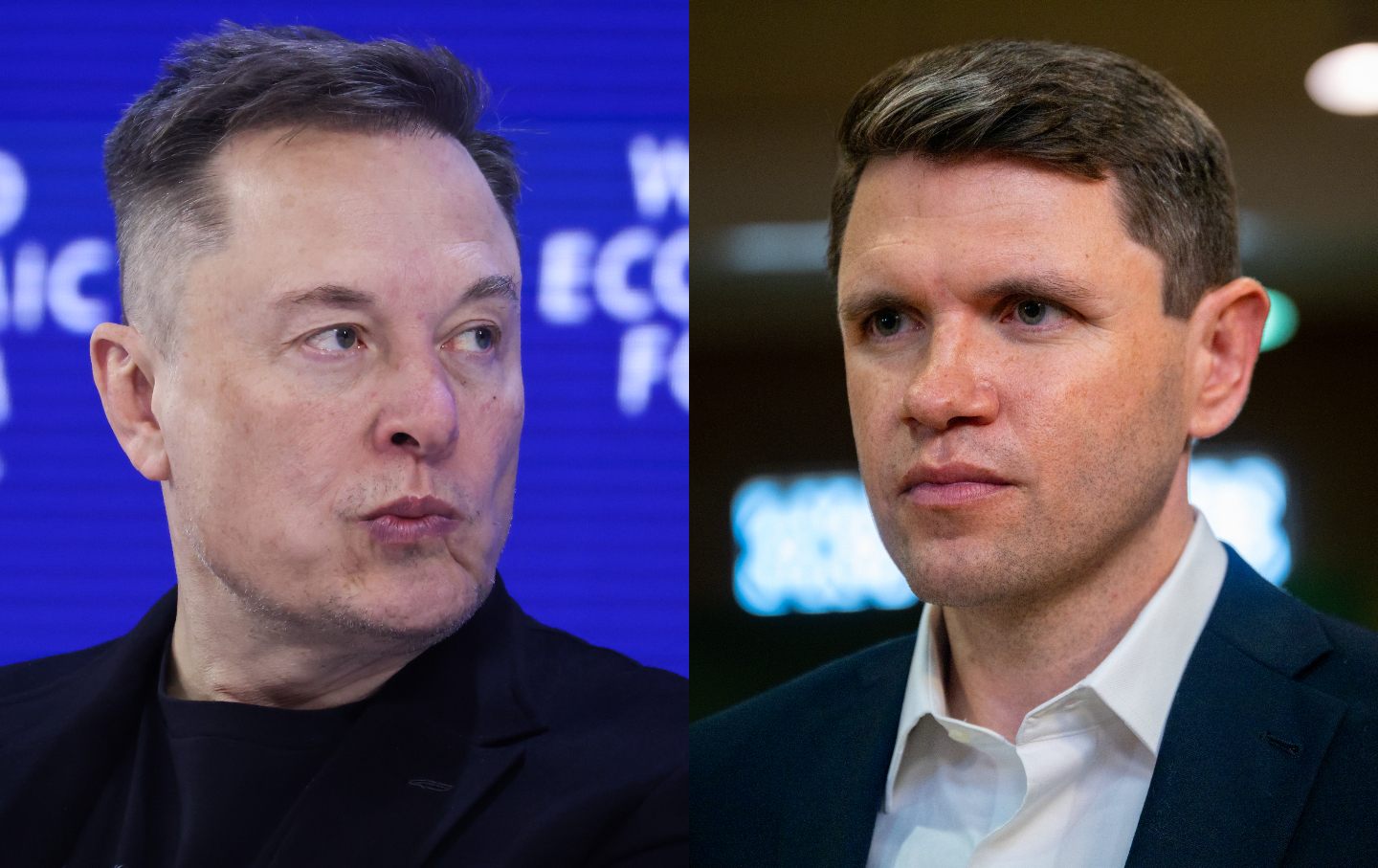
Elon Musk’s James Talarico Smear Blew Up In His Face Elon Musk’s James Talarico Smear Blew Up In His Face
But that doesn’t mean the danger from Musk’s lies is over.
Does America First Really Mean Israel First? Does America First Really Mean Israel First?
Mike Huckabee’s aide shows how an extremist agenda dominates Trump’s Middle East policy.
The Death Penalty Has Become a Torture Machine The Death Penalty Has Become a Torture Machine
Christa Pike's botched lethal injection proves there is no humane form of execution.

