
Harvard’s New Speech Rules Continue Their Pattern of Repression
The university’s adoption of the IHRA definition of anti-semitism conflates critique of Israel with antisemitic speech, directly attacking pro-Palestine activism and academic freedom.
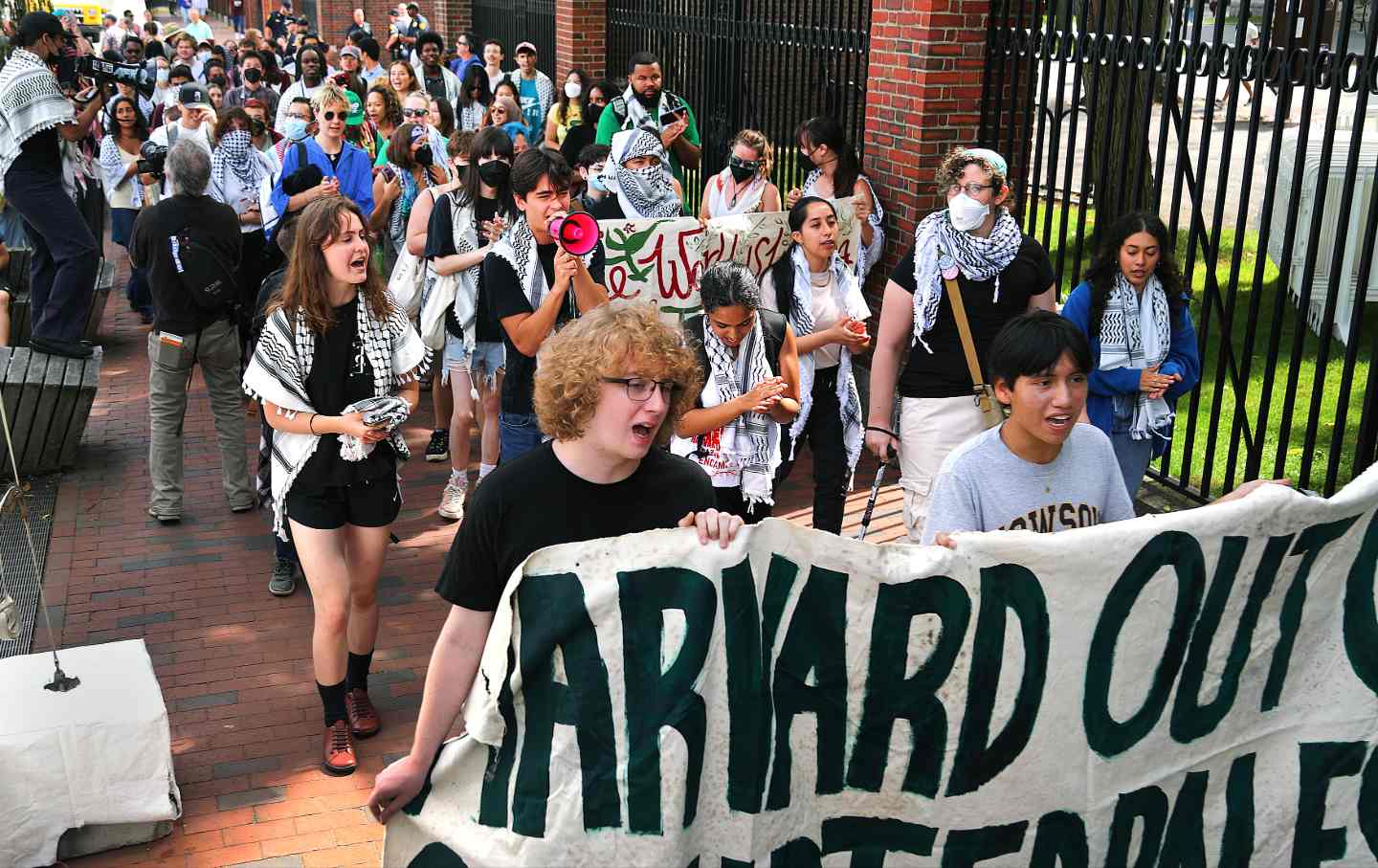
People march past Harvard Yard during the school year’s first Pro-Palestinian protest.
(John Tlumacki / Getty)
As universities remain materially invested in genocide, the split between their acceptance of violence and a student consciousness that challenges that commitment continues to widen.
Harvard University remains one of the more public sites for this struggle. As Israel violated the ceasefire in Gaza, simultaneously shifting its genocidal campaign to the occupied West Bank, Harvard announced new policies as settlements for ongoing lawsuits against the university. They include the adoption of the International Holocaust Remembrance Alliance (IHRA) definition of anti-semitism, which conflates critique of Israel with antisemitic speech, and plans for a partnership with an unspecified Israeli university, details for which remain vague.
As recent Harvard graduates, the announcement feels like a massive regression in the campaign for divestment, characterized by some of the biggest student mobilizations in university history. In May, Harvard barred us from graduating due to our involvement in the movement for Palestine, after many of us faced suspensions and evictions. More than one thousand students walked out of Harvard’s graduation ceremony, protesting the university’s complicity in genocide and its targeting of student dissidents.
These policies cement a pattern of repression that Harvard has championed since October 2023 (and more subtly, for decades), revealing the fundamental crisis of the elite American university and the country itself. Mirroring the Trump administration, Harvard too has rejected any ambiguity in its support for Israel’s genocidal violence.
After October 2023, Harvard administrators tightened protest policies for the first time in decades, targeting pro-Palestine groups. University administrators weaponized bureaucracy to indefinitely postpone an undergraduate referendum on divestment, privately telling us that the petition had caused “a storm” among university leadership. In April, after disregarding repeated outreach from student groups seeking dialogue about Harvard’s material complicity in genocide, the university suspended the Palestine Solidarity Committee (PSC). This past fall, Harvard launched a crackdown on “study-ins,” suspending students from libraries for silently studying while wearing keffiyehs. It is not in spite of, but rather, in response to the student movement that Harvard is taking new, dramatic steps to silence student voices and reaffirm its complicity in genocide.
The settlement is a glaring attempt to appease pro-Israel interests under the new Trump government, although external political pressure existed long before the current administration. Since 2023, bipartisan attacks in response to pro-Palestine student advocacy have led the university on a long-winded process of placating lawmakers. Former university President Claudine Gay’s resignation best illustrates the university’s inability to benefit from acquiescing to right-wing demands. Despite writing a series of statements condemning the attacks on October 7 and the pro-Palestine student body—a response steered by billionaire donors—Harvard nevertheless remained the subject of legislative scrutiny. These offensives soon transformed into racist attacks on Gay and the integrity of her scholarship, leading to her premature resignation.
Today, we see similar dynamics playing out. Instead of celebrating the settlement agreement, Shabbos Kestenbaum, the lead plaintiff in the Students Against Antisemitism lawsuit, has promised additional action against Harvard in collaboration with the Trump administration, which platformed him at the 2024 Republican National Convention. So long as Harvard students express dissent against Israel and question Zionism as a racist ideology, the university will remain a target. The university has embraced the will of Republican lawmakers, becoming the first significant example of educational overhaul under Trump. By upholding right-wing interests wholeheartedly, Harvard now finds itself at a crossroads.
As students are suspended from libraries for sticking a sheet of printer paper with a divestment slogan on their laptops, or have their degrees withheld for using a microphone at a protest, penalizing critique of Zionism through the IHRA definition could embolden the university to exact even more disproportionate sanctions.
The university’s policy extends to any substantive critique of Israel, making classes, panel talks, or vigils subjects of scrutiny, deeply compromising basic academic freedom in the process. Explicitly sanctioning anti-Zionism turns classrooms into sites for revisionism regarding Israel, whitewashing its racist imprints, the colonial aspirations of its founders, the massacres that enabled its establishment, and the exclusionary systems that perpetuate its existence. Critiquing Netanyahu and Israeli policies as divorced from the ideological moorings of Zionism is not just insufficient—it is ahistorical. Students must have the language to advance this critique.
In addition to the censorship enabled by the IHRA definition, Harvard’s new approach treats Zionists as a protected category, while neglecting documented xenophobic assaults on Palestinian and pro-Palestine communities on campus. Doxxing websites feature directories of Arab, Muslim, Black, and brown students at Harvard. Our faces have been paraded on billboard trucks and our inboxes have been flooded with death and rape threats. By offering no institutional support, Harvard has proven that pro-Palestine students are undeserving of “protection.” The new policies codify this racist differential.
Perhaps the most upsetting development in Harvard’s settlements is the promise to establish a partnership with an Israeli university, while concurrently dismissing calls for a Palestine Studies program. To respond to one of the most tangible asks of the student movement by establishing a new tie with an Israeli institution only furthers Harvard’s isolation alongside the Israeli state, particularly in academia. Recently, members of the American Historical Association (AHA) voted overwhelmingly to condemn the scholasticide of Gaza, paralleling several other academic boycott campaigns. As Harvard’s new partnership endorses the decimation of Gaza’s education system, it simultaneously annuls any purported commitment to a just academic mission.
For fifteen months, we have witnessed the depravity of elite institutions in capitulating to war-mongering lobbies. Guided by the steadfastness of the Palestinian people, we are certain that the student movement will escalate, holding complicit institutions accountable for abetting the first live-streamed genocide known to humanity. While Harvard may settle these lawsuits in the courtroom, it will not win in the eyes of history.
More from The Nation

Jalen Hurts Deserved Better. We All Do. Jalen Hurts Deserved Better. We All Do.
In a country that treats workers as expendable parts, Hurts’s playing through a blood clot is just the highest-profile example of the price workers pay in an oligarchy.
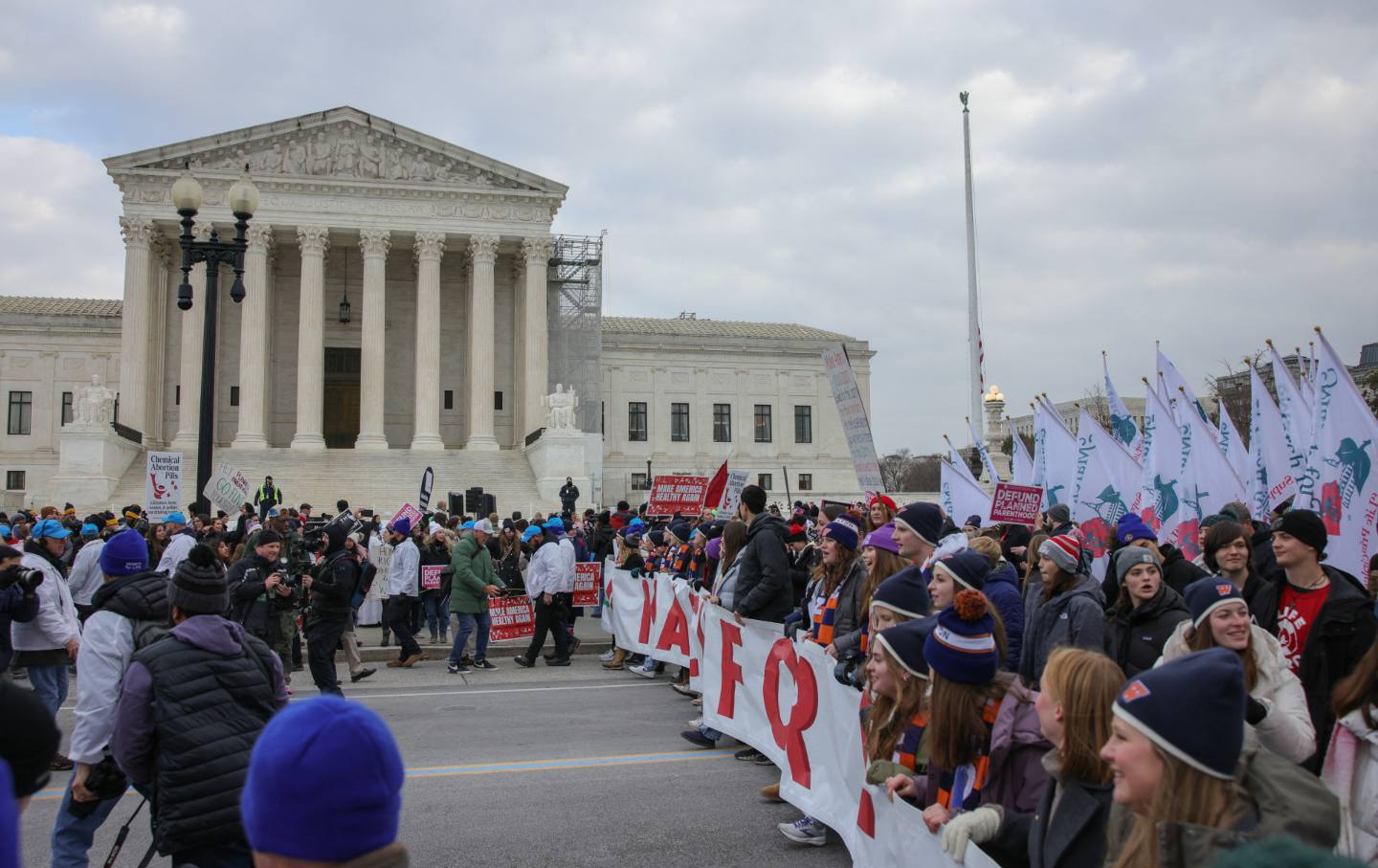
The Terrifying Future of States’ Criminalizing Pregnant People Is Already Here The Terrifying Future of States’ Criminalizing Pregnant People Is Already Here
The idea of charging people who have abortions with murder is gaining traction on the right. But a report finds that people are already being prosecuted for their pregnancy outcom...
The Supreme Court Is Coming for Affirmative Action—Again The Supreme Court Is Coming for Affirmative Action—Again
The high court has just accepted a case that takes aim at efforts to increase diversity at high-performing public schools.

My Family’s Dark, Hidden History With Institutionalization My Family’s Dark, Hidden History With Institutionalization
My great-great-grandfather was the namesake of an infamous institution for the disabled. From long-neglected records of the property, the lives of forgotten people were uncovered....
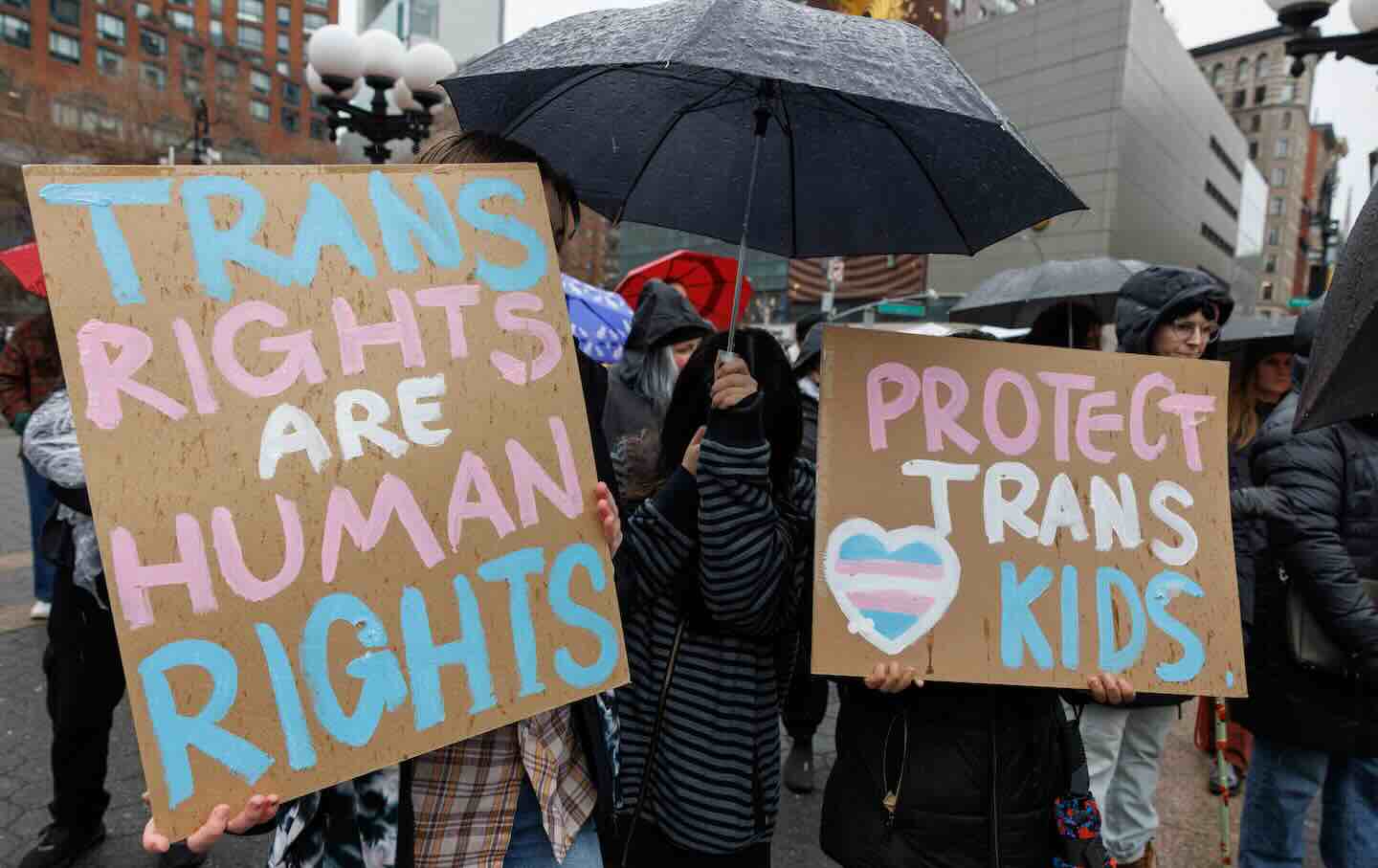
Smoke and Mirrors: The Right's Latest Attacks Against Trans People Smoke and Mirrors: The Right's Latest Attacks Against Trans People
The MAGA movement is redoubling its attacks on trans healthcare in an attempt to win votes this November.

Is Blockbuster Video the Answer to Our Digital Privacy Woes? Is Blockbuster Video the Answer to Our Digital Privacy Woes?
The Supreme Court is weighing whether a 1988 video-store law can be used to protect our digital privacy.

